

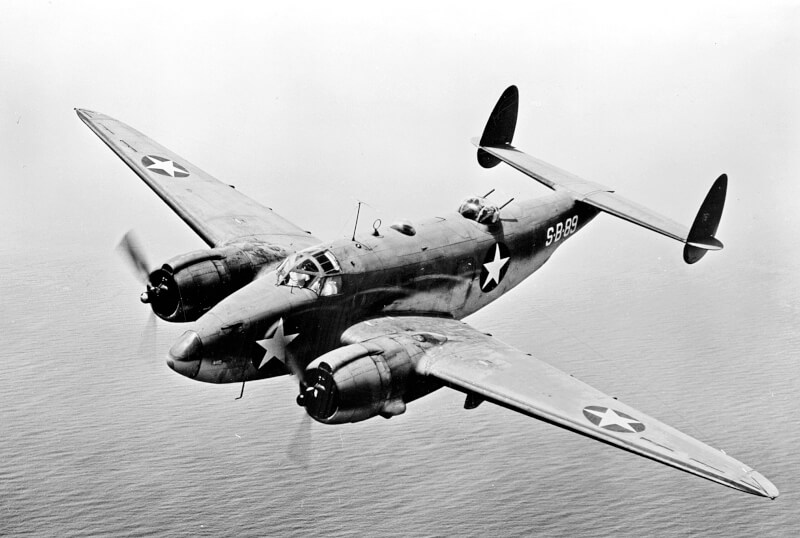
A U.S. Navy Lockheed Ventura bomber, similar to the one Donald Cormack and his crew trained in, circa 1943. [U.S. Navy/Wikimedia]
He left the small, rural community of Esk, Queensland, and came to Canada to learn how to fly bombers with the British Commonwealth Air Training Plan (BCATP). Fifteen months later, in the winter of 1943, Cormack was dead. The 22-year-old was lost along with two other airmen when their Ventura bomber crashed into the Gulf of St. Lawrence during a training exercise.
The bodies of Cormack and his crew—co-pilot Stanley James, 27, a fellow Australian, and wireless air gunner Thomas Hunter, 21, of New Zealand—have never been found.
They are among more than 1,500 aircrew who died in BCATP training incidents during the war. Like Cormack and his crew, many were lost in crashes over water, complicating the recovery of remains and creating a legacy of unknown graves of BCATP flyers across Canada.
The deaths of military members in wartime training accidents, especially when they occur far from any operational theatre, are often overlooked compared to those killed on the front lines. Yet the sacrifice remains equal, and the sorrow is no less profound.
“Think of the toll this took on the families,” Bil Thuma, a lost aircraft explorer based in Toronto, recently told Legion Magazine. “How much of an impact does it have when a 20- or 22-year-old kid goes halfway around the world to train for war and never comes back?
The sacrifice remains equal, and the sorrow is no less profound.
“When you think particularly of those families that are so distant from where the person died, it’s a huge impact,” said Thuma, “especially if the body isn’t found, because they have no place to grieve.”
Don O’Rorke, Cormack’s nephew, said that his family in Australia, particularly his mother (Cormack’s sister), struggled for decades to reckon with his death. Their loss was made harder by not having a grave at which to remember their brother, son and uncle. Today, there is only a plaque in Cormack’s memory at the family’s cemetery plot in Queensland.
Two years ago, O’Rorke, a businessman in Brisbane, began organizing an expedition team to search for and hopefully recover some of the wreckage of Cormack’s lost plane, and possibly even repatriate his remains.
Finding the wreckage, O’Rorke told Legion Magazine in an email, “would provide closure to an issue that has haunted our family for 80 years.”

Donald Cormack and his lost crewmates. [Courtesy Don O’Rorke/Bil Thuma]
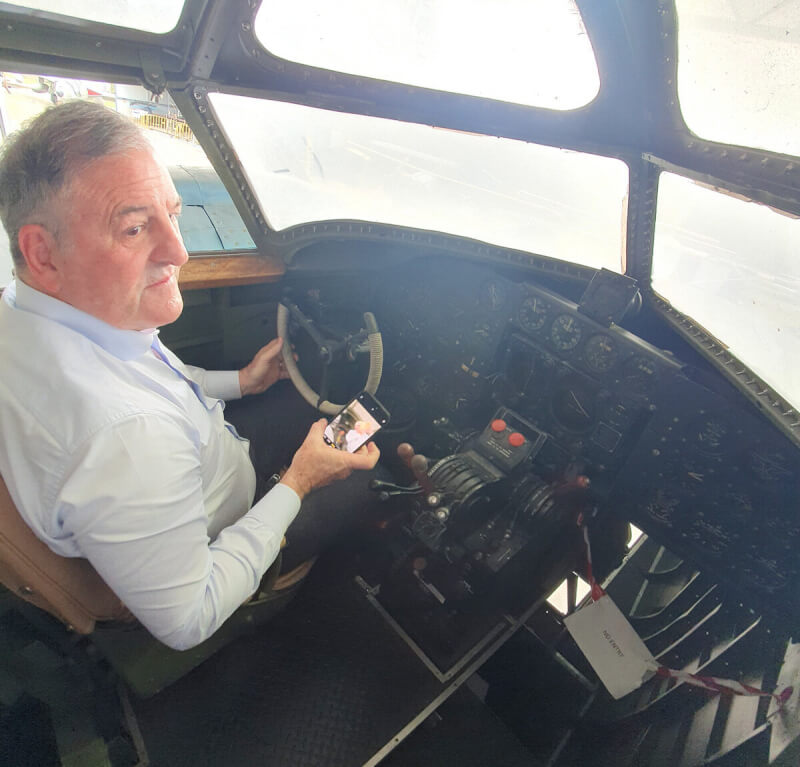
Don O’Rorke, Cormack’s nephew, sits in the cockpit of a Ventura bomber on display at the Queensland Air Museum. [Courtesy Don O’Rorke/Bil Thuma]
Pennfield Ridge was one of 151 air training schools hastily built across Canada as part of the BCATP in the 1940s. The overall program was an extraordinary undertaking, one of Canada’s most valuable contributions to the Second World War. Over the course of five years, the BCATP—staffed by tens of thousands of Canadian trainers—graduated more than 131,000 pilots, flight engineers and other aircrew for the air forces of Canada, Britain, Australia and New Zealand. These also included students from Nazi-occupied countries such as France, Poland, Norway and Czechoslovakia.
As a result, U.S. President Franklin D. Roosevelt famously called Canada the “aerodrome of democracy.”
It’s unclear precisely how many aircrew died while training in Canada with the BCATP, however one estimate published in the Royal Canadian Air Force Journal in 2016 put the number between 1,700 and 2,000 losses.
U.S. President Franklin D. Roosevelt famously called Canada the “aerodrome of democracy.”
Roughly 70 of those deaths occurred among crews flying out of Pennfield Ridge during the war. Thuma said the airfield was a risky place because its twin-engine Ventura bombers were difficult to fly. He said Cormack’s plane was one of 17 Venturas that crashed out of Pennfield Ridge.
Add to that the inexperience of the crews, plus the complexity of flying in both summer fog conditions and a Canadian winter, and Thuma said he’s not surprised at the number of fatalities at that station.
On the afternoon of Jan. 26, 1943, Cormack and his crew were flying a cross-country navigation exercise. They were returning to base from northern New Brunswick, flying at 3,048 metres (10,000 feet) above heavy cloud cover. It’s believed that they attempted to duck below the clouds to get a physical fix on their location, and in the process, their plane became disabled by icing.
They crashed onto the ice-covered Gulf of St. Lawrence about two kilometres off New Brunswick’s northeastern coast, with an oil fire reportedly seen on the surface. Searches of the crash site at the time failed to turn up any wreckage other than a wheel and a handkerchief monogrammed “S. James.” They found no survivors or remains.
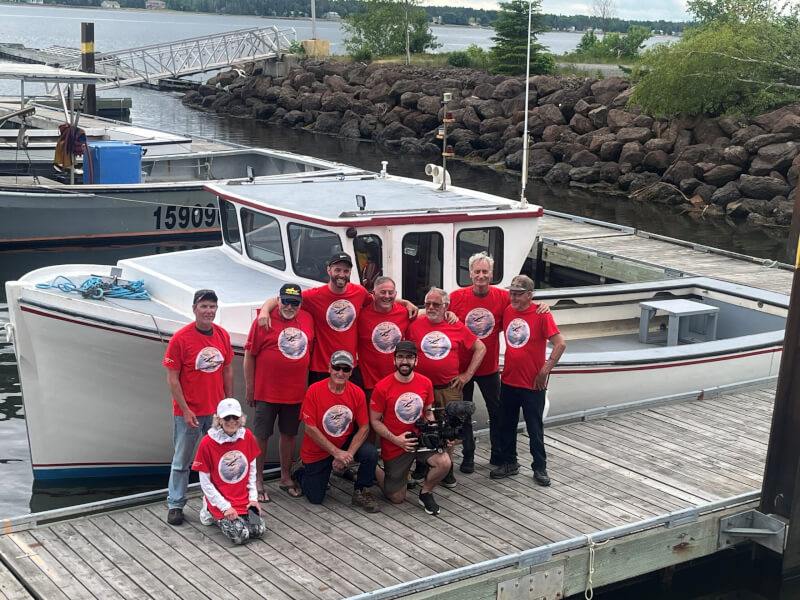
The expedition team that searched for Cormack’s Ventura in New Brunswick in 2025. Don O’Rorke and Bil Thuma are standing, fourth and fifth from the left in the back row. [Courtesy Don O’Rorke/Bil Thuma]
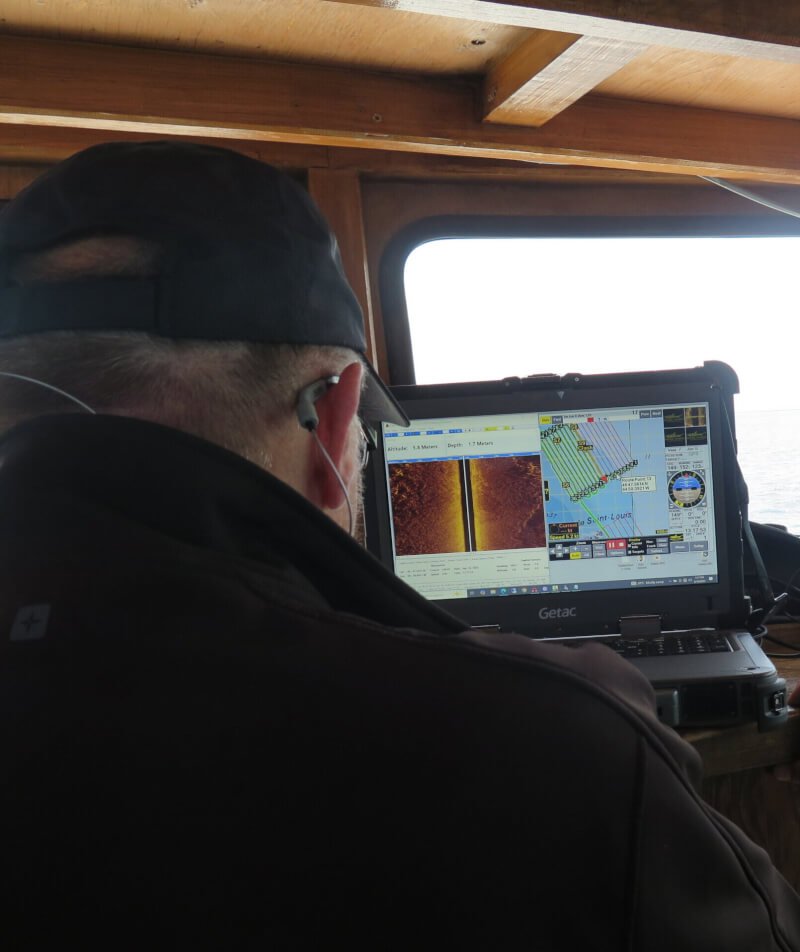
Bil Thuma watches the results of a side-scan sonar during the 2025 search. [Courtesy Don O’Rorke/Bil Thuma]
In summer 2025, trailing a sonar device from a fishing boat, the team searched three locations in the Gulf of St. Lawrence: the original co-ordinates of the Ventura crash, as well as the locations of two separate reported sightings of the wreckage by local fishermen, including one where fishermen thought they pulled up an aircraft wing in their gear, but had to cut it loose due to its weight.
The team also dived on some of the locations in about 15 metres (50 feet) of water, but none of their searches turned up anything that resembled pieces of an aircraft. Thuma believes that over the decades, hurricanes and other Atlantic storms have likely dispersed the wreckage over a wide area or buried it beneath the seabed.
Despite the disappointment, O’Rorke said it was a worthy and emotional experience to be on the water where his uncle disappeared so long ago.
“It brought a lump to my throat, thinking that directly below me is where my direct descendant lost his life representing his country in what was a terrible situation, World War Two,” he said.
O’Rorke may return sometime in the future to continue the search for his uncle’s Ventura in the hope that even if most of the aircraft has been washed away, its heaviest pieces—the engines—may still be on the seabed in the crash area.
For his part, Thuma doesn’t consider the initial search a failure because the real value of such projects comes not from locating or recovering wreckage, but from something more meaningful that transpires during the search itself.
“It’s not so much about recovering these aircraft,” he said. “It’s about remembering the sacrifices that were made by the young men who went off earnestly believing they would be helping the war effort—which they would have—but they never made it.”
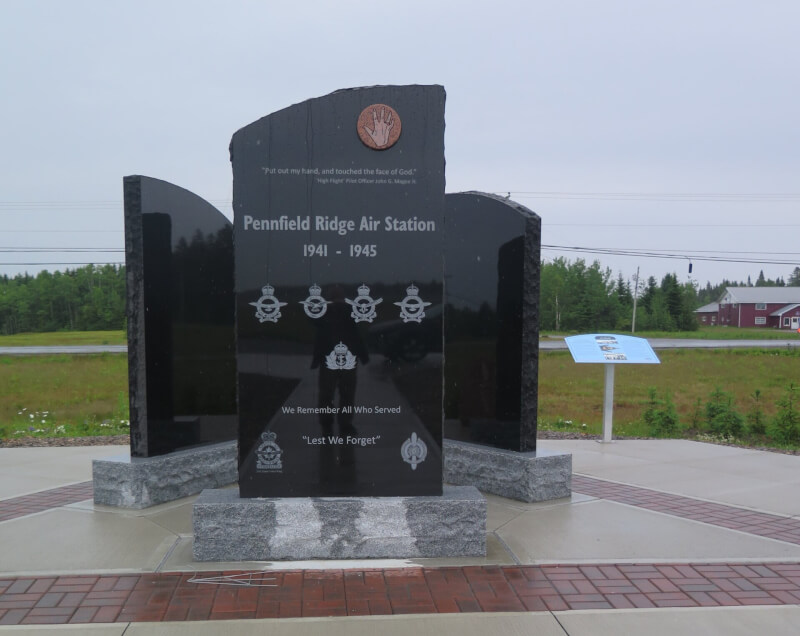
The memorial to those who died while training at Pennfield Ridge Air Station during the Second World War. [Courtesy Don O’Rorke/Bil Thuma]
Advertisement