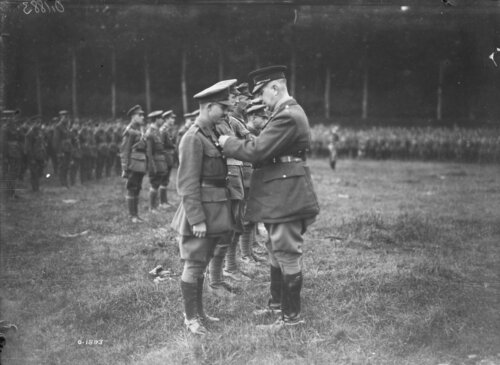




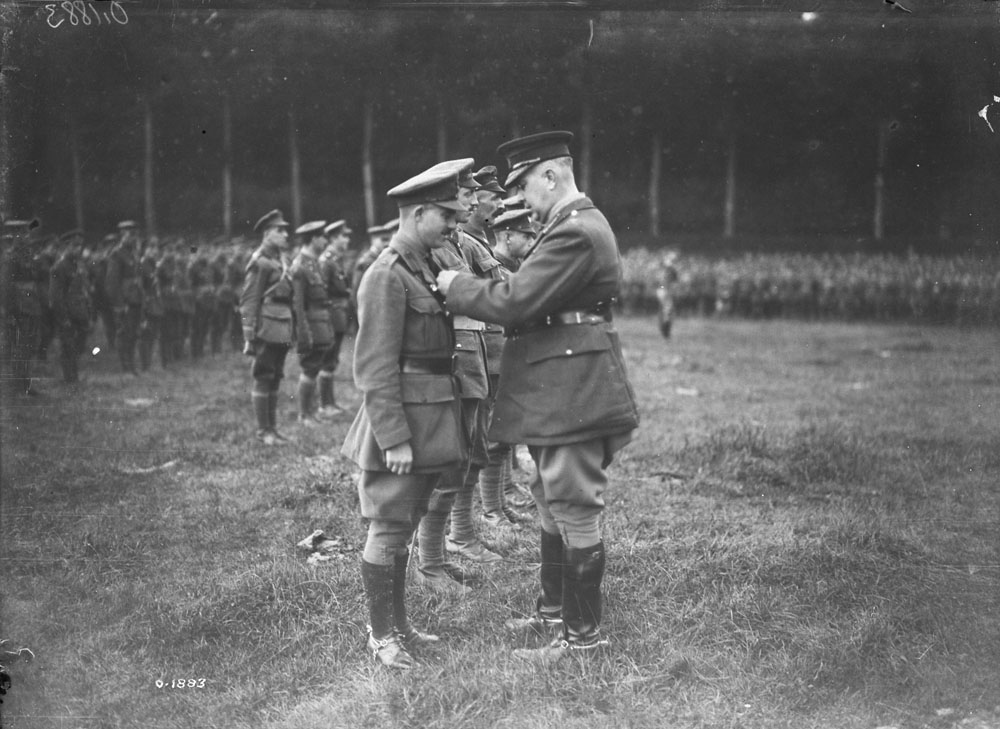
General Arthur Currie decorates a Canadian officer with the Distinguished Service Order in September 1917. [DND/LAC/3362394]
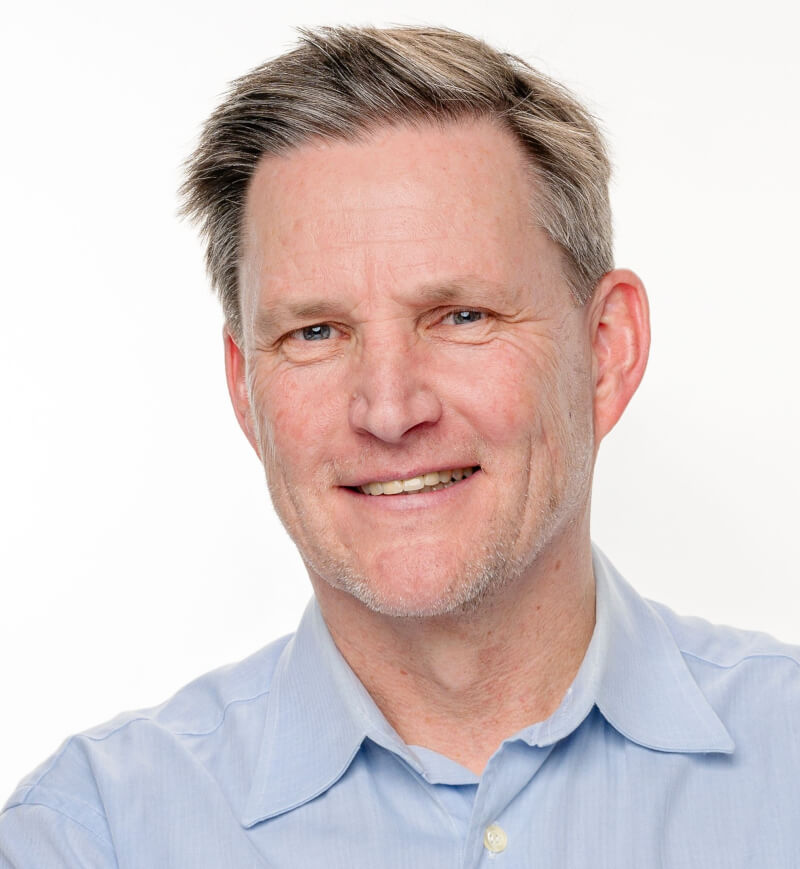
None of that mattered, of course. Currie’s physical appearance had no bearing whatsoever on his success in leading the Canadian Corps—four divisions of hardened shock troops, 100,000 strong—during the final years of the First World War.
That success, under Currie, included the Corps’ string of 1918 victories in the celebrated Hundred Days battles at Amiens, Arras and Mons.
“The Canadian general, who stood almost 6 feet 3 inches tall and bulged in his uniform at over 250 pounds, had an agile mind and was continually studying the challenges of trench warfare,” historian Tim Cook wrote. “He gathered together an effective staff and encouraged learning from victories and failures in battle.”
Pete Hegseth, the current U.S. defense secretary (or secretary of war as he prefers to be called) wouldn’t have much time for an officer like Currie, or room in his army for someone who looked like him. One of the hallmarks of Hegseth’s tenure at the Pentagon is his obsession with the physical appearance of troops in uniform.
Last week, the Wall Street Journal reported that the Pentagon is combing through its ranks for service members that “meet waist-to-height requirements and exhibit ‘impeccable’ grooming standards” as it seeks eligible audience members for Hegseth’s upcoming “State of the Force” address.
According to The Hill, a Washington, D.C., newspaper: “Those who are selected to attend the event will also have the opportunity to work out with the Defense secretary” during the event.
This follows Hegseth’s imposition of new grooming standards for the U.S. military—“no more beardos,” he has said—and a mandatory screening program for all service members older than 30, including women, for testosterone deficiency.
His goal, he has said, is for a “High-T Department of War.”
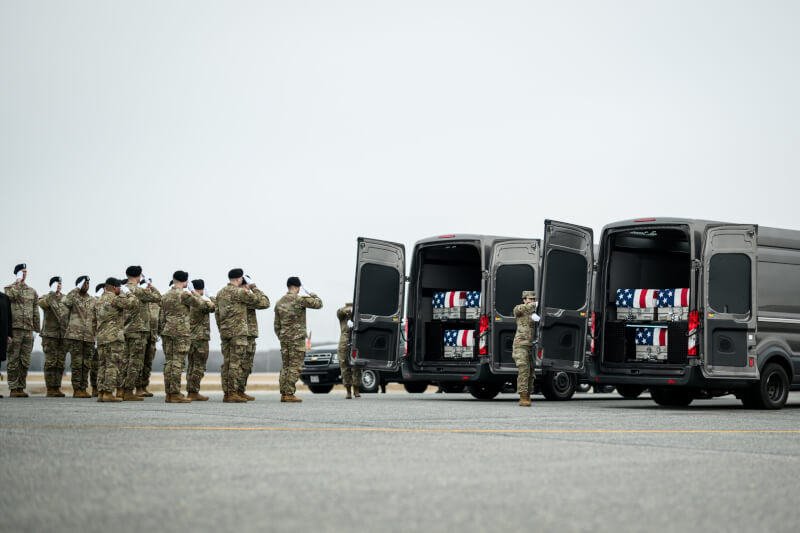
Six dead U.S. soldiers from Iran’s drone attack at Port Shuaiba, Kuwait, are transferred to the U.S. on March 7, 2026. [Official White House Photo by Daniel Torok]
To be clear, there is virtue in promoting physical fitness, particularly within any military. Fitness is good for all, and essential for those whose job requires strength and endurance—the infantry and special forces, for example, or fighter pilots who must withstand heavy G-forces in flight.
However, Hegseth’s fitness fetish—and his cartoonish preoccupation with looks and appearances—betrays a worrisome lack of seriousness, a quality one might expect in the leader of the world’s most powerful military.
Should Hegseth really be spending his time showcasing his bench-pressing skills when his country is mired in a war it seemingly can’t win, is handicapped by critically low defensive missile stocks, and is facing a world of escalating and complex security threats?
Most importantly, do Hegseth and his supporters understand that to win in the 21st century, modern militaries require a diverse mix of people, personalities, skill sets and, yes, physical attributes?
If every service member was a lean, fighting warrior trained to jump from the rear door of a Hercules aircraft or hunt down jihadists in the mountains, then who might want to pilot the remote-controlled drones from the safety of an air-conditioned operations centre far from the front lines?
Most importantly, do Hegseth and his supporters understand that to win in the 21st century, modern militaries require a diverse mix of people, personalities, skill sets and, yes, physical attributes?
Who will prepare the research and analysis about the changing nature of warfare, so that modern militaries can develop units capable of defending against cyber, space or AI-enabled warfare?
Who will be the modern-day successors to General Currie—people with “agile minds” who, whatever their appearance, understand how to innovate, to learn from past failure and adapt for future success?
“In today’s military, the number of people who really need to have big biceps and be able to kick open the door is miniscule, because most of the force is intelligence, communications, logistics—all the enablers that allow you to, with great accuracy, put in that very small number of [door-kicking] operators,” said retired U.S. four-star general Stanley McChrystal in an interview earlier this year.
McChrystal is a former commander of U.S. Joint Special Operations Command and former commander of the International Security Assistance Force in Afghanistan.
“I’m disappointed by the current atmosphere that is communicated from the top [of the Pentagon],” he said. “I think people ought to look like whatever they look like so that they are capable in their jobs…. I want whoever’s good to serve.”
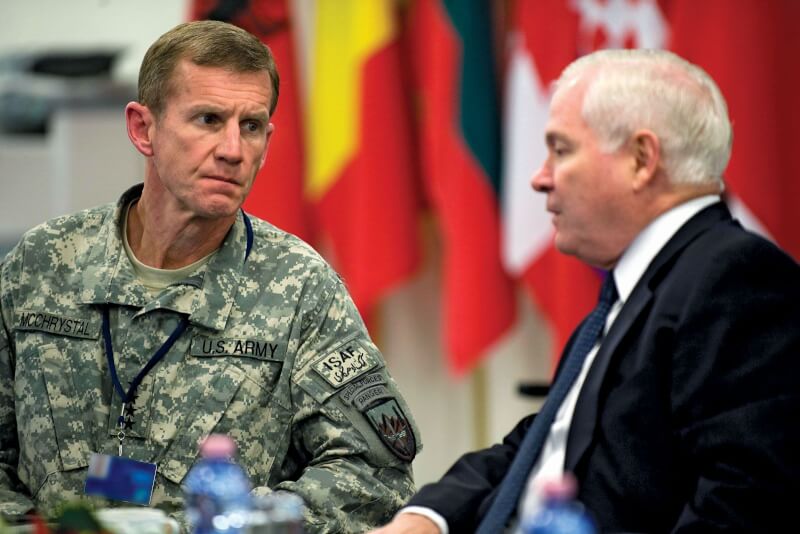
Stanley McChrystal (left) and former U.S. Secretary of Defense Robert M. Gates, in 2010. [Encyclopedia Britannica]
Consider three remarkable talents of the Second World War.
Field Marshal Bernard Montgomery, one of the great strategic minds of the conflict, was small and slight in stature, and would never have won a prize for being handsome. Yet he inspired loyalty and confidence among the troops.
Winston Churchill, for all his extraordinary inner strength, was physically soft. He spent many mornings working from his bed with a glass of whisky at his side and was more adept at painting than push-ups.
Franklin D. Roosevelt helped defeat Hitler from a wheelchair.
True toughness isn’t found on the surface. Nor do those who have inner toughness ever showboat or brag about it.
First Lieutenant Lynn (Buck) Compton, one of the heroes profiled in the popular book (and TV series) Band of Brothers, about a company of American paratroopers who fought in the Second World War, described many of his mates in Easy Company as “tough, hard” combat soldiers.
But he quickly added: “I mean tough, in terms of fibre.”
Advertisement