


Grief is not a straight line,” affirmed Cheryl Cameron, director of operations at the Canadian Virtual Hospice. “It’s actually a big squiggly messy line, and it looks totally different for different people.”
Military and RCMP veterans, along with their families, epitomize that reality, their sense of loss taking countless forms. Uniformity might exist in the ranks, but sorrow does not—cannot—conform.
“As a society,” Cameron continued, “we are really grief illiterate…. Some of the things that you hear people say, like, ‘Oh, it’s just been so long,’ or ‘I shouldn’t be feeling this way,’ really show a misunderstanding about what grief actually is, and we don’t do a good job…of supporting each other in grief.”
The Canadian Virtual Hospice—a free, bilingual online platform providing information and support related to advanced illness, palliative care and grief—has long striven to fill such gaps. Now, the team behind it is focusing on personnel—both former and active—who encounter loss, helping them recognize and better understand the ways it can affect their lives.
The resulting resource, Shaped by Service (ShapedbyService.ca—which was expected to be live at press time), was created for, and largely by, Canadian Armed Forces and RCMP community members, drawing on the expertise of grief and trauma specialists to combine first-hand knowledge with the latest research.
“The focus on it being digital,” said Cameron, “is really to try to have that accessibility for people when they’re struggling around some topics that sometimes you’re not comfortable either talking to your family about or reaching out for help…. It’s an online resource people can Google, that they can find at three in the morning.”

“Loss doesn’t have to be a person. It can be financial or housing loss. It can be identity loss, a big thing in a lot of professions, especially military, RCMP, paramedicine and firefighting.”
Considered an accompaniment rather than a substitute to formal counselling or other health services, the website delivers more than 200 pages of content across 13 thematic areas that extend far beyond bereavement.
“Loss doesn’t have to be a person,” explained Cameron. “It can be financial loss. It can be housing loss. It can be identity loss, a big thing in a lot of these professions, especially military, RCMP, paramedicine and firefighting, where a huge amount of your identity becomes embedded in your profession.”
The death of a colleague or comrade, while unquestionably deserving of in-depth examination, is instead just one manifestation of grief explored through the Veterans Affairs Canada-funded resource, which also tackles injury, disillusionment and sexual trauma, as well as transitioning out of service. The unique challenges that spouses and children might face, too, are addressed in dedicated online sections.
Shaped by Service not only explains loss but also outlines practical strategies for navigating it. For example, Cameron detailed, “grief can be present at the same time that you could be dealing with trauma, PTSD or experiencing an occupational stress injury. But grief needs different kinds of attention and strategies.”
Nor is the material itself limited to only the written word. In determining the themes for Shaped by Service, the Canadian Virtual Hospice conducted more than 75 phone and video interviews with individuals dealing with loss. From these, over 850 candid clips—700 in English and 150 in French—are now embedded throughout the modules and consolidated in a gallery searchable by person or topic.
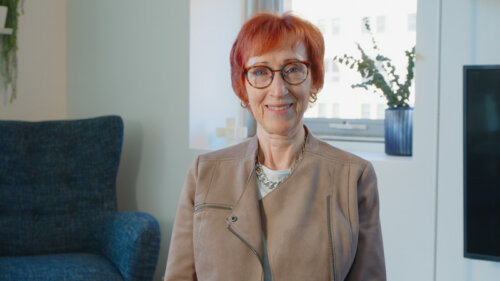
Retired RCMP staff sergeant Kathie King (right)—who served upward of 35 years in ‘D’ Division (Manitoba)—was among the veteran contributors, perceiving her participation as a “way to give back” to others who might follow in her bootsteps. “Having had the experience in the mounted police, having been a supervisor, having dealt with so many different things,” she noted, it was important “for people to at least have a resource where you can see yourself in something and then know where you can go for help.”
Notwithstanding the deeply personal nature of grief and the myriad ways it can manifest, commonalities can emerge and shared truths resonate in even the most disparate stories. Less a collection of anecdotes and more a mosaic of raw, authentic voices, each tale offers both insight into loss and, hopefully for some, a reflection of sentiments they may have struggled to articulate.
Cameron cited difficulty acknowledging vulnerability as one recurring barrier for interviewees and, significantly, in the broader culture of uniformed service. Numerous videos, she observed, address the “danger of silence, stoicism and of tucking things away and letting them fester.”
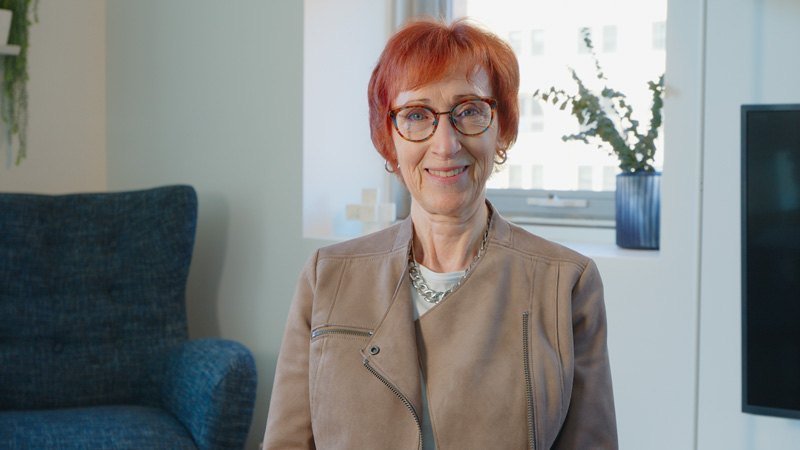
[Canadian Virtual Hospice]
In professions where physical and mental resilience are viewed as hallmarks of operational readiness, the decision to seek support can carry an added burden. The Canadian Virtual Hospice hopes that its resource can perhaps lessen the load by “destigmatizing grieving and normalizing grief.”
While much work remains to be done on an institutional level, creating a safe space for honest reflection is a meaningful step toward change.
“A lot of times,” said Cameron, “people don’t understand that what they’re potentially feeling is 100 per cent normal. It’s super uncomfortable, and we don’t like a lot of these feelings, but it’s part of the normal human experience.”
Advertisement