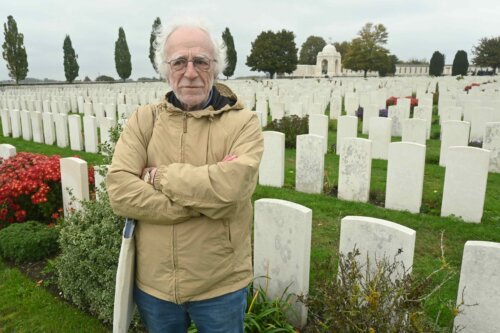



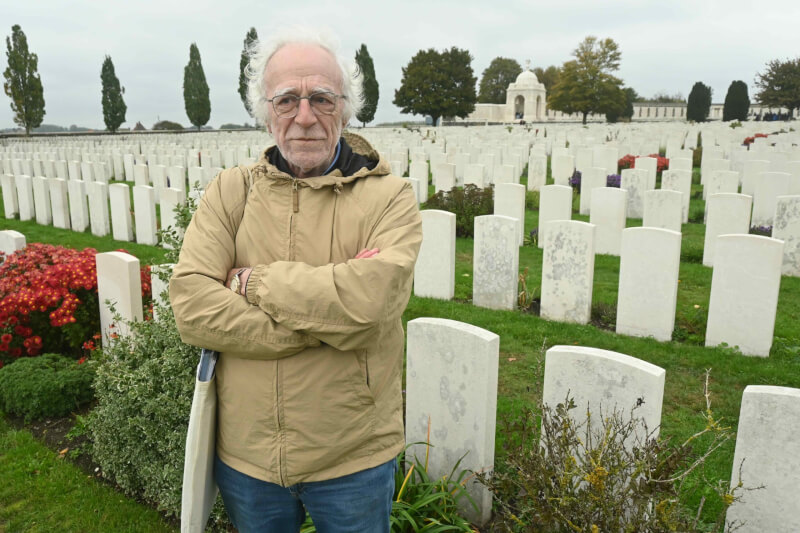
Pol Lefevre at Tyne Cot Cemetery near Ypres, Belgium. Tyne Cot holds the graves of nearly 12,000 Commonwealth soldiers who died in the First World War, including more than 8,000 that are unidentified. [Richard Foot/LM]
“Hitting a human bone sounds different,” he said. “I cannot explain it, but you can hear the difference—and feel it.”
What Lefevre discovered that day was actually three skeletons lying on top of each other—the remains of two German soldiers and one British, who died during the First World War near the Yorkshire Trench, a section of the front line from 1915 to 1917 just north of Ypres.
“We don’t know exactly how they died,” said Lefevre. “It could have been hand-to-hand fighting. Or perhaps they were trapped in an explosion.”
Although enough artifacts were found along with the skeletons to determine their nationalities, none of the three could be identified by name. All were buried in nearby German and Commonwealth war cemeteries with full military honours.
“We don’t know exactly how they died,” said Lefevre. “It could have been hand-to-hand fighting. Or perhaps they were trapped in an explosion.”
Lefevre is a 74-year-old retired banker from the Flemish town of Adegem, Belgium, not far from the Dutch border (and close to a Canadian cemetery with mostly Second World War casualties). Having finished his career and raised a family, Lefevre now devotes his time to a personal passion, Belgium’s military history—particularly the story of the First World War, which is intertwined with much of ordinary life in modern-day Flanders.
The verdant countryside here is dotted with war cemeteries. The ancient towns and villages along the old Western Front—rebuilt after being levelled by artillery during the war—stand as living monuments to Belgium’s wartime resilience.

And almost everywhere are reminders of the bustling business of war tourism: coaches loaded with foreign students on tour; ubiquitous war museums and gift shops dedicated to British, Australian or Canadian experiences; and every night a crowd of pilgrims gathers in downtown Ypres for the Last Post ceremony under the lights of Menin Gate, which bears the names of nearly 55,000 Commonwealth soldiers, including nearly 7,000 Canadians, who died in Belgium in unknown graves.
Lefevre himself works as a private tour guide, shepherding veterans and other visitors through the battle sites and monuments of the Ypres salient, where allied troops held the line against repeated German attacks.
War, said Lefevre, is “very close” to most Belgians, whose country was invaded twice in the 20th century. His grandfather was a decorated Belgian army veteran of the First World War. During the Second World War, his mother lived under occupation next to a German airfield. Growing up hearing his family’s stories sparked an interest in military history that remained with him throughout his life.
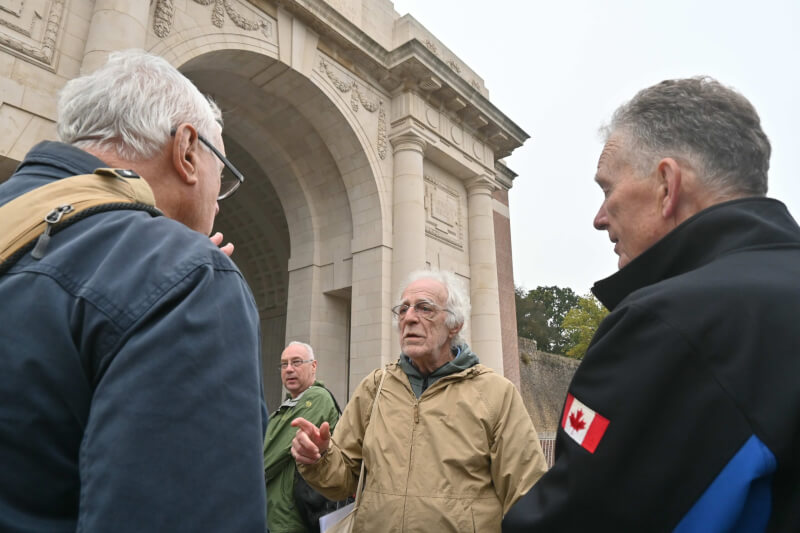
Lefevre speaks to visiting Canadian veterans last month at Menin Gate in Ypres, Belgium. [Richard Foot/LM]
In the 1990s, a farmer had accidentally discovered the entrance to a large First World War British dugout. Such finds are common across much of Belgium, but this one yielded a significant number of artifacts, from ammunition to soldiers’ boots, buttons and other items.
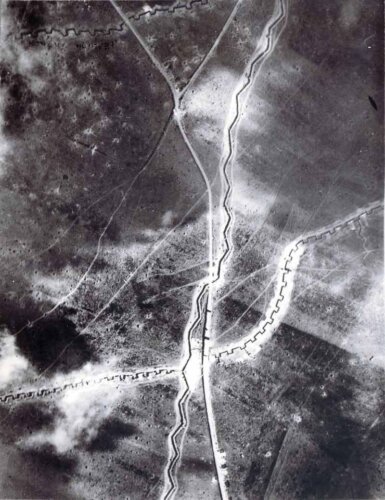
Early investigation showed the dugout was connected to a system of front-line trenches built following the first German gas attack in the spring of 1915. Initially used by French troops, this network of trenches was later expanded and was occupied for most of 1917 by British forces, including regiments from northern England who named the section the “Yorkshire Trench.”
This historical site, located on the northern outskirts of Ypres, was threatened by an industrial park development in 2000. A group of amateur archeologists known as “the diggers” stepped in to salvage what they could before the bulldozers moved in.
As the years-long construction of the industrial park proceeded around them, the diggers—granted an archeological license from the city—worked at the site on Saturdays for nearly a decade, armed with metal detectors, shovels and excavators.
Lefevre joined the dig as a volunteer in 2002, working under the direction of the group’s leader, a self-taught archeological hobbyist.
“There were critics who called us scavengers,” Lefevre said. “But mostly we had a lot of support, especially from the U.K. Sometimes even troops from U.K. regiments came over to pay us a visit on Saturday afternoons.
“We learned [how to dig] bit by bit, by reading and doing research. We worked for free—we even brought our own coffee.”
Lefevre also said the company developing the site knew there was unexploded ammunition in the ground and was happy to let the diggers find and remove as much of it as possible. Even so, in 2008, the dig was shut down by legal changes that made it unlawful for amateurs to excavate and remove artifacts or human remains from Belgium’s heritage sites.
“We learned [how to dig] bit by bit, by reading and doing research. We worked for free—we even brought our own coffee.”
“We were brought before the court,” said Lefevre. “The judge said we did a marvellous job. But we were ordered to stop.”
Years of painstaking digging, however, had produced a wealth of artifacts, many of which are now in the collection of the In Flanders Fields Museum in Ypres. With financial help from supporters in the U.K., the museum also restored a section of the Yorkshire Trench with walkways, new sandbags and interpretive signs, turning it into a historic site for the public.

A view of the restored Yorkshire Trench. [www.ww1battlefields.co.uk]
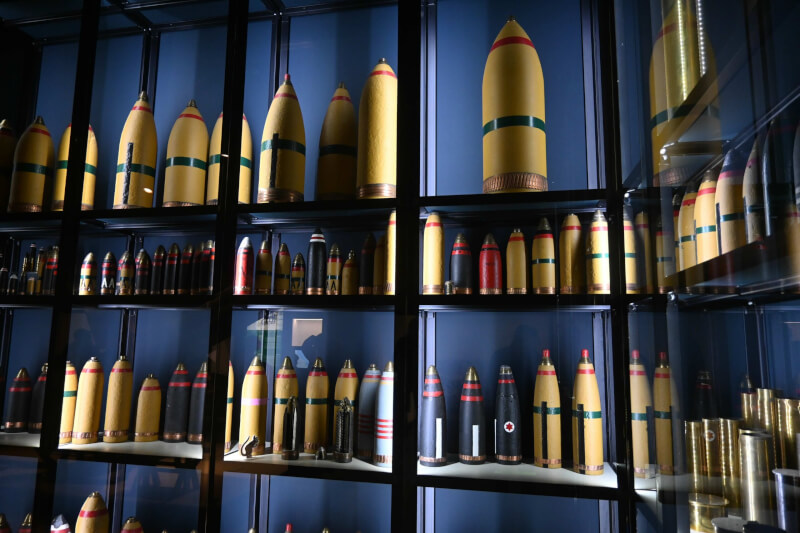
Refurbished First World War artillery and mortar shells, recovered from former battle sites in northwest Belgium, on display at the Passchendaele Museum in Zonnebeke, Belgium. [Richard Foot/LM]
Lefevre said only one of those recoveries has been identified—a French soldier, born in Algeria, who was killed or died of his wounds in 1915. His identification was only made possible because of a well-preserved ID disc found with the skeleton.
Lefevre himself found the remains of 20 soldiers in the dig.
“I can still remember every skeleton I found, and where it lay,” he said.
“It’s an emotional moment, discovering these bones. But you have to put aside your emotions and do your job. You have to be very careful, very focused. You don’t want to break anything.
“What kind of ammunition is with the remains? What kind of uniform or buttons or boots—because boots are often still preserved. Every small item that’s there with the remains can lead you to a possible identification.
“That doesn’t mean I wasn’t thinking about the person I was digging up,” he added. “Whose son could it be? Was it someone’s father? Someone’s brother? Did he suffer a lot? How many people didn’t know where he was after he died? Can we identify him to give the family a name?
“We were able to give them a respectful and peaceful final resting place in a military cemetery. That was what drove me to travel to Ypres every Saturday and try to salvage whatever I could.”
Advertisement