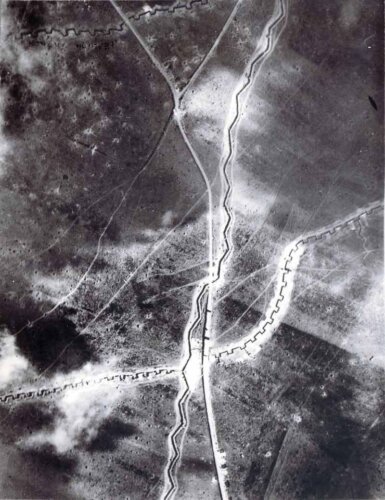



[Mitchell-Turner Air Photos/LAC/C-043992]
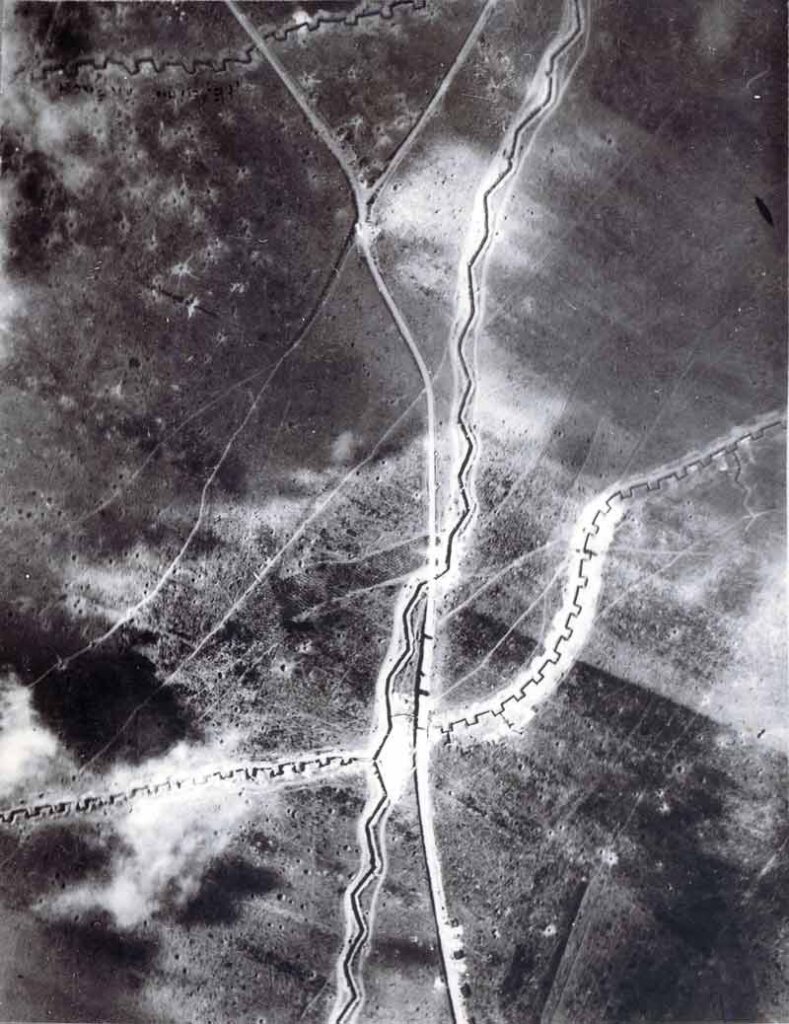
On Sept. 15, 1916, Canada won a stunning victory by taking Courcelette and holding it against repeated counter-attacks. This marked one of the few achievements for the Allies during the entire 141-day Somme Offensive. Launched on July 1 to take pressure off the embattled French army at Verdun, the Somme became a slaughterhouse for both British and German armies. By the end of September, the Somme had cost the Canadian Corps more than 10,000 casualties. Then, on Oct. 1, the Canadians were tasked with seizing Regina Trench, “that ditch of evil memory,” the main German defensive line roughly 300-500 metres north of Courcelette. This 3,000-metre-long trench spanned the entire length of Thiepval Ridge. A previous Canadian attack on Sept. 26 had been driven back with heavy losses.
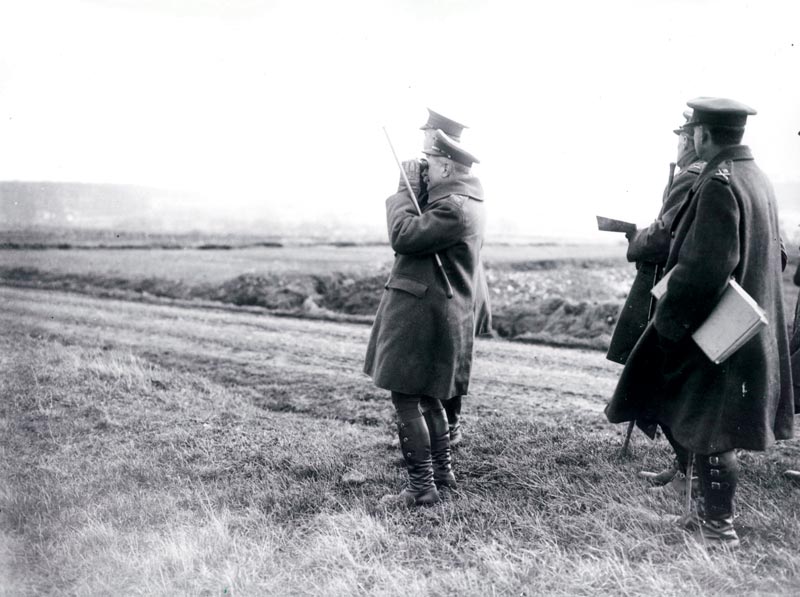
Field Marshal Douglas Haig and Major-General Arthur Currie (centre) survey a Great War battlefield. [DND/LAC/PA-004667]
After that failure, British Expeditionary Force commander, Field Marshal Douglas Haig, allowed no pause. He ordered a renewed attack so the ridge could serve as a jumping-off point for a mid-October offensive, which, all together, became known as the Battle of Ancre Heights.
Regina Trench lay just over the spur of Thiepval Ridge, making it an almost impossible target to strike accurately with artillery. Before it stood thick bands of concertina wire. To the rear, a deep ravine and sunken road network made it easy to supply and reinforce. A fresh German Marine Infantry Brigade from the Naval Corps provided its garrison.
With strong defences on either side of the ridge, the Canadians’ only option was a frontal assault. Regina also loomed over British lines; any attack in that sector would fail if the trench wasn’t taken beforehand. British Lieutenant-General Julian Byng, who commanded the Canadians, recognized that nothing short of a miracle could bring success. Leading the attack would be 2nd and 3rd divisions. Their respective commanders, Major-General Richard Turner and Major-General Louis Lipsett, argued that the trench’s defences were too strong for their dwindling and exhausted troops to overcome. Byng’s immediate superior, General Hubert Gough, insisted the attack proceed immediately.
Winning Courcelette had left Turner’s 2nd Division fought out. However, Byng ruled there was no time to relieve it with another Canadian division. Turner believed the artillery fire plan would fail to cut the wire and could even miss the trench. Disaster seemed foretold, especially given his division’s 4th and 5th brigades were the main assaulters and needed to advance directly north from Courcelette’s ruins. To the left, 3rd Division’s 8th Brigade would be in support. The 25th Battalion commander was told the attack must succeed at “all costs.”
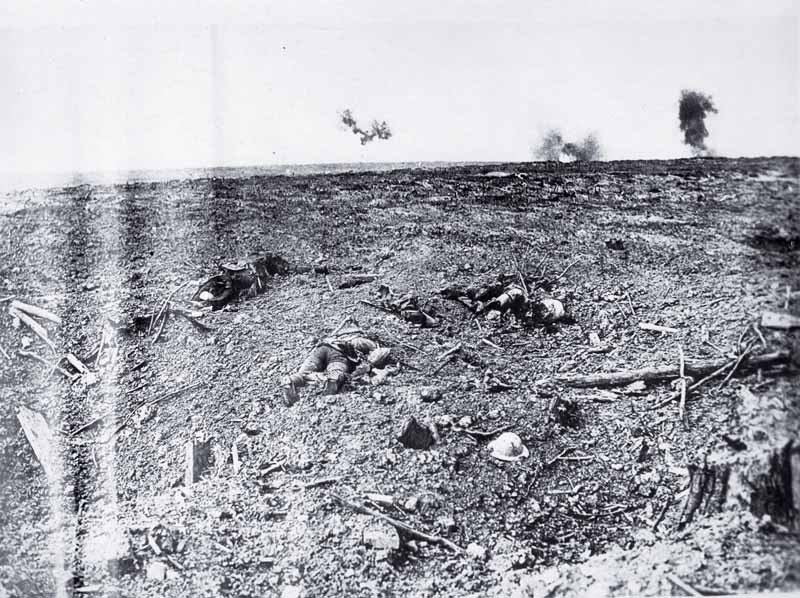
No man’s land in the vicinity of Regina Trench. [LM Archive]
In the days leading up to Oct. 1, artillery hammered Regina Trench’s defences. But patrols detected no signs of the wire being breached. Every potential line of access terminated in a dead-end killing zone. As zero hour at 3:15 p.m. approached, the first wave prepared to go over the top. A cold drizzle fell. The artillery fire rose to a crescendo. Yet, nearly the entire storm of shells fell behind the trench, while a few errant guns dropped rounds on the Canadian front position. Private Albert Fowlie remembered his company commander sending a message to the rear to stop the guns from firing on them. The response: “We can’t stop the guns. The wire has to be cut.”

Whistles blew and the Canadians advanced. Lance-Corporal Ralph Garfield Flemons recalled seeing men immediately fall. “The others would keep on going, going, going, just as though they were on parade, rifles at the trail, and walking, not running…so calm and collected. I thought that was the most glorious thing.”
Lieutenant-Colonel Edward Hilliam commanded 5th Brigade’s 25th Battalion. His task was to win Kenora Trench, then leapfrog through to Regina. “To do this I had 200 all ranks and 12 [machine guns],” he reported after. He should have been leading about 800 men. The first two waves reached Kenora and drove on to Regina only to be halted by the wire. By then, just 30 men remained. Unable to get through, they took cover in shell holes and waited until nightfall to retreat.
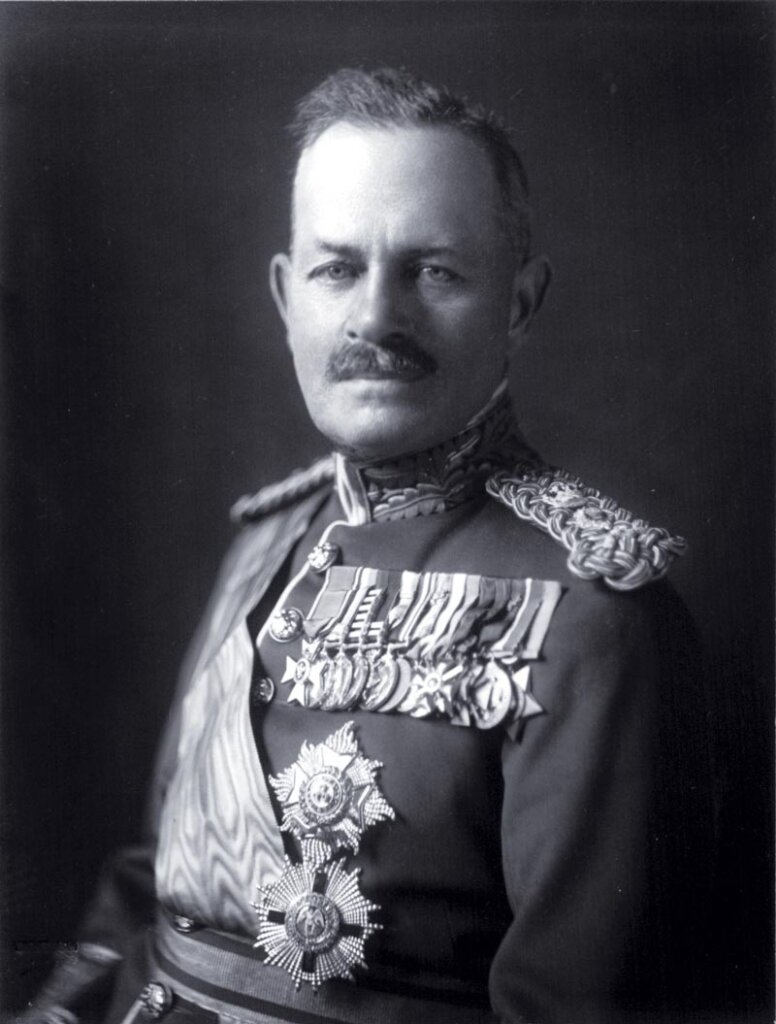
Lieutenant-General Julian Byng. [British Library/Wikimedia]
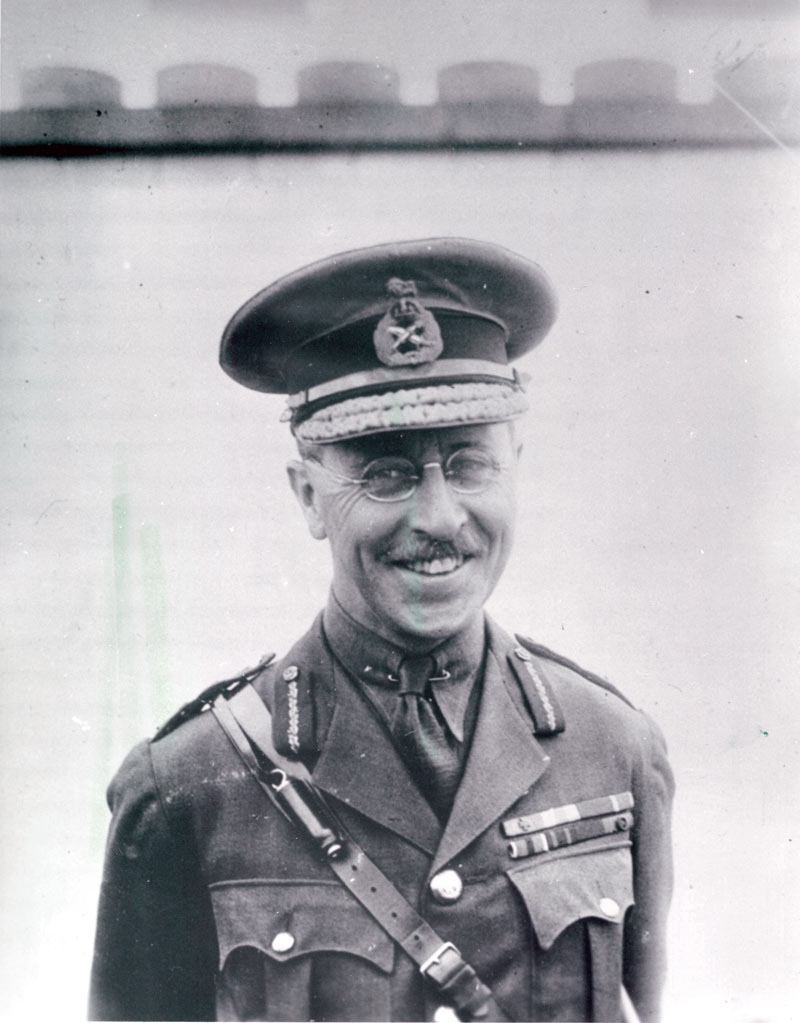
Major-General Richard Turner. [DND/LAC/PA-006315]
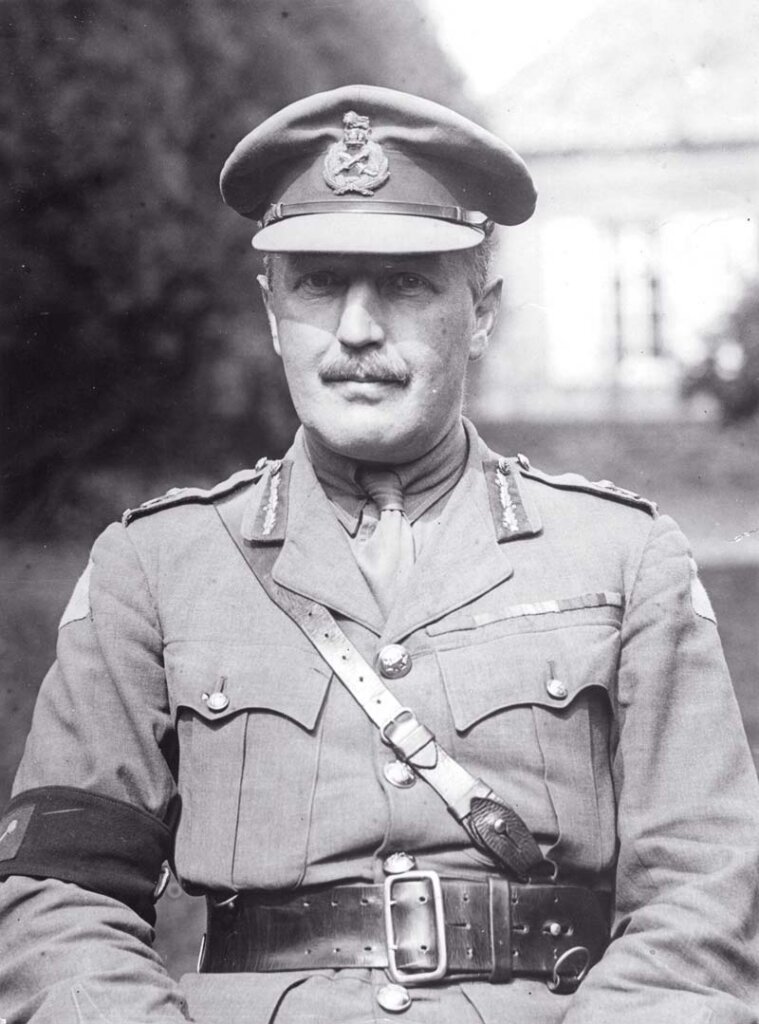
Major-General Louis Lipsett. [LM Archive]
Every potential line of access terminated in a dead-end killing zone.
To the left, 24th Battalion met a similar fate trying to secure Kenora and its junction with Regina. One company made the objective but was then cut off and annihilated by counterattacking marines. Left of 2nd Division, 3rd Division’s 8th Brigade was also slaughtered, with most men falling while trying to get through the wire. One 5th Canadian Mounted Rifles company gained the trench only to be driven back, while the adjacent company was halted inside the wire and torn apart by machine-gun fire. All but 15 men in the wire were killed or taken prisoner.
By nightfall, Kenora was controlled by the Canadians, but Regina remained unscathed and unreachable. The artillery’s inability to destroy its protecting wire had made succeeding incredibly difficult. Artillery in 1916 couldn’t deliver the precision fire required for a target hidden behind a ridge. Artilleryman D.C. Higgins said later, “We knew, at that time, that you could not control your battery with any accuracy…. The guns were wearing very rapidly and very badly…the ammunition was a bloody mess.”
Multiple fuse types, different powder charges and a flawed resupply system that delivered rain-drenched munitions created countless issues.
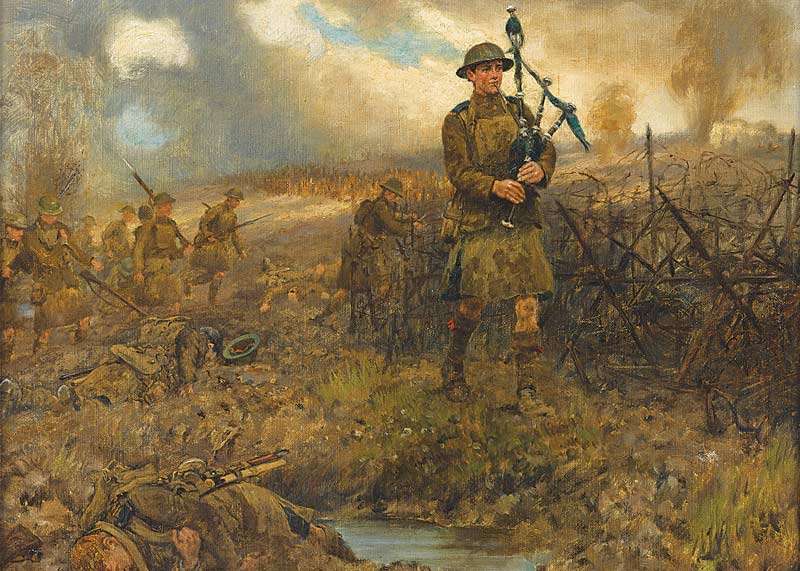
Artist James Prinsep Beadle depicts Piper James Richardson rallying his men during the Regina Trench offensive. [James Prinsep Beadle/Bagpipe News]
In the aftermath, Haig blamed the Canadians for not capturing Regina Trench, despite the task being clearly unachievable by the forces at hand.
“I think the case was that in the hope of saving lives they attacked in too weak numbers,” wrote Haig. “They have been very extravagant in expending ammunition! This points rather to nervousness and low morale.”
A pause followed due to dreadful weather and the need for some semblance of reorganization. Byng switched out 2nd Division with 1st Division. Both Canadian and German artillery raked the battlefield. Patrols continued to report that neither the wire nor the strongpoints were suffering much damage. Major-General Arthur Currie of 1st Division implored the corps headquarters’ artillery staff to make the guns work. Taking aside British Major Alan Brooke, who would rise to chief of the Imperial General Staff in the Second World War, Currie said, “I want you to realize how much depends on the guns: my boys haven’t got the kick in them which they had; I look to the guns to put them in Regina Trench.”
The corps responded with thousands of tons of metal. Yet accurately targeting the trench remained next to impossible.
At 4:50 a.m. on Oct. 8, eight battalions of 1st and 3rd divisions advanced. Currie’s 3rd and 4th battalions of 1st Brigade were devastated on the far-right flank. Together, each lost more than 60 per cent of their troops, either killed or wounded. To the left, 3rd Brigade’s 13th and 16th (Canadian Scottish) battalions were blocked by the wire and slaughtered by machine-gun fire. The 16th’s 20-year-old Piper James Richardson strode along the line playing his pipes to rally the men. Reinvigorated, about 100 fought through to the trench. Afterward, Richardson set his pipes aside to retrieve the wounded and, upon returning for his instrument, was never seen again. He was awarded a posthumous Victoria Cross for his actions. The attack ultimately failed with only about 75 Can Scot survivors being forced back from Regina Trench.
For 3rd Division, the story was the same. Its four battalions were chopped apart before the wire barriers. Only 7th Brigade’s Royal Canadian Regiment gained Regina Trench, but it was driven off after three counterattacks. Just 140 soldiers made it back. All told, the Oct. 8 attack cost 1,364 casualties with another 1,324 killed or wounded in the days leading up to it. The Canadian Corps was done with the Somme; of its 65,000 men, nearly 20,000 had become casualties.
As the corps marched away from the ruins of Courcelette, more Canadians arrived to be thrown against Regina Trench. The 4th Division had been recently deployed to the Western Front and assigned to 2nd British Corps. Its 72nd Battalion paused to cheer the 16th Battalion coming out of the lines. Private Howard Hines was excited because his militia reserve regiment had been divided between the 16th and the 72nd when the war began. Hines was about to offer his praise, when “we saw them coming around the bend of the road. There was no cheering. There wasn’t 100 men in the whole outfit.”
It was mid-October. Rain and cold darkened 4th Division’s all-too-clear situation. They moved into the trenches Canadian Corps had left behind and saw the makeshift cemeteries and graves of their countrymen strewn about. Nothing offered much hope.
The Canadian artillery had remained behind and aligned its guns alongside those of 2nd Corps. German artillery responded in kind and soldiers died on both sides. An Oct. 21 order to the 11th Brigade gave them their objective: gain a 550-metre toehold of Regina Trench. At 12:05 p.m. the attack went in behind what survivors described as a “perfect barrage.” The 87th Battalion was in the centre and its soldiers—like all the others—waded through waist-deep mud toward the trench. Surprisingly, the Germans offered little of their former resistance. When the 87th reached the trench, it was almost flattened by what had been devastating shellfire. Only mangled corpses and dazed Germans remained. The attack was over in about 15 minutes.
If there was one certainty in this war, it was that counter-attacks would follow, and these were beaten back in turn. The Canadians—supported by 500,000 artillery shells—drove the Germans off. This success prompted a second offensive four days later to take the part of trench that had eluded 1st Division on Oct. 8. It failed.
Another reorganization and a weather-dependent attack followed. On Nov. 10, three 4th Division battalions attacked under a full moon at midnight. Thousands of tons of artillery shells had been pounding Regina Trench for months. In some places the trench had been reduced to mere dips in the ground. During the advance, C. Swanson recalled entering a trench “literally filled with bodies of the 16th Canadian Scottish, and the only way we could get through…was walking on top of them or climb over the top, which wasn’t permissible. It was too hot. The machine-gun fire was terrific. It was rather sickening to begin with, but an old-timer said, ‘You might as well step on them. You can’t hurt them anymore.’ So that was our baptism.”
The Canadians kept going. It helped that the battalions were fresh and at full strength. And the Germans, seemingly caught by surprise, folded. They left behind 50 dead and about 90 prisoners.
There would be one more Canadian attack in the Somme that year: a Nov. 18 drive out of Regina Trench to take Desire Trench. The result was mixed, with counterattacks driving back some while others held.
And then it was over. The Canadians were relieved and left the Somme. Behind them were 20,000 casualties from the Canadian Corps and 4,311 more from 4th Division. There was no victor in the Somme. A measly 9.5-kilometre advance yielded a total of 432,000 British and Commonwealth casualties, 204,000 French and an estimated 500,000 German—more than one million soldiers slaughtered. The Somme Campaign will forever serve as a symbol of the futility of war.
Haig would thereafter be condemned for having embraced a strategy based on attrition, literally trying to kill more of them than us to break the stalemate of the Western Front. On the sidelines, the French had pushed the offensive as essential to their survival. The validity of this is debated endlessly. Realistically, however, with October and its dreadful weather reducing the battlefield to an ungodly quagmire, Haig should have ceased the campaign. The year of 1916 was one of blood.
Those Canadians who survived left the Somme cut to the bone. But they emerged stronger and with a growing sense of national pride that would fully come to fruition in 1917 at a victory etched in Canada’s history: Vimy Ridge.
The Canadian Corps was done with the Somme; of its 65,000 men, nearly 20,000 had become casualties.
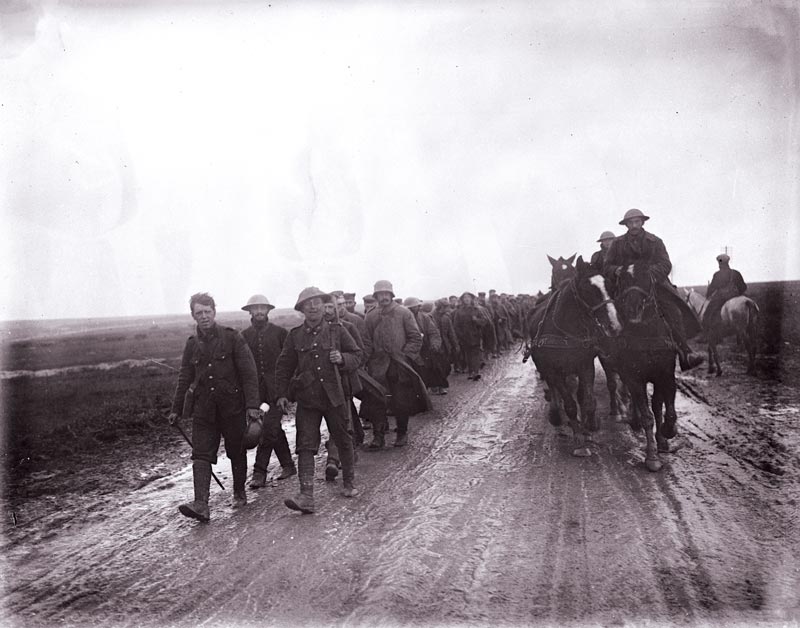
Germans captured during the storming of the trench are escorted to the rear. [DND/LAC/PA-000825]
Advertisement