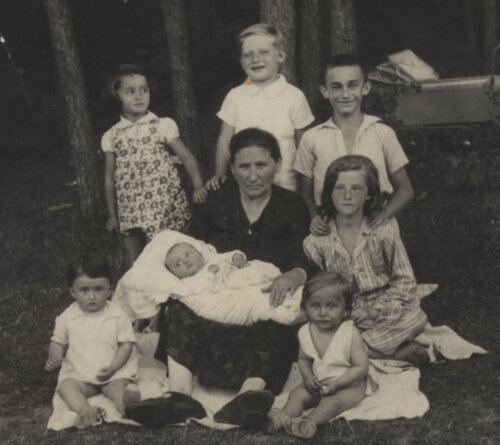

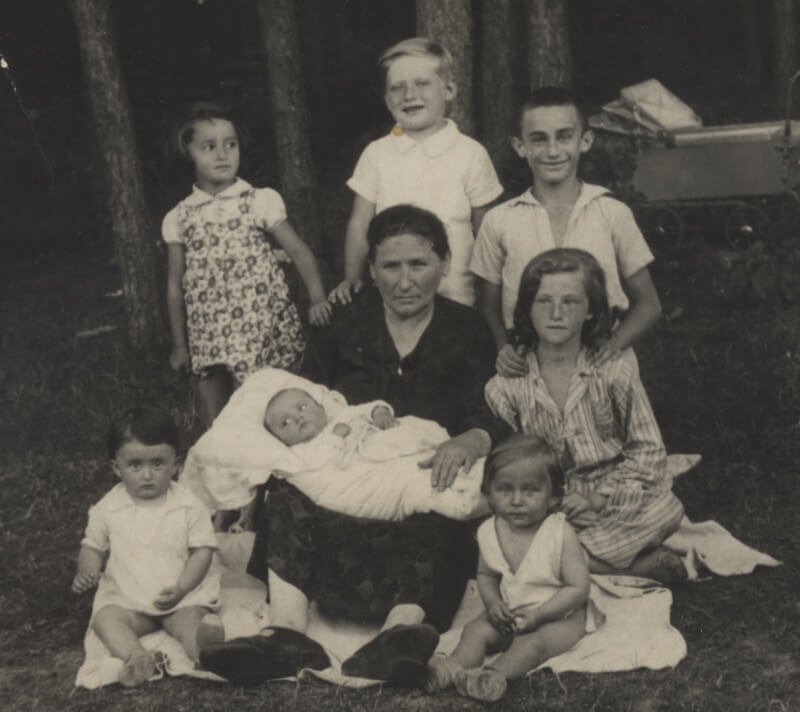
Rose Lipszyc as a girl (far right, middle row) with her maternal grandmother, siblings and cousins in Lublin, Poland, in 1938 before the outbreak of WW II. [Courtesy Toronto Holocaust Museum]
Judy Weissenberg Cohen and Rose Lipszyc, survivors of the Holocaust, died last month in Toronto. Both were 97—two remarkable women whose experiences illustrate not only the depths of darkness that humanity can reach, but also the light that can emerge in its wake.
Each was a reminder of why Canada was right to fight the Second World War, and of the risks in forgetting its lessons.
Cohen was born in Debrecen, Hungary, in 1928, the youngest of seven siblings in a large Orthodox Jewish family. The early years of the war were difficult but not impossible for Hungarian Jews. That changed in March 1944 when the Germans occupied the country and, as Cohen once wrote, “the Holocaust, with all its horrible ramifications, began for us.”
Cohen and her family were forced from their home into the Debrecen ghetto and required to wear yellow Stars of David. A month later, they and hundreds of others were rounded up and stuffed into railway cattle cars. After three days, they arrived at Auschwitz-Birkenau, the infamous concentration camp in Nazi-occupied Poland.
Sixteen-year-old Cohen and her sisters were separated from their brothers. Their parents, Margit and Sandor, along with their sister-in-law Magda and her 18-month-old son Peter, were immediately murdered in the gas chambers—where more than one million people would ultimately die at Auschwitz.
Cohen and her three older sisters were kept alive and together for a time, crowded into barracks with thousands of other women, their heads shaven, their clothing filthy and their food rations meagre. Cohen was later taken from her sisters and relocated to the Bergen-Belsen concentration camp in Germany.
Terrified to be alone, she found company and solidarity with two other Hungarian prisoners who became her “camp sisters.”
“I needed to know that someone cared whether I woke up in the morning or not,” she wrote.
She was eventually moved with other young women to a labour camp, where she was put to work in a German aircraft factory. The labour was hard, but living conditions were better than in the death camps.
“I needed to know that someone cared whether I woke up in the morning or not.”
Near the end of the war, as Germany began to crumble under Allied assaults, the hundreds of factory slaves were forced into a death march to nowhere. For two weeks, they marched aimlessly along German highways without food, water or shelter, escorted by Nazi SS guards, who randomly shot some of the women at night. Others died from starvation on the roadside. In early May 1945, Cohen and a group of women found shelter inside an abandoned stable. They were woken in the morning by a local German civilian who informed them: “Freuleinen—you are all free to go!”
With the war over, Cohen found her way home to Hungary and eventually reunited with one surviving sister and one brother. She was recruited by a Canadian garment commission that was touring postwar Europe, seeking workers for the country’s clothing industry. With a job offer in hand, she immigrated to Montreal.
Cohen later met and married Sidney Cohen, with whom she moved to Toronto and raised two children—trying to put the horrors of the Holocaust behind her, in order to build a new life.
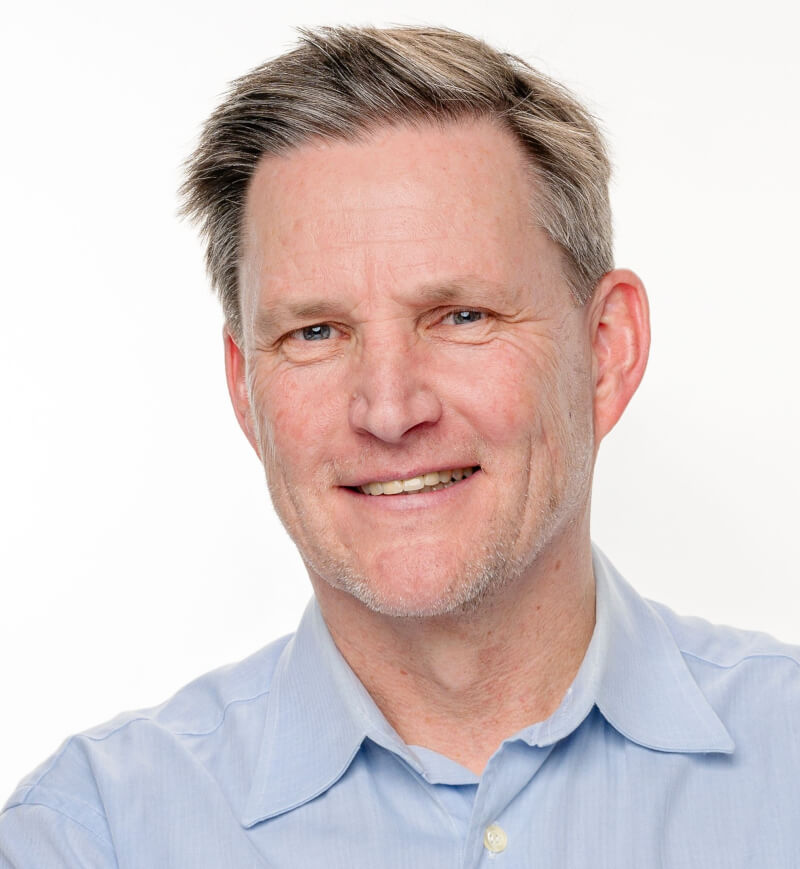
After the war, Judy Weissenberg Cohen immigrated to Montreal then settled in Toronto. She shared her story of survival at schools and universities, the Toronto Holocaust Museum and others. [Azrieli Foundation]
As Lipszyc’s mother Dvorah walked along the road with her 13-year-old daughter and two young sons, she turned to Lipszyc and whispered: “We are being taken to our deaths! The only hope that one of us will survive is in you…. If you survive, I will survive, because a part of me will live on in you. I have to put all my faith in you.”
Because Lipszyc’s young brothers were circumcised, they would not be able to hide their Jewish identity. But Lipszyc’s blue eyes and blond hair meant that she had a chance at escape. Dvorah manoeuvred her daughter to the back of the line of marchers, where, without any guards noticing, she quietly edged her child away onto the side of the road, leaving her there alone. The ruse worked. Lipszyc pretended to simply be a curious Polish child, standing on the roadside watching as the Jews marched by.
“We are being taken to our deaths! The only hope that one of us will survive is in you.”
Lipszyc never saw her father, mother or brothers again. All were murdered in the concentration camps.
Lipszyc survived by disguising her identity. She connected with her aunt, and the two spent the remainder of the war posing as a pair of Catholic sisters. They were sent with other Polish women to the German city of Bremen, where they worked as forced labourers for the Nazi war effort. Lipszyc said her biggest fear at that time wasn’t the Germans, but being discovered and outed as a Jew by her fellow Poles.
In 1949, Lipszyc married another Holocaust survivor, Jakob Lipszyc. They immigrated to Canada in 1952 and raised three children.
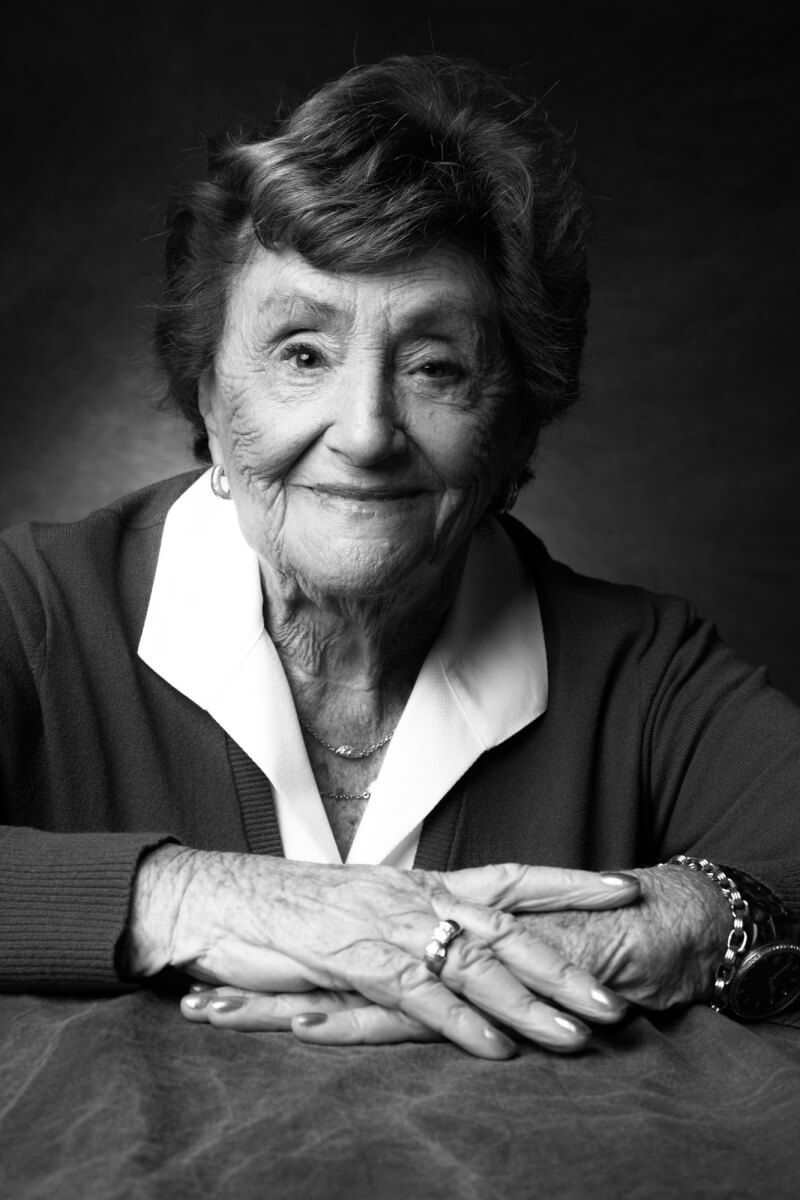
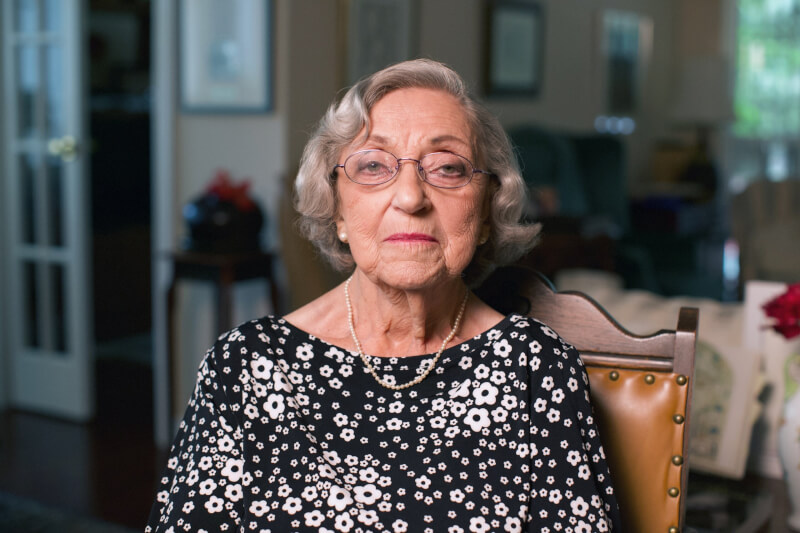
Holocaust survivor Rose Lipszyc shared her story with students and became a vocal advocate for remembrance and tolerance. [Yuri Dojc for the Toronto Holocaust Museum, 2015]
“After the war, I was afraid of revealing my identity to people. For years, I wouldn’t want to outright admit to someone that I was Jewish,” said Lipszyc. “I’m ashamed of myself for doing it, but the fear never really leaves you.”
In their retirement—after raising families and finishing their careers—both women separately became volunteer educators and advocates of Holocaust remembrance.
Cohen spoke in schools and at universities across North America. She worked with the Toronto Holocaust Museum and escorted students on educational trips to Poland and Israel as a survivor-facilitator. She wrote and recorded an audiobook memoir and created a website—Women and the Holocaust—to provide space for women’s perspectives and experiences.
Lipszyc also became a vocal advocate for remembrance and tolerance. She was one of three people profiled in the 2019 documentary Cheating Hitler: Surviving the Holocaust. She was an active public speaker, telling her story in schools and forging a strong connection with teenage girls, who were captivated by the story of what she faced as a 13-year-old.
In 2022, Lipszyc was invested into the Order of Canada. The citation recognized her years of work with young audiences, “inspiring them to defy racism and oppression, and to become agents of social change.”
Before Cohen and Lipszyc died, they pleaded with Canadians to be vigilant about the presence of fear and hatred in society.
Such signs and sentiments are all too common today, not only across the globe—including in Germany itself, where political support for far-right extremist movements is growing—but in Canada, as well.
They pleaded with Canadians to be vigilant about the presence of fear and hatred in society.
Last month, members of a white nationalist group, wearing black uniforms with white masks, marched on a First Nations reserve near Kamloops, B.C., for the purpose of intimidating residents.
And in Belleville, Ont., a few days earlier, a synagogue was attacked by a gunman during a Yom Kippur service.
Constable Jeff Smith, the Belleville cop on duty at the synagogue—stationed there because Jewish places of worship now routinely require police protection—was hospitalized with multiple gunshot wounds after stopping the attacker from entering the building.
It’s hard to comprehend such things occurring in Canada today, knowing what Cohen and Lipszyc witnessed so many years ago—and knowing that 43,000 Canadians died fighting to defeat the Nazis and their ideology.
As Cohen once told her audiences: “The struggle to keep this world safe, just, equitable and peaceful for all is never ending. In my own small way, I am too trying to work for Tikkun olam [repairing the world]. Won’t you do the same?”
Advertisement