




Tanks and infantry advance through the ruins of Ortona. [LAC]
It was 1998 when anthropologist Ian Cosh embarked on the trip of a lifetime. The researcher had learned that a reunion of Canadian Second World War veterans, old soldiers of Italian battlefields, would soon meet former enemies at the revered site of Ortona.
It was there in December 1943 that an immense struggle had transformed a once-sleepy, largely unknown town into a sea of rubble, a devastating urban battle long etched into the minds of many aging attendees. Fifty-five years later, the veterans were returning to a scene of lingering wounds.
Cosh would be there to witness it. No stranger to Italy himself, having spent several formative years discovering the country, Cosh quietly observed. He saw the reconciliatory nature of the proceedings, sensed the inner reflections of those who had long ago traversed Ortona’s streets. But he also wondered if there could be something else beneath the surface.
It took several years of veteran interviews for Cosh to find his answers, now published in Ghosts of Ortona: Reckoning with the Traumas of Canadian World War II Veterans.
Rather than a blow-by-blow account of an already well-examined battle, Cosh takes a decidedly anthropological route, examining how veterans remember—and misremember—a clash once dubbed Little Stalingrad.
Here, Cosh offers a brief insight in a Legion Magazine exclusive.

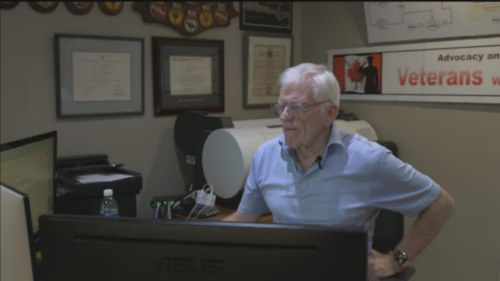
Anthropologist Ian Cosh. [Sutherland House Books]
On interviewing Ortona survivors
When I got back to Canada [after the 1998 reunion], I had made connections with some of the veterans, especially those in Edmonton. I flew out there the following November, stayed for a few weeks, was introduced to veterans at the Legion, and did the first set of interviews.
The following summer, I bought a used car and drove across Canada to meet different people. I got so interested in learning and collecting more of these veteran stories that it became a bit detrimental to my own academic purposes.
I probably did way more than I needed to in terms of writing a dissertation on the topic, but while I was doing that, something more was going on than just collecting stories—I just couldn’t put my finger on what it was at the time.
On his initial assessments
I hadn’t necessarily set out to have in-depth conversations with these men, but that’s what I ended up doing. Many were sharing stories about things they had rarely talked about before. In the process, I was encountering symptoms of very extreme emotional distress. That often led to narrative confusion—for both teller and listener.
The veterans, for example, weren’t always providing context—and maybe they didn’t realize that because they, too, were getting lost. These were experiences that were clearly very troubling, that they had perhaps never previously tried to narrate—even to themselves—because they had tried to put many of those experiences behind them. Some stories lacked coherence as a result.
I was in my early 30s at the time, so not necessarily young, but I also didn’t know much about the emotional and psychodynamic difficulties in storytelling, so I didn’t fully grasp what I was experiencing while listening to them. I did figure it out enough to write and defend my dissertation, but then I packed it all away, partly because I had struggled with it for so long. I needed a break from it.
There’s been so much more that I’ve discovered since going back to it over the last two years.
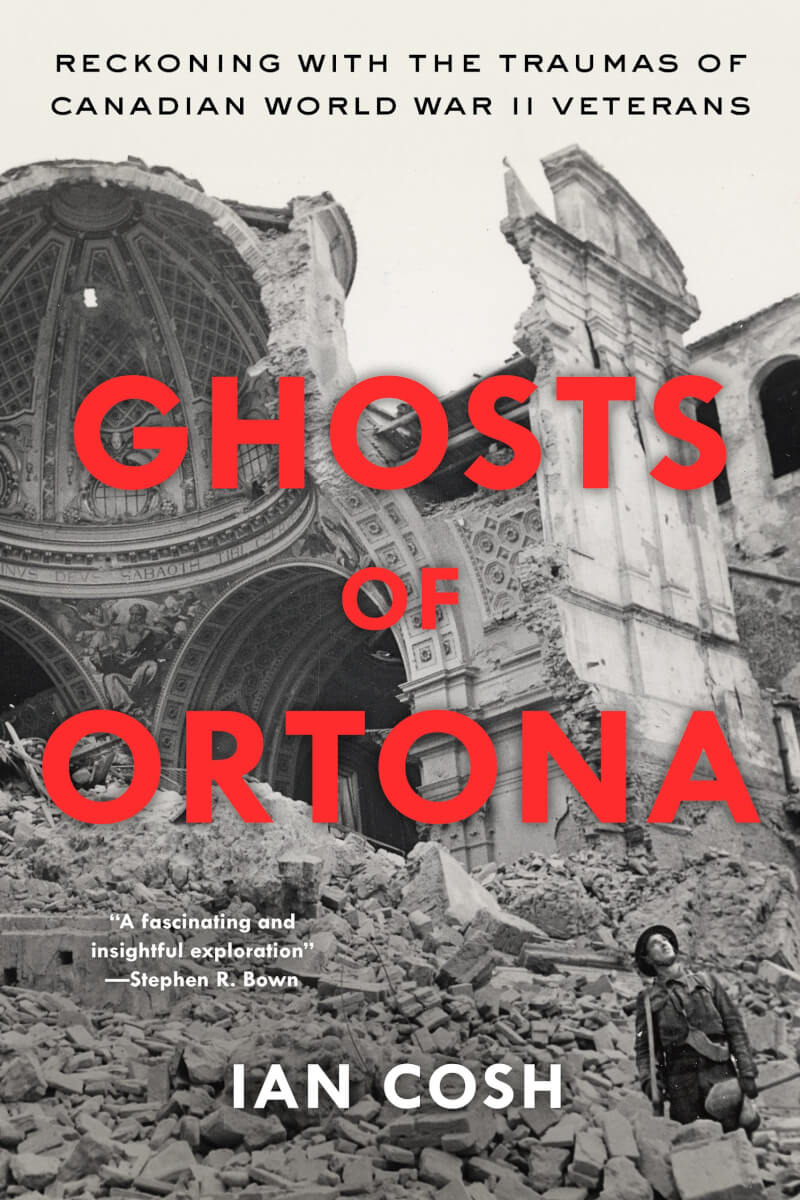
Anthropologist Ian Cosh’s new book Ghost of Ortona. [Sutherland House Books]
On returning to his studies
When writing an academic dissertation, even in anthropology where the discipline is quite open to more humanistic narratives, it still has to be an intellectual work. That framework can limit you in terms of how much you can humanize people, which is partly why writing my new book was important to me: to do just that.
I want readers to get a sense of these men as people beyond their veteran status, to understand the role that war plays in a soldier’s life when they’re no longer wearing the uniform. It’s not only about how they remember their experience, it’s what place that memory occupies in their life.
On documenting memory versus strict historical accuracy
It’s interesting to see how something is remembered and how meaning is derived from that memory, regardless of how accurate it might be.
Veteran Ted Griffiths—who organized the 1998 reunion—said that every man had his own war. What he meant was that you could talk to two guys who had been beside each other in combat and they would tell you completely different things about what happened.
Ted himself had a very traumatic experience in Ortona, which he believed happened on Christmas Day 1943, but when you look at the war diaries and other records of the time, it’s not as clear that that event happened on that date. Despite that reality, if someone like Ted thinks that happened on Christmas Day, that’s obviously very meaningful. It suggests to us why it troubled him so much.
It’s also Italy, so there are lots of churches, even in a dense urban environment. I think that too contributed to some of the moral disorientation and moral uncertainty that some of these veterans carried through their lives.
There are different ways of writing military history, many of which rely on absolute historical accuracy, and that’s obviously an important approach. But that doesn’t have to be the only approach. This book is much more about personal and emotional meanings to these events that stayed with these men—in one way or another—for many decades.
This interview has been edited for brevity and clarity.
Advertisement




As an author, I can relate to a story that has taken a very long time for its narrator to find its focus and finally write about it. This article does a great job of capturing the essence of that journey and provides a tantalising glimpse of what the book is about. That said, I wish this was another two-parter interview from Alex. It’s a great story and I want to know more!