

For veteran Jim Lowther, service didn’t end when he took off his uniform for the last time.
“It was the best job I ever had,” Lowther explained of his 15-year military career as a cook—or “culinary commando,” as it’s often called in the Canadian Armed Forces. But after an injury forced him out, “I was kind of lost,” he said.
Nevertheless, the soldier raised in Cumberland County, N.S., ultimately walked a new path with the help of a “great psychiatrist” and his wife, Debbie, who convinced him to “get into the community and volunteer,” he said.
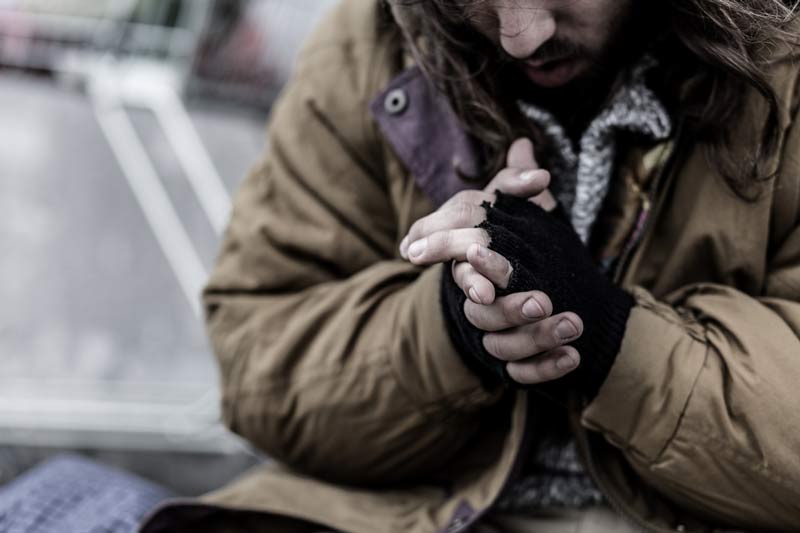
Lending a hand at a homeless shelter, however, he soon encountered someone he had served with. “I went over and spoke to the guy,” Lowther noted, “and I quickly realized that he was a homeless veteran, and he pointed out three other homeless veterans. I was gobsmacked—I didn’t know what to do.”
That may have been the case initially, but no longer. In 2010, the Lowthers co-founded the Veterans Emergency Transition Services—or VETS Canada—in Halifax. What started out as a small grassroots group has since evolved into a nationwide, volunteer-led registered charity, delivering face-to-face, online and telephone assistance to veterans at risk, in crisis or experiencing homelessness.
From providing temporary shelters and household items to covering rent and utility bills, VETS Canada supported nearly 3,200 former service personnel—including eight residing outside of Canada—between Jan. 1, 2018, and Aug. 31, 2025. “Our intention was never to create a charity,” said Debbie of the venture. “We thought we would just help some veterans in our own community. But things just sprouted legs and took off.”
Food is another essential aspect of the services provided by VETS Canada, more so after the COVID-19 pandemic forced the closure of their Ottawa centre (a second facility in Edmonton ceased operations after changes in government funding). Such challenges became increasingly evident from 2022 onward, when, said Debbie, “we spent over $170,000 across the country just on grocery cards [for veterans]. And then the following year, we spent more than double that amount.”
At their Nova Scotia-based headquarters, the Lowthers recognized that they could go further still in offering support. Thus, in March 2025, the couple and their team opened the charity’s first pantry at its Halifax-Darthmouth site, “realizing that food insecurity was becoming a really big issue,” noted Debbie.
The recent initiative operates on a grocery store model and credit system in which visiting veterans are given a select number of monthly credits based on the size of their household. “They grab a shopping cart and walk through and take anything they like. Everything is labelled with the number of credits [it costs],” said Debbie.
Acknowledging the broadly unaddressed stigmatization of food banks, as well as the justifiably widespread nature of veterans’ privacy concerns, the scheme currently maintains an appointment-only practice “to give them a little more dignity” without any worry of bumping into familiar faces. In doing so, the pantry had aided about 112 former personnel at the time of writing. “If we get busier,” conceded Debbie, “we may not be able to do it like that anymore.”
Amid an ever-worsening cost-of-living crisis—one felt acutely by veterans at risk and experiencing homelessness—the organization is already planning how to accommodate the anticipated influx. Additional programs, including a provincial delivery service, are in the pipeline, with drop-off points “so we can actually hit the whole province,” Jim highlighted. “It’s like a military exercise.”
Beyond providing the food, VETS Canada also intends to show its beneficiaries how to make the most of it. “We have a brand new kitchen downstairs [at headquarters], so we’re going to offer classes,” said Jim. The culinary commando himself will lead the cooking workshop, sharing space with other initiatives, from their Guitars for Vets program to financial literacy seminars.
The VETS Canada team does what it can to feed hungry mouths, although the organization has encountered a 47.7 per cent decline in financial contributions since 2024, said Debbie. The pantry scheme itself has benefited from local businesses—another food bank among them—for some stock donations, together with its own purchased goods. Curious people driving by or walking past the building also stop in to see what they’re about.
“I quickly realized that he was a homeless veteran, and he pointed out three other homeless veterans. I was gobsmacked—
I didn’t know what to do.”
“Between 70 to 80 per cent of the people that come here and go down to see the pantry come back with a food donation. They’re blown away by it.”
Despite this, what the Lowthers hope for above all else is greater government involvement—both in terms of the funding the organization receives and the fundamental willingness of politicians to serve those who have served. “You know, we get a pat on the back on Remembrance Day,” said Jim, but the political will to help “is really lacking in Canada.”
Debbie, meanwhile, granted that the federal government’s 2025 announcement of CAF pay raises was a “good first step,” lamenting that “we have members still serving that are accessing the food pantry, and that just shouldn’t be.”
“The general public thinks that veterans are well taken care of. And why shouldn’t they think that?” she continued. “You put your life on the line to serve your country, you think that when you’re finished, your country is going to look after you.”
“I thought that when I was in uniform in Bosnia,” agreed Jim. “Thinking that if anything happens to us, we’re good to go. We’ll be looked after. We didn’t know until after. Until you work with veterans who are injured, who have to fight for their pensions. [Veterans who] get released from the military for an injury, and then have to fight Veterans Affairs to get compensated for that injury.
“I suppose it is what it is, though. We just try to do what we can. We quietly do the work.”
Advertisement