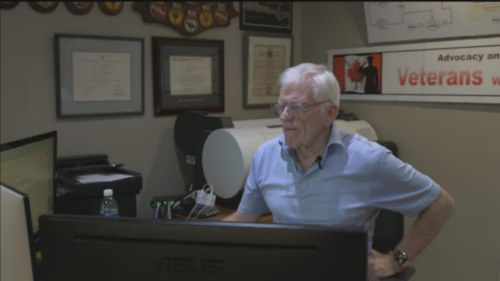




British military expert and archeologist Stephen Fisher. [Stephen Fisher]
In the heat of battle, mistakes are made.
The annals of history brim with instances where chaos has bred even greater chaos, where the fog of war can cloud the judgement of those on the ground. Nor are such fateful miscalculations the only consequence of combat-induced confusion. As arrows or bullets pour into ranks, as careful orders are drowned out by a cacophony, and as soldiers fight by instincts that consume headspace, post-engagement recollections falter or differ significantly between witnesses.
Memories fragment like shrapnel. It is thus the role of historians to pick up the pieces, to interpret these echoes in time, and when the evidence permits, to draw their own conclusions on what exactly happened—and when.
British military expert and archeologist Stephen Fisher knows the struggle well. In researching and writing his 2024 book Sword Beach: The Untold Story of D-Day’s Forgotten Victory, he encountered many a first-hand account that produced far more questions than answers, forcing him to dig deeper into the records to corroborate or—with regret—set aside testimonies.
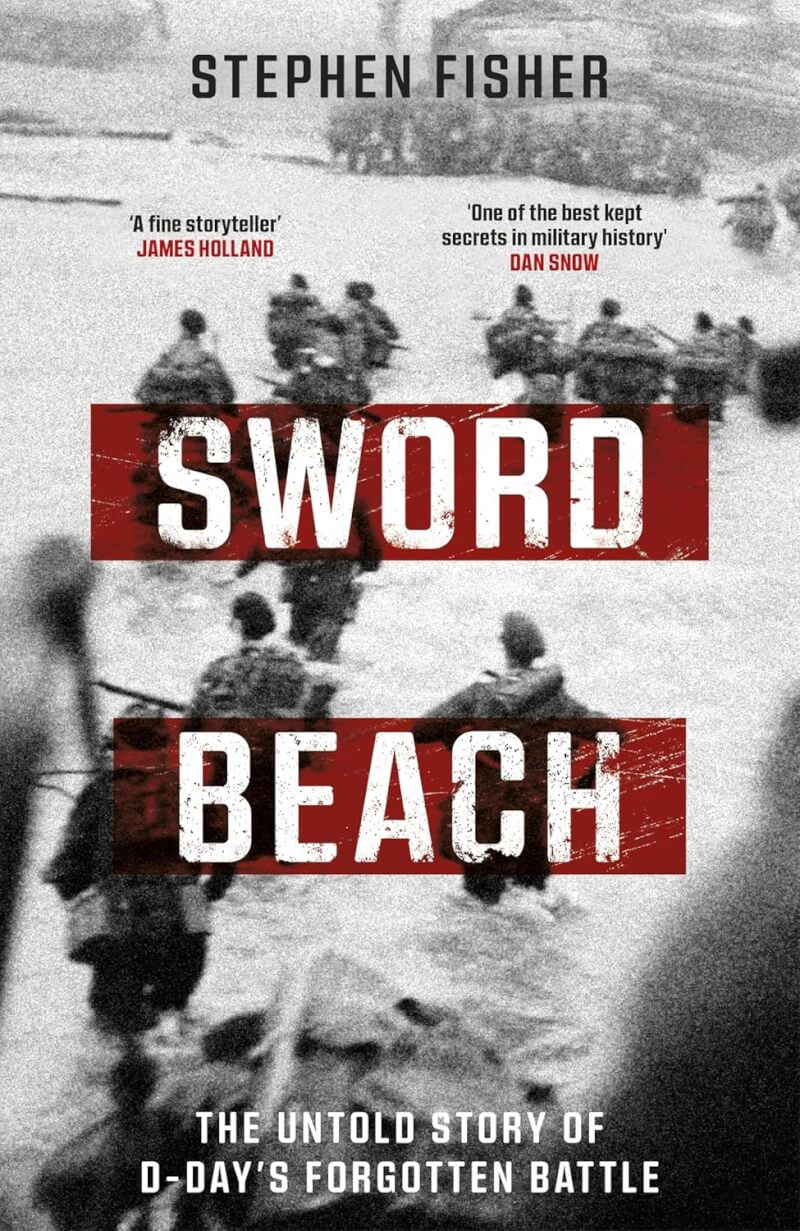
Historian and archeologist Stephen Fisher’s latest book Sword Beach: The Untold Story of D-Day’s Forgotten Victory includes details on the role Canadians played in that sector on D-Day. [Bantam Books]
But evidently, at least one answer alludes him still: the unsolved case of Captain James McGregor, a Scottish-born Canadian officer serving with 2nd Battalion, The East Yorkshire Regiment (2 East Yorks) during Operation Overlord—one whose death might yet prove to be of substantial historiographical consequence.
The Commonwealth War Graves Commission notes that McGregor, who fought with British forces as part of the Canloan scheme (literally meaning “Canadian loan”), died on June 7, 1944, indicating he likely succumbed to wounds after an assault on German-held Strongpoint Sole off Sword Beach the day before.
That may indeed be so. Fisher, however, has cause to believe that he was killed amid the 2 East Yorks’ attack itself—and, therefore, would have died on the 6th.
Currently, figures from the Juno Beach Centre document 381 Canadian fatalities on D-Day, including the 340 Canadian Army personnel killed in the Juno sector (meaning the actual beach and the advance inland of it), as well as 19 Canadian paratroopers and a further 22 Canadian airmen. Should that figure now be 382?
Fisher rightly has no intention of delivering any assertions until the truth comes to light. Nevertheless, in a Legion Magazine exclusive—the second of two parts [read Part 1 here]—he explores the theory and presents the evidence available so far.
On McGregor’s life and military career
Captain McGregor was quite old by the [military] standards of the day, with the Canadian Virtual War Memorial listing him as being born in 1911. This would have made him 33 [when he died]. However, the Commonwealth War Graves Commission records him as having been 35, so there’s an inconsistency there.
I’m more inclined to believe the Canadian Virtual War Memorial as, frankly, the Commonwealth War Graves Commission would likely be the first to admit that there are mistakes in its records. Either way, one or the other has made an error.
Now, according to newspaper cuttings, McGregor had just gone over to Europe on April 7, 1944, where he was placed with 2 East Yorks. Previously, he had volunteered at the war’s outbreak as a private prior to receiving an officer’s commission and serving on the east coast of Canada. He subsequently enlisted in the Canloan scheme, apparently eager to move into the European theatre of operations, as were so many Canloans who joined the scheme for that reason.
McGregor transferred to 14 Platoon of ‘C’ Company, becoming one of at least four Canloans to serve within 2 East Yorks. He also became the first one killed.
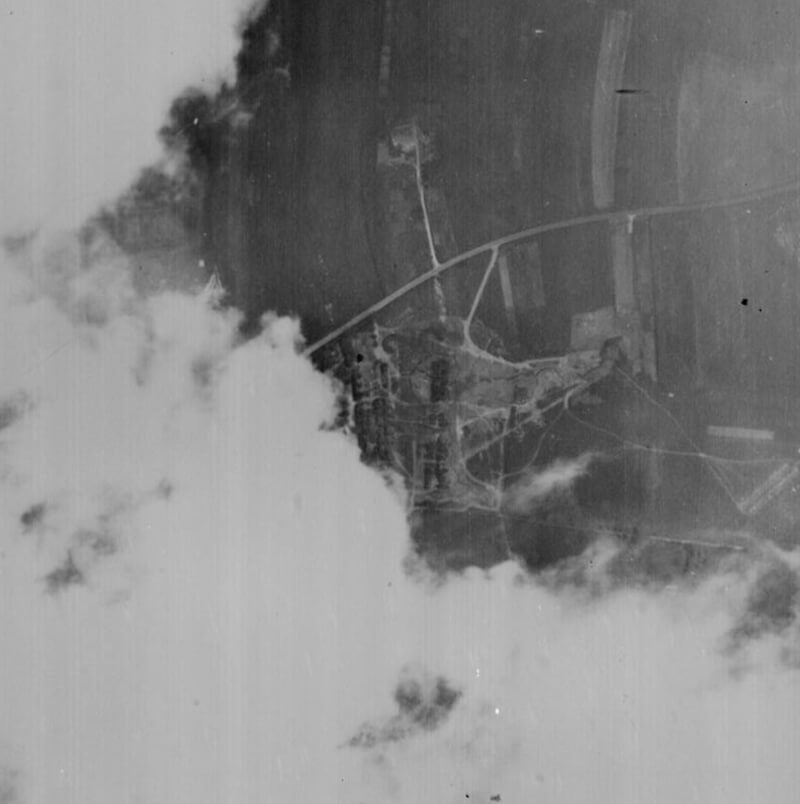
An aerial view of German Strongpoint Sole off Sword Beach on D-Day. [U.S. National Archives and Records Administration]
On McGregor’s final battle
‘C’ Company led the assault against Strongpoint Sole, located about a mile to a mile-and-a-half inland [from Sword Beach on June 6], just south of Ouistreham. This was the very first objective of 2 East Yorks after its men cleared the beach.
It was defended by the last remnants of [German] 4 Company, I Battalion, 736th Grenadier Regiment from the 716th Infantry Division and, frankly, by whatever troops that had managed to withdraw to the bunker from around the beach area.
There’s maybe somewhere in the region of 50 to 60 men defending Strongpoint Sole, but they ultimately realize that they don’t have much of a realistic chance [of withstanding any British assaults] as the enemy is pressing in hard and fast.
[German Obergefreiter Josef] Häger offers a detailed account of the conditions in the bunker, which could be verified through the testimonies of prisoners of war during their interrogations. There’s only a small amount of space for all of these men—some wounded and most exhausted—trapped and cramped inside, who could barely breathe. He also relates how the strongpoint commander [Hauptmann Gundlach] was an ardent Nazi who was seemingly determined to defend the bunker, and who is recorded as really the only person still actually shooting.
I can’t say for certain—and I didn’t include it in my book because it felt like an assumption too far—but it’s probable that he was the one who killed McGregor.
As ‘C’ Company closes in around the site, Captain McGregor tries to approach the front door but is hit by a burst of machine-gun fire. Eventually, the German defenders surrender after seeing a flamethrower being brought up to the bunker.
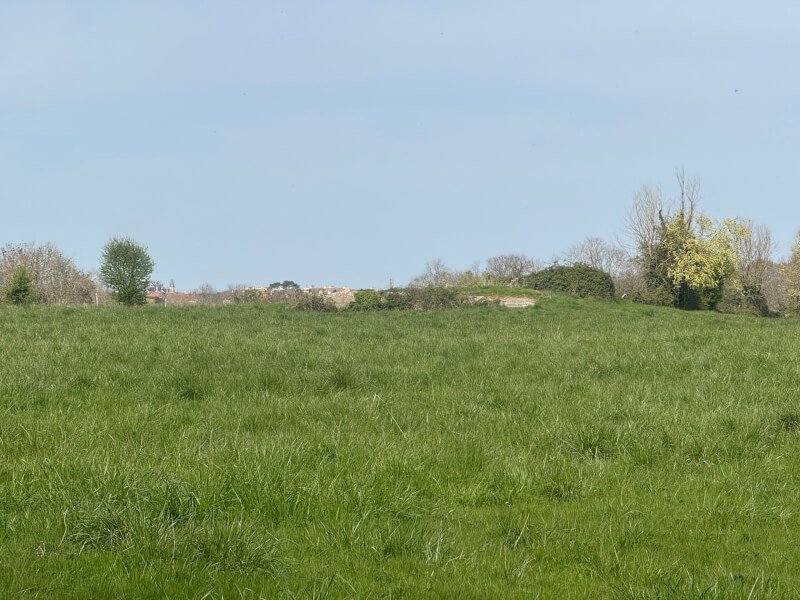
The remains of the concrete bunker at Strongpoint Sole today. [Stephen Fisher]
On the mystery of McGregor’s death
I’ve found at least one witness statement that says McGregor was killed. I’ve seen another record indicating that he instead died of his wounds [on June 7].
Although later reinterred within Bayeux War Cemetery, his concentration record says that he was originally buried at Strongpoint Sole. That’s important because if he was wounded [rather than killed outright], he obviously would have gone to one of the first aid posts, but I’ve found no record of one around the bunker.
Now, it’s possible that 2 East Yorks did set one up and didn’t move it [when the men advanced further]. However, they had gone some distance by the end of D-Day, about two miles if not more, so it seems strange that they would have left their forward aid post there, as it’s only a strongpoint to defeat and move past.
If he was badly wounded, they would have tried to move him back to the beach for treatment. Possibly, of course, he was too wounded to move, but the bottom line is I haven’t found any evidence of [2 East Yorks] collecting wounded there. It doesn’t add up to me, so I’m inclined to believe that he likely died on the 6th, which would tie up with him being originally buried close to Strongpoint Sole.
There are likely several more accounts that I didn’t see [while researching and writing the book] that might shed more light on it. It’s hard to say for sure for now, but I’ll do some more digging and determine if there’s more to the case.
This abridged interview has been edited for brevity and clarity.
Advertisement