




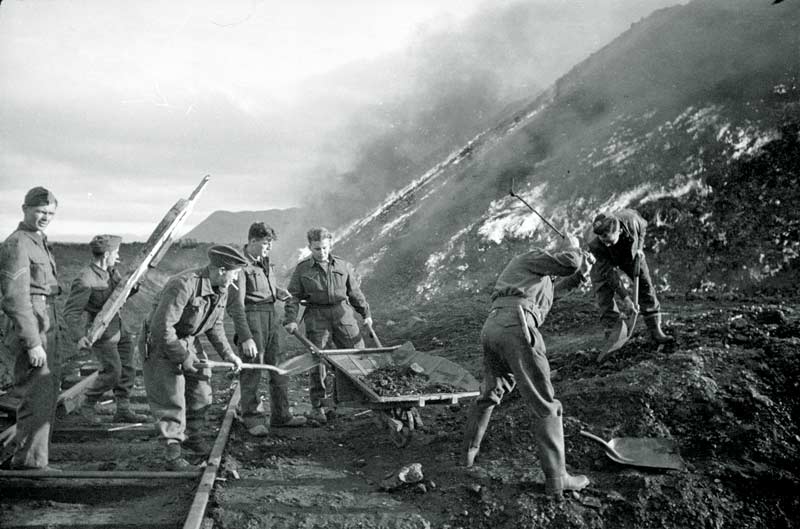
Sappers of 3rd Field Company, Royal Canadian Engineers, burn piles of coal on Spitsbergen island in Norway in the fall of 1941.[Ross Munro/DND/LAC/PA-180524]
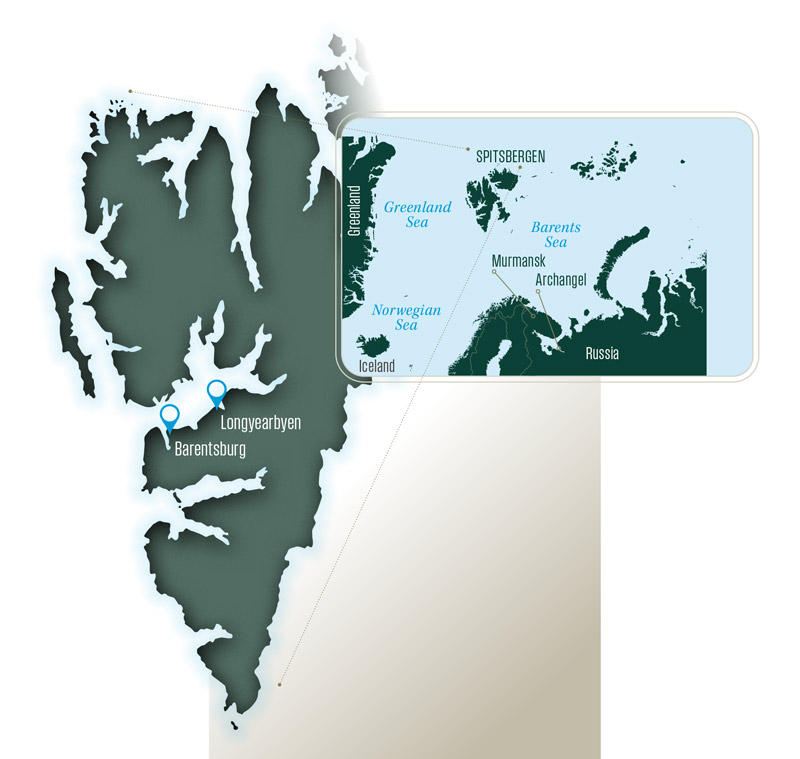
Cold, barren, glacial, mountainous, isolated and sparsely populated best describe the Norwegian island of Spitsbergen today. This description also applied to the island in 1941 during the Second World War. Spitsbergen, some 1,000 kilometres from the North Pole and the largest island in the Svalbard archipelago, was not initially affected by the war, even after Germany occupied Norway in April 1940. The situation changed in June the next year when Hitler invaded the Soviet Union.
The Barents Sea, between Svalbard and the mainland, took on a new strategic significance. Beginning in late-summer 1941, it became the prime route for the shipment of Allied materiel to the Soviets. The so-called Murmansk Run was a dangerous one, but crucial to the Soviet Union remaining in the war against Germany. During the conflict, 41 Allied convoys sailed to the northern Soviet ports of Murmansk and Archangel, bringing millions of tonnes of essential vehicles, weapons, ammunition, fuel, clothing and other commodities.
The Germans, well aware of how critical these supplies were to keeping the Soviets in the war, attacked the convoys from air and sea off the coast of occupied Norway. More than 20 per cent of all cargo carried on the Murmansk Run was lost. Canadian merchant seaman sailed in these convoys from the start. And beginning in October 1943, destroyers and frigates of the Royal Canadian Navy provided escorts. They sailed in about 75 per cent of all subsequent convoys—without the loss of a single ship.
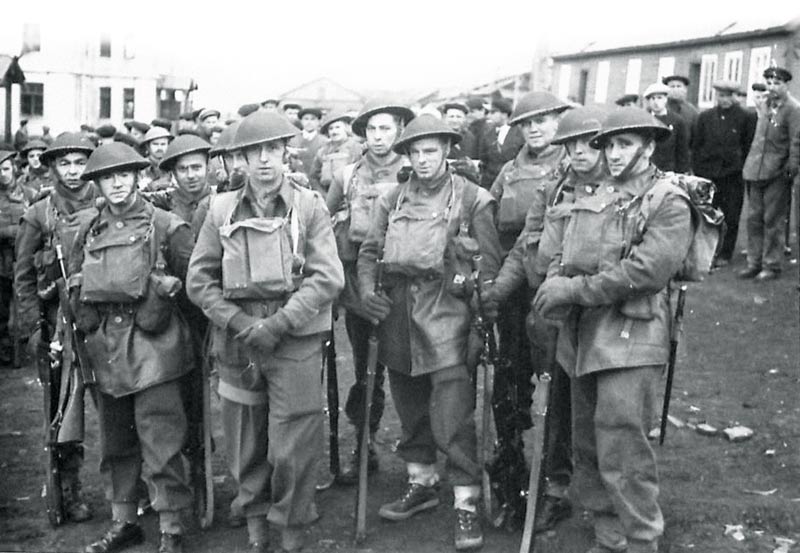
Men of The Edmonton Regiment pose for a photo on Spitsbergen.[piemags/ww2archive/Alamy/2X2FATF]
Spitsbergen itself had an important raw material for the war: vast deposits of coal. Canada, as part of the British Empire, and a dozen other countries signed the 1920 Svalbard Treaty, which gave all signatories the right to engage in commercial pursuits on the area’s islands. The Soviet Union was the only country, aside from Norway, to exercise this right and had been mining coal in the region since 1932. By the start of the Second World War, about 2,000 Russians were living on Spitsbergen at Barentsburg, along with nearly 800 Norwegians at Longyearbyen. Almost all of them were coal miners.
Once the Soviets were drawn into the war by the German invasion, Soviet leader Joseph Stalin demanded that British Prime Minister Winston Churchill come to his country’s aid. His requests were sweeping, including establishing a second front and providing much-needed war supplies. Despite Britain’s stretched resources at the time (the U.S. had not yet joined the conflict), Churchill attempted to meet Stalin’s needs to keep the Soviets in the war. One of their requests was for a permanent Royal Navy presence in the Arctic, which the Admiralty promptly rejected as too dangerous. Churchill wasn’t happy with his navy’s response.
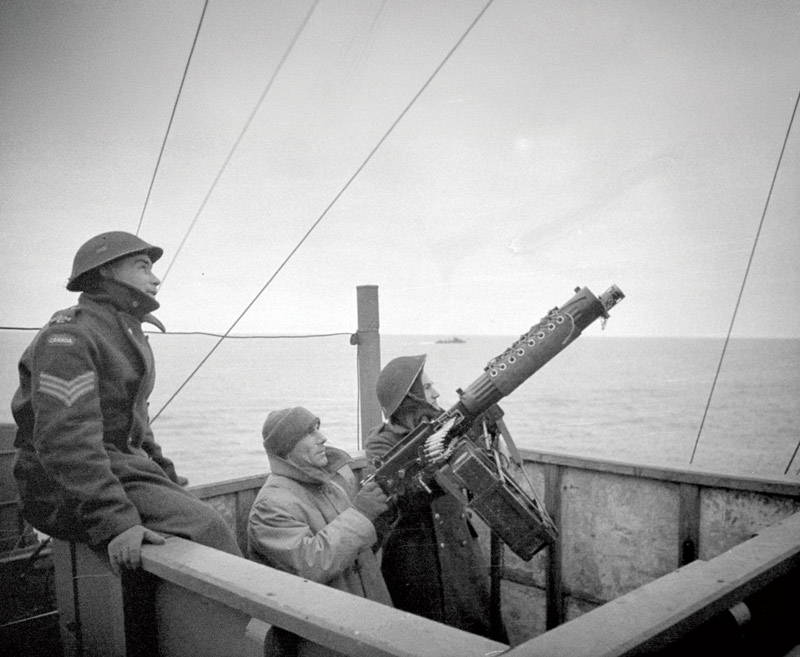
A Canadian machine-gun crew keeps watch aboard Empress of Canada en route to Spitsbergen in August 1941 (left). [Ross Munro/DND/LAC/PA-180203]
The Soviet foreign secretary suggested a possible solution: the occupation of Spitsbergen to help secure the sea route from the West to Archangel, as well as possible facilities for air service between Britain and the Soviet Union. The British chiefs of staff, already under pressure to do something, realized the benefits of occupying the island and recommended the action to the War Cabinet. The British, Soviets and Norwegians negotiated a joint operation.
Further discussions between the three countries led to an agreement on mounting one of two possible operations. The first consisted of evacuating the miners from Spitsbergen, while the second entailed occupying the island. British planners initially focused on the latter, which would deny the area to the Germans and provide a defended anchorage and a refuelling base for shipping until the winter freeze-up, which typically began in October. In late July, General John Dill, chief of the imperial general staff, met with Lieutenant-General Andy McNaughton, commander of the Canadian Corps. Dill informally offered the still-developing operation to the Canadians. McNaughton readily accepted.
The Canadian commander was anxious to get his soldiers into action, as they had been employed in a static defensive role since their arrival two years ago. Canadians had been considered for proposed operations on the continent, but all such plans had been cancelled. McNaughton and his men were bitterly disappointed.
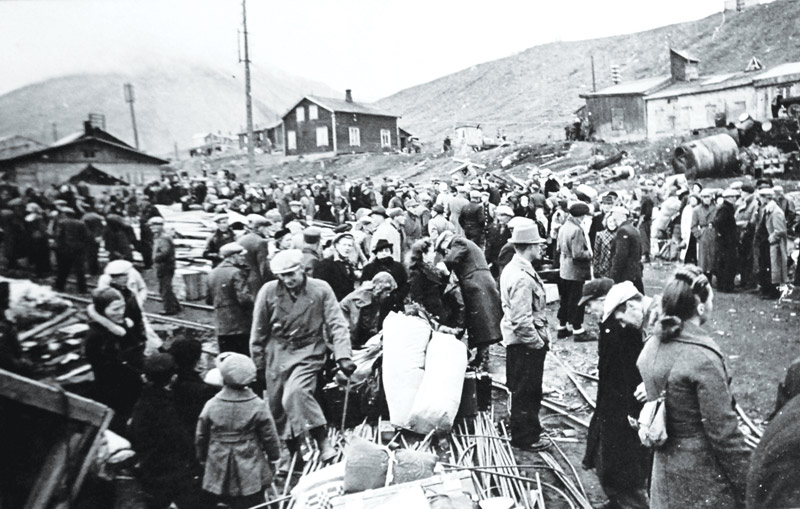
Locals await departure from the island.[National Museum of the U.S. Navy/Wikimedia]
On July 26, 1941, Canadian and British planners met to discuss Operation Flaxman. The original idea called for Force 111 to consist of an understrength brigade of two infantry battalions, plus Canadian and British support troops, to land on the island, establish a naval anchorage and a refuelling base, then leave at the end of October. First Canadian Division’s 2nd Infantry Brigade was selected, using Princess Patricia’s Canadian Light Infantry and The Edmonton Regiment.
While Canadian Military Headquarters (CMHQ) in London enthusiastically pitched into the planning process, the British War Office, calling the shots, soon began to express doubts about Operation Flaxman. It was concerned about a German air threat, a potential problem that did not worry McNaughton or Brigadier Arthur Potts, the commander of 2nd Infantry Brigade. Somewhat mollified by the Canadian commanders, British planners proceeded with preparations but delayed the operation’s launch until more intelligence could be collected. Meanwhile, the Canadian Cabinet War Committee informed McNaughton on July 31 that it was “quite prepared to have you act on your own judgement as to whether to cooperate and to what extent.” On Aug. 5, the British War Cabinet approved Operation Flaxman.
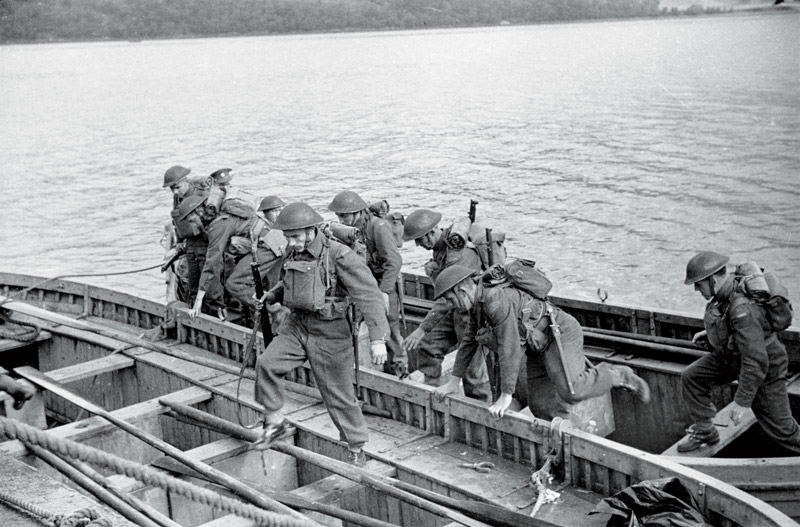
Members of Force 111, as the originally planned invasion unit was known, train in Inverary, Scotland, in summer 1941. [Ross Munro/DND/LAC/PA-180196]
Canadian Military Head-quarters issued instructions later that day and, on Aug. 6, Canadian soldiers moved out of their camps at Oxted, Surrey, due south of London, and boarded trains for Glasgow. From the Scottish city, the Canadians would travel by ship to Spitsbergen. Meanwhile, the chiefs of staff had dispatched a naval reconnaissance mission to the island. The resulting opinion was that “an operational base at Spitsbergen for units of [the] Fleet is not necessary and if established will form a commitment which will severely hamper any operations.”
Despite the RN’s concerns, the chiefs of staff had to weigh it against the increasing pressure from Churchill to do something in the Arctic to support the Soviets. British Foreign Secretary Anthony Eden had already told his Soviet counterpart that his country would send an occupation force to Spitsbergen on Aug. 8. To renege would have been politically challenging.
[The Canadian Virtual War Memorial]
From Spitsbergen to Sicily
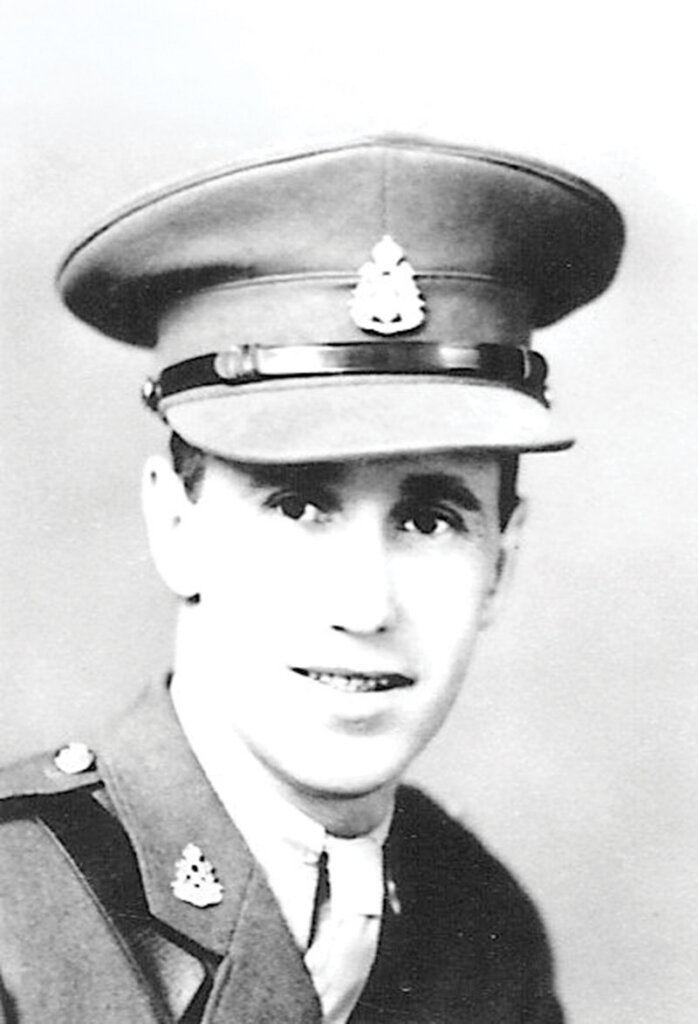
Bill Bury remained in command of ‘D’ Company following the Norwegian operation and participated in the Sicilian Campaign. On July 27, 1943, he led his men in a bayonet charge that captured a key German post and subsequently repelled three major counterattacks. Bury was killed by a mortar bomb the next day and was subsequently awarded a posthumous Distinguished Service Order.
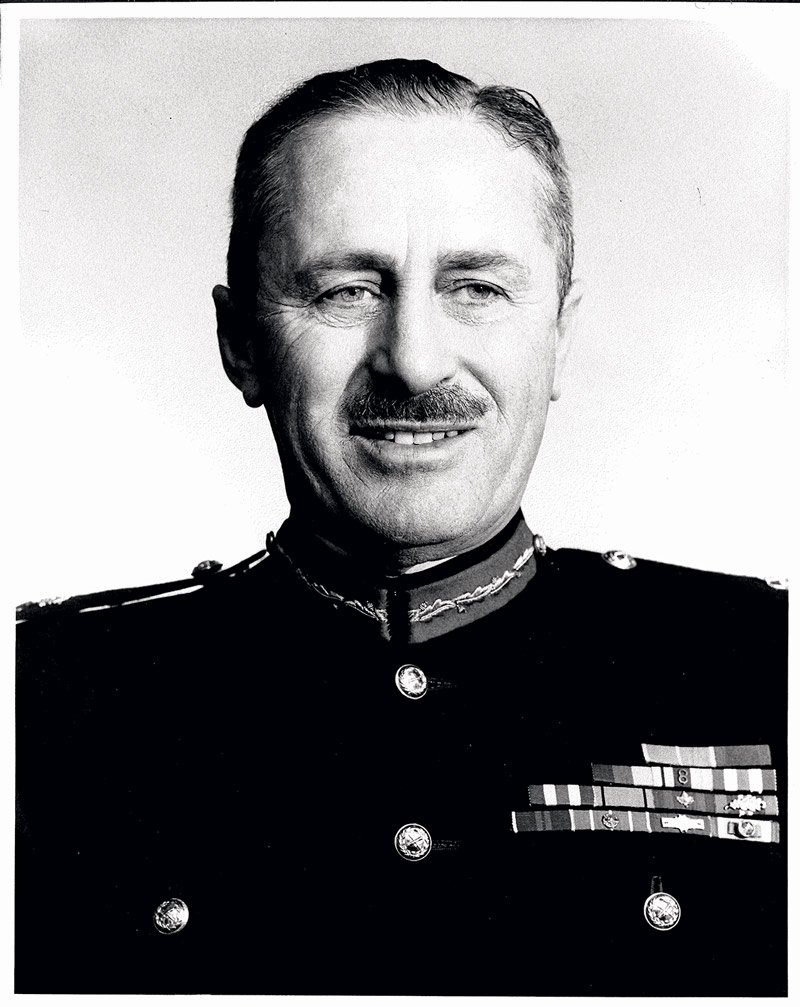
[Canadian Military Engineers Museum]
Explosive rise
Geoffrey Walsh began the war as a captain and ended it as a brigadier and chief engineer for First Canadian Army. He remained in the army after the war and went on to be the first commander of Canada’s NATO brigade (1951-52). As a lieutenant-general, Walsh was the last chief of the general staff (1961-64) and the first vice-chief of the defence staff until his retirement in 1965.
When McNaughton and Potts met with the chiefs of staff on Aug. 6 to review the situation, McNaughton made the point that the RN “did not appear to have a clear appreciation of the ‘object’ of the proposed expedition.” He also asked that, until the chiefs of staff made a final decision, Force 111 be sent to the Combined Training Centre at Inverary, Scotland, to ready for a future operation.
Meanwhile, 2,000 Canadian soldiers “loaded like a bunch of sardines into the carriages,” wrote one war diarist, were moving north, completely unaware of these developments—or their mission. When they arrived in Glasgow, the troops detrained and boarded Empress of Canada, a Canadian Pacific Steamships passenger liner pressed into wartime service as a troopship. Empress ferried them to Inverary for intensive, and tough, infantry and small boat operations training.
Based on new information from the reconnaissance of Spitsbergen, the chiefs of staff directed a revision of Operation Flaxman. The new aims: evacuate the Soviet miners to the U.S.S.R. and the Norwegian ones to Britain; and destroy all coal mining facilities as well as any wireless and meteorological stations that supplied Germany with weather data. The result was a drastic curtailment of the operation and most of the force returned to Surrey, “much disappointed” as Charles P. Stacey put it in Six Years of War: The Army in Canada, Britain and the Pacific.
The revised plan reduced the force to 645 men: 527 Canadians, 93 British and 25 Norwegians. The Canadian component consisted of a small 2nd Brigade HQ and attached signals personnel, ‘D’ Company (plus a platoon) of The Edmonton Regiment commanded by Major Bill Bury, 3rd Field Company, Royal Canadian Engineers under Major Geoffrey Walsh, a machine-gun detachment
from The Saskatoon Light Infantry, and medical and pay detachments. The British element included 57 Royal Engineers, while the Norwegians were infantrymen.
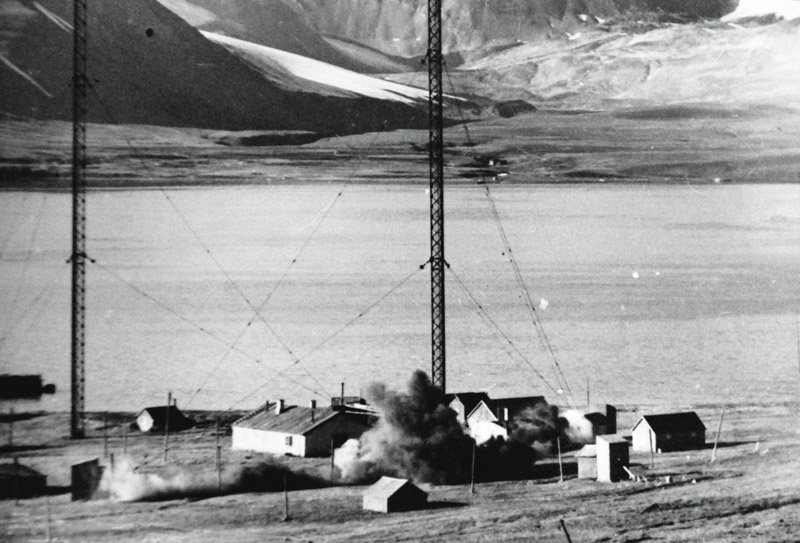
A wireless station on Spitsbergen goes up in smoke during the Allied operation in early fall 1941. [National Museum of the U.S. Navy/Wikimedia]
The newly named Operation Gauntlet began on Aug. 18-19, when Empress of Canada sailed from Scotland carrying Force 111. Later, the troopship rendezvoused with the RN’s Force ‘A,’ under Rear-Admiral Philip Vian, comprised of cruisers Nigeria and Aurora and three destroyers.
The fleet refuelled in Iceland, where Potts and Vian conferred. The vessels departed on the evening of Aug. 21; the next night the soldiers were told their mission for the first time.
The troops landed at Spitsbergen on Aug. 25 to begin their various tasks. The first: evacuate the Russian community. The embarkation of the miners proceeded according to plan, until the resident Russian consul insisted that heavy machinery and mining equipment be loaded as well. Already well-fortified with alcohol, the gift of three more bottles from a Canadian officer resulted in the envoy falling into a drunken stupor. His subordinates carried him aboard Empress and proved more co-operative than their boss in completing the loading. Just after midnight two days later, the liner departed for Archangel, escorted by Nigeria and the three destroyers.
Over the next few days, the soldiers completed their tasks on Spitsbergen. Huge piles of coal, estimated at 408,000 tonnes, were set on fire, 249,000 tonnes of fuel oil was dumped into the ocean or burned, and mining machinery was removed or disabled. In addition, power plants and radio and meteorology equipment were disconnected or destroyed.
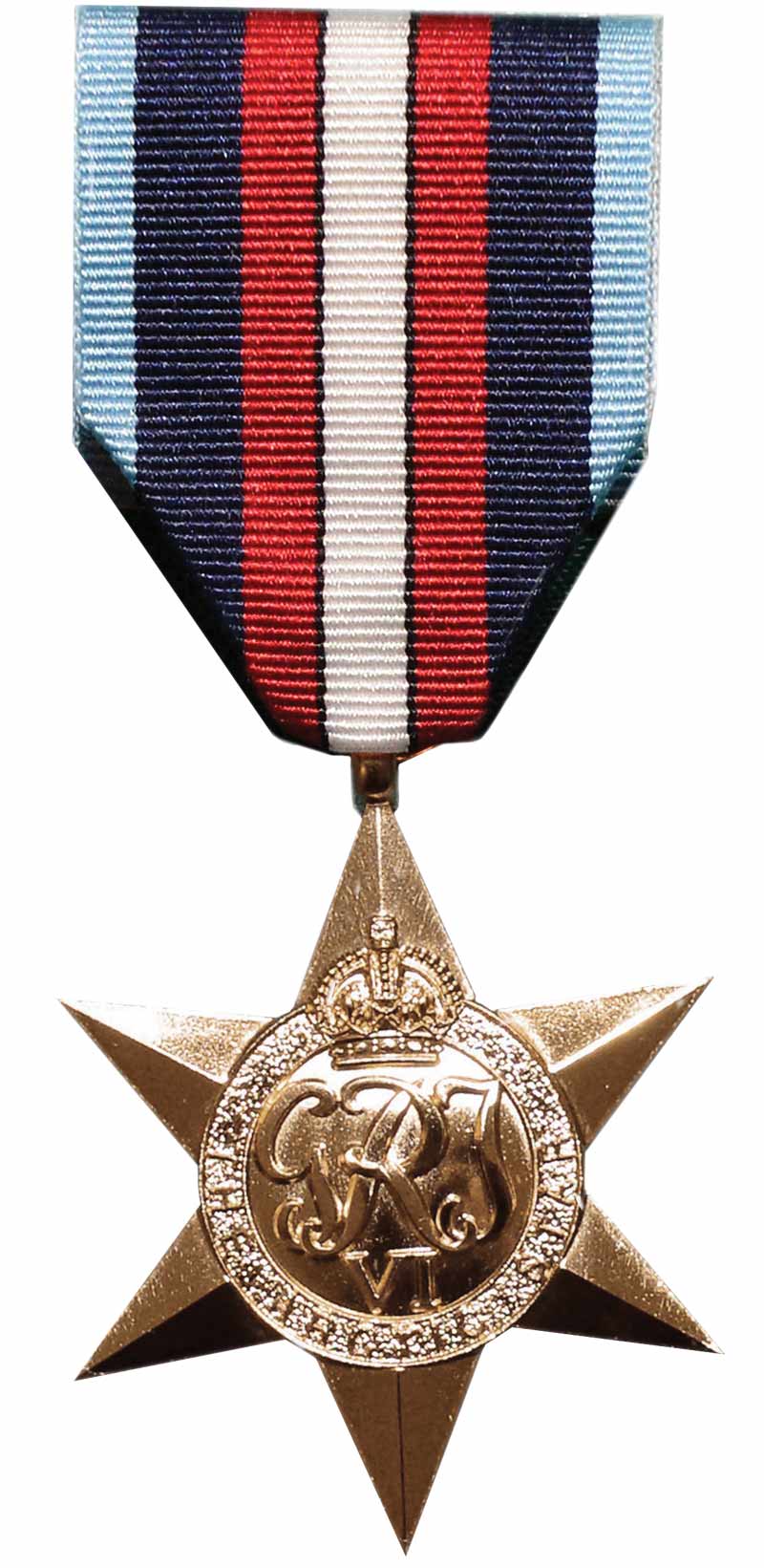
[U.K. Ministry of Defence/Wikimedia]
North stars
After more than six decades of lobbying for recognition, particularly by survivors of the Murmansk Run, a new Second World War campaign medal was approved by Queen Elizabeth II in early 2013. The Arctic Star was authorized for operational service of any length north of the Arctic Circle in the Greenland, Norwegian and Barents seas. While designed primarily for crews of merchant ships and their naval escorts, soldiers who participated in Operation Gauntlet are also eligible. To date, 365 have been issued to Canadians.
Empress and its naval escort returned from Archangel late on Sept. 1 and the next day, the entire Norwegian population was taken on board. On Sept. 3, the force departed, leaving Spitsbergen deserted. Three days later, the two cruisers left on another mission, which resulted in the sinking of a German gunnery training cruiser and other vessels.
In addition to the 765 Norwegians aboard Empress, there was another group. In Archangel, almost 200 French soldiers, who had escaped from German prisoner-of-war camps to the Soviet Union, had been picked up. On Spitsbergen, the Frenchmen had pitched in to assist the evacuation.
Empress reached Glasgow on the night of Sept. 7-8 and, the next day, the Canadians boarded trains for their camps in southern England.
Although Gauntlet was a minor non-combat operation, it was a complete success and only one of two missions carried out by the Canadian Army in Europe in 1941 (the other involved the deployment of Royal Canadian Engineers to Gibraltar). It also marked Canada’s first military expedition to the Arctic.
General John Dill, chief of the imperial general staff, wrote a short note to Lieutenant-General McNaughton about the operation. In it, he noted, “The whole operation calls for nothing but praise, and I hear from all sides that your men were just grand.”
Advertisement