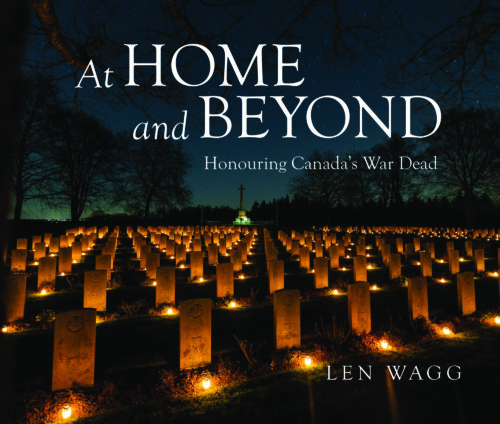



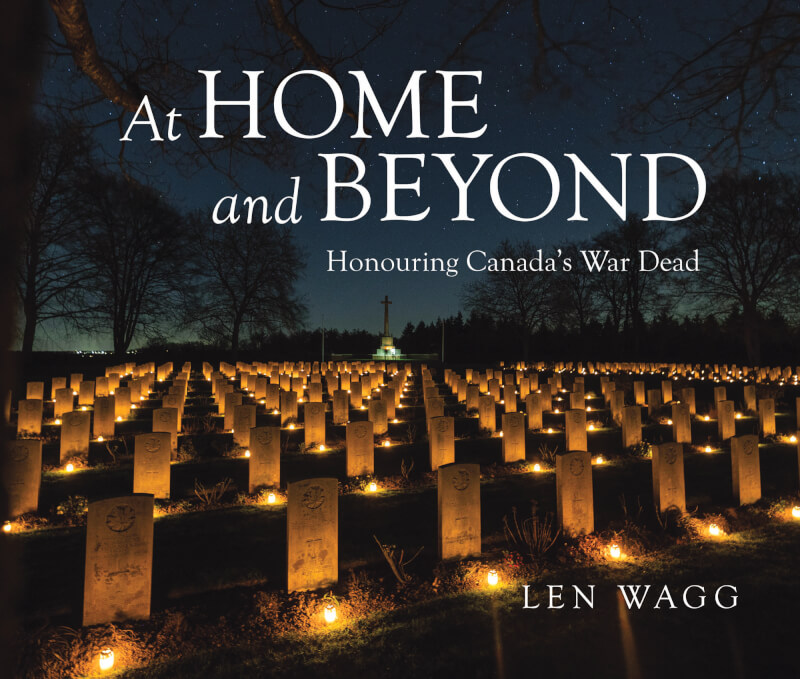
The cover of photographer and author Len Wagg’s latest book. [Courtesy Len Wagg]
Photographer and author Len Wagg believes that “every Canadian” should visit the war cemeteries of Europe, should walk between the rows of headstones, should comprehend the sacrifices made on the sacred ground on which they died. He contends that those same Canadians should gaze upon the Canadian National Vimy Memorial and all it represents, should walk among the monument’s 20 allegorical statues—embodying values such as honour, justice and peace—and should contemplate the still-crater-pocked landscape that surrounds it.
Most critically, Wagg hopes that the human stories of conflict—both overseas and back in Canada—won’t be forgotten. It’s a sentiment that underpins his latest book At Home and Beyond: Honouring Canada’s War Dead.
Featuring more than 100 photographs and accompanying essays that examine the enduring legacy of two world wars, Wagg’s new publication takes readers from the battlefields and cemeteries of Europe to the households and communities of those left behind. Across its pages, the enormity of loss is laid bare: an estimated 110,000 Canadians buried abroad in approximately 5,800 locations; 27,000 have no known grave. Yet At Home and Beyond is concerned with far more than figures, bringing to light deeply personal tales of tragedy, courage and resilience while reflecting on the changing ways people choose to remember.
Speaking to Legion Magazine, Wagg offered insight into the experiences that shaped the book and the people who defined it.
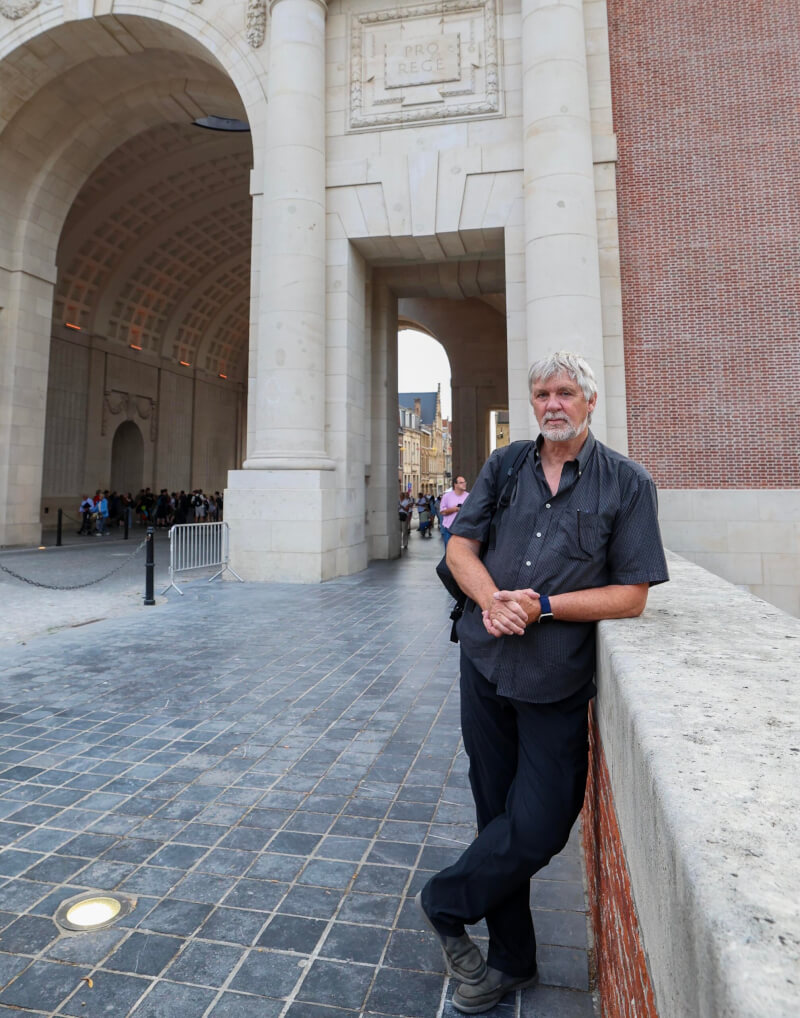
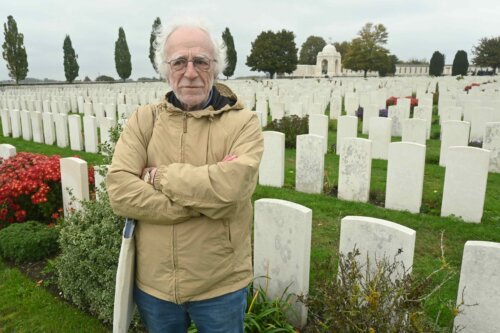
Wagg at the Menin Gate in Ypres, Belgium. [Courtesy Len Wagg]
On the origins of the book
I always find that a picture might become an idea, an idea might become a project and a project might become a book. But with At Home and Beyond, the seeds were there 30 years ago.

I was in Sicily and had a day off. I went to a tiny place called Agira. There were pine trees, hedges and headstones with surnames that I recognized as commonplace back home in Nova Scotia. Then I found out that they had been part of The West Nova Scotia Regiment.
I took some photos, came back to Canada and wrote a small story about it. I then got a phone call from a gentleman in Digby, N.S., who read it and said, “I knew my dad was buried in Europe, but I didn’t know where.” That was just the first message.
I then realized how important it was for this story to be told.
Fast forward to after the pandemic, and I travelled to similar sites. The first, Bény-sur-Mer Canadian War Cemetery in France, is where a lot of the casualties from D-Day are buried. I knew at that point that there was a book to be done. Five years later, here we are.
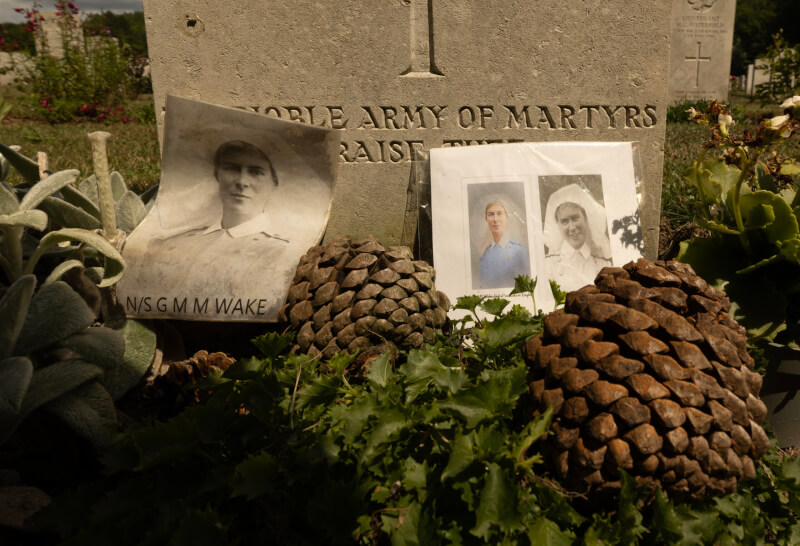
Étaples Military Cemetery in northern France holds the graves of more than 1,000 Canadian war dead, including several nursing sisters who were killed in a bombing of a local hospital. [Courtesy Len Wagg]
On highlighting the stories behind the headstones
You’re looking at a graveyard with thousands of war dead. You ask yourself, “What can I do that will commemorate them? What will give them the respect that they deserve?” For me, that was the challenge.
It was almost as though breadcrumbs had been left for me as I started going through this, and I found them along the way. If it moved me emotionally, I felt that there must be something there—stories like the three fallen brothers, Thomas, Albert and George Westlake, in Bény-sur-Mer.
On generational gratitude in the Netherlands
Being in Holten Canadian War Cemetery on Christmas Eve, I had tears coming down my face. For the kids there, it wasn’t just a game. They would bring a candle to the headstone, take a step back, pause, and move on to the next one.
I drove that night to Groesbeek Canadian War Cemetery, which is the largest Canadian cemetery in Holland. I got there late, and people were wandering around still. I finally went to Bergen-Op-Zoom Canadian War Cemetery on Christmas morning. I arrived at sunrise and people were there.
You see the great generational gratitude that certainly the Dutch have for what Canada did, and you know you’re part of a country that’s very special.
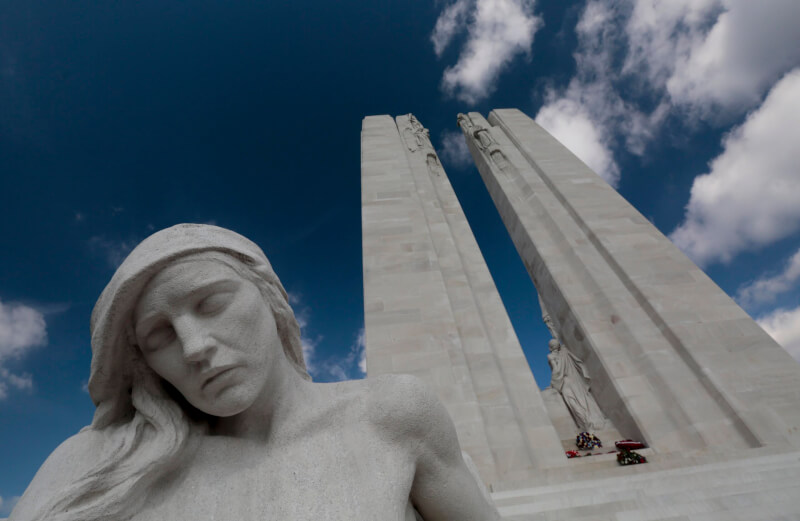
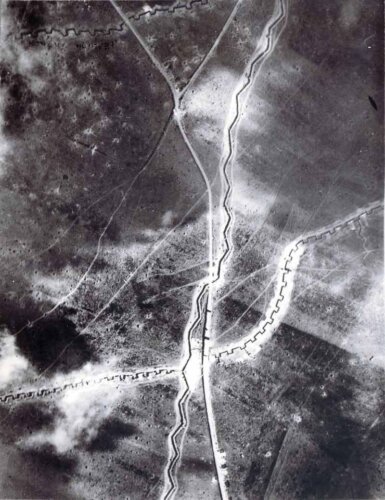
The Canadian National Vimy Memorial in France. [Courtesy Len Wagg]
On passing the torch of remembrance
Linda van Beek, a ceremonial organizer at Holten, told me that it’s getting harder to get volunteers for the Christmas Eve event. But after I finished the shoot there, after the crowd was gone and I was just about to leave, a family with two young girls dressed in their Sunday best came in. That gave me hope that the tradition will continue.
Ultimately, we’re talking about the values that we have, the values that make Canada a good country—empathy, sacrifice and honour. You see those, for example, when you look at the individual sculptures at the Vimy Ridge memorial. Those are what make our country what it is, and I think a lot of the younger people understand that and will carry it on.
This interview has been edited for brevity and clarity.
Advertisement