





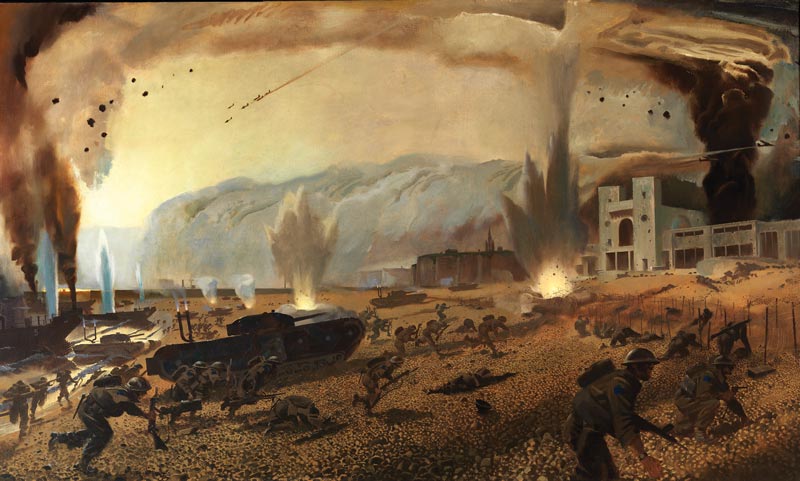
Major Charles Comfort depicts the Royal Hamilton Light Infantry (RHLI) in action during the Dieppe Raid. [Charles Comfort/CWM/19710261-2183]
At 5:22 a.m. on Aug. 19, 1942, 28-year-old Lieutenant John (Jack) Gartshore led 13 Platoon, ‘C’ Company, 1st Battalion, Royal Hamilton Light Infantry into combat for the first time. It would also be the last. When the smoke cleared over Dieppe, his regiment known as the Rileys had suffered 82 per cent casualties. 13 Platoon had been in the ill-fated raid’s first wave.
Assigned to land at the sector code-named White Beach, the initial assault by the Rileys, comprising 443 men in three companies, was scheduled for 5:20. ‘D’ Company was to land west of Dieppe’s seaside casino, advance rapidly and knock out positions on the western headland before connecting with The South Saskatchewan Regiment, which would be moving east from a landing at Pourville. In the middle of the three Riley companies, ‘B’ was to overrun the casino, a heavily fortified German defensive position, and push through Dieppe to establish its own defensive position on the town’s outskirts. ‘C’ Company, meanwhile, was to land to the east, assist in securing the beachhead, cross the promenade and link with elements of The Essex Scottish regiment to its immediate left.
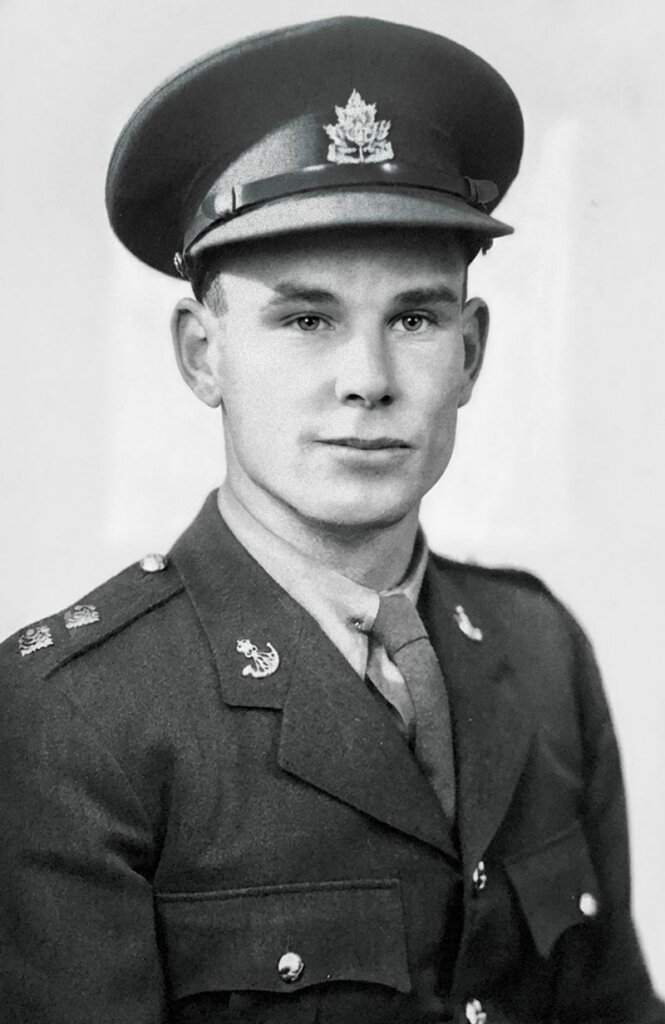
Lieutenant John (Jack) Gartshore led 13 Platoon, ‘C’ Company, 1st Battalion, RHLI that day. [courtesy Gartshore family]
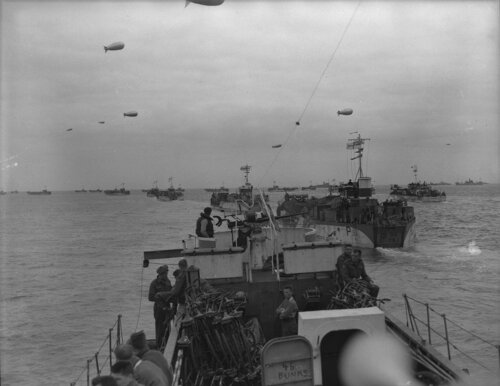
The three Riley companies sailed aboard Landing Ship, Infantry HMS Glengyle, which carried three Landing Craft, Mechanized (LCM) and 11 Landing Craft, Assault (LCA), along with a single armed Landing Craft, Support. In darkness, the 123 officers and men of ‘C’ Company under Major Norris Waldron mustered on Glengyle’s aft starboard deck beside three LCAs. Shortly after 3 a.m., 13 Platoon boarded one of the LCAs. By 3:10, the landing craft had been lowered and were in formation.
Meanwhile, the battalion’s reserves, around 100 Rileys of ‘A’ Company, along with medical detachments and headquarters staff, were travelling to Dieppe in a separate naval group. They were supposed to land 15 minutes later.
As dawn approached, the weather was clear and the sea calm, promising a bright summer’s day ahead. As Glengyle’s landing craft approached shore, dim twilight revealed the looming headlands flanking Dieppe’s beachfront. Closer in, men could distinguish familiar landmarks, including the prominent shape of the casino. Around 5 a.m., the relative calm was shattered by a 10-minute naval bombardment and aerial strike against German positions on the headlands. As it would turn out, the barrage proved too brief and largely ineffective.
For many Canadians, the first sign of the enemy came in the form of scattered, long-range machine-gun bursts, which intensified as the vessels neared the beach. The sustained artillery and mortar fire that would torment them for the remainder of the raid commenced moments before they touched down.
The first wave landed on time and in the designated locations. Alighting directly in front of the heavily fortified casino and below the western headland, ‘B’ and ‘D’ companies bore the brunt of early enemy fire. Farther from the cliff defences, ‘C’ was initially less heavily engaged.
‘C’ Company’s 13 Platoon escaped the worst of the early fusillade, but Lieutenant Gartshore took no chances and ordered his 2-inch mortar to provide smoke.
“While we were about 150 yrds offshore,” Private S.D. Cameron, “fired two smoke bombs from the LCA,” notes an after-action report in the Rileys’ war diary. How effective the smoke was is impossible to assess, but it required considerable co-operation and skill to fire a mortar from a tightly packed moving landing craft.
As the craft came to a halt, the ramp lowered. Gartshore was first out and, trusting his men were close behind, headed up the beach. He need not have worried.
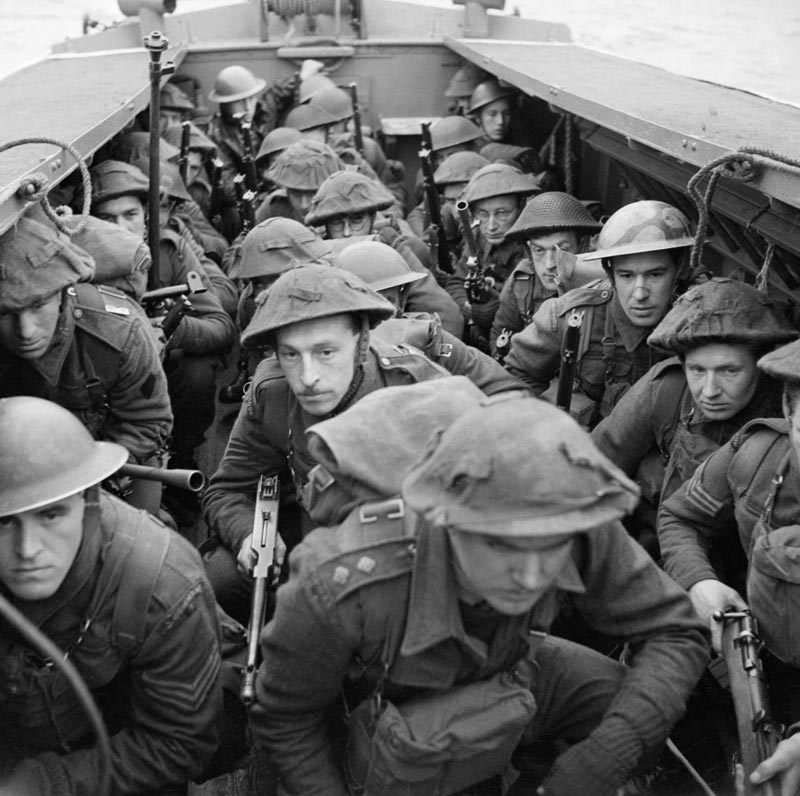
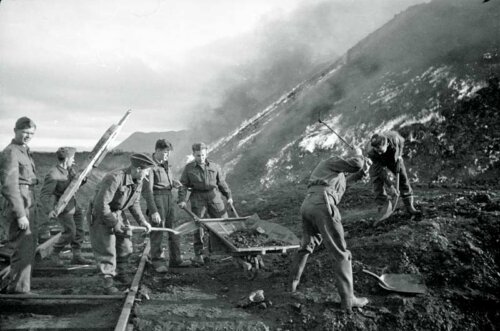
In early 1942, commandos train for the Dieppe Raid.[Imperial War Museums/Wikimedia]
“As the boat grounded,” Private David Neillings was sure that, “we all scrambled out, nobody hesitating,” as he wrote in a post-raid statement. Hot on the heels of Gartshore was acting corporal Harry Stewart with No. 3 Section, followed by Corporal Ed Boles leading No. 2 Section. Last off was No. 1 Section, under Lance-Corporal Brian V. Lisson. 13 Platoon cleared the ramp in seconds.
“We disembarked from an LCA after a dry landing and fanning out, rushed up the beach to the first wire,” noted Private Percy Pearson of No. 2 Section in his post-raid comments. “We had landed just about where we wanted to—about 30 yds to the left of the Casino.”
Perhaps thanks to the speed of their exit, the first two sections suffered no casualties reaching the first wire. No. 1 Section wasn’t as fortunate. Rifleman Joseph Johnston recalled that as they leapt from the ramp, they “were met…with a murderous cross fire, which took heavy toll of our ranks.” The first casualty was Private Bob Newton. Falling in front of a stretcher-bearer, Newton was dragged to cover but died during the withdrawal.
Most of 13 Platoon negotiated the first barbed-wire obstacle without much delay. Despite the relatively swift crossing, the wire had caused the unit to become disorganized. Emerging on the far side, some men were separated from their sections. The platoon’s cohesion was largely broken by the time it reached the seawall, which was covered by a substantial entanglement of Dannert wire, about a metre high and two metres deep.
No. 3 Section had reached the seawall virtually intact, however, and Gartshore in the lead called for a Bangalore torpedo. Carrying the cumbersome weapon, Private Roy E. Wilkinson had been temporarily trapped in the wire. But hearing the order, he “threw the torpedo as far as possible” before untangling himself.
When Gartshore stood to unleash the explosive pipe into the wire, two machine-gun rounds shattered his elbow and sent him spinning. Stewart dashed forward to take over but was also wounded attempting to place the Bangalore. The task was abandoned.
The Rileys had been on the beach less than 30 minutes at this point. The most direct route to the esplanade was blocked by wire, covered by snipers and machine-gun fire, and there were no engineers or tanks nearby to help clear a path. The rest of ‘C’ Company had also stalled at the seawall. And ‘B’ and ‘D’ companies were stretched out and pinned down by the casino.
The Rileys were going nowhere. Gartshore, head spinning from the pain of his crippled arm, assessed the situation. There was only one possible route off the beach. He ordered 13 Platoon to join the assault on the casino.
On hearing the new orders, section leaders gathered as many men as they could and began edging toward the casino. As Private Lewis A. Lardie with No. 2 Section remarked, “it was just a slaughter from then on.” The volume of artillery, mortar, machine-gun and small-arms fire was so intense that according to some eyewitnesses, the rocks on the beach seemed to dance and shudder as if an earthquake was afoot.
Just then Eddie Boles yelled ‘Grenade’ and a potato-masher came tumbling out from behind the bags.”
Private H. West, a rifleman in No. 3 Section, estimated the platoon had been on the beach for about 45 minutes before his section commander ordered the move to the casino “by crawling along the [sea]wall.”
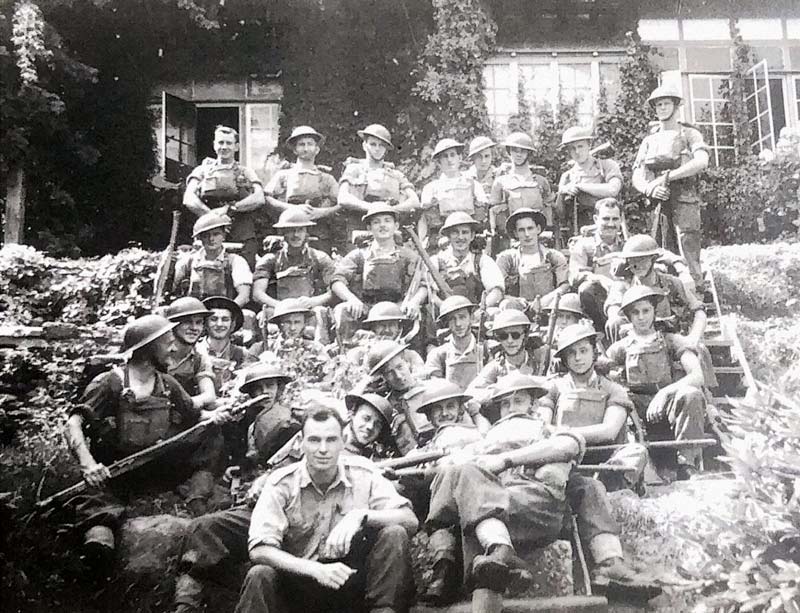
Gartshore (front, centre) and men of 13 Platoon. [courtesy Gartshore family]
Struggling to keep up with his leader without exposing himself to the enemy, Private Pearson noticed that his 13 Platoon comrade Herbert (Bert) Judd had sustained a serious wound to his face. Judd would later die on the beach and is buried in the Dieppe Canadian War Cemetery in nearby Hautot-sur-Mer.
As No. 3 Section Bren gunner Private William (Wilf) Rolston moved toward the casino, a sniper in the building killed him. Several men, notes the war diary, “took cover under the sea-wall until the Navy barrage of pom-poms into the Casino wiped out the sniper.”
Meanwhile, after stopping to provide cover with his Bren gun, ‘C’ Company Private James Ratcliffe lost contact with his section and decided to join 13 Platoon as it crawled past him. Up and down the beach, men became similarly separated from their sections and joined others.
During this scramble—waiting for lulls in artillery and mortar fire, searching for comrades or avoiding snipers—the platoon’s structure finally disintegrated. Many from 13 reached the casino, but often on their own.
Arriving during the second wave, one Landing Craft, Tank landed around 5:50 a.m.—15 minutes late. It was quickly wrecked and stranded near where 13 Platoon had leapt ashore. Its misfortune, however, proved a stroke of luck for the embattled infantry. The four guns aboard—two 2-pounder pom-poms and two 40mm Oerlikons—were welcomed support for the Rileys.
Numerous witnesses credited the naval gunners with knocking out several sniper and machine-gun positions on the upper floors of the casino. The action came at a cost though, all of the gun crew were killed or severely wounded. As the last of the vessel’s weapons fell silent, it was nearly 7 a.m. By then, the Rileys had subdued the pillboxes flanking the casino and were rushing the building.
The casino was two storeys and about 67 square metres in size with a matrix of hallways and gaming rooms. It also featured two three-storey towers facing the sea. The Germans had partially demolished the rear of the building in preparing to remove it entirely, but what remained was essentially a huge pillbox.
Rather than being captured by ‘B’ Company early in the assault as planned, taking the casino took the combined efforts of the whole battalion. There was nearly two hours of frantic action before the first men burst through an open door on the casino’s seaward side.
Casualties, and those simply pinned down, were scattered across the length of White Beach. ‘D’ Company, on the extreme right, had been almost completely wiped out in the first rush, with all its officers either dead or badly wounded. Its remaining men clung to whatever cover they could find. 13 Platoon, ‘C’ Company, had taken some casualties, but those still able to fight were now scattered among remnants of ‘B’ Company and the reserves from ‘A’.
When Lance-Corporal Lisson entered the casino with what remained of his No. 1 Section, he immediately joined ad hoc units being formed by other officers. The fight for the building’s tight corridors and dark, unfamiliar rooms proved brutal, with little quarter shown by either side.
Lisson’s second in command, acting corporal James Henderson, was wounded while crossing a hallway. A comrade propped him up, bandaged the wound and gave him a drink, but he died 15 minutes later. The other soldier rejoined the fight and “proceeded to help clear the building of Germans and did some good work as numerous dead Germans proved,” said a note in the war diary.
“Bullets were ricocheting all over the place, making one hell of a racket,” reported Private Jim Telfer of No. 2 Section of action inside the casino. “There was a pile of sandbags in one corner of the room facing the beach,” he continued. “Just then Eddie Boles yelled ‘Grenade’ and a potato-masher came tumbling out from behind the bags. The ceiling came down, but by the time I got up Eddie and a couple of others had finished the job.”
Despite the intense, close fighting, not all the enemy were dispatched. One German officer was found bleeding profusely from a head wound and one of the Canadians “slapped a field dressing on him [and] propped him up against the wall.” After the casino’s ground floor was cleared, the Rileys had 15 prisoners, two of whom died later of their wounds.
“Under Cpl Lisson’s orders we tied their thumbs behind their backs and sent them back to the beach,” said one private in his after-action report. This order, confirmed to the Germans in Allied operational plans captured after the battle, resulted in Allied prisoners taken at Dieppe being placed in shackles as retaliation.
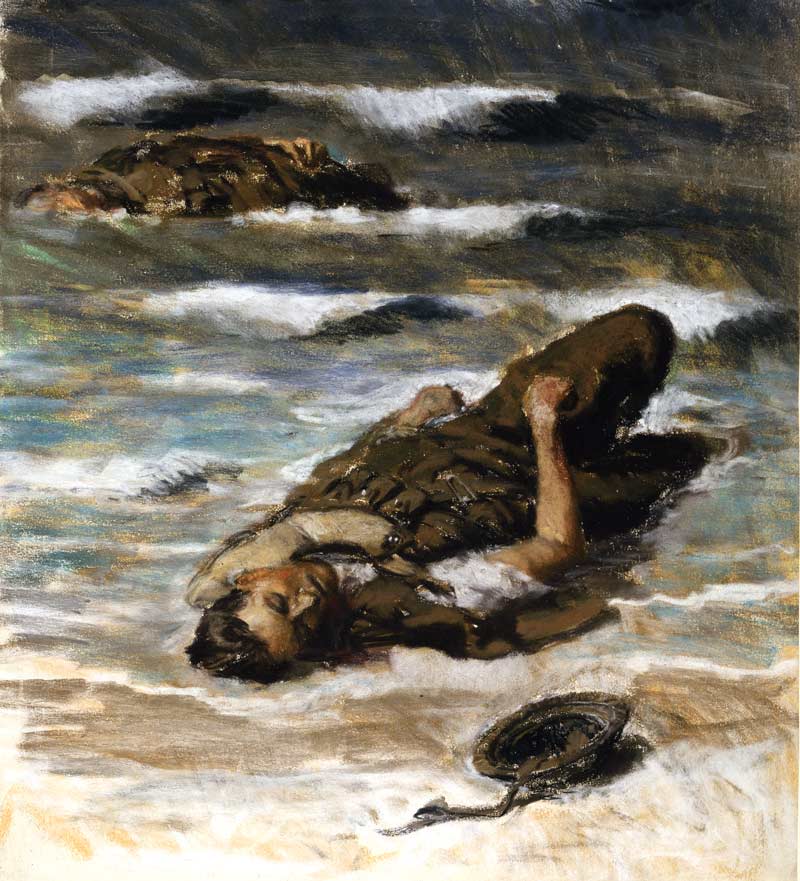
Artist Alfred Hierl depicts a casualty on the beach at Dieppe.[Alfred Hierl/CWM/19710261-5976]
There were bombs dropping and this tit-tit-tit of rifle and machine-gun fire along the water. We reached one boat, but it was so overloaded it sank.”
Suffering with his crippled arm, 13 Platoon commander Gartshore somehow managed to drag himself to the casino.
“That casino was as far as we got. I realized as soon as we got there that we weren’t going any farther,” he detailed later. Separated as they were, taking casualties seemingly every step of the way, it’s remarkable that at least 21 of the 34-strong 13 Platoon had made it from the landing, through the first wire to the seawall, then into the casino.
Unbeknown to Gartshore, however, not all his men stayed in the building. Before their leader reached the strongpoint, several made their way to the rear of the building closest to the town. A mixed platoon occupied the demolished section of the casino, engaged enemy positions and covered men attempting to cross the promenade into the town proper.
One member of 13 Platoon found himself with an assortment of troops behind a hedge between the casino and town. He still had a 2-inch mortar and some ammunition and reported afterward that, “there was a [machine gun] nearby well concealed and HE bombs which I fired had no effect.
“It was finally wiped out by one of our tanks,” noted the soldier. “Heavy and continuous fire came from the buildings across the esplanade and kept us under cover for a long time, until the order for withdrawal was received.”
Another 13 platoon private reported joining a group in a trench system behind the casino that ultimately covered the return of comrades back toward the building.
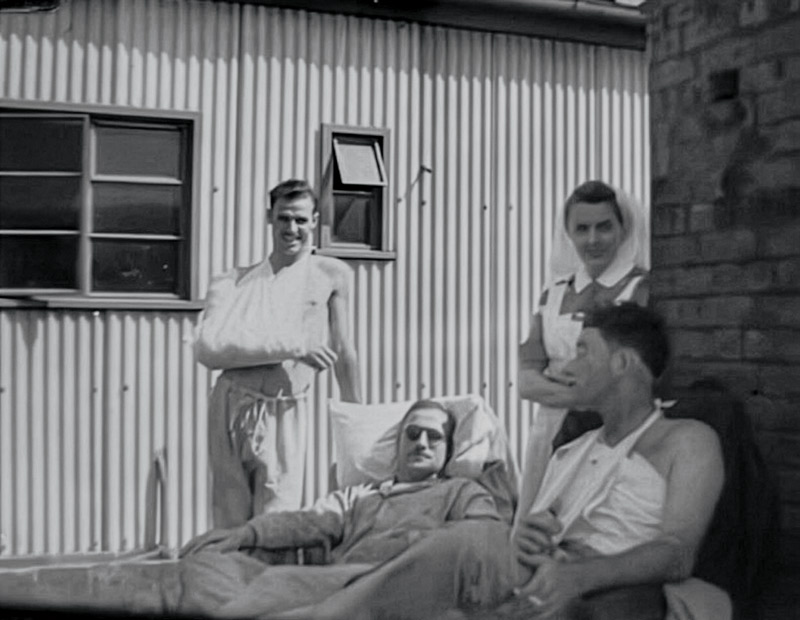
Gartshore (right in sling, left) recuperates with comrades in England following the raid. [courtesy Gartshore family]
Smoke canisters outside the casino covered the retreat. In small groups, those who could helped the wounded through the swirling black cloud. Many made for the leeward side of the beached Landing Craft, Tank that had arrived with the second wave. Numerous casualties had gathered there, too, during the battle. No. 2 Section commander Boles witnessed “Gartshore and…Medical Officer (Capt Clare) both bandaged up and both crawling about and fixing other wounded men.”
As the troops retreated to the water’s edge hoping to be rescued by landing craft, Germans in shorefront buildings and the flanking heights continued to fire on them. In response, the Canadians organized a rearguard of Bren gunners comprising reinforcements from Les Fusiliers Mont-Royal, a unit of Royal Marine Commandos and several men of 13 Platoon. They worked to hold back the encroaching enemy as long as possible.
Terrible losses in both men and craft during the landings meant too few vessels were available to evacuate survivors. Several that did arrive were destroyed before getting to shore. Others, overloaded with wounded, sank shortly after departing.
The withdrawal proved particularly hazardous for the Rileys, and 13 Platoon suffered further casualties. One 13 man was hit in the head while running for a landing craft but managed to scramble aboard. Another, by then separated from the platoon, was “knocked under an LCA and dragged into the sea.” He was pulled aboard by a comrade. Wounded earlier, one 13 member was helped onto an overcrowded LCA by Gartshore and Private John Gralick. Gralick later disappeared, his body never recovered. He, like many others missing after the raid, is commemorated in England on the Brookwood 1939-1945 Memorial, located some 50 kilometres west of London.
“We were walking in water up to our waists and necks,” recounted Gartshore later of the retreat. “There were bombs dropping and this tit-tit-tit of rifle and machine-gun fire along the water. We reached one boat, but it was so overloaded it sank.
“When that happened, I thought that was it, we weren’t going to get out. But along came another boat, and we all got in. We went first to a destroyer, but it took off and left us there. Then we went to a tank landing craft. Just as they were going to get us up, the boat was hit by a shell and exploded. You could see bodies flying through the air. I remember this huge red ball and then parts of the boat and these bodies flying all over the place.”
Gartshore was eventually transferred to another vessel and returned to England that evening. In total, 15 men of 13 Platoon, many of them wounded, made it back aboard various vessels. They left behind 11 dead and eight who were taken prisoner, four of them wounded. The captured had either covered the withdrawal or were too badly injured to be moved.
For his actions that day, Gartshore was awarded a Military Cross. He spent months in hospital afterward and never returned to active duty. Indeed, on Aug. 20, 1942, only about 100 of some 580 Rileys who were part of the Dieppe Raid reported for duty.
Advertisement