Far East Flyers
In December 1939, Britain had undertaken to form distinct Royal Canadian Air Force squadrons overseas, manned as far as possible by Canadian graduates of the


In December 1939, Britain had undertaken to form distinct Royal Canadian Air Force squadrons overseas, manned as far as possible by Canadian graduates of the
– It is a tie! Just in time for Father’s Day, Legion Magazine will be releasing our fifth SIP which marks the 70th anniversary

¹ As a part of their fieldcraft training, soldiers are taught about camouflage. They’re given a checklist of basic principles to use in order to stay hidden from the enemy—things like avoiding silhouetting yourself, shadows, spacing, shininess, etc. The list is entitled: “Why Things Are Seen.” For many Canadian soldiers—particularly the Princess Patricia’s Canadian Light Infantry—the phrase has become a part of the common language, used to point out the basic reason why something is screwed up. If an outpost runs out of batteries, for example, and none can be sourced and so all sorts of crucial things stop working, a soldier hearing of the situation might quip: “Why things are seen.” It is a synonym for a blunder.
1. Gone But Not Forgotten If there was one time of the year to make a special effort to honour the sacrifice made by the
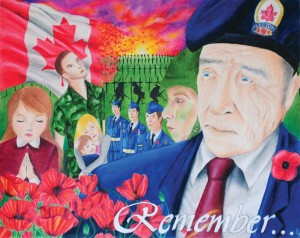
One winner of the 2013 Legion Poster and Literary Contests has had a rare opportunity to get his message across—twice. Owen Brown, 17, from Guelph, Ont., wants other young people to appreciate that soldiers and veterans are real people who carried a burden that can only be imagined by today’s youth.
“Those people carried such a great weight,” says Brown, who has had back-to-back first- place finishes in the senior black and white poster category. His poster, submitted by Waterloo Branch, depicts a young soldier and a veteran, standing side by side under the words “The Weight of our Freedom.” Where their shoulders meet are scenes of battles on the ground, sea and air, representing “the duress and pain they went through,” says Brown. They represent the weight of freedom for their generation.
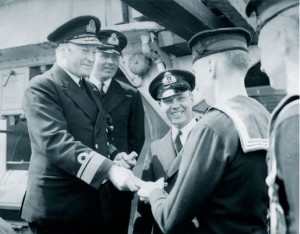
Through the crisis of the Atlantic war in 1942, the Royal Canadian Navy worked much harder than its British and American allies realized. In fact,