




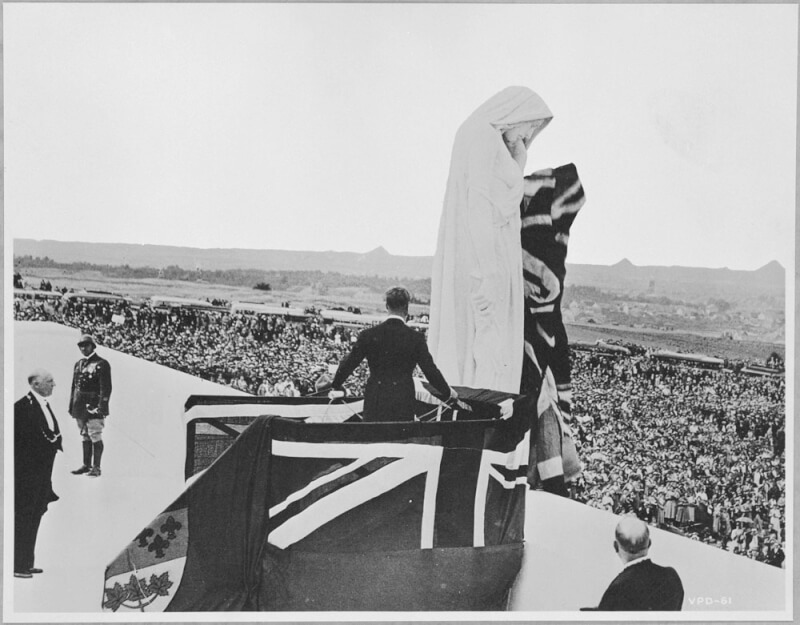
King Edward VIII unveils the figure of Canada at the Canadian National Vimy Memorial on July 26, 1936.
[LAC/PA-148880]
On board were roughly 6,400 Canadian “pilgrims” making the nine-day journey to France for the highly anticipated unveiling of the new Canadian National Vimy Memorial. On the first day of the voyage, each pilgrim received a commemorative silver badge resembling a medal to be proudly worn on their chests throughout the journey to France and back.
In the 90 years since that journey, the great memorial itself, with its high white towers, brooding figures and broad walls carved with the names of Canadian Great War soldiers missing or presumed dead, has come to embody the spirit of Canada’s wartime memory and sacrifice. And yet, one might argue that another object of that time, quite humble and mostly forgotten, more profoundly animates Canadian remembrance—the Vimy Pilgrimage Medal.
The thousands of pilgrims who received the medal were a mixture of surviving veterans and nursing sisters of the First World War, returning to the battlefields for the first time, plus relatives of Canadian soldiers who had died in France and Belgium. Among these were 50 Memorial (Silver) Cross mothers and widows who had lost sons or husbands in the war. No mass gathering of Canadians before or since has contained such a deep well of personal experience with wartime sacrifice.
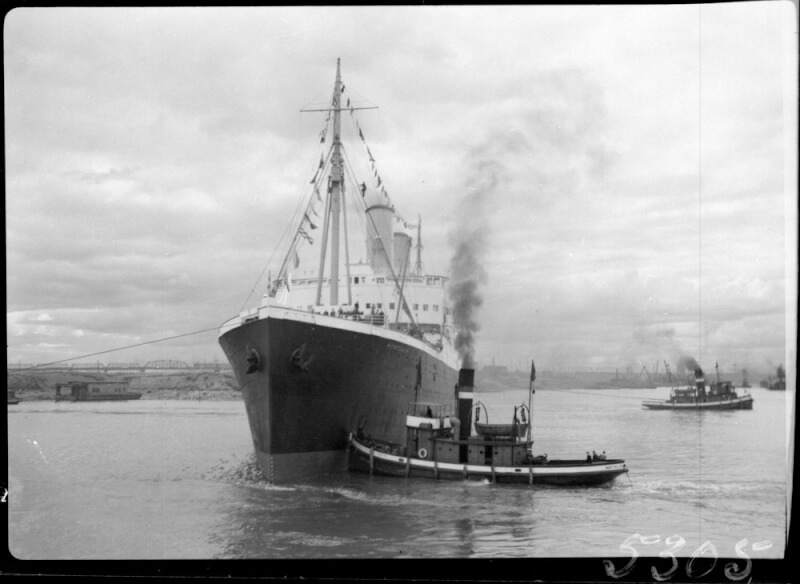
SS Montcalm was one of five ships that carried participants of the Vimy pilgrimage overseas. [LAC/PA-056955]
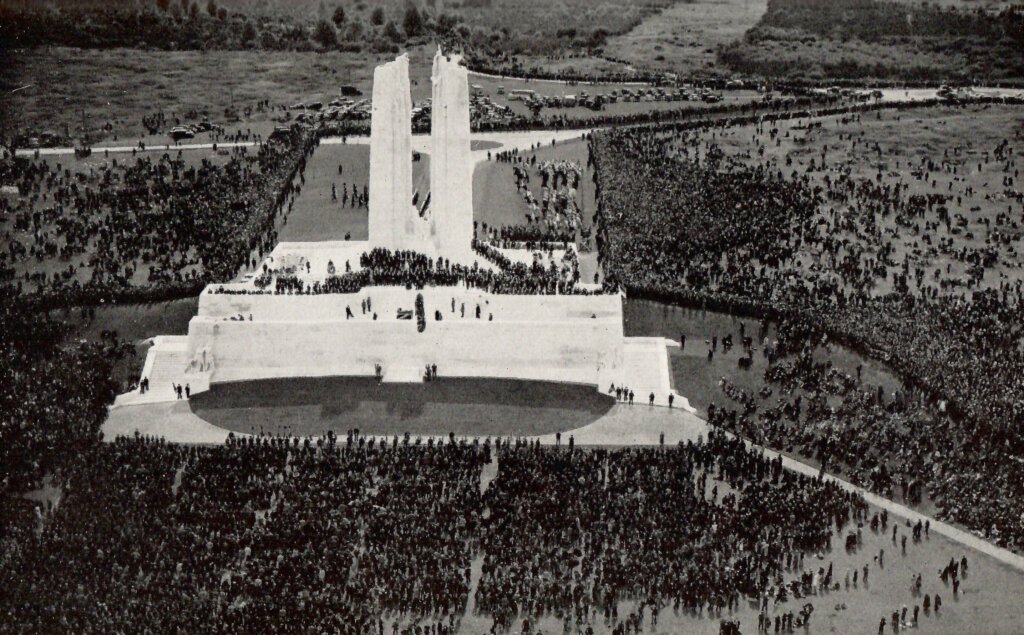
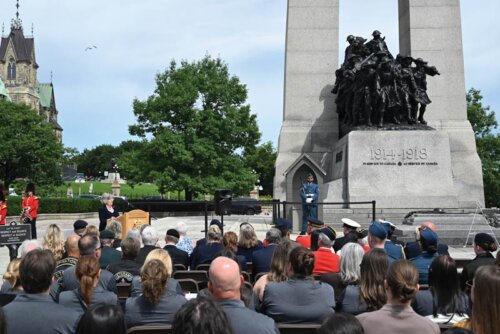
The crowd at the unveiling of the Canadian National Vimy Memorial. [Canadian Geographical Journal, December 1936]
“Nothing in the domestic story of Canada appears in recent years to have stirred the people of this Dominion quite so much as the unveiling of the Canadian National Memorial on Vimy Ridge,” wrote William W. Murray, a veteran and journalist, in an account of the pilgrimage published later that year in the Canadian Geographical Journal.
This “epochal event,” he wrote, “more than anything else, was responsible for riveting the attention of the whole world on Vimy, on that tranquil afternoon last July.”
In the aftermath of the Great Depression, wealthy Canadians had begun private travels to Europe to visit the still-scarred battlefields of the Western Front. However, there was a wider groundswell of interest among veterans, and the families of soldiers who hadn’t returned, to visit the places and walk the grounds where their loved ones had died.
To meet this demand, in 1934 the Canadian Legion announced that a “Pilgrimage to the Battlefields” would take place in 1936 to coincide with the unveiling of the Vimy memorial. More than 6,000 veterans and family members of servicemen killed in action were selected, led by a delegation of officials including Alex Ross, the Legion’s president.
“It was,” wrote historian Tim Cook in Vimy: The Battle and the Legend, “a dauntingly complex undertaking — the largest ever peacetime movement of people from Canada to Europe.”
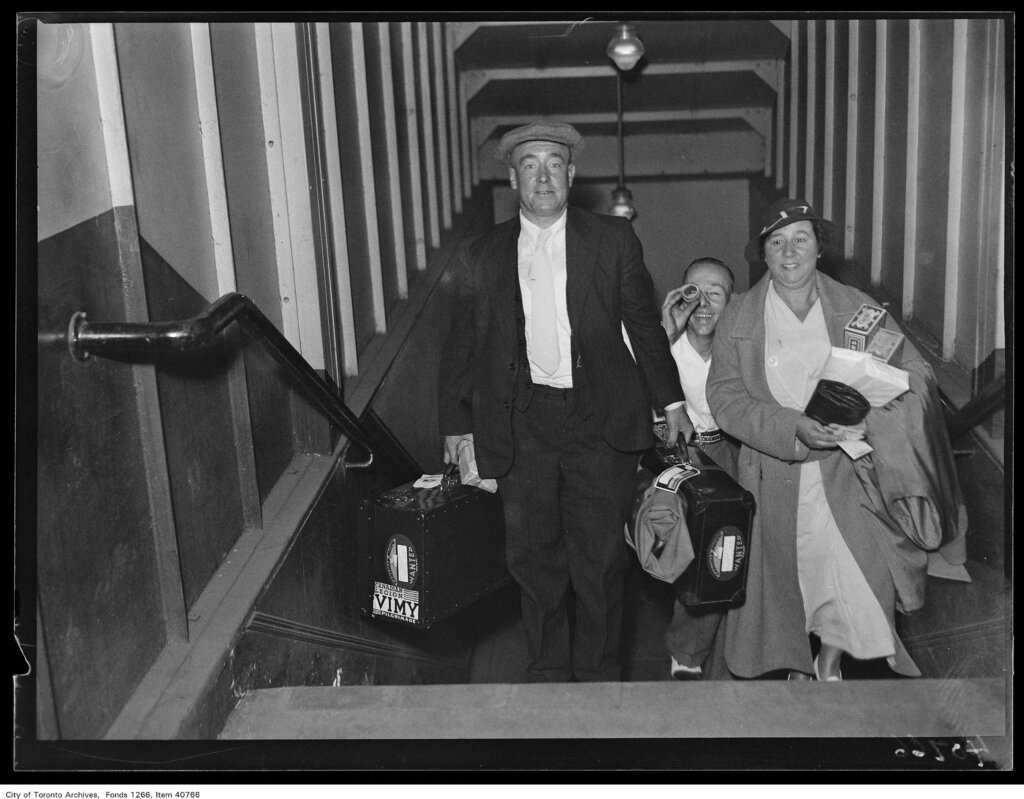
Vimy pilgrims at Toronto’s Union Station on July 15, 1936. [City of Toronto Archives/40766]
Typical of the women on board was Agnes Wrenn of Bowmanville, Ont., who at age 73 was eager to see the graves of her dead sons Alexander and Edward. She and every other pilgrim was issued, on the first day of the voyage, a haversack, a beret—khaki for veterans and blue for everyone else—a guidebook and a Vimy Pilgrimage Medal to be worn on the right breast, opposite any service or gallantry medals.
“It was,” wrote historian Tim Cook in Vimy: The Battle and the Legend, “a dauntingly complex undertaking — the largest ever peacetime movement of people from Canada to Europe.”
The pilgrimage medals were silver medallions embossed with images of a cross, the memorial itself, a wreath of poppies and the words “Vimy Pilgrimage.” The medallion was attached to a blue-and-gold ribbon fastened by a silver pin that said, “CANADIAN LEGION 1936.”
In April 1917, Vimy Ridge had been a scene of mud, death and devastation. Nineteen years later, on July 26, 1936, it was bathed in sunshine and surrounded by a sea of worshipful onlookers including not only the Canadian pilgrims, but thousands more who had come from Britain and France, all gathered amid the gleaming monument.
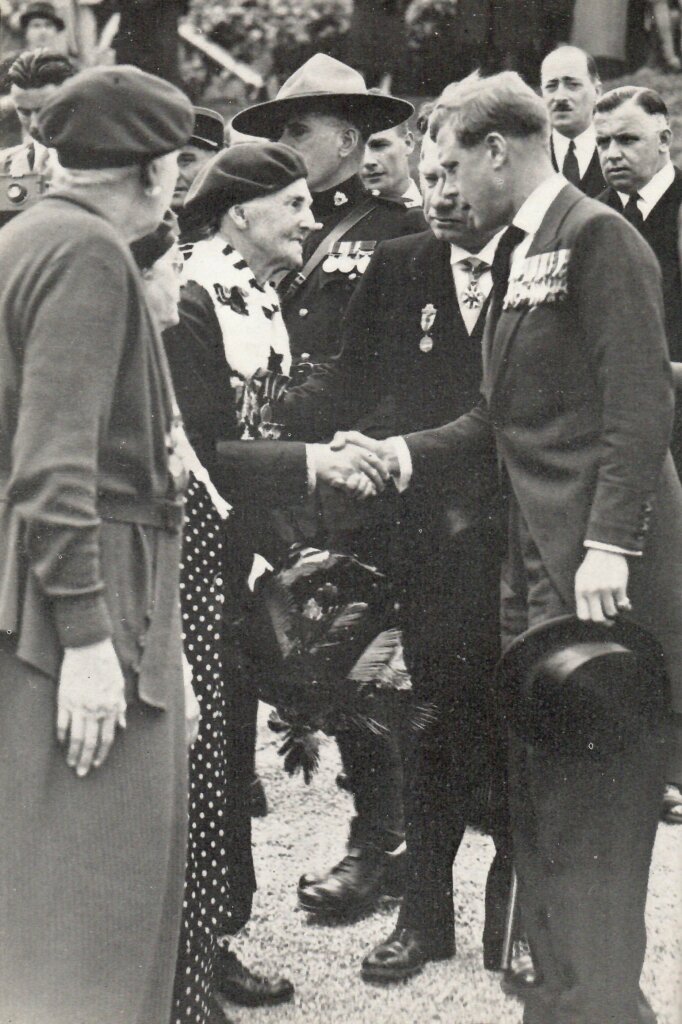
King Edward VIII meets Silver Cross Mother Charlotte Wood at the 1936 unveiling event. [Canadian Geographical Journal, December 1936]
Holding her hand the King said, “I wish your sons were all here.”
“Oh, sir,” she replied, “I just can’t figure out why our boys had to go through that.”
“Please God, Mrs. Wood, it shall never happen again,” the King replied.
Wood died in 1939, one month after Canada was once again at war in Europe.
Where are the thousands of Vimy Pilgrimage Medals today? The medal worn by King Edward was acquired by the Canadian War Museum, with help from the Vimy Foundation, at a cost of about $20,000 when it and other items from the Duke and Duchess of Windsor’s estate were auctioned in 2010.
One imagines many of the other medals, once worn by Vimy pilgrims on that emotional day, are now in local museums—or in shoeboxes, drawers or attics across the country, perhaps forgotten by those who inherited them, or hopefully cherished.
This writer has one in his possession, an old and weathered medal handed down from a late family friend whose mother attended the 1936 pilgrimage. It’s a small but treasured symbol of a country’s remembrance, and a touchstone to one Canadian family’s wartime grief.
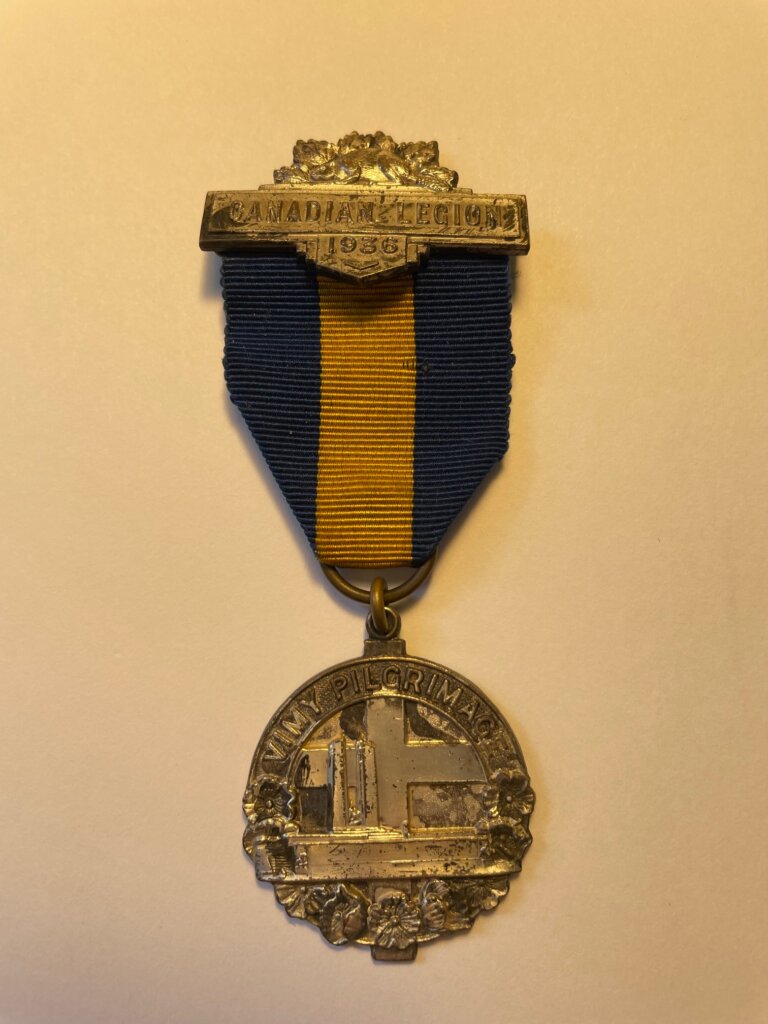
The writer’s Vimy Pilgrimage Medal. [Richard Foot]
Advertisement




My great-grandfather was part of that pilgrimage. I have his memorabilia from the trip, including his medal and the programme.
What an awesome story!! I never knew about this medal, and didn’t know much about the 1936 event. What a memory for those “pilgrims” who travelled there!
My grandfather wanted to go but couldn’t afford it.