

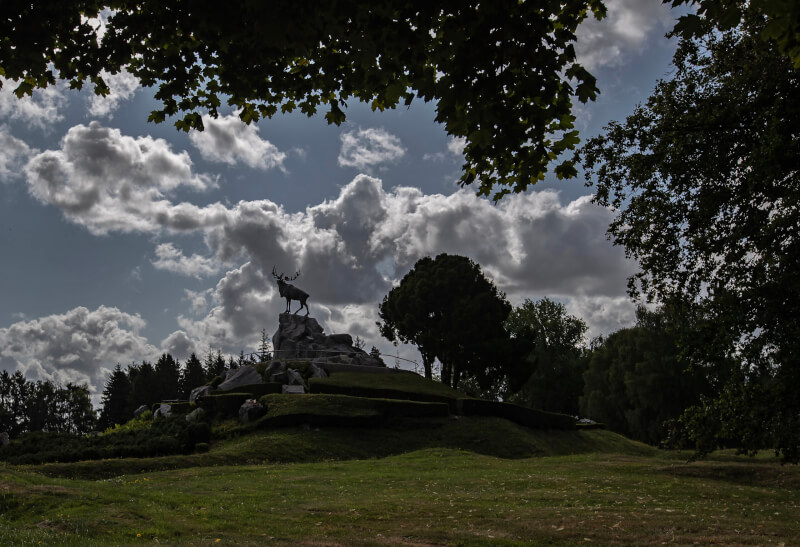
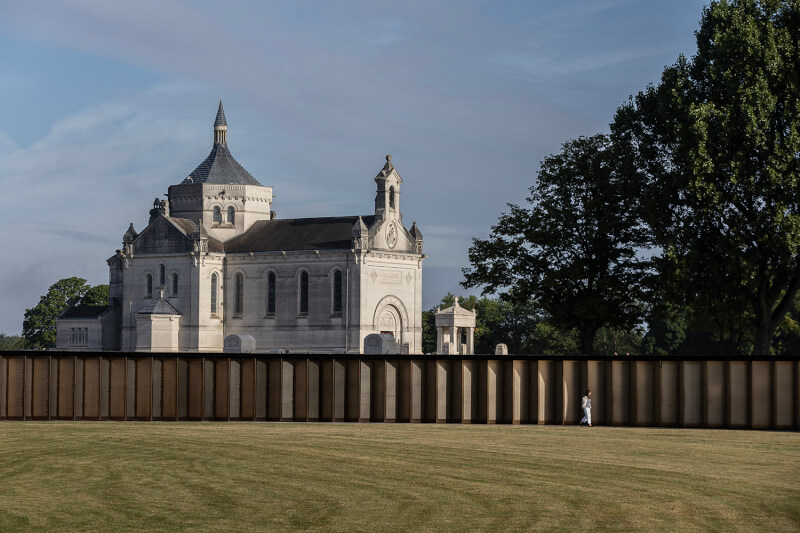
The distinctive Beaumont-Hamel Newfoundland Memorial at the site in northern France where the Newfoundland Regiment was all but wiped out on the first day of the Battle of the Somme. [Stephen J. Thorne/LM]
The grey-brown mud and deep red blood have surrendered to shades of green and gold, the fields of battle now verdant forests, placid pastures, and crops of corn and grain.
The trenches and craters of 1914-1918 have long since turned to undulating, grass-covered mounds and soft folds and bowl-shaped cavities in the landscapes of places with iconic names like Ypres and Passchendaele, Vimy and the Somme.
No matter how much we teach, we never really learn
The villages and towns, cities and hamlets, laid waste by millions of artillery rounds, have been rebuilt.
Soaring monuments and meticulously curated museums turn the terror, loss and heartbreak to awe, reverence and regret—regret for the futility of war and the ultimate realization that no matter how much we teach, we never really learn; that regardless the lessons of history, we are nevertheless condemned to repeat it.
But there is genuine grace and gratitude, too. Canadian Maple Leaf Flags are draped in house windows, hung on walls and fences, and flap on flagpoles alongside the tricolours of France and Belgium and the vivid blue and gold of the European Union.
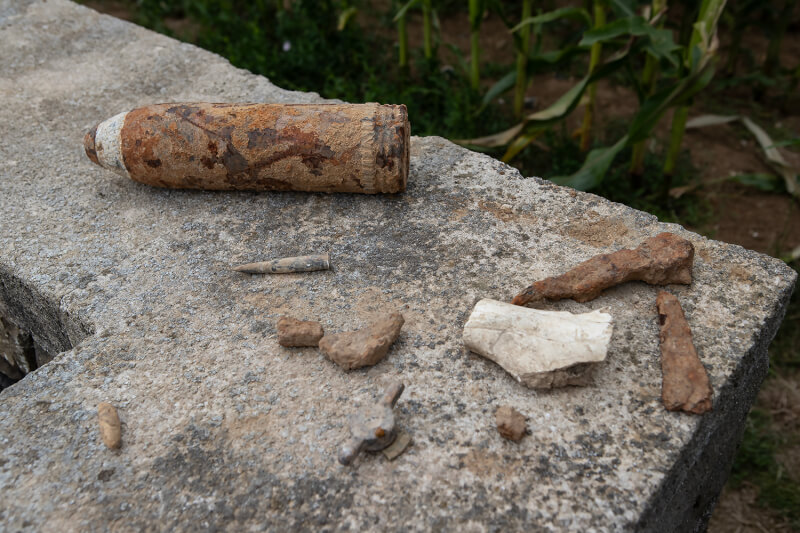
Shrapnel, bullets, an unexploded shell, and a human bone on the wall of a battlefield cemetery in the Somme. [Stephen J. Thorne/LM]
A stone’s throw away, a new war rages in present-day Ukraine
A stone’s throw away, a new war rages in present-day Ukraine; Poland and the Baltic states are on high alert; and passive threats allude to another potential maelstrom, the likes of which the world has never seen.
For 30 years now, historian, guide, storyteller and former teacher John Goheen has led legionnaires and others on pilgrimages to WW I & II sites big and small—from the grand cathedrals and monuments, to museums of every size, to the remote corners, expansive battlefields and sweeping beaches of Europe in what has become an exhaustive, lifelong quest to infuse Canadians with knowledge and understanding of their military history.
Here are France and Belgium 107 years after they were caught in the crucible of the Great War. Next week: Vimy.
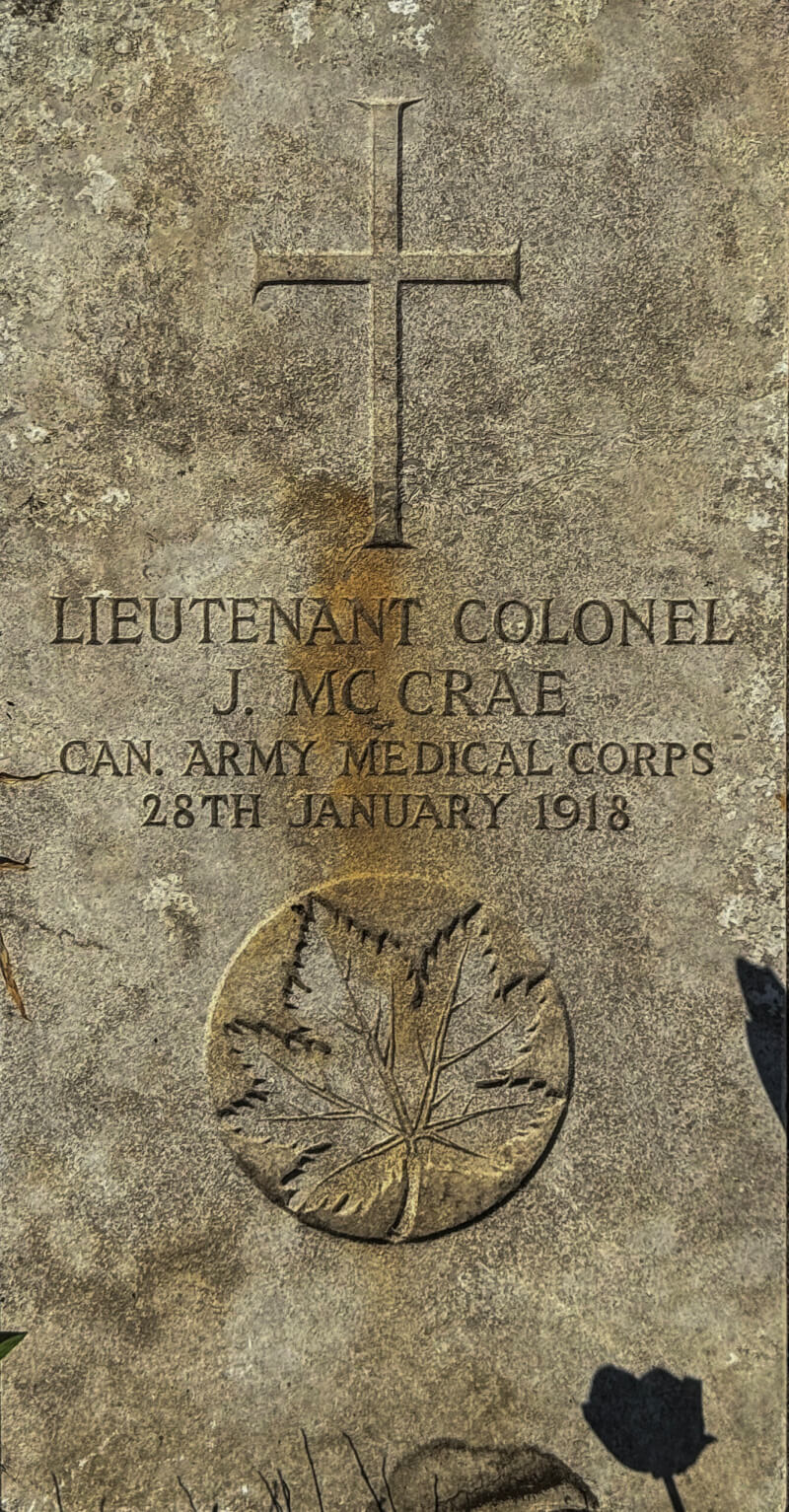
John McCrae, Canadian author of In Flanders Fields, was buried with full military honours in Wimereux Cemetery, just north of Boulogne, not far from the fields about which he wrote. [Stephen J. Thorne/LM]
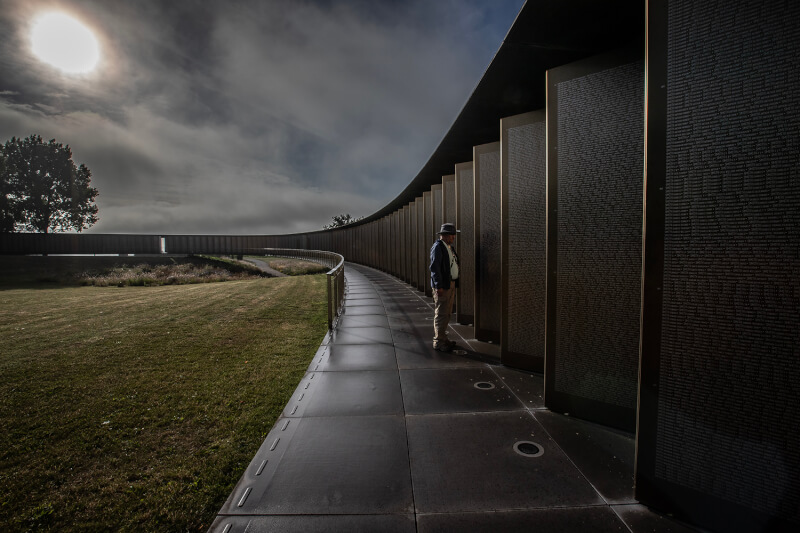
The morning sun pierces the fog at the Ring of Remembrance First World War memorial at Notre-Dame-de-Lorette military cemetery in France. [Stephen J. Thorne/LM]
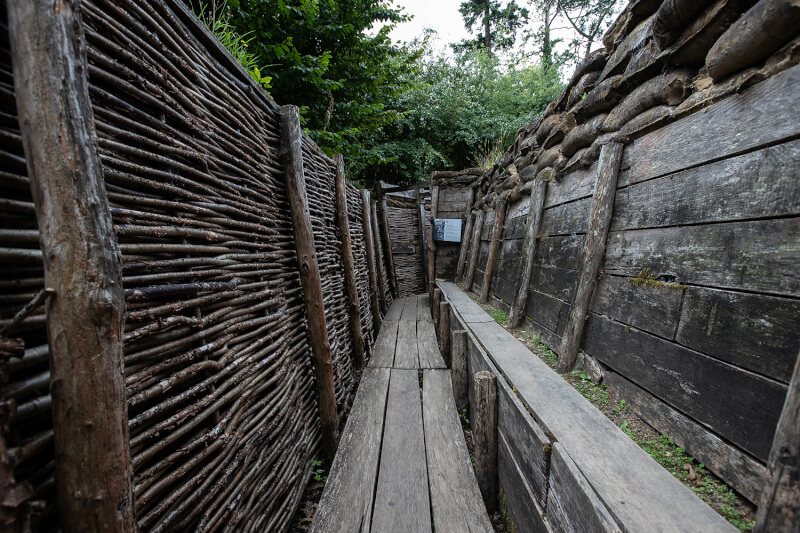
Restored trenchworks at Zonnebeke illustrate developments in construction, comfort and defence, including benches to sit on and duckboards to help allay the discomfort and irritations of incessant and insidious mud. [Stephen J. Thorne/LM]
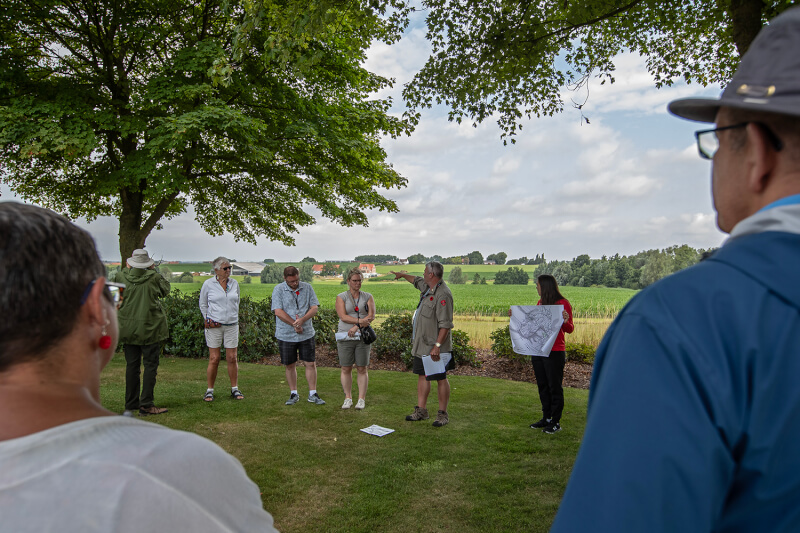
Standing at the site of one of the Canadians’ last objectives before taking the village, John Goheen points to the approaches to Passchendaele, a muddy quagmire in November 1917. [Stephen J. Thorne/LM]
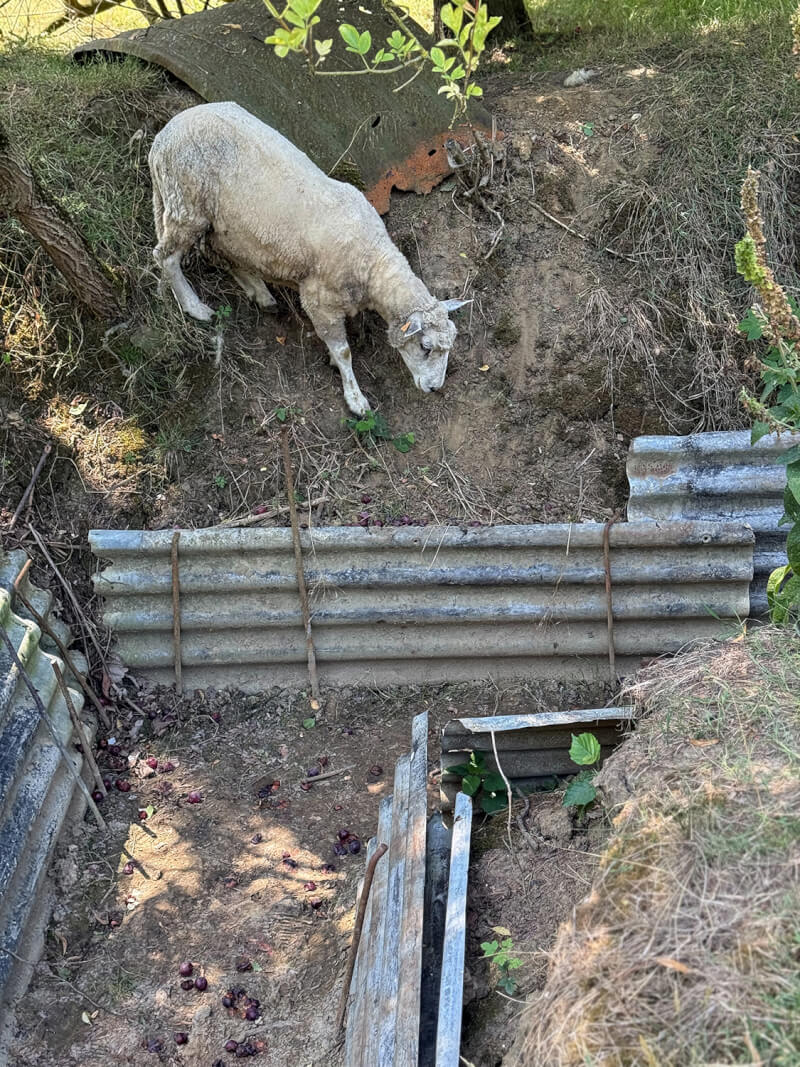
A sheep forages alongside surviving trenchworks at Hooge Crater. [Stephen J. Thorne/LM]
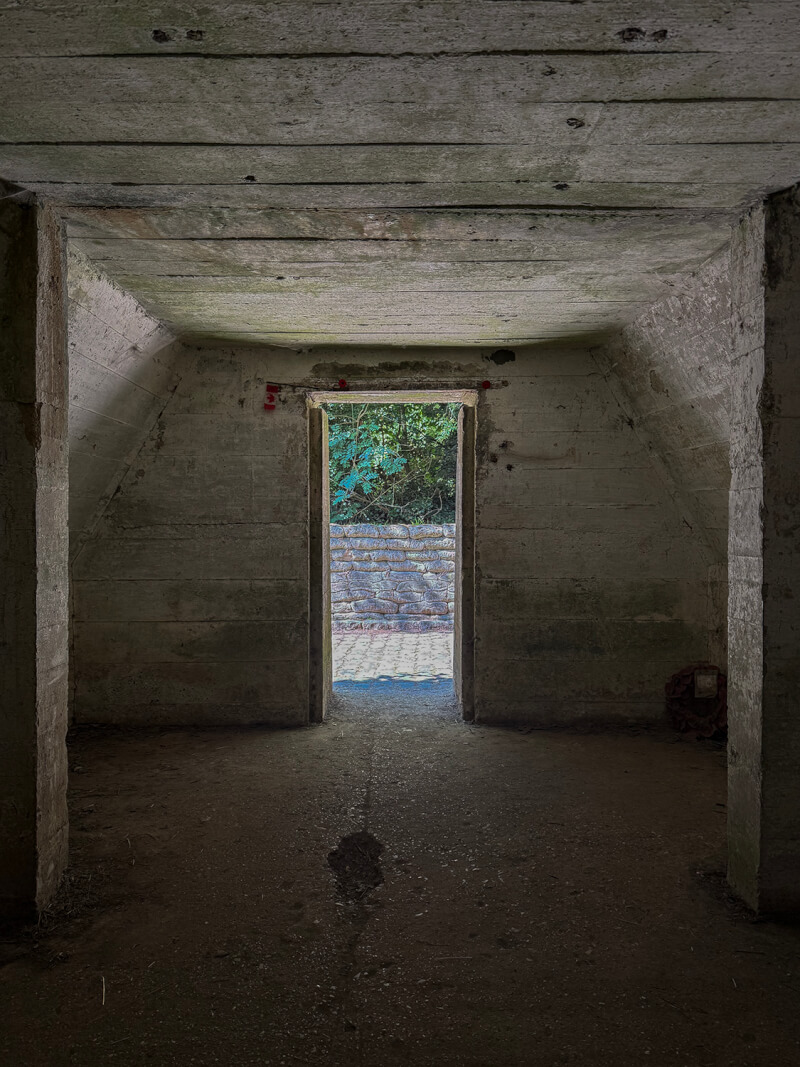
A room at the Essex Farm dressing station, the site where John McCrae wrote In Flanders Fields. [Stephen J. Thorne/LM]
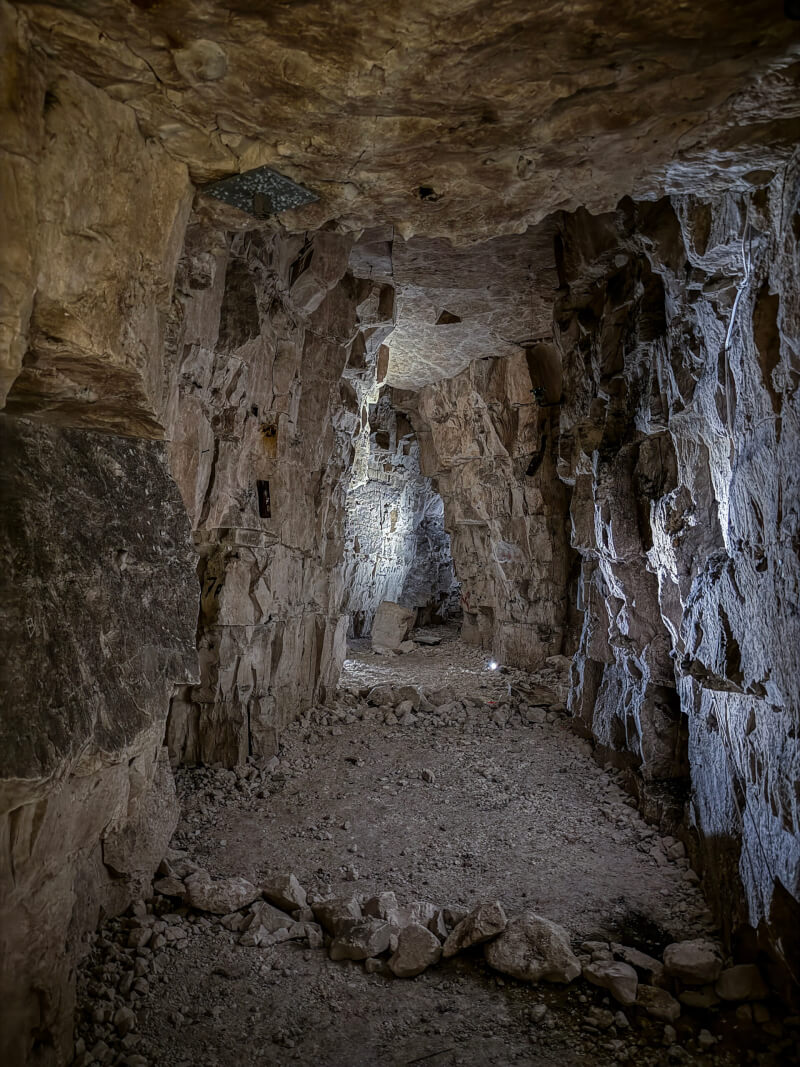
The Wellington tunnels 20 metres under the French town of Arras, where New Zealanders linked the area’s medieval chalk extraction tunnels to create a network of underground barracks large enough to accommodate up to 24,000 soldiers. [Stephen J. Thorne/LM]
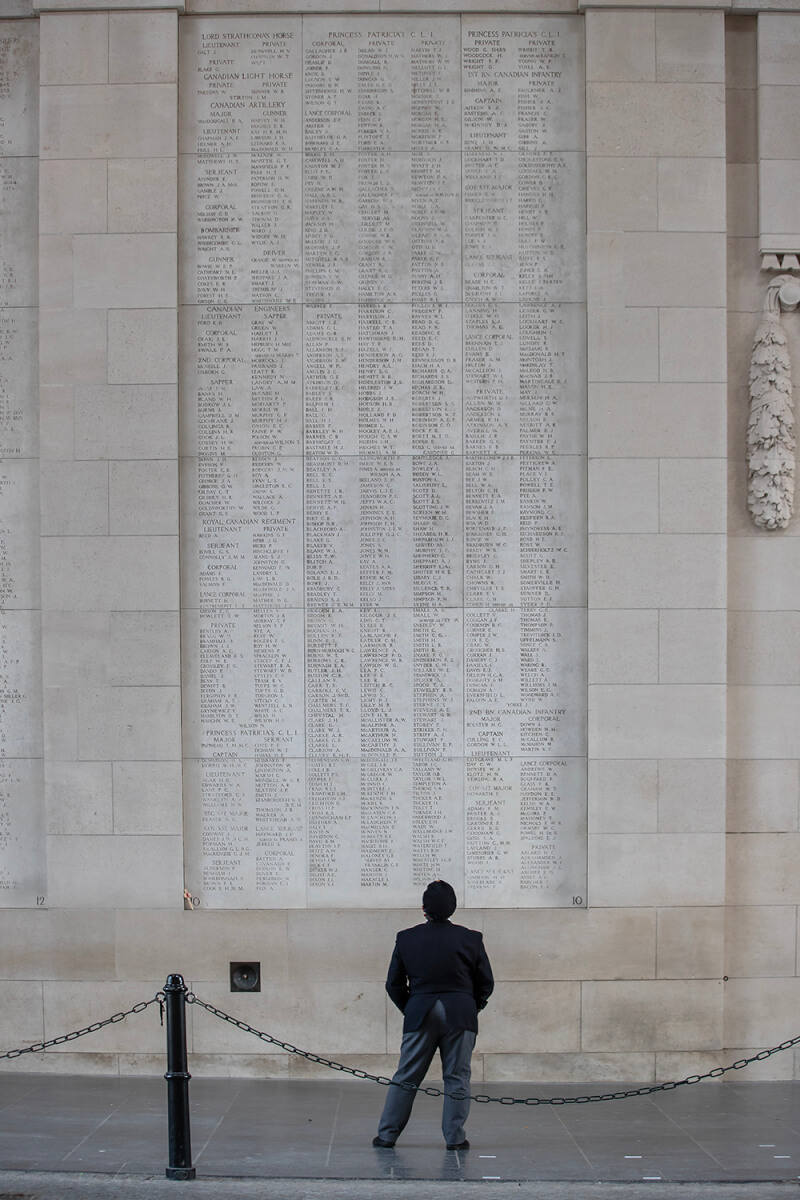
Taking in one of the Canadian panels at the Menin Gate in Ypres (Ieper). The panels bear the names of 54,896 Commonwealth soldiers, including 6,983 Canadians, who died in the Ypres Salient during WW I and have no known grave. [Stephen J. Thorne/LM]
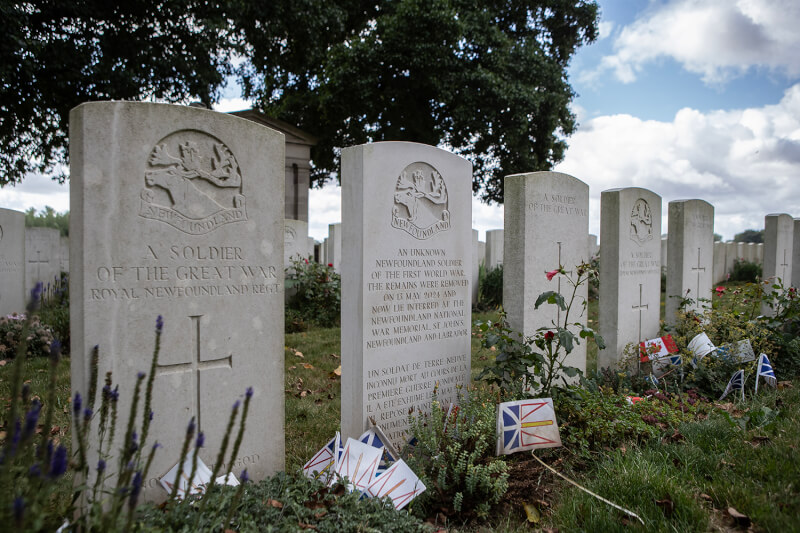
The previous grave of Newfoundland’s unknown soldier is marked in a row of unknowns at Cagnicourt British Cemetery in France. His remains were exhumed in May 2024 and re-interred at the Newfoundland National War Memorial in St. John’s, N.L. [Stephen J. Thorne/LM]
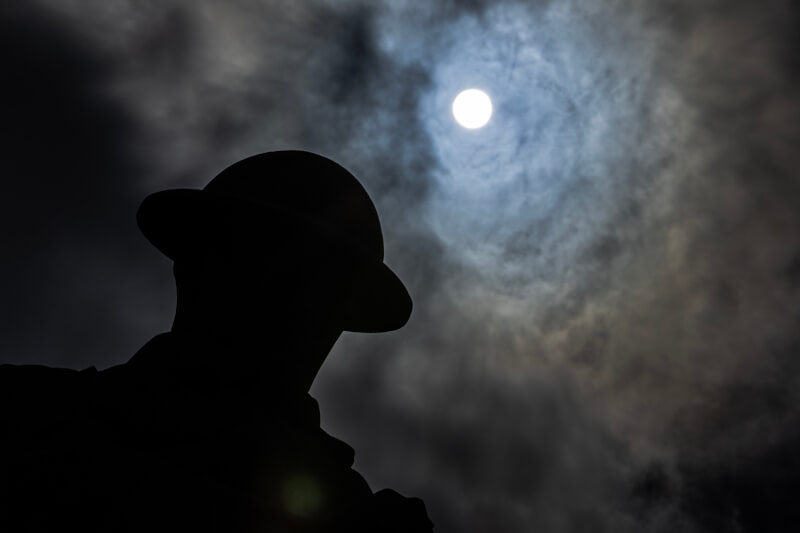
The St-Julien Memorial to Canadian WW I troops near Ypres in Belgium’s Flanders region, better known as The Brooding Soldier, is among the most compelling memorials in Western Europe. It was here during the Second Battle of Ypres in April 1915 where the Germans first deployed gas on the Western Front, initially against French colonial Algerian troops, then Canadians. [Stephen J. Thorne/LM]
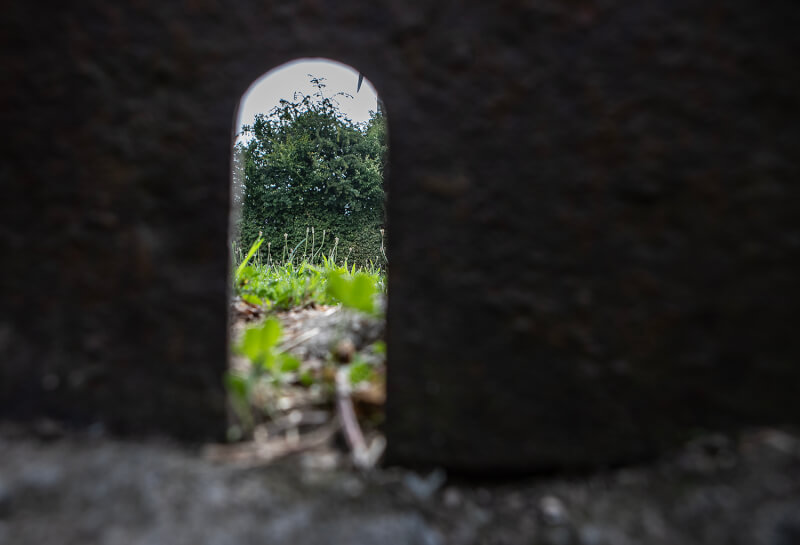
A peephole still offers a view from a restored WW I trench on the edge of Ypres (Ieper). [Stephen J. Thorne/LM]
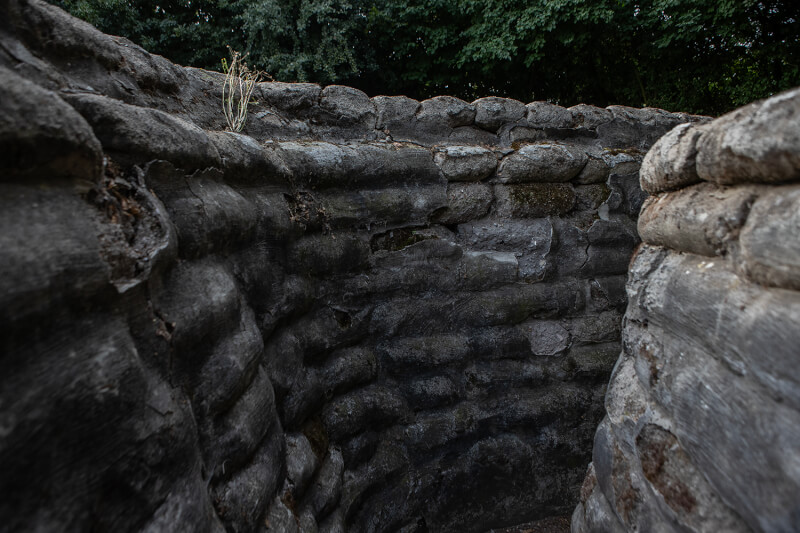
The trench walls were higher in the front than in the back. Trenchworks were refined as the war drew on. [Stephen J. Thorne/LM]
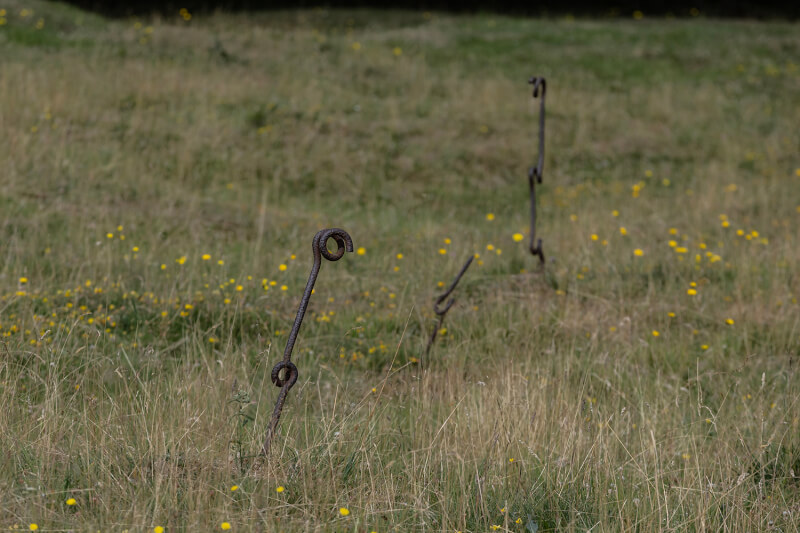
Iron stakes, like these at Beaumont-Hamel, held barbed wire in place, but they were no match for well-placed artillery shells. [Stephen J. Thorne/LM]
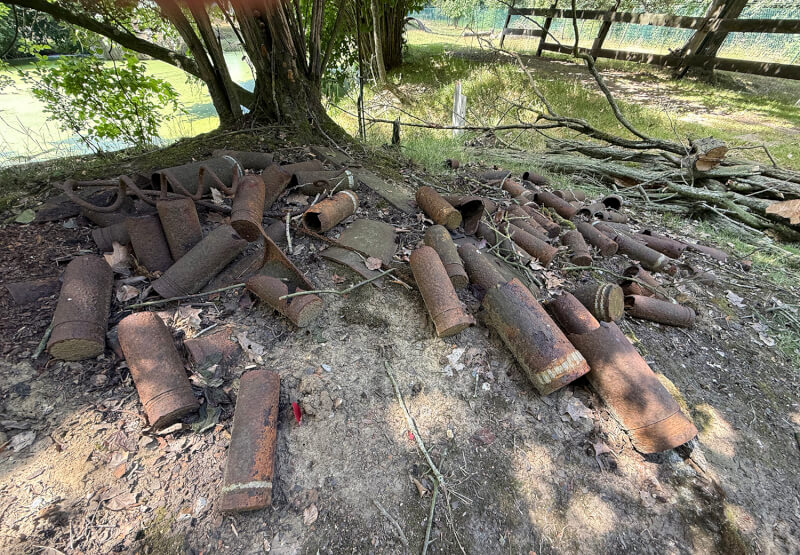
The iron harvest, here at Hooge Crater, still yields Great War detritus, deadly and otherwise. Experts expect the discoveries will continue for another 500 years. [Stephen J. Thorne/LM]
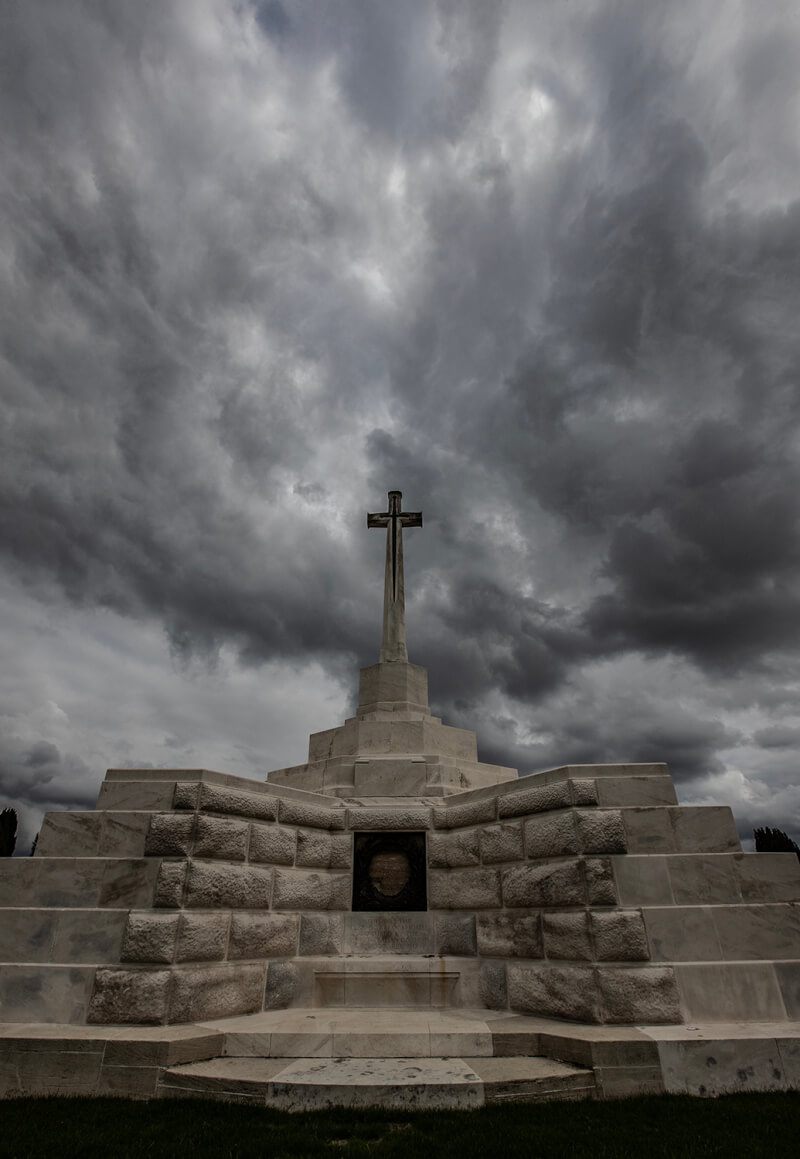
The Cross of Sacrifice at Tyne Cot, with more than 11,000 burials the largest of 23,000 war cemeteries and memorials managed by the Commonwealth War Graves Commission worldwide. Seventy per cent of those buried here are unidentified. [Stephen J. Thorne/LM]
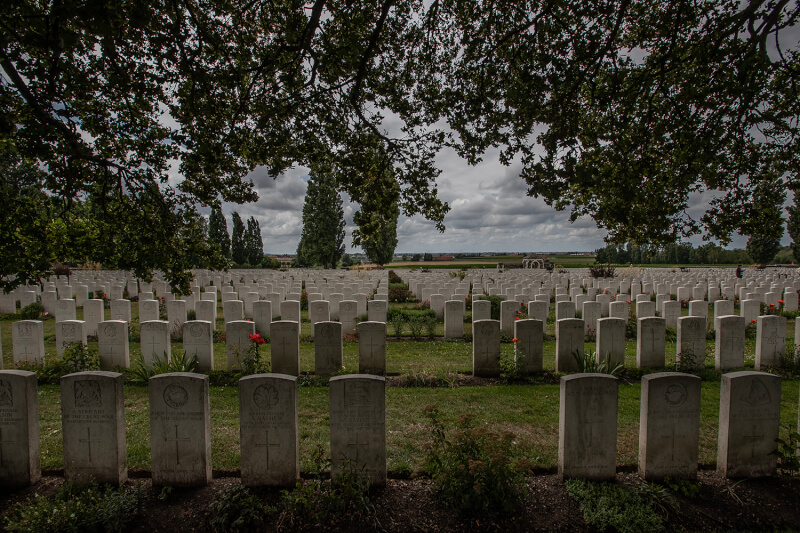
Tyne Cot’s 11,961 Commonwealth graves are an ominous sight. [Stephen J. Thorne/LM]
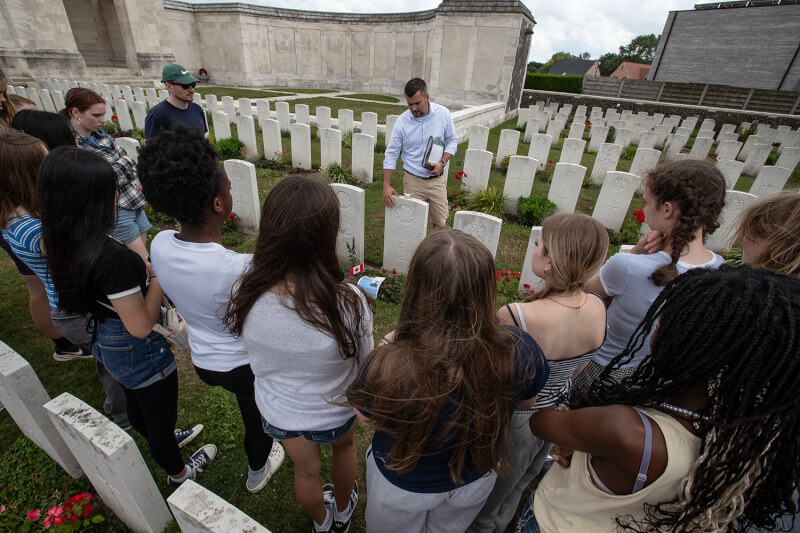
A teacher introduces British school students to Canadian Victoria Cross recipient, Pte. Peter Robertson of the 27th (City of Winnipeg) Battalion, a native of Pictou County, N.S. During the final assault on Passchendaele on Nov. 6, 1917, his platoon was held up by barbed wire and a German machine gun. Robertson dashed round to an opening on the flank of the enemy position and rushed the gun. After a desperate struggle, Robertson killed four of the crew and turned their weapon on the rest. His platoon was then able to continue on to its objective, with Robertson firing the captured gun at the enemy as it retreated. Later, when two of his own snipers were wounded in front of their trench, he went out and carried one of them to safety under heavy fire. He was killed by a bursting shell while trying to get the second man and is buried at Tyne Cot Cemetery. [Stephen J. Thorne/LM]
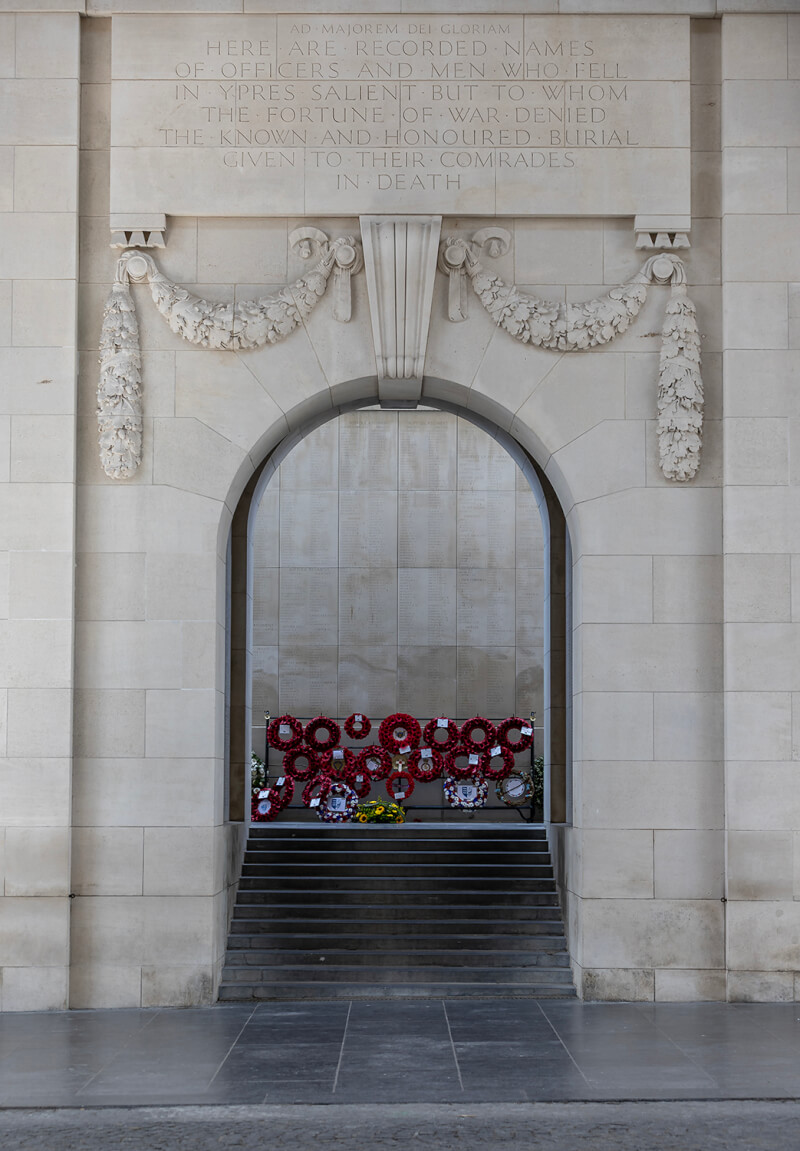
Wreaths are deposited at the Menin Gate in Ypres (Ieper), Belgium, during 8 p.m. bugle ceremonies each night — more than 34,000 consecutive since July 2, 1928. The panels bear the names of 54,896 British and Commonwealth soldiers, 6,983 Canadians among them, killed in the Ypres Salient and whose graves are unknown. [Stephen J. Thorne/LM]
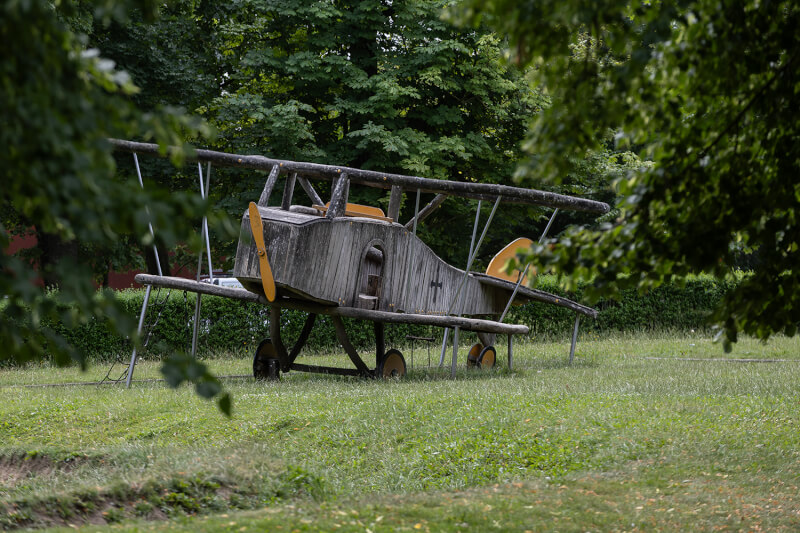
In Passchendaele-Zonnebeke, the war may be long ago but it is never far away. A children’s playground is tucked away on the grounds of the Passchendaele Memorial Museum, once a private chalet, still with magnificent gardens and a large pond. [Stephen J. Thorne/LM]
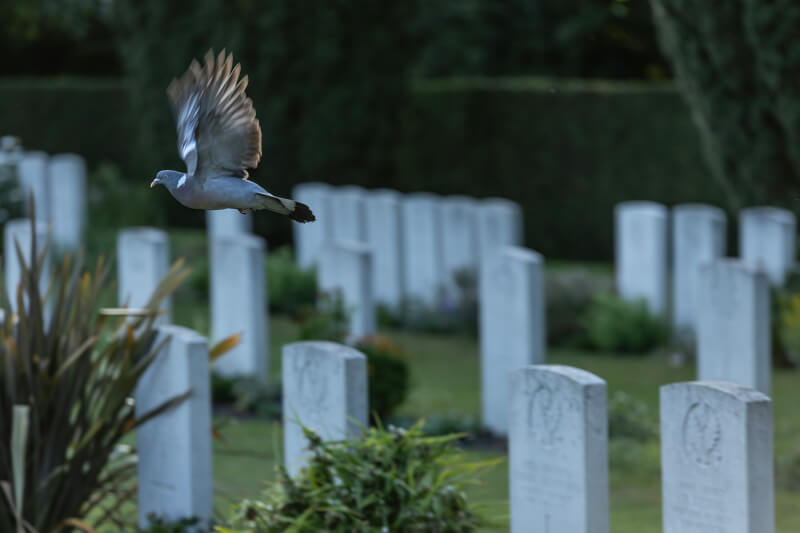
A pigeon launches from its perch atop a headstone in a small wartime cemetery nestled alongside a pond in Ypres. [Stephen J. Thorne/LM]
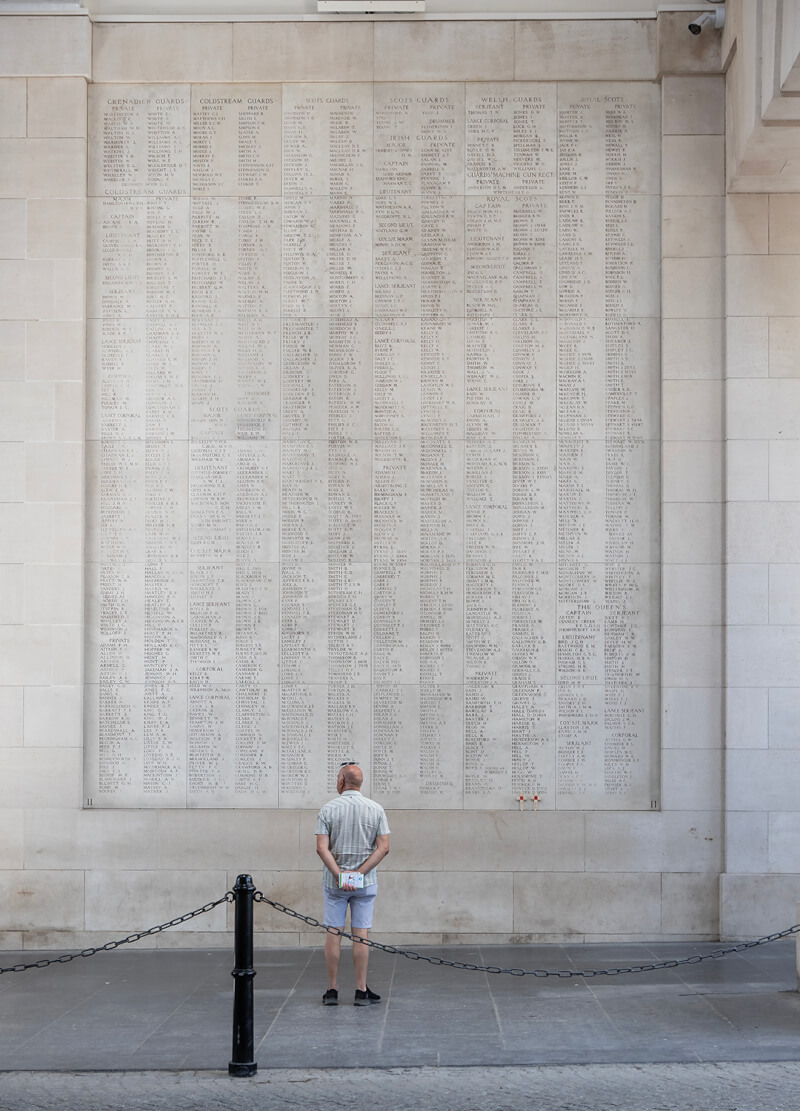
A passerby pauses to take in one of the panels at the Menin Gate. The magnitude of WW I loss is incomprehensible: 15-22 million dead; 23 million wounded. About 701,276 Allied KIAs were never identified, more than 54,000 of them listed at this iconic memorial in Ypres. [Stephen J. Thorne/LM]
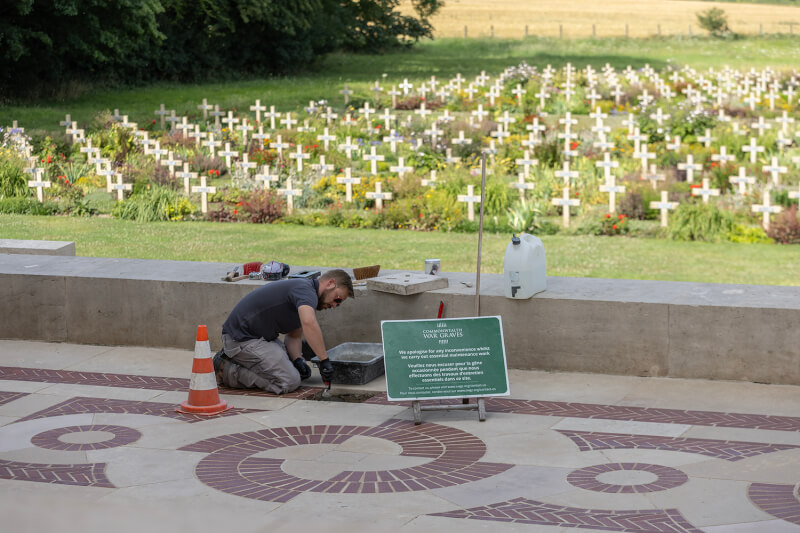
A Commonwealth War Graves Commission maintenance worker conducts some repairs to the Thiepval Memorial to the Missing of the Somme, memorializing 72,337 missing British and South African servicemen. [Stephen J. Thorne/LM]
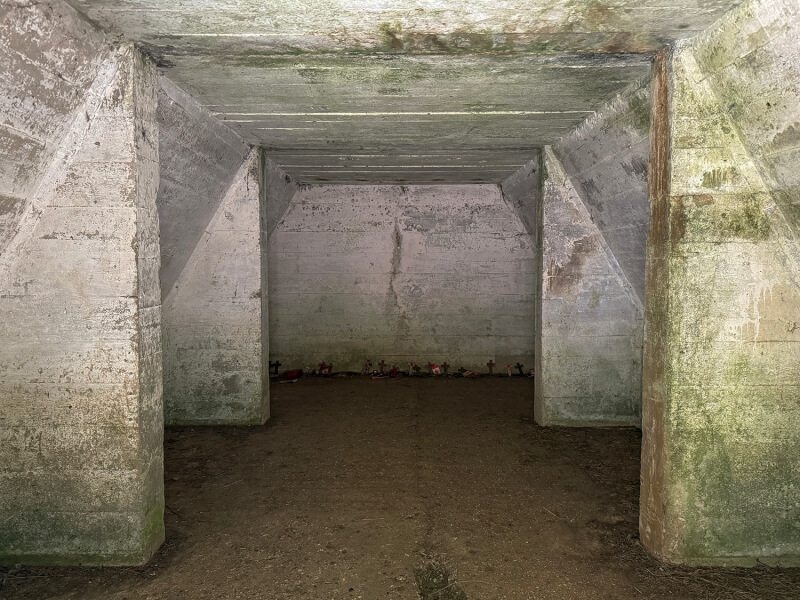
The stories these walls at the Essex Farm dressing station could tell. [Stephen J. Thorne/LM]
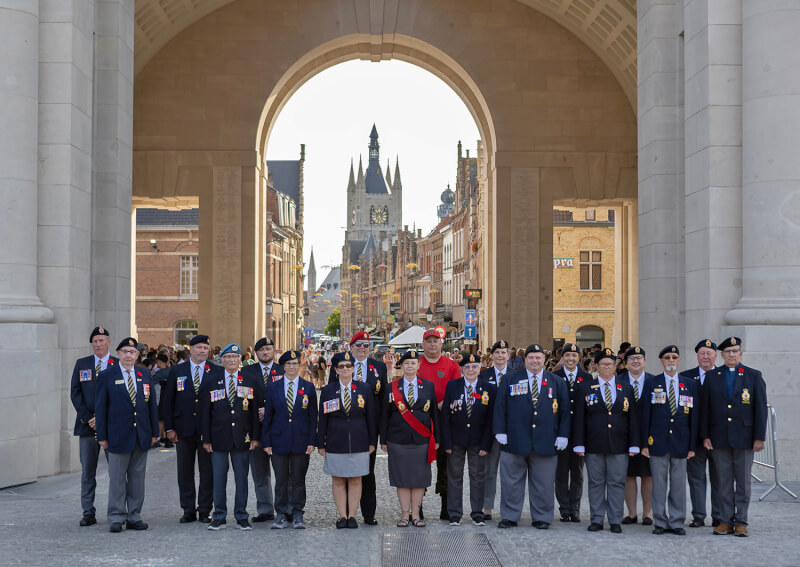
Legion pilgrims touring battle sites, war cemeteries, memorials and museums participate in the nightly ceremony at the Menin Gate in Ypres. The rebuilt Cloth Hall, destroyed during WW I, can be seen in the background. [Stephen J. Thorne/LM]
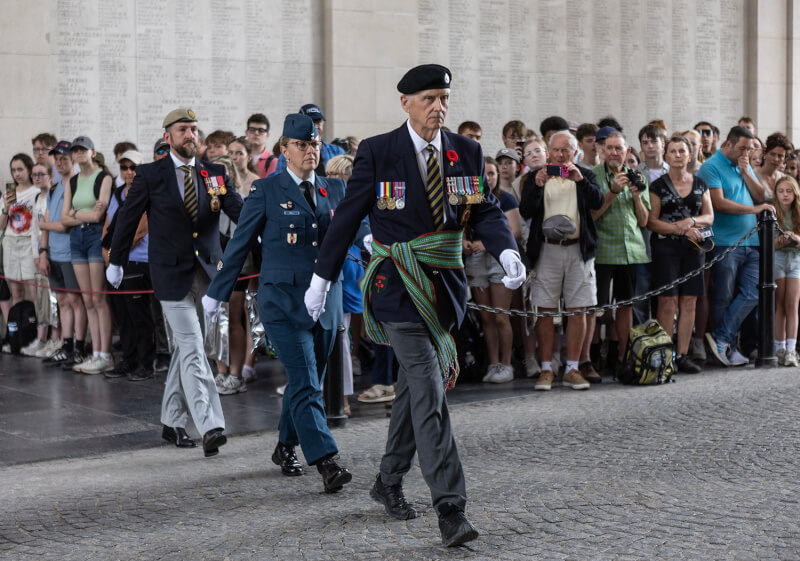
Veterans Caleb MacDonald (left), Karina Bell and David Scandrett laid a wreath at the Menin Gate. [Stephen J. Thorne/LM]
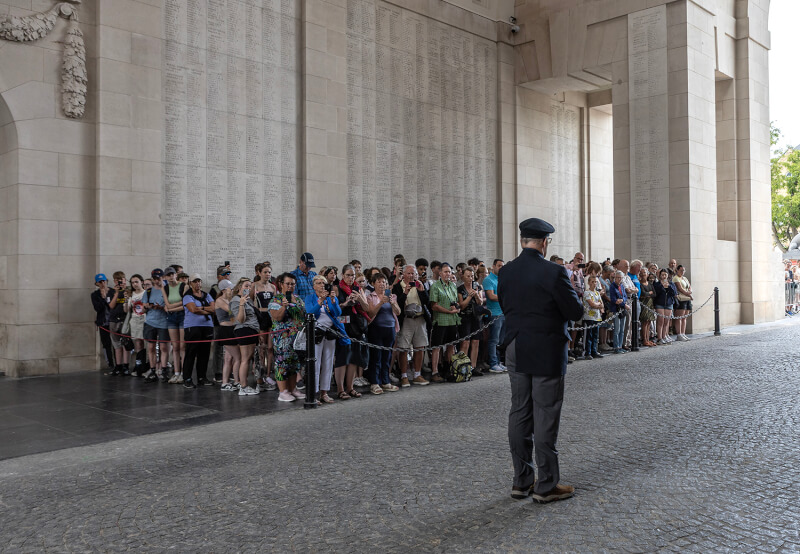
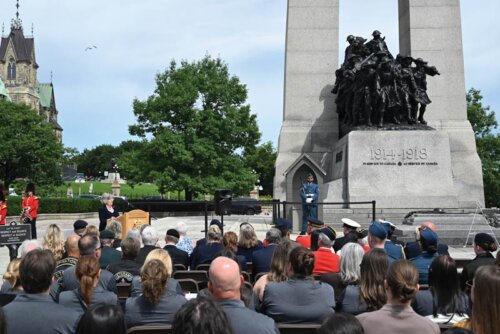
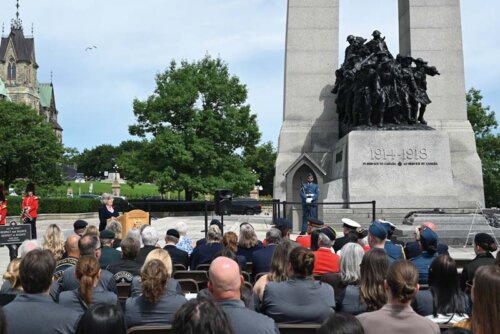
Father Robert Sicard, an Anglican priest from the Ottawa Valley, delivers the prayer during the 34,181st Menin Gate ceremony on July 14, 2025. [Stephen J. Thorne/LM]
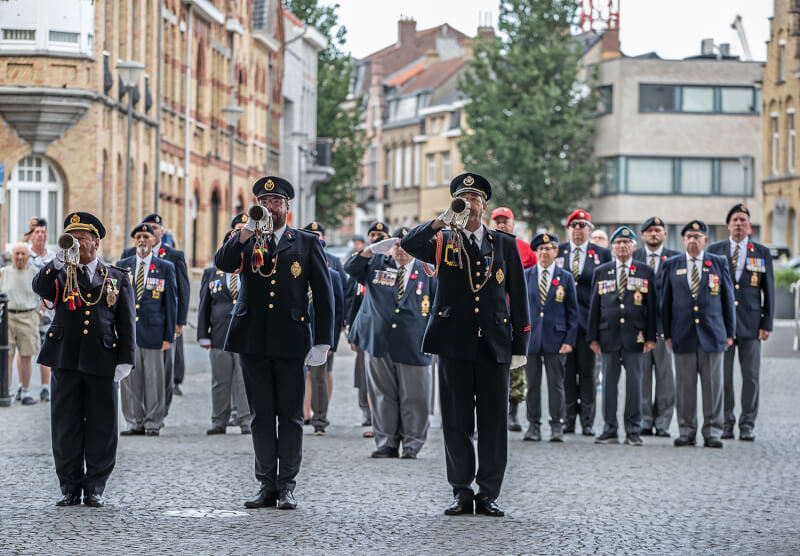
The buglers blow at Menin Gate. [Stephen J. Thorne/LM]
Birds accompany the Menin Gate buglers during one of the more than 34,000 ceremonies at the WW I memorial in Ypres, Belgium.
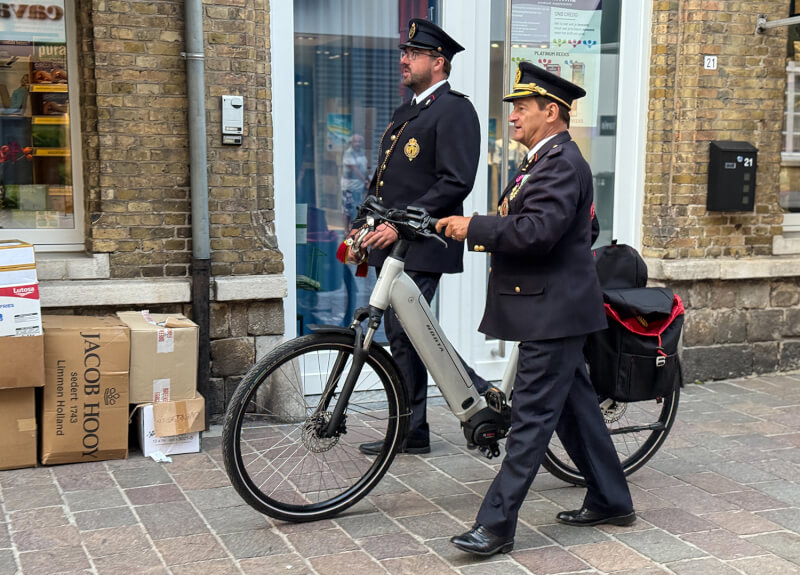
Two Menin Gate buglers head to the brasserie after another evening at the office. [Stephen J. Thorne/LM]
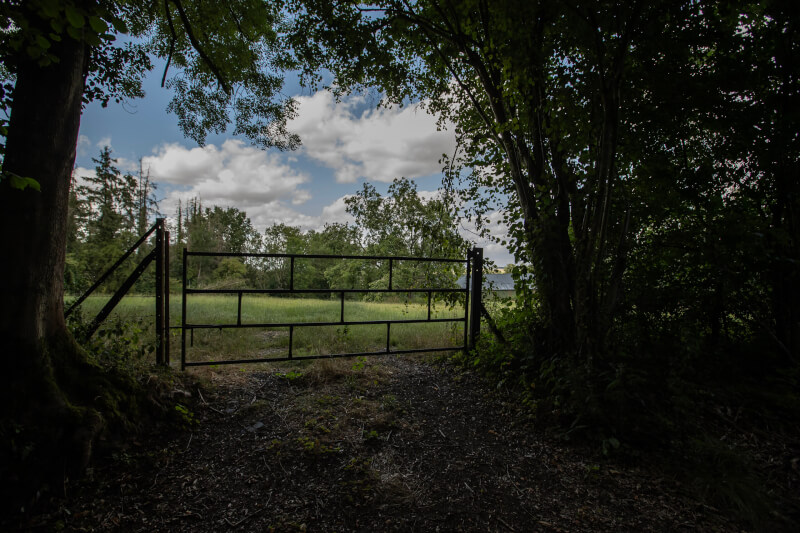
A gate along a wooded pathway at Bourlon Wood. [Stephen J. Thorne/LM]
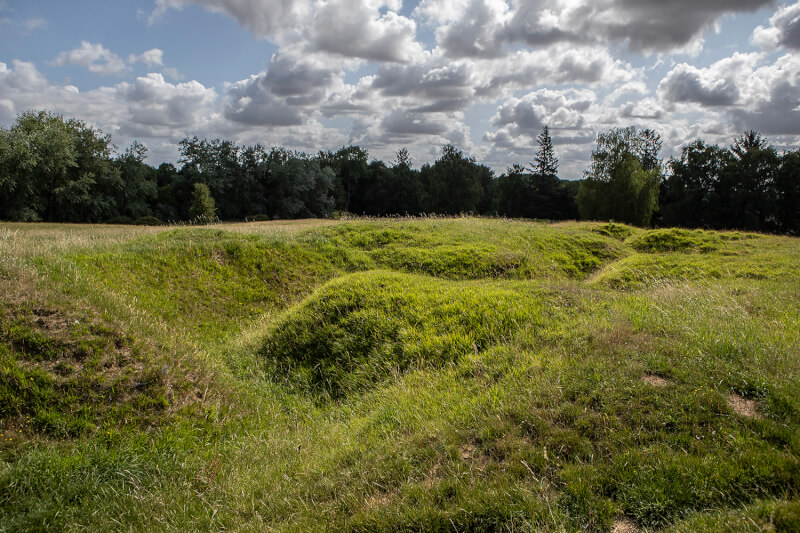
Proof of life, and death, at Beaumont-Hamel. It was here in northern France, on July 1, 1916 — the first day of the Battle of the Somme — that nearly 800 members of the Newfoundland Regiment went over the top. A day later, just 68 answered roll call. [Stephen J. Thorne/LM]
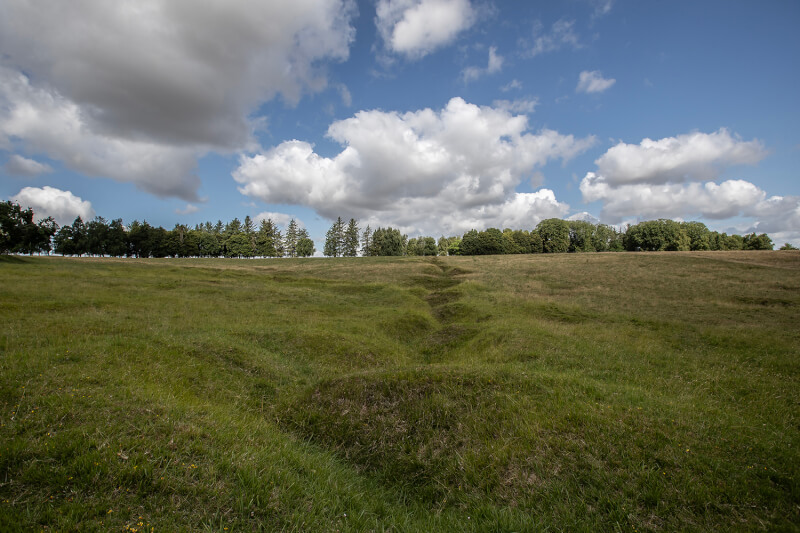
The scars of history remain, though softened by time, at Beaumont-Hamel and WW I battle sites all over France and Belgium. [Stephen J. Thorne/LM]
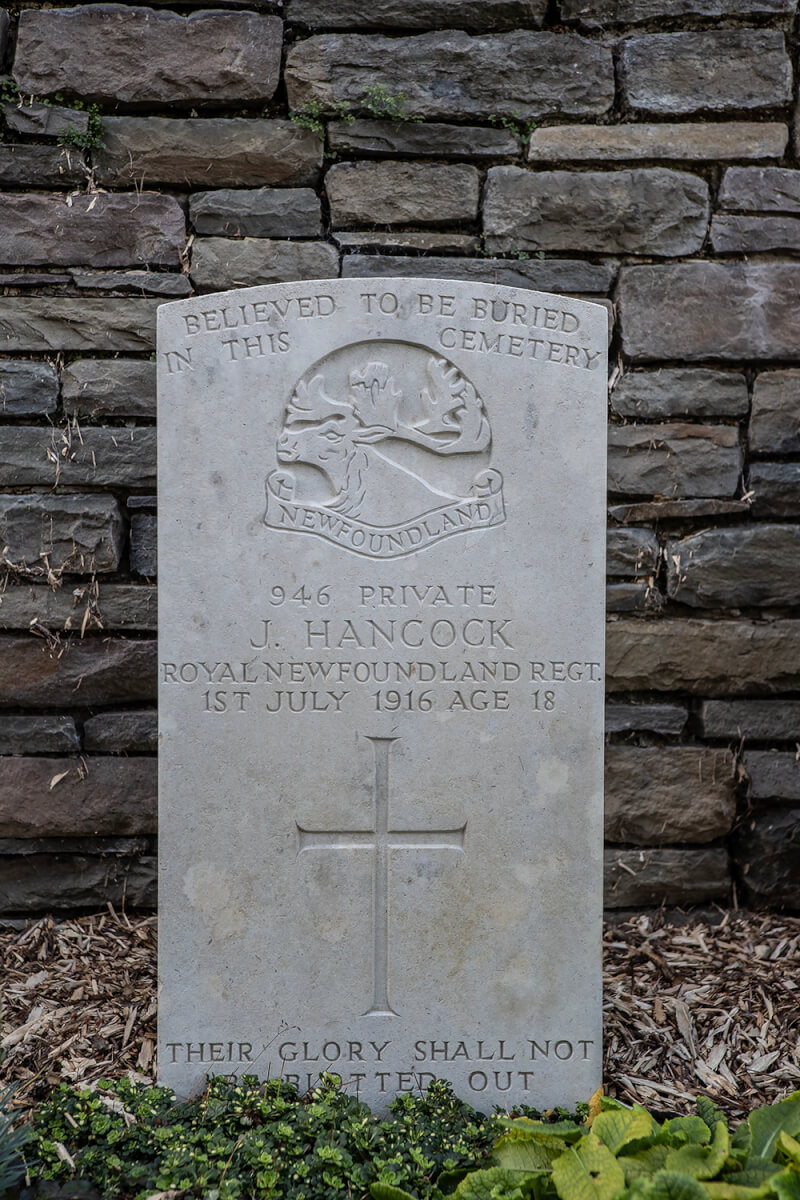
A stone acknowledges the presence in this battlefield cemetery of the remains of an 18-year-old Newfoundland soldier killed on the infamous first day of the Battle of the Somme. His remains were never identified. [Stephen J. Thorne/LM]
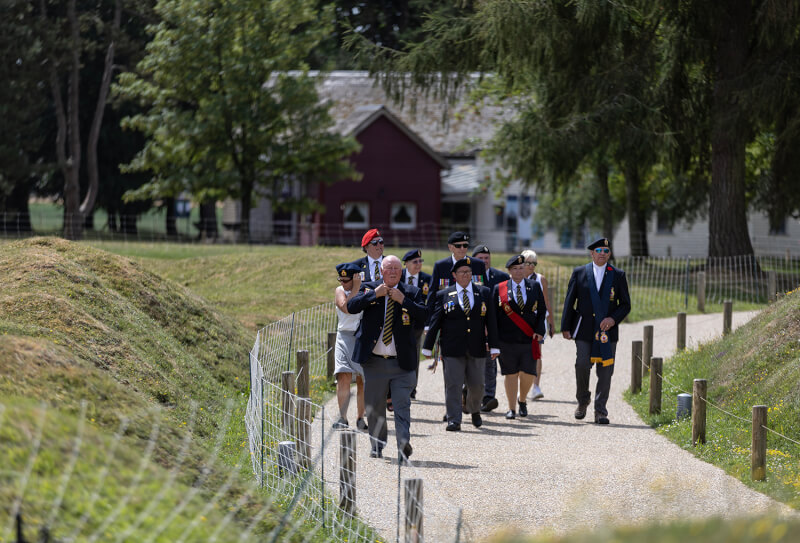
Legionnaires suit up for a ceremony at the Beaumont-Hamel Newfoundland Memorial. [Stephen J. Thorne/LM]
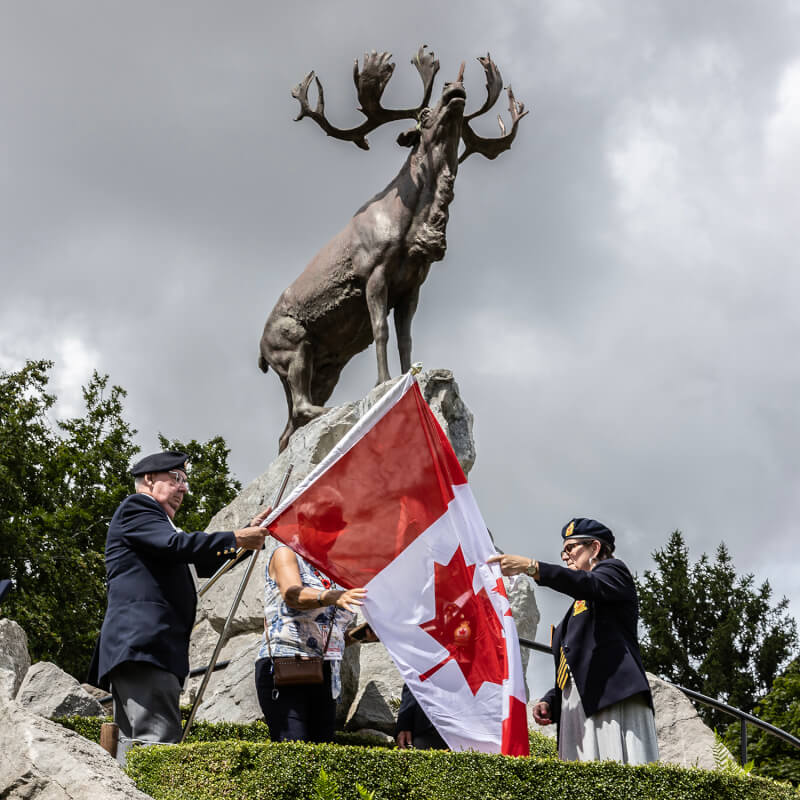
Navy veteran Bob Paddick of Nova Scotia, Jane Seaborne Davies of Ontario, and Susan Williams of P.E.I. fold up the flag after the ceremony. [Stephen J. Thorne/LM]
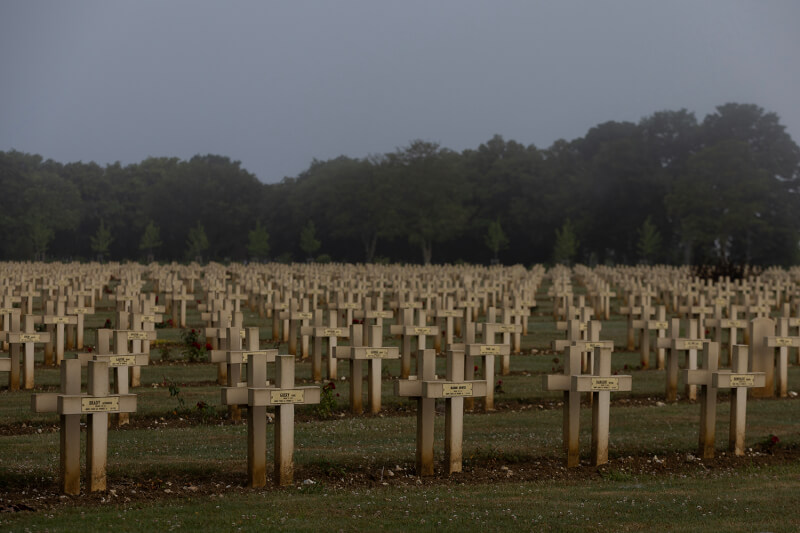
Notre-Dame-de-Lorette military cemetery is the largest French military cemetery in the world. The burial grounds and ossuary hold the remains of more than 40,000 soldiers, as well as the ashes of many concentration camp victims. [Stephen J. Thorne/LM]
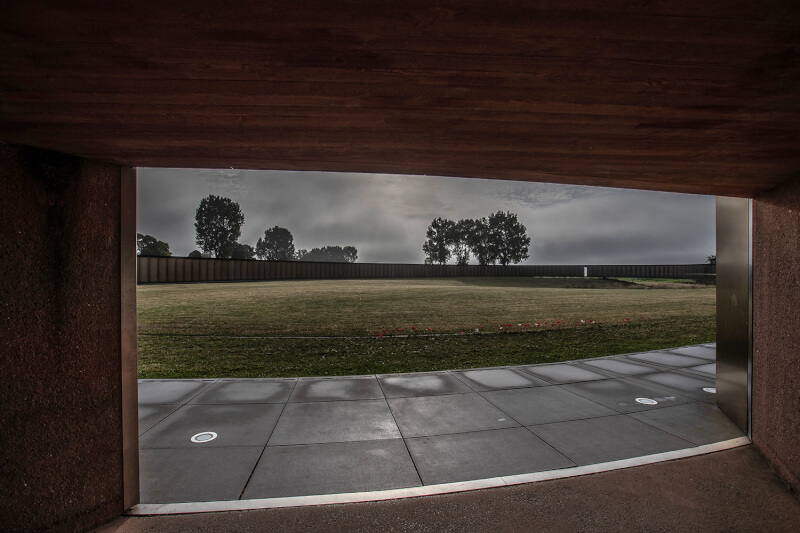
The Ring of Remembrance First World War memorial at the Notre-Dame-de-Lorette military cemetery in France. It commemorates the 579,606 soldiers from 40 different nationalities who died in the Nord-Pas-de-Calais region during the war. [Stephen J. Thorne/LM]
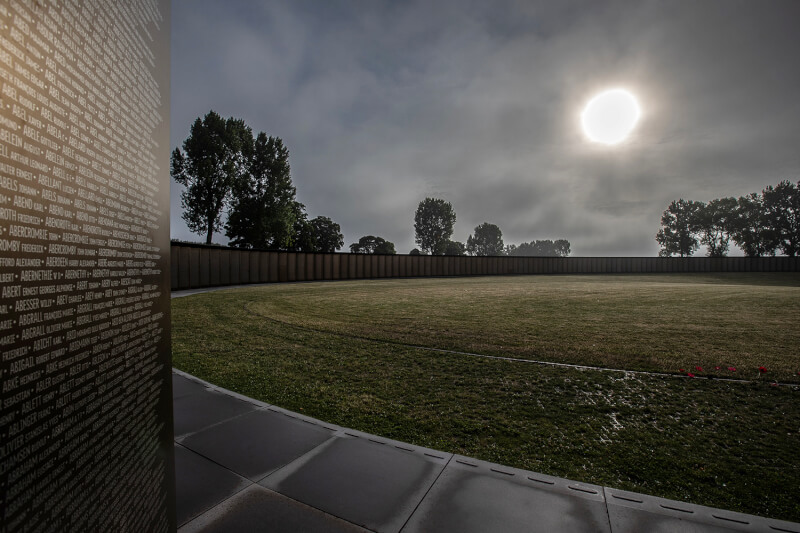
The morning sun pierces the fog at the Ring of Remembrance First World War memorial at Notre-Dame-de-Lorette military cemetery in France. [Stephen J. Thorne/LM]
Walking the Ring of Remembrance is a sobering experience. [Stephen J. Thorne/LM]
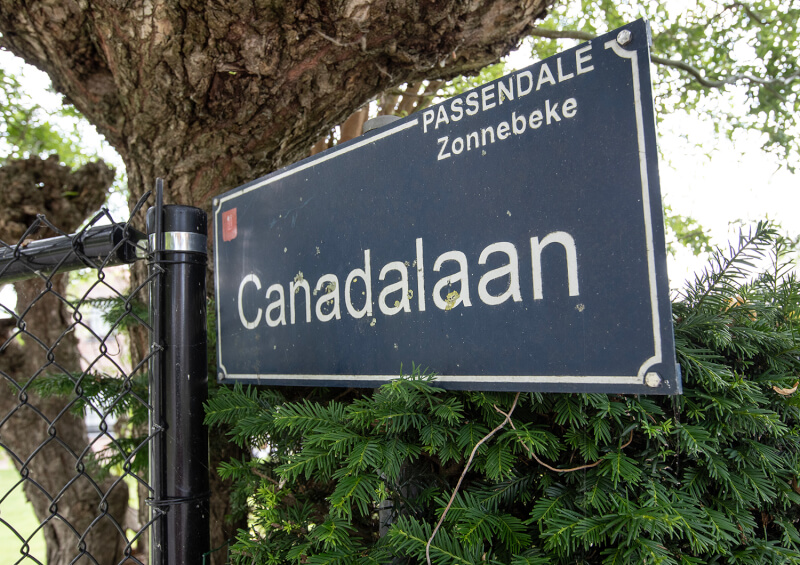
The main thoroughfare on which the Canadians entered Passchendaele on Nov. 6, 1917, bears their name. [Stephen J. Thorne/LM]
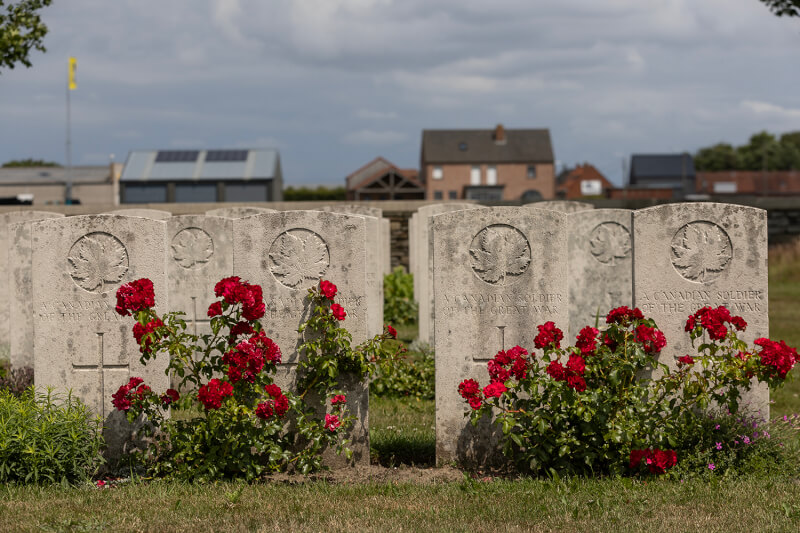
Four unidentified Canadians, and more, in the New British Cemetery outside Passchendaele. [Stephen J. Thorne/LM]
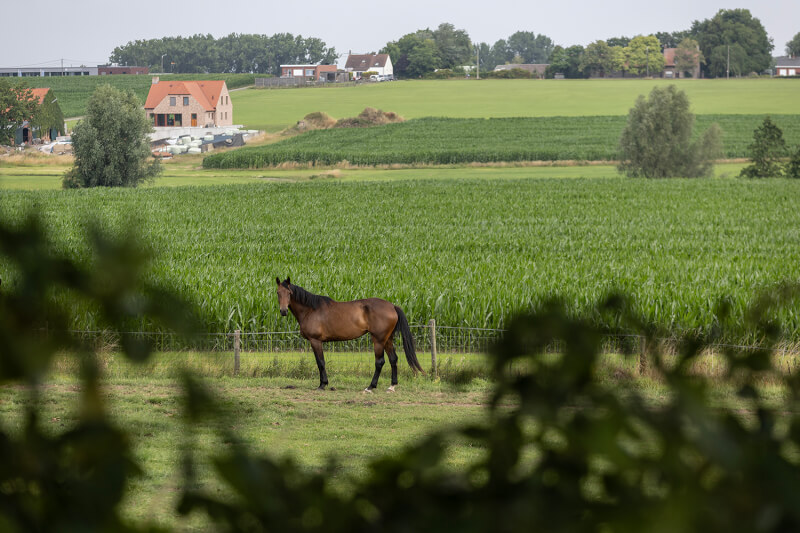
A horse stands guard over hallowed ground where Canadian soldiers once fought in rat-infested mud to liberate Passchendaele from German occupation. Eight million horses died in the First World War. [Stephen J. Thorne/LM]
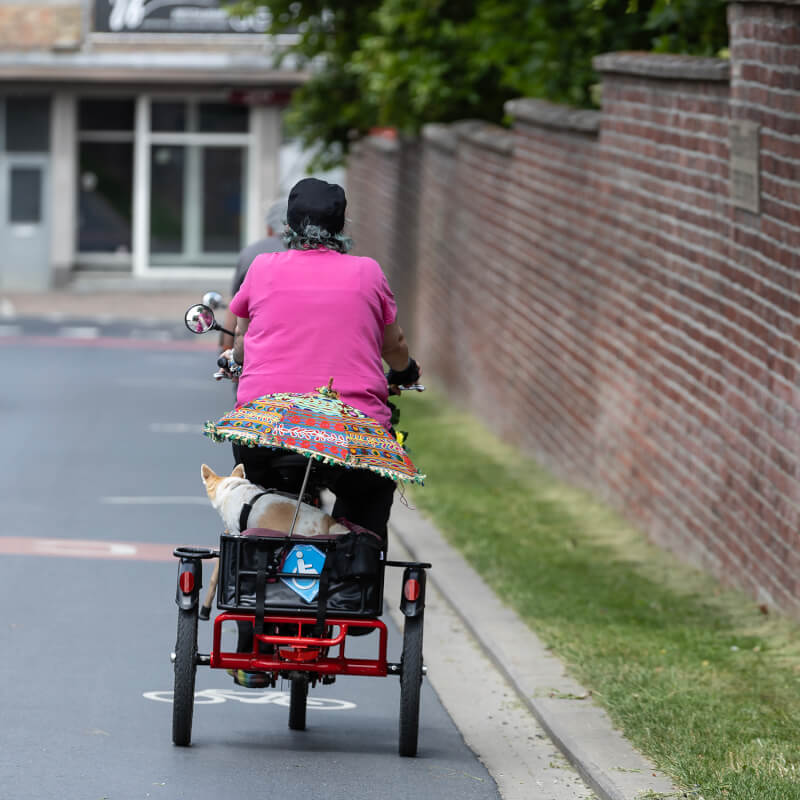
A woman and her dog ride past the museum walls in Zonnebeke. [Stephen J. Thorne/LM]
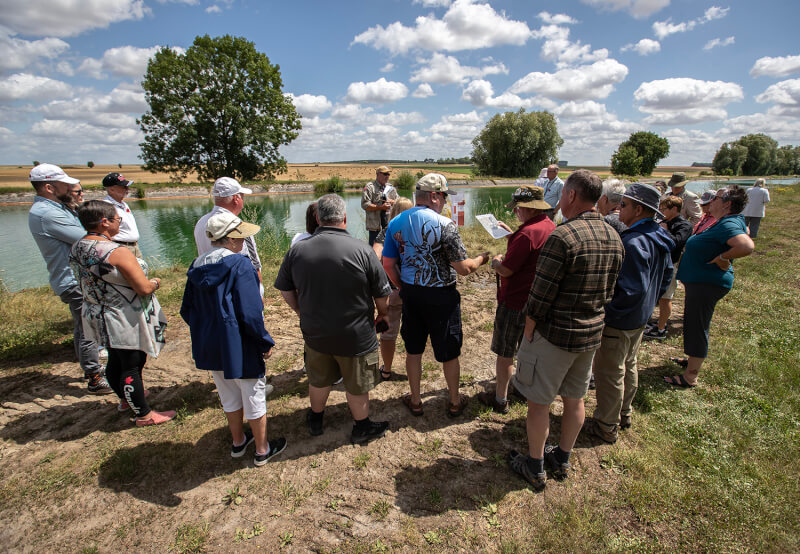
Historian and guide John Goheen briefs Legion pilgrims on the Hundred Days battle at Canal-du-Nord, Sept. 27-Oct. 1, 1918. [Stephen J. Thorne/LM]
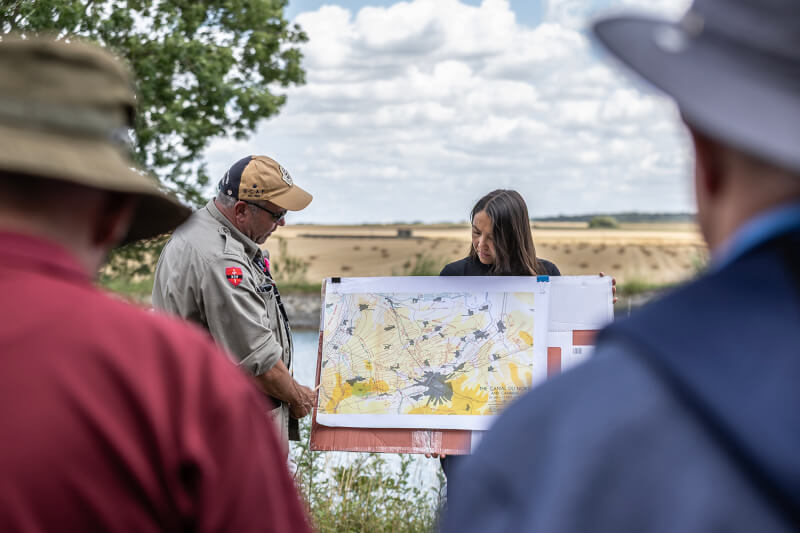
The Canadian Corps attacked along this portion of the canal near Cambrai. The waterway was key to the subsequent Canadian victory at Bourlon Wood. It came at a high cost to the Canadians, including more than 230 unidentified dead. [Stephen J. Thorne/LM]
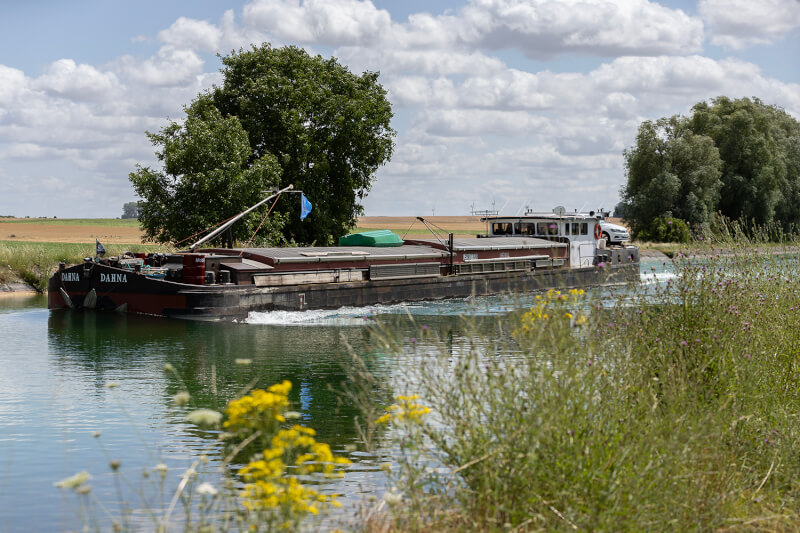
A barge makes its way up the Leopold Canal near Cambrai, France. [Stephen J. Thorne/LM]
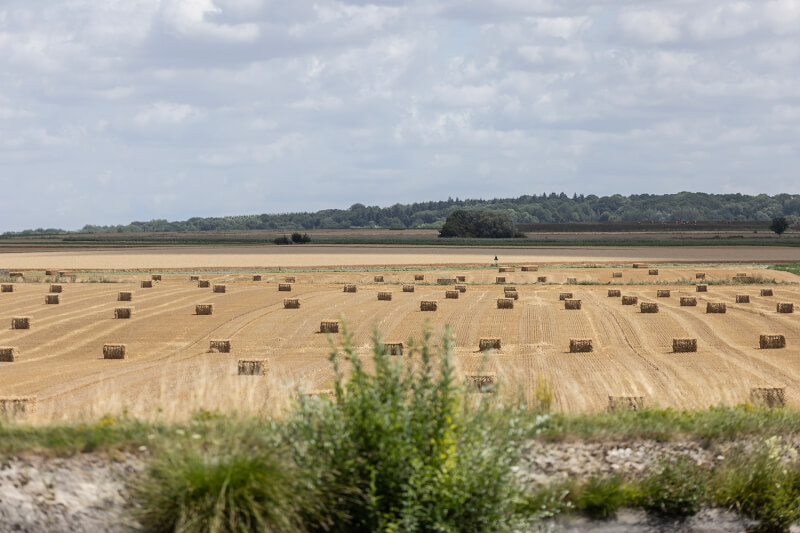
The other side at Canal du Nord. [Stephen J. Thorne/LM]
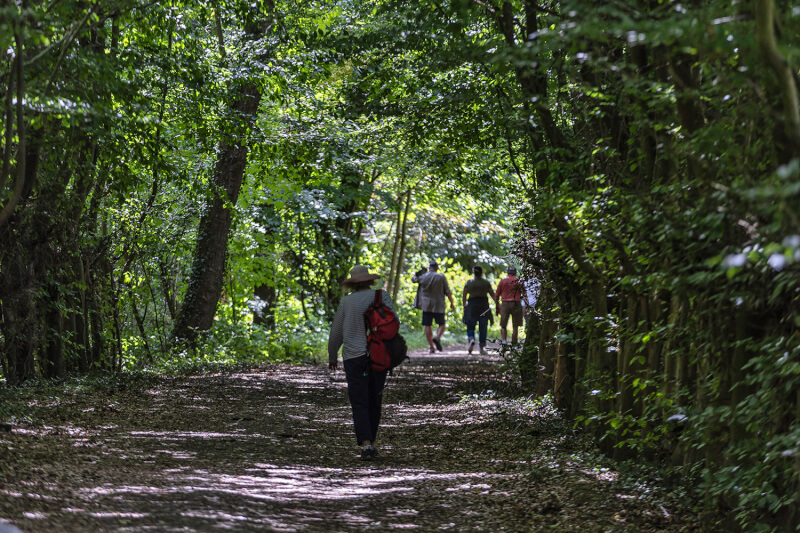
Walking Bourlon Wood. [Stephen J. Thorne/LM]
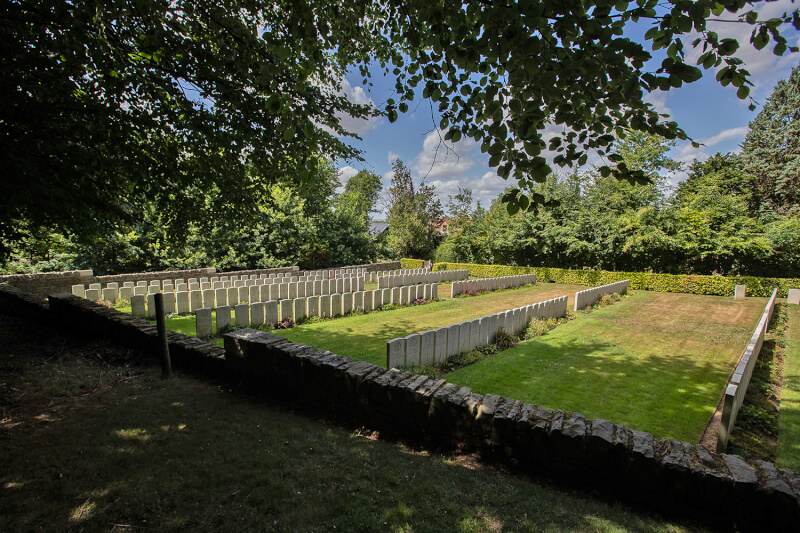
The cemetery in Bourlon Wood contains 250 Canadian graves, along with two Germans and three Chinese labourers. [Stephen J. Thorne/LM]
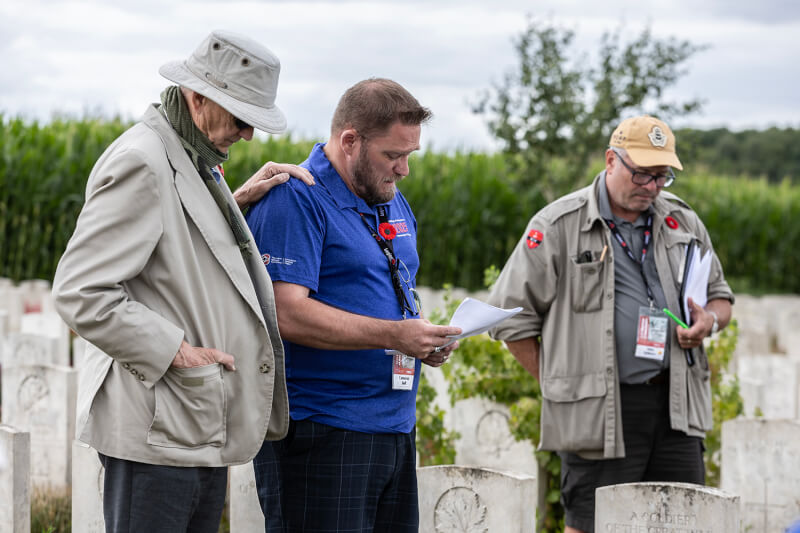
An emotional Cameron Bell is supported by David Scandrett as he reads his graveside account of Pte. James Flett, a 22-year-old Manitoba farmer with the 43rd Battalion (Cameron Highlanders of Canada) killed Oct. 8, 1916, in the Somme. [Stephen J. Thorne/LM]
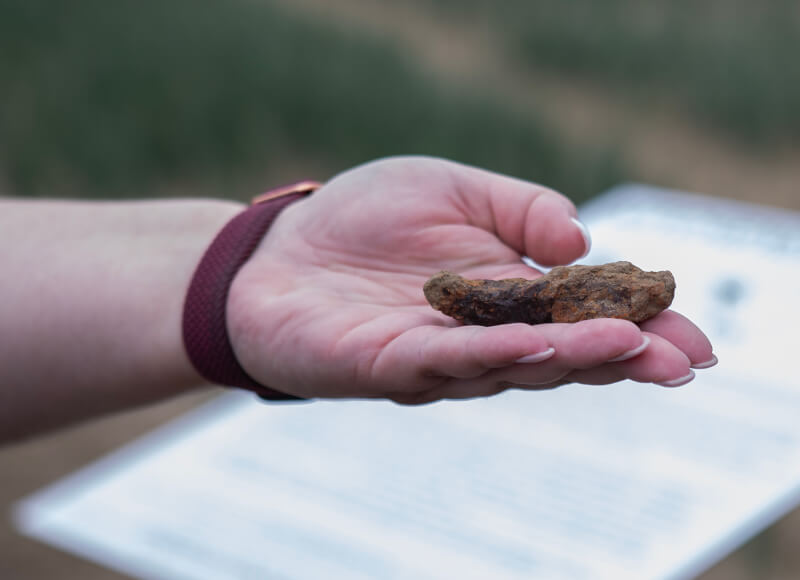
Shrapnel from a Belgian field. Experts say the annual iron harvest will continue to yield live munitions, detritus and human remains for another 500 years. [Stephen J. Thorne/LM]
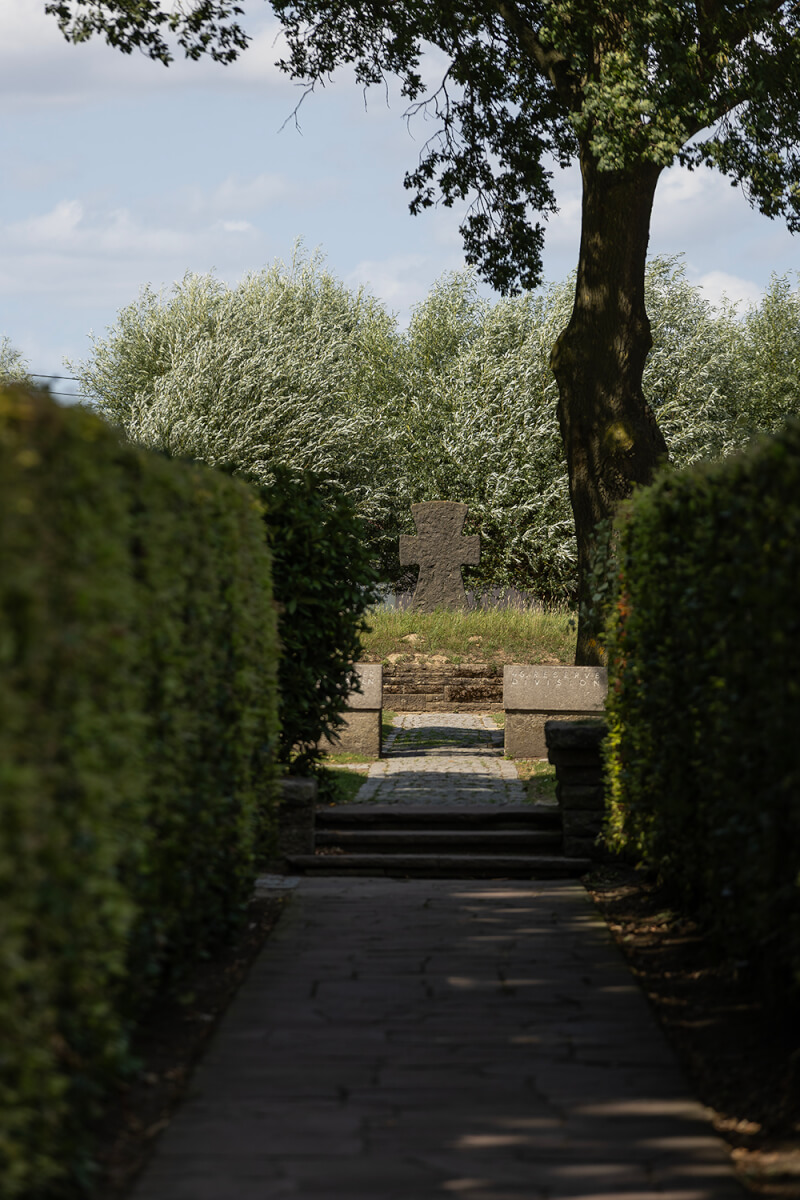
A German cross at the Langemarck German cemetery in Belgium, where the remains of 44,292 German servicemen killed in WW I are buried. [Stephen J. Thorne/LM]
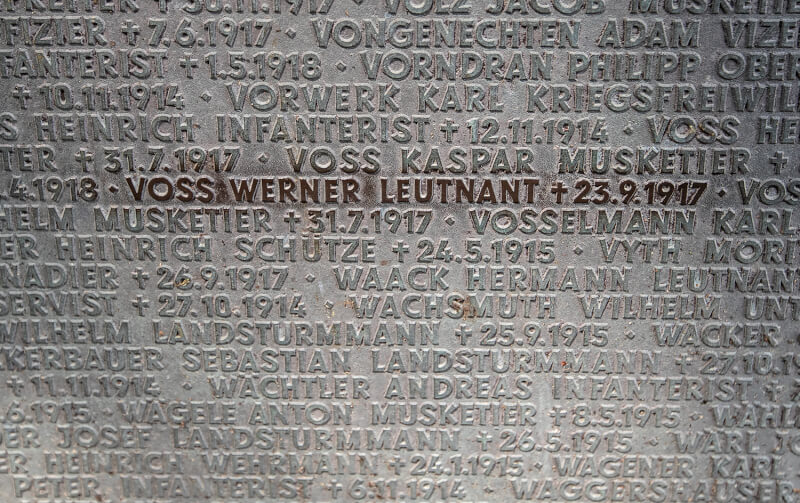
German ace Werner Voss, 48 aerial victories, is buried in a mass grave at Langemarck German Cemetery in Belgium. A close friend and friendly rival to The Red Baron, his final fight came versus eight British, Canadian and Australian aces. After what was described as a dazzling display of aerobatics and gunnery that put bullets in his every opponent, his preeminent foe, Victoria Cross recipient James McCudden, called him “the bravest German airman.” The pilot who actually killed Voss, Briton Arthur Rhys-Davids (27 victories), said he wished he had brought him down alive. The dogfight remains a subject of debate and controversy among aviation historians. [Stephen J. Thorne/LM]
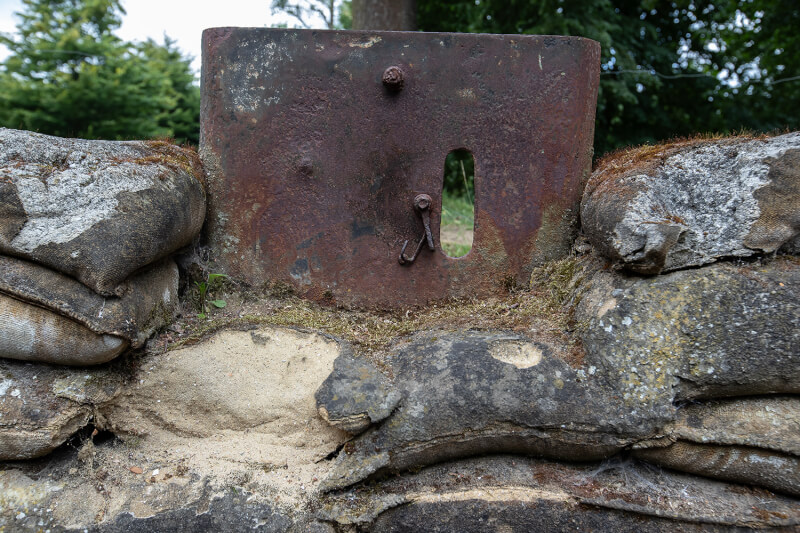
Even the peepholes progressed, with levered outside covers to protect trenchbound soldiers when not in use. [Stephen J. Thorne/LM]
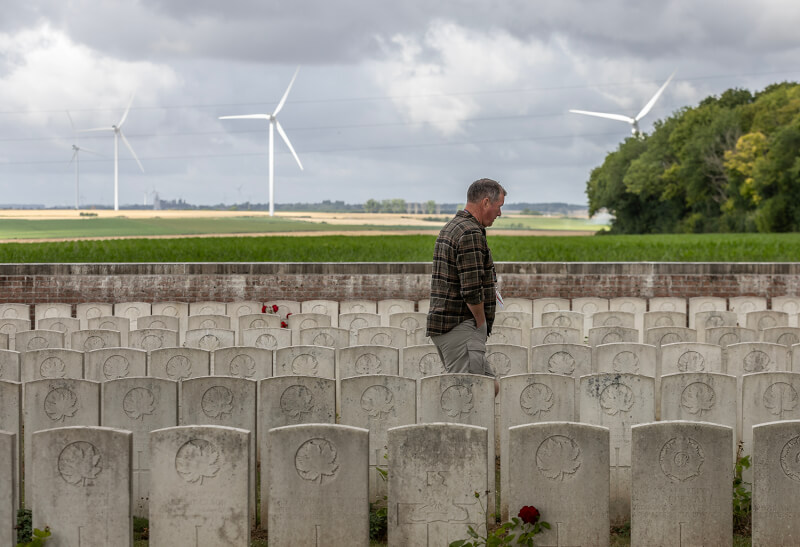
Retired Jasper, Alta., firefighter Greg Van Tighem walks a cemetery filled with Canadians killed during the Hundred Days campaign. [Stephen J. Thorne/LM]
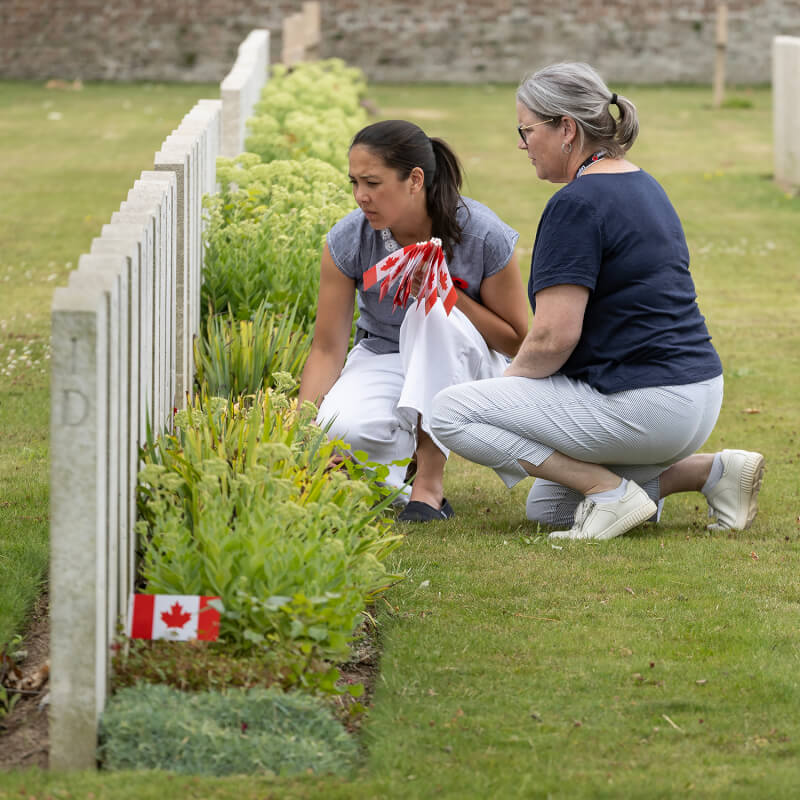
Lia Taha Cheng of RCL headquarters in Ottawa and pilgrim Michelle Babin study a grave marker in northern France. [Stephen J. Thorne/LM]
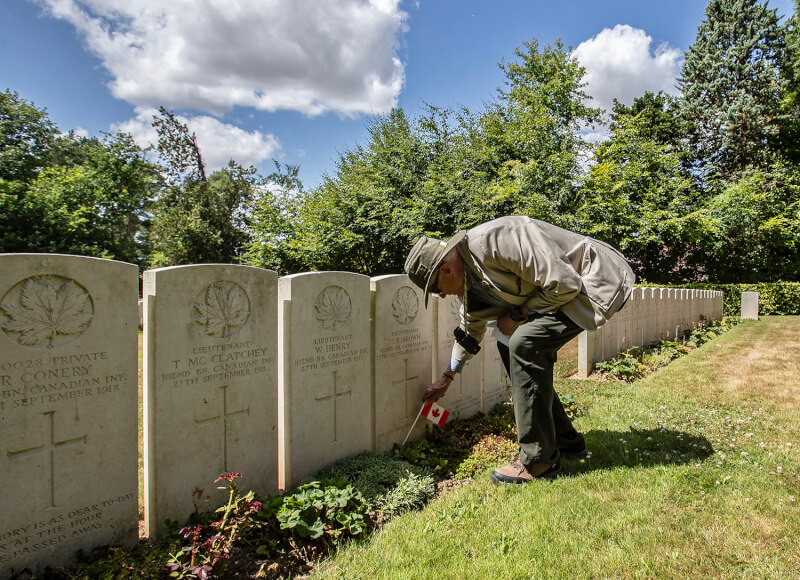
Retired colonel David Scandrett of British Columbia, a tanker and former commander of the 3rd Canadian Ranger Patrol Group, places a Maple Leaf Flag on the grave of a Canadian killed in the Hundred Days campaign that ended the First World War. [Stephen J. Thorne/LM]
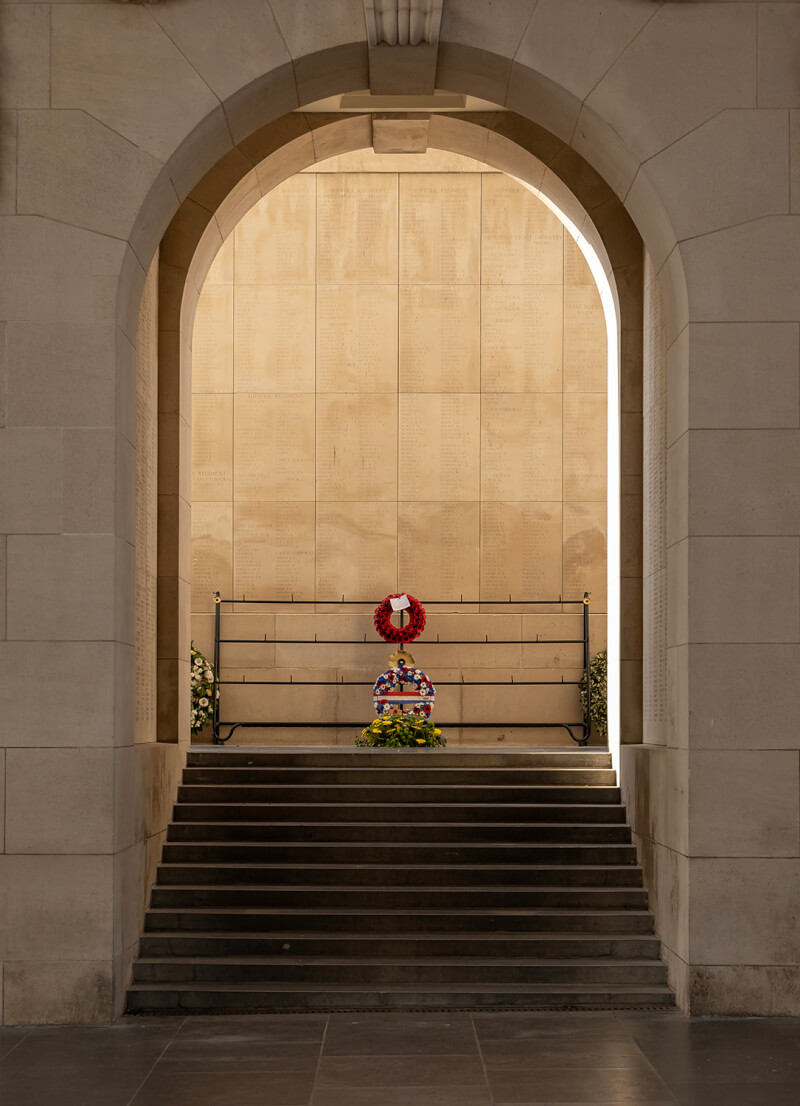
The majesty of Menin Gate, Ypres (Ieper). [Stephen J. Thorne/LM]
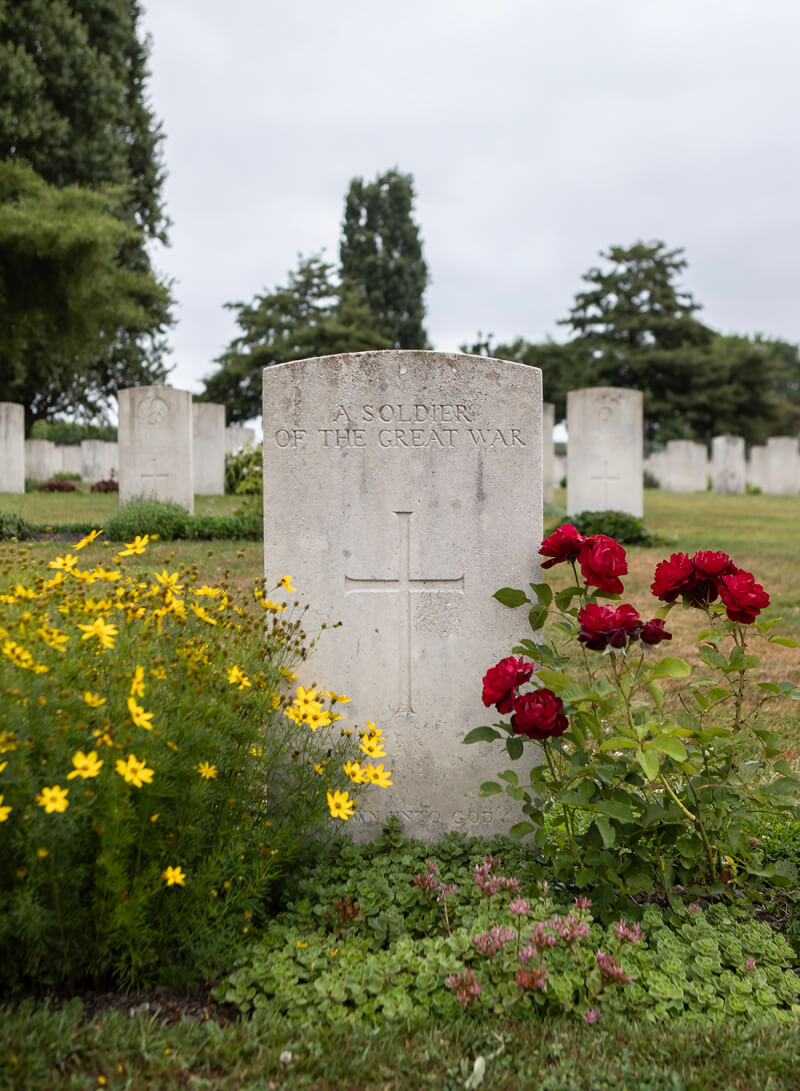
The profound simplicity of a single stone. The flowers are a testament to the fact that, more than a century on, the Commonwealth War Graves Commission continues its work to memorialize WW I & II dead with grace and attention to detail. [Stephen J. Thorne/LM]
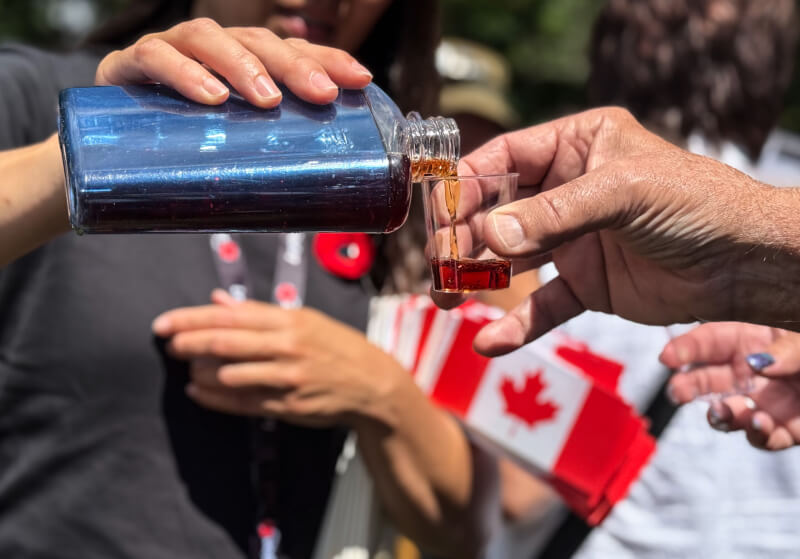
To absent friends. [Stephen J. Thorne/LM]
Advertisement