




Richard Turner [Sharif Tarabay]
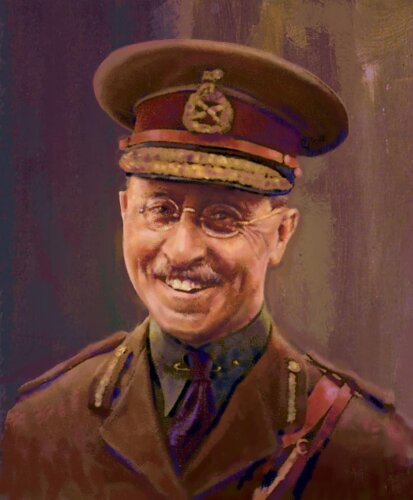
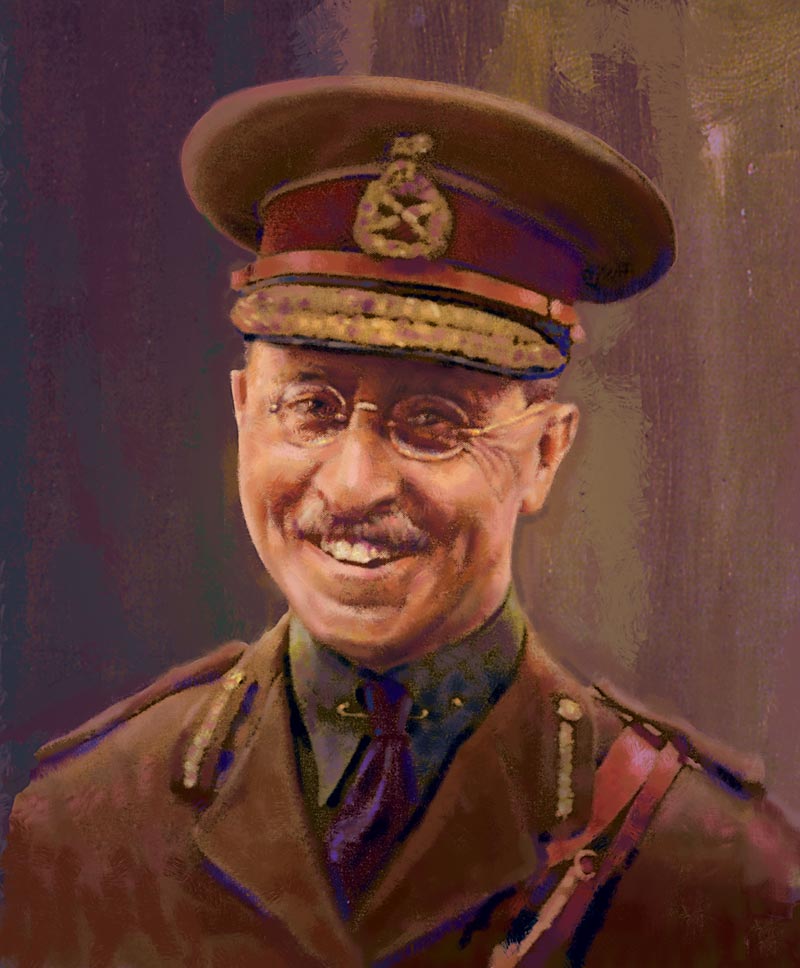
Richard Turner
The hurriedly pulled together continuation of the Canadian Corps’ offensive at Courcelette by Major-General Richard Turner’s 2nd Division in the late afternoon of Sept. 15, 1916, yielded one of the few decisive Allied victories of the entire Somme Campaign.
“Hold back the enemy!”
—Richard Turner
Turner sent his first-wave troops through the depleted 3rd Division and into the village’s ruins in a full-out charge. It was a bold, even reckless, attack. The officers leading it had been given just five hours to prepare before crossing the start line at 6 p.m. Despite heavy casualties, the division took the village, dealing the Germans a decisive defeat.
For Turner, 2nd Division’s exploits at Courcelette helped restore a reputation muddied by a shaky performance at St. Eloi.
For Turner, the division’s exploits helped restore a reputation muddied by his shaky performance during the 1916 Battle of St. Eloi Craters—the only battle the Canadian Corps lost during the war.
Born in Quebec City on July 25, 1871, Turner joined the Canadian militia when he was 21. Three years later, he attained a captain’s rank and was then promoted to major in 1900. That same year, Turner accepted a demotion to lieutenant in order to join the Royal Canadian Dragoons—part of a Canadian volunteer force being sent to South Africa to fight the Boers. The Dragoons came under command of Brigadier-General Edwin Alderson.
At Leliefontein on Nov. 7, 1900, Turner was part of a rearguard covering a British column’s retreat. When the rearguard was ambushed by roughly 200 mounted Boers, Turner saved two 12-pound field guns from capture. Shot in the left arm and neck, he ordered a small group of Dragoons to dismount and hold the Boers until the guns could be moved.
“Hold back the enemy!” Turner had cried. His gallantry, along with two others, was recognized with a Victoria Cross.
Although Turner served under Alderson in South Africa, the British general had tried to sack the Canadian commander for his failure at St. Eloi. Despite Turner’s better performance at Courcelette, on June 23, 1917, he was transferred from divisional command to oversee Canadian troops held in reserve in England.
While the new duty brought him a promotion to lieutenant-general, the same day Arthur Currie attained the rank, command of the Canadian Corps went to the latter. Turner’s job became largely administrative and, although technically senior to Currie, he was never considered for corps command.
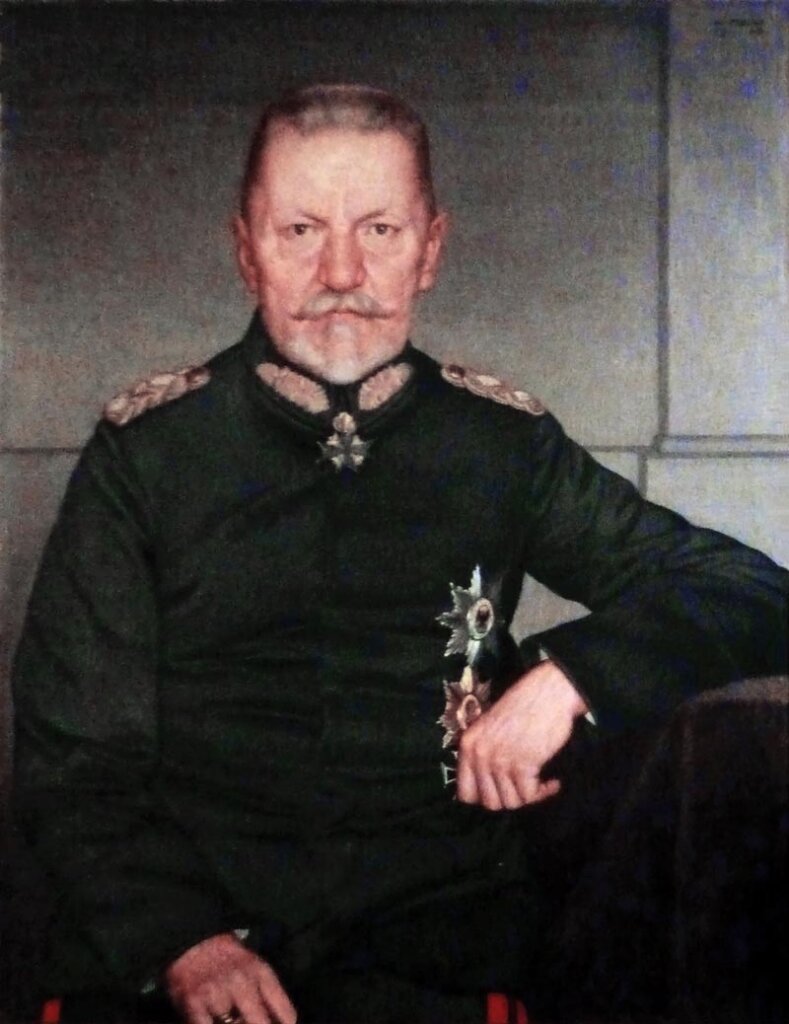
Max Von Gallwitz [Wikimedia]
Max Von Gallwitz
At Courcelette, Major-General Richard Turner’s 2nd Division defeated the German 45th Reserve Division, one of many divisions comprising a formation created on July 19, 1916, named after its commander. Before taking command of Army Group Gallwitz, General Max von Gallwitz had established a reputation for competency while serving on virtually every German front.
At the war’s outset, Gallwitz commanded the Guard Reserve Corps during the siege of Namur on the Western Front. Thereafter, his corps moved to the Eastern Front, joining 8th Army in driving the Russians out of East Prussia in September 1914. The Germans inflicted more than 125,000 casualties for estimated losses of about 15,000.
Having played a pivotal role in this stunning victory, Gallwitz was promoted to command Army Group Gallwitz in February 1915. In July, the general led his army to victory in the battle that took Warsaw on Aug. 5. For his role there, Gallwitz was awarded the much-coveted Pour le Mérite (known as the Blue Max) on July 24, 1915, and on Sept. 28 added the Oak Leaves to the decoration. He then assumed command of 11th Army, leading its invasion of Serbia on Oct. 7—crossing the Danube east of Belgrade.
Driving the Serbs back to Salonika (now Thessaloniki), Gallwitz was preparing to complete their destruction when he was summoned to deal with a crisis on the Western Front. Taking command of Meuse Group West on March 29, 1916, he joined the bloody fighting against the French at Verdun.
“Nowhere else have I seen such brave lions being led by such lambs.”
—Max von Gallwitz
In July, however, a new crisis sent Gallwitz to the Somme to help stem the British offensive. No sooner did he arrive to lead Second Army than his role was expanded with the creation of a new Army Group Gallwitz, bringing First and Second armies under his command.
Responsible for defending the entire Somme, Gallwitz again proved his abilities by limiting the Allied advance to roughly eight kilometres while inflicting horrendous casualties. During the fighting, Gallwitz was much impressed by the courage of the Allied troops. But he disdained their generals.
In July, a new crisis sent Gallwitz to the Somme to help stem the British offensive.
“Nowhere else have I seen such brave lions being led by such lambs,” he wrote.
From the Somme, Gallwitz raced back to Verdun to command Fifth Army with orders to once again rescue the situation there. Then in 1918, another new Army Group Gallwitz faced the recently arrived American Expeditionary Force until war’s end.
Advertisement