


Generic selectors
Exact matches only
Search in title
Search in content
Post Type Selectors
Search

Army

Broken In Battle: The Invisible Casualties: Army, Part 101

Every soldier is affected by the strain and violence of combat. Most learn to cope or even adapt, some become stronger and tougher, but others develop immediate or delayed reactions that can be psychologically disabling. Historically these have been labelled shell shock, combat fatigue, battle exhaustion, combat stress reaction, post-traumatic stress disorder and most recently operational stress injury. Psychological problems related to experiences in war and other stressful situations are universal, but doctors, patients, governments and the military are constantly changing their ideas about causation, prevention and treatment.Every soldier is affected by the strain and violence of combat. Most learn to cope or even adapt, some become stronger and tougher, but others develop immediate or delayed reactions that can be psychologically disabling. Historically these have been labelled shell shock, combat fatigue, battle exhaustion, combat stress reaction, post-traumatic stress disorder and most recently operational stress injury. Psychological problems related to experiences in war and other stressful situations are universal, but doctors, patients, governments and the military are constantly changing their ideas about causation, prevention and treatment.Every soldier is affected by the strain and violence of combat. Most learn to cope or even adapt, some become stronger and tougher, but others develop immediate or delayed reactions that can be psychologically disabling. Historically these have been labelled shell shock, combat fatigue, battle exhaustion, combat stress reaction, post-traumatic stress disorder and most recently operational stress injury. Psychological problems related to experiences in war and other stressful situations are universal, but doctors, patients, governments and the military are constantly changing their ideas about causation, prevention and treatment.
Ferocity and Futility: Army, Part 100

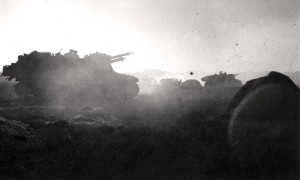
Operation Spring, 2nd Canadian Corps’ second attempt to secure Verrières Ridge, began in the dark during the early hours of July 25, 1944.Operation Spring, 2nd Canadian Corps’ second attempt to secure Verrières Ridge, began in the dark during the early hours of July 25, 1944.Operation Spring, 2nd Canadian Corps’ second attempt to secure Verrières Ridge, began in the dark during the early hours of July 25, 1944.

Chaos In The Dark: Army, Part 99

General Bernard Montgomery’s “armoured blitzkrieg,” Operation Goodwood, and its Canadian component, Operation Atlantic, ended in rain and confusion on July 20, 1944. The next day, Montgomery and his army commander, Lieutenant-General Sir Miles Dempsey, met to consider their options. News of the failed assassination attempt against Hitler was discussed as was the postponement of Operation Cobra, the major American offensive originally scheduled for July 20. The two British generals agreed they could not wait for the Americans; they would launch their attack south of Caen as soon as possible.

Short, Bloody Steps: Army, Part 98

Operation Atlantic was called off on the evening of July 20, 1944, but no one told the enemy, who continued to press counterattacks designed to regain St. André-sur-Orne, Point 67 and Bourguebus in Normandy. Since the Canadians and British were dug in with good artillery observation positions and well-camouflaged anti-tank guns, the German battle groups began to take heavy losses, including precious Panther tanks.Operation Atlantic was called off on the evening of July 20, 1944, but no one told the enemy, who continued to press counterattacks designed to regain St. André-sur-Orne, Point 67 and Bourguebus in Normandy. Since the Canadians and British were dug in with good artillery observation positions and well-camouflaged anti-tank guns, the German battle groups began to take heavy losses, including precious Panther tanks.Operation Atlantic was called off on the evening of July 20, 1944, but no one told the enemy, who continued to press counterattacks designed to regain St. André-sur-Orne, Point 67 and Bourguebus in Normandy. Since the Canadians and British were dug in with good artillery observation positions and well-camouflaged anti-tank guns, the German battle groups began to take heavy losses, including precious Panther tanks.

Flawed From The Start: Army, Part 97

The Canadian part of Operation Goodwood/Atlantic began well. The veteran 3rd Canadian Division fought into Caen’s industrial zone south of the River Orne while 4th Brigade from 2nd Cdn. Div. won a difficult battle for the village of Louvigny. The 3rd British Div. on the left flank of the bridgehead also gained its initial objectives, but the two leading British armoured divisions lost close to 200 tanks without reaching the vital high ground south of the city.The Canadian part of Operation Goodwood/Atlantic began well. The veteran 3rd Canadian Division fought into Caen’s industrial zone south of the River Orne while 4th Brigade from 2nd Cdn. Div. won a difficult battle for the village of Louvigny. The 3rd British Div. on the left flank of the bridgehead also gained its initial objectives, but the two leading British armoured divisions lost close to 200 tanks without reaching the vital high ground south of the city.The Canadian part of Operation Goodwood/Atlantic began well. The veteran 3rd Canadian Division fought into Caen’s industrial zone south of the River Orne while 4th Brigade from 2nd Cdn. Div. won a difficult battle for the village of Louvigny. The 3rd British Div. on the left flank of the bridgehead also gained its initial objectives, but the two leading British armoured divisions lost close to 200 tanks without reaching the vital high ground south of the city.

The Bloody Battles Around Caen: Army, Part 96

On the afternoon of July 11, 1944, Canadian Corps Headquarters once again became operational on the soil of France. Lieutenant-General Guy Granville Simonds assumed responsibility for 7,280 metres of front in the Caen sector of Normandy. There was little time or inclination to mark this event or link it with the memory of the vaunted Canadian Corps of First World War fame because there was too much to be done.

Most Popular
In the news
Sign up to our newsletter

Stay up to date with the latest from Legion magazine

By signing up for the e-newsletter you accept our terms and conditions and privacy policy.

Advertisement
Listen to the Podcast

Sign up today for a FREE download of Canada’s War Stories

Free e-book

An informative primer on Canada’s crucial role in the Normandy landing, June 6, 1944.