

Generic selectors
Exact matches only
Search in title
Search in content
Post Type Selectors
Search

J.L. Granatstein

12 Military Events That Shaped Canada

Everyone likes lists. Everyone makes lists. They are always self-selected, incomplete, and eminently arguable, but they sometimes can focus our minds on significant points that otherwise might escape notice.

This listing of 12 military events and issues does not concentrate on significant battles, though some are included. It does not look at great leaders, although a few will be noted. Instead, what it does is to pick out a dozen key occurrences that had long-term military ramifications and that helped shape Canada and the Canadian military in the years after Confederation.

Readers will disagree with a few of my choices, I know, and some will object strenuously that one event or another has been omitted. Where is the Battle of Vimy Ridge? How could Ortona be left out? And why is the list so heavily weighted to the Army? Good questions all, some of which will be answered in our list.
DIEPPE: “They Didn’t Have To Die!”

When writing his epic multivolume history of the Second World War, Winston Churchill had to discuss what he called the “very controversial” Dieppe raid of Aug. 19, 1942. To those who were assisting him in his research he wrote, “it would appear to a layman very much out of accord with the accepted principles of war to attack the strongly fortified town front without first securing the cliffs on either side, and to use our tanks in frontal assault off the beaches.”

HONG KONG: The Inside Story Of Canada’s Role In A Doomed Garrison

Seventy years ago, on Dec. 7, 1941, Imperial Japan began its war against the West, attacking Pearl Harbor, Malaya and moving against Hong Kong. In the Crown Colony’s garrison were almost 2,000 Canadian soldiers, only recently arrived and scarcely acclimatized. For the next 18 days, they would fight for their lives against well-trained, well-equipped Japanese troops. For almost four years after the capitulation, the survivors would struggle to survive in brutal conditions as prisoners of war.

The Roads To Victory

John Gray, an intelligence officer, was one of the first Canadian liberators to enter Rotterdam after the German surrender. He came out of the city hall where he had been inquiring where he could find the city’s resistance leaders, and saw a dozen or so Dutchmen around his jeep. “As I was about to climb in I saw the cardboard box with the remains of our lunch—sandwiches and pie. If these men were hungry—would it be resented?” Gray then asked one man if the food was of interest. The Dutchman “stared at me incredulously—any use? He climbed onto the bonnet of the jeep and began to break the sandwiches into little bits and to give each man a small handful.

The Victory And The Cost

The Queen’s Own Rifles of Canada touched down on Juno Beach at 8:12 a.m. on June 6, 1944, almost a half-hour late. The sea was

The End Of Darkness

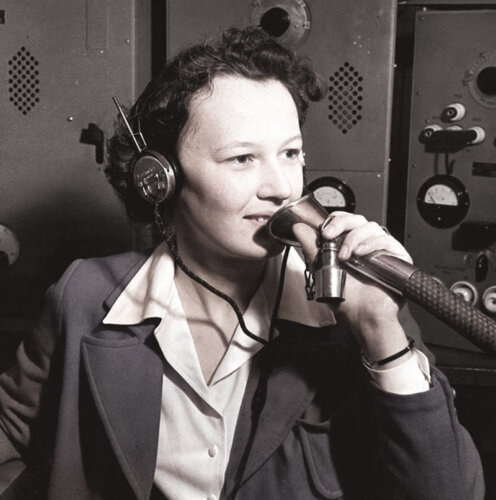
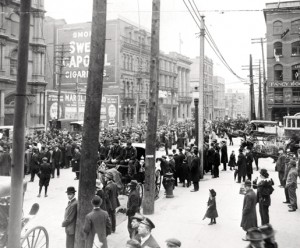
PHOTOS: ALEX STIRTON, LIBRARY AND ARCHIVES CANADA–PA133321; LIBRARY AND ARCHIVES CANADA–PA116720; LONDON PICTURES SERVICE/BRITISH HIGH COMMISSION OTTAWA; ALEX STIRTON, LIBRARY AND ARCHIVES CANADA–PA140417 Clockwise from

Most Popular
Sign up to our newsletter

Stay up to date with the latest from Legion magazine

By signing up for the e-newsletter you accept our terms and conditions and privacy policy.

Advertisement
Listen to the Podcast

Sign up today for a FREE download of Canada’s War Stories

Free e-book

An informative primer on Canada’s crucial role in the Normandy landing, June 6, 1944.