

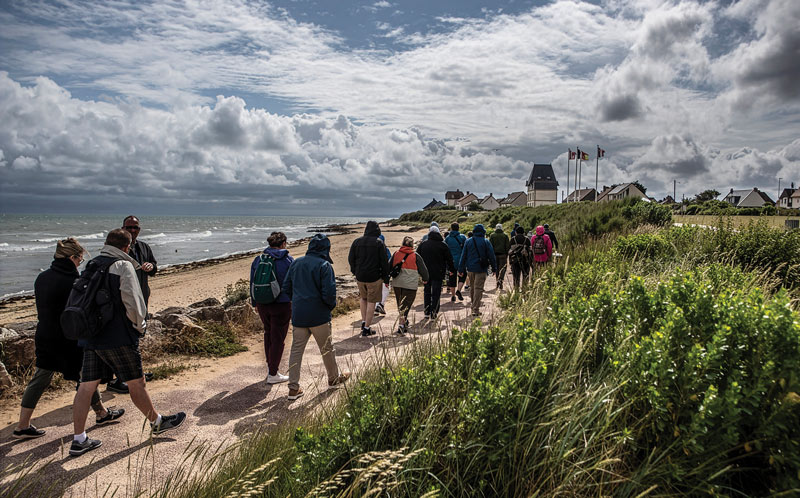
Members of the 2025 Royal Canadian Legion’s Pilgrimage of Remembrance walk along Juno Beach. [Stephen J. Thorne]
“Seeing is believing.”
An idiom now, the phrase is credited to 17th-century English clergyman Thomas Fuller. Many, however, may not know the proverb continued with, “but feeling is the truth.”
After the Great War, the loved ones of many Canadian veterans, indeed people the planet over, wanted to experience both the sense and the emotion first-hand by visiting sites of many of the conflict’s battles. They flocked to the old Western Front, often alongside veterans themselves.
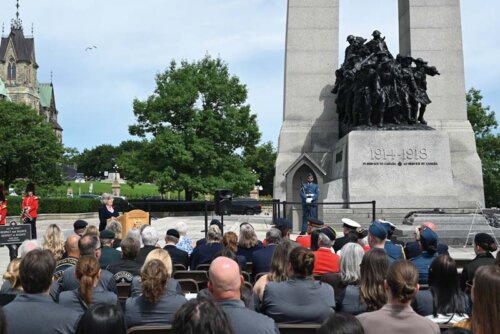
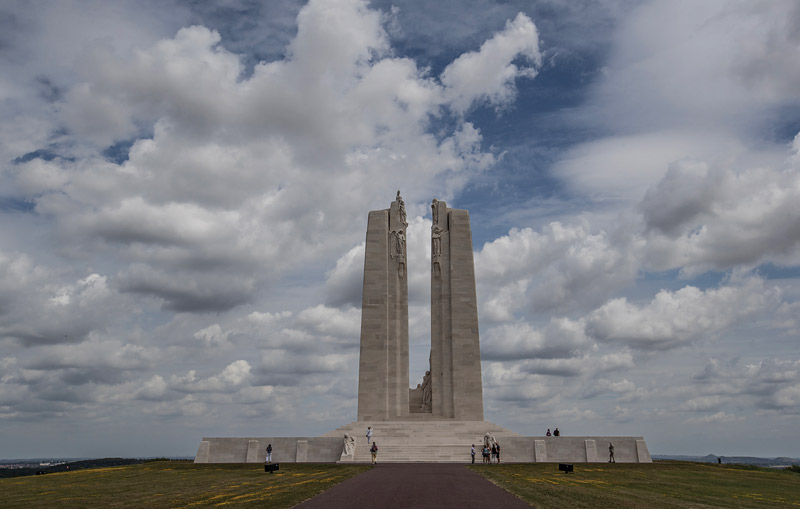
In July 1936, The Royal Canadian Legion organized a mass pilgrimage to the ceremony to unveil the Canadian National Vimy Memorial in France (also see “Altar of remembrance,” page 26). Some 6,500 veterans and their family members made the trip on five ships to see the iconic tribute to all Canadians who served in WW I and that bears the names of 11,285 of its sons who died with no known grave.
The Legion conducted several other similar trips during the decades to follow, then in 2013, it established a biennial Pilgrimage of Remembrance, in which one member from each of the organization’s 10 territories is selected to participate. The 2025 group experienced a 14-day tour of First and Second world war sites in France and Belgium focused exclusively on Canadian battlefields, cemeteries and memorials, and unmarked rural roadside battle sites—where few, if any, other such excursions stop.
Like those Canadians who trekked overseas in the aftermath of WW I, for modern-day pilgrims, the trip is a dream of a lifetime, a chance to see and connect with the land on which their country’s forbearers fought and fell. Legion Magazine’s late senior staff writer Stephen J. Thorne joined the group to document their tour for this photo essay. For the career military journalist who had spent the last years of his work penning accounts of Canada’s military history, the trek was as meaningful as it was for any of the participants.
Seeing really is believing. And feeling really is the truth.
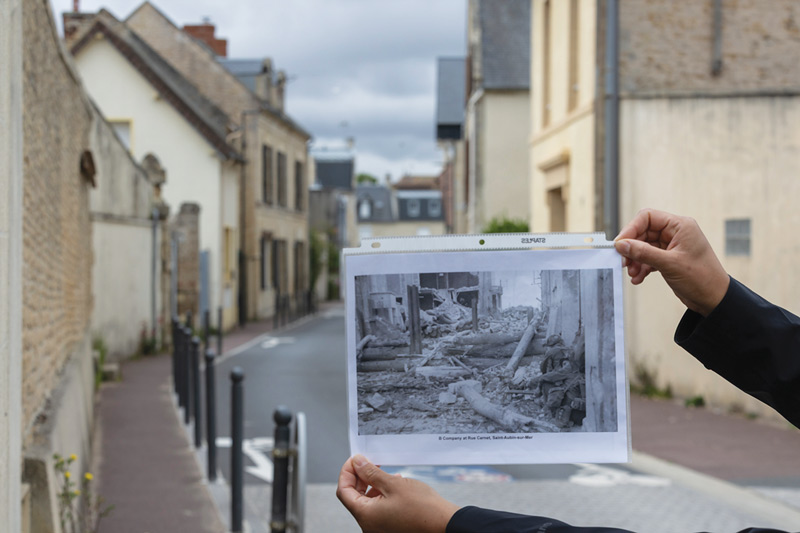
Rue Canet in Saint-Aubin-sur-Mer, France, during WW II and today. [Stephen J. Thorne]
People the planet over wanted to experience both the sense and the emotion first-hand by visiting sites of many of the conflict’s battles.
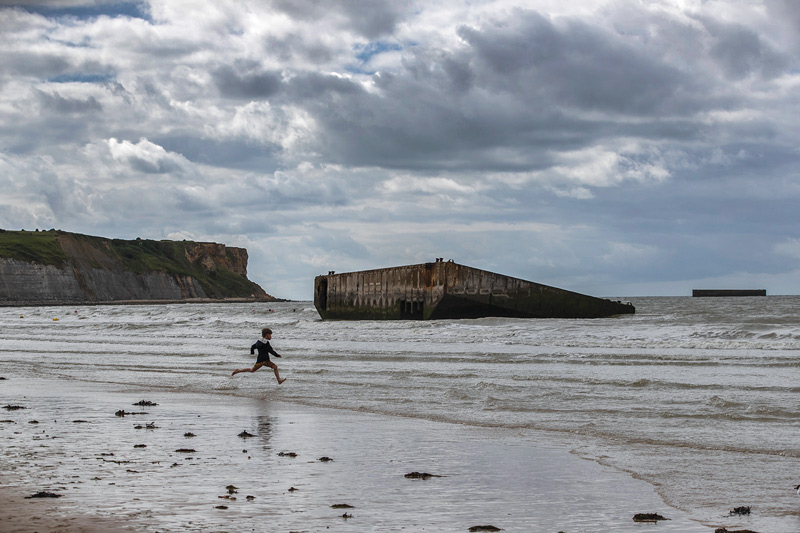
A child frolics in the shadows of the Mulberry harbours (clockwise from below) deposited along Gold Beach at Arromanches, France, after June 6, 1944 [Stephen J. Thorne]
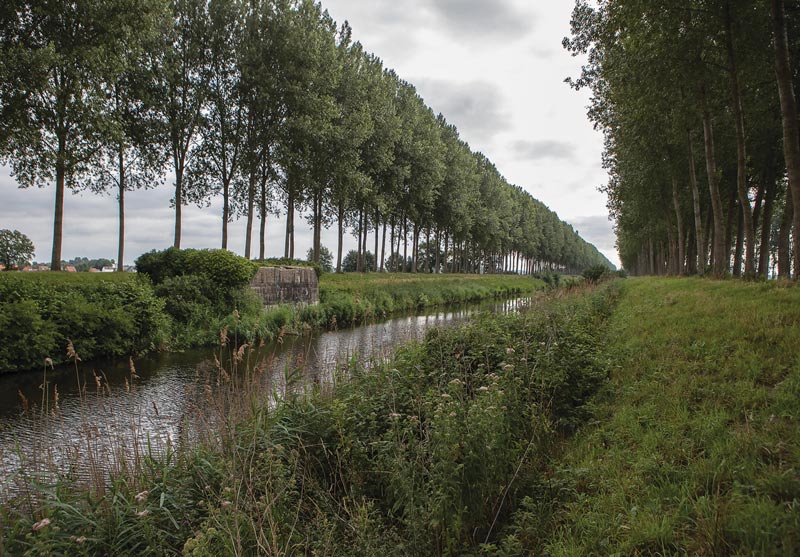
The remnants of a WW II German bunker on the Leopold Canal, where Canadian troops launched the Battle of the Scheldt [Stephen J. Thorne]
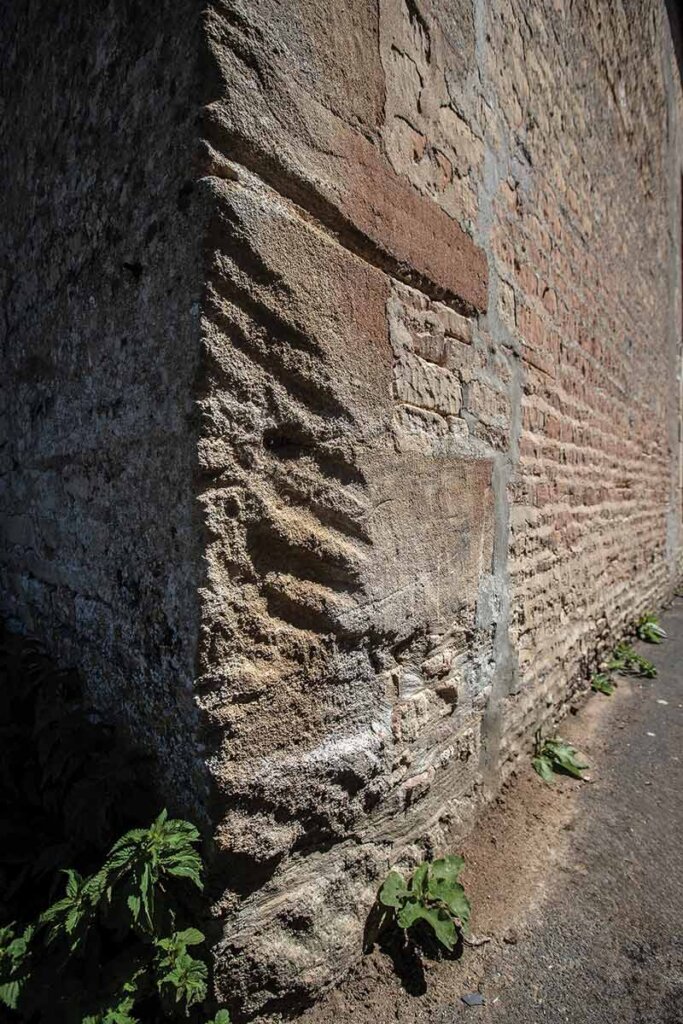
In the heat of 1944 fighting, a tanker took his turn a little too tight. [Stephen J. Thorne]
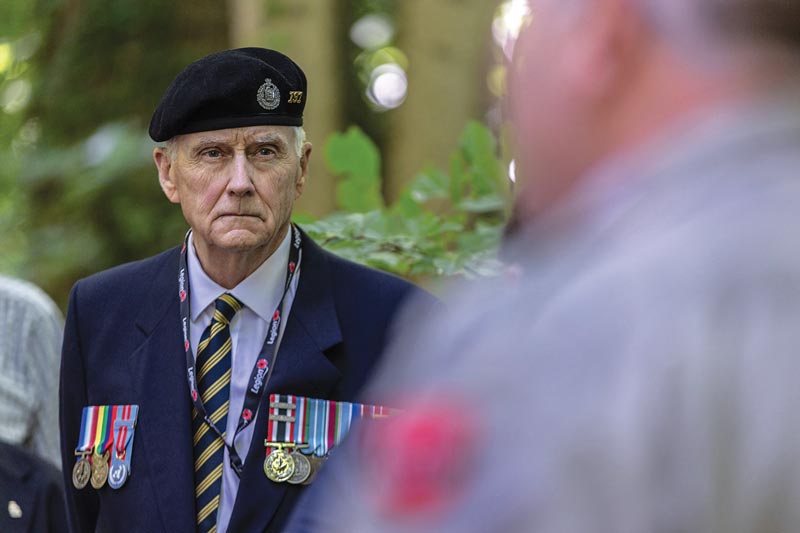
Pilgrim David Scandrett, a former armoured trooper and commanding officer of 3rd Canadian Ranger Patrol Group, listens to guide John Goheen during the 2025 Legion tour. [Stephen J. Thorne]
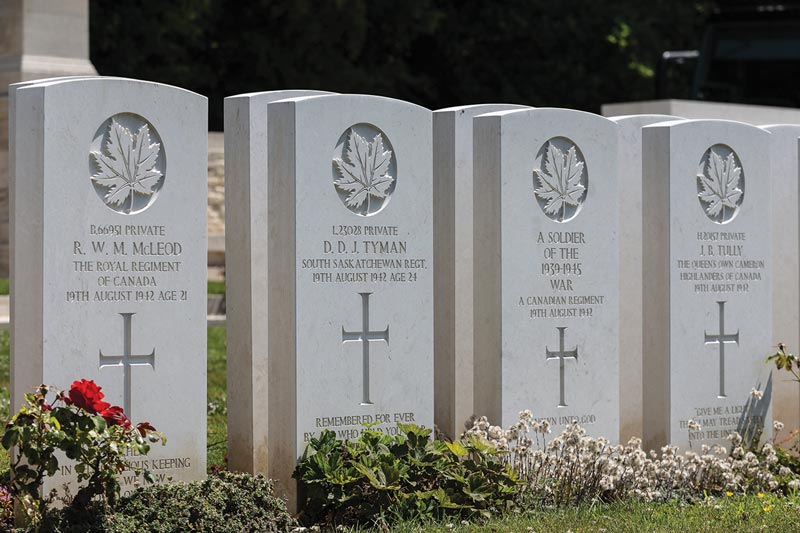
Row upon row of Canadians killed on Aug. 19, 1942, fill the cemetery in Dieppe, France. [Stephen J. Thorne]
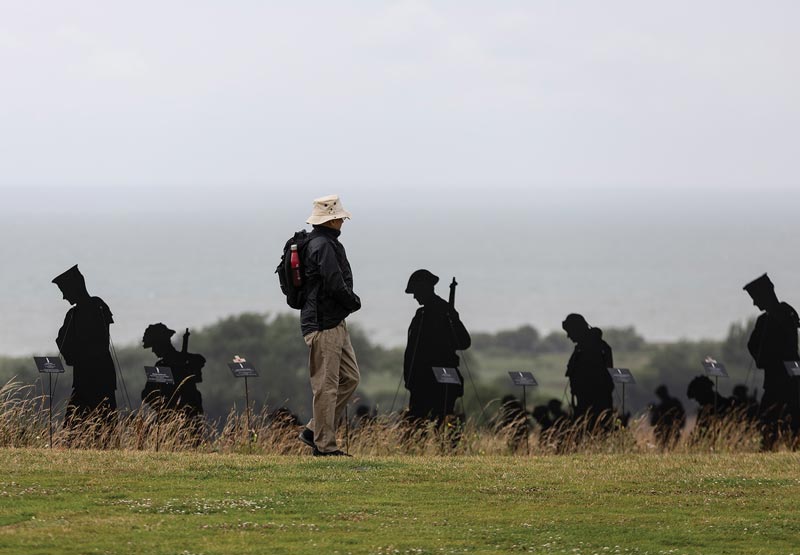
A pilgrim strolls through a memorial near Gold Beach in Normandy [Stephen J. Thorne]
The trip is a dream of a lifetime, a chance to see and connect with the land on which their country’s forbearers fought and fell.
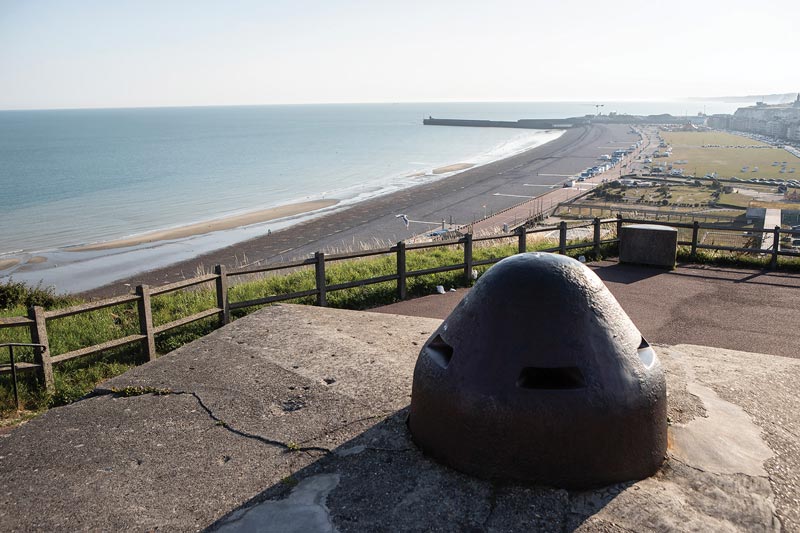
A German bunker boasts a commanding view of the town and the beach. [Stephen J. Thorne]
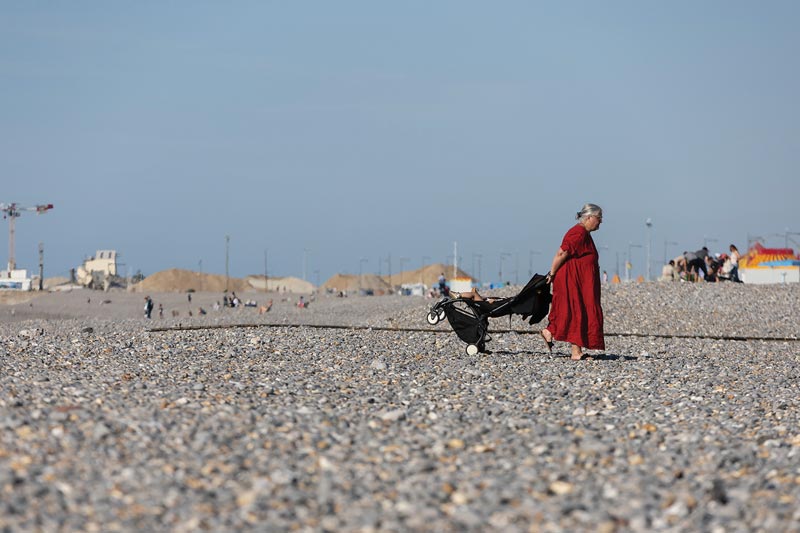
A woman carts her young charge off White Beach at Dieppe. [Stephen J. Thorne]
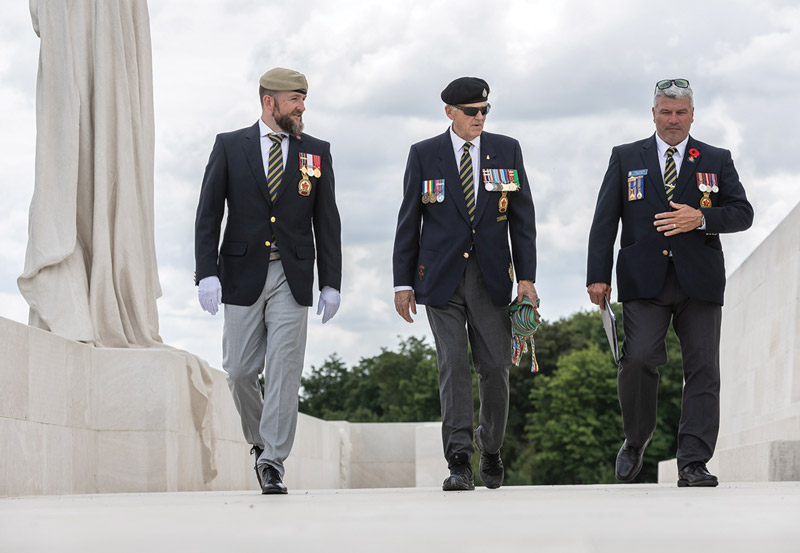
Veterans Caleb MacDonald and David Scandrett walk the Canadian National Vimy Memorial (above and opposite) with pilgrimage guide John Goheen. [Stephen J. Thorne]
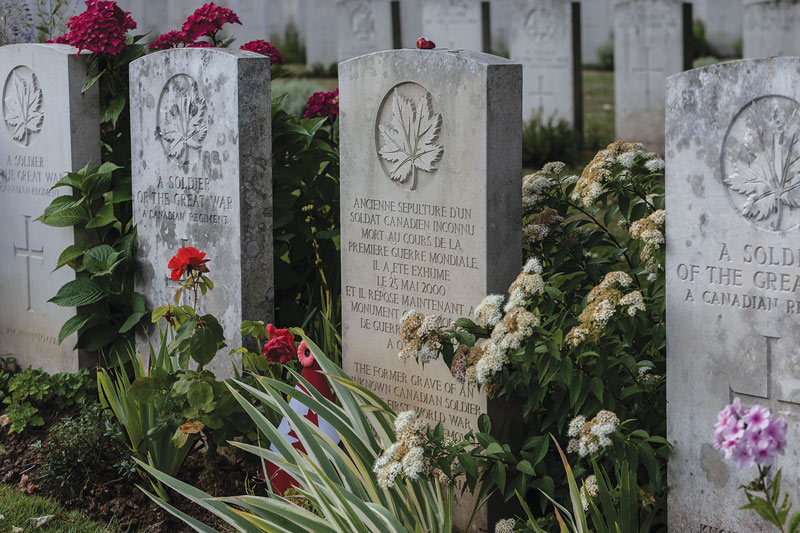
Grave 7, Row E, Plot 8 in Cabaret-Rouge British Cemetery near Vimy Ridge at Souchez, France (below)—the gravesite of an unidentified Canadian who was exhumed and interred in the Tomb of the Unknown Soldier in Ottawa in 2000. [Stephen J. Thorne]
[Stephen J. Thorne]
[Stephen J. Thorne]
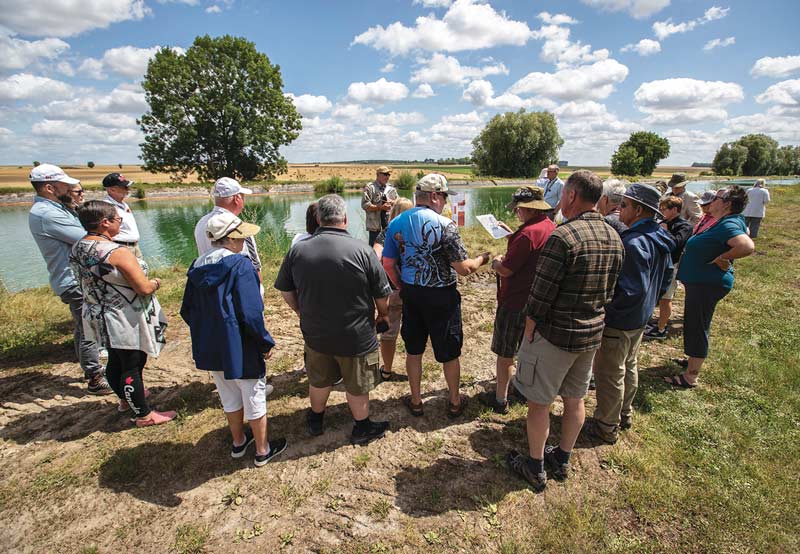
Historian and guide John Goheen briefs pilgrims on the Sept. 27-Oct. 1, 1918, battle at Canal du Nord, France. [Stephen J. Thorne]
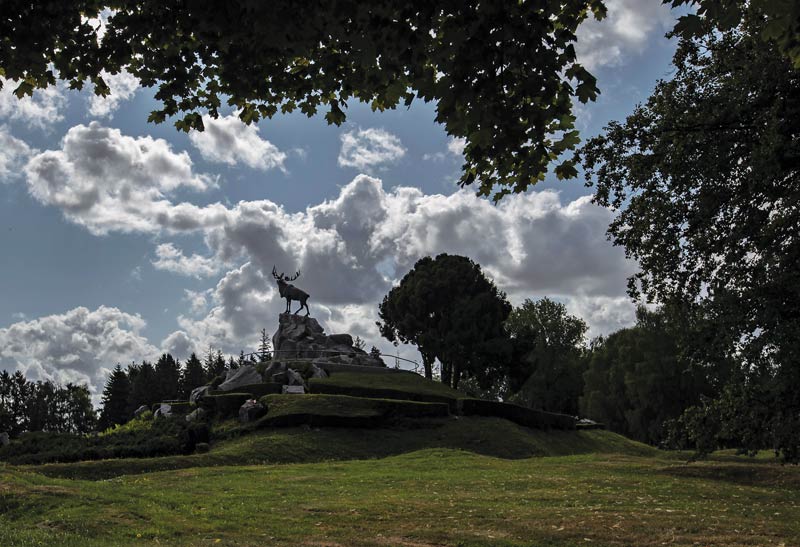
The Beaumont-Hamel Newfoundland Memorial. [Stephen J. Thorne]
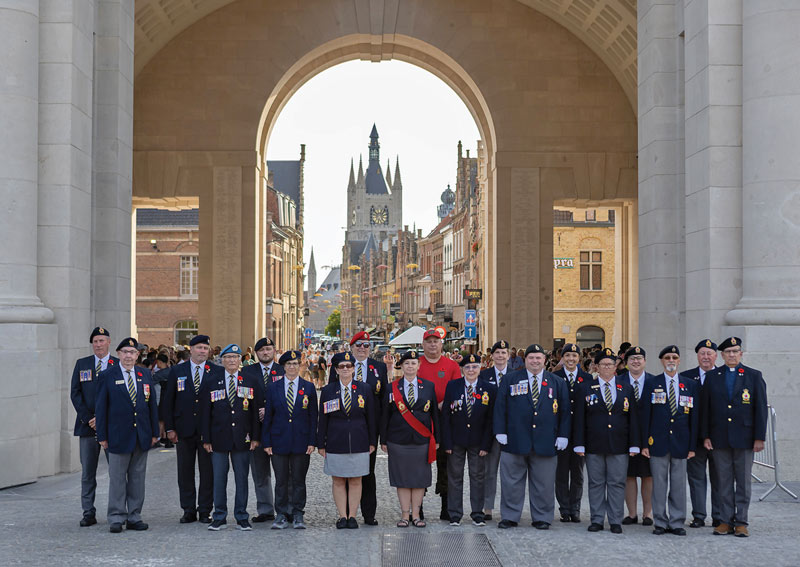
Members of the 2025 Legion Pilgrimage of Remembrance gather for a group photo at the Menin Gate in Ypres. [Stephen J. Thorne]
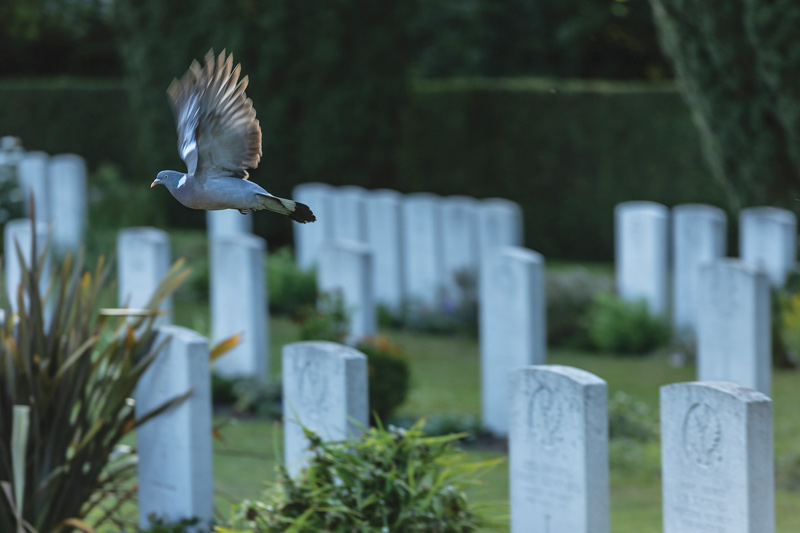
A pigeon launches from its perch atop a headstone in a small wartime cemetery nearby. [Stephen J. Thorne]
For the journalist who had spent his last years penning accounts of Canada’s military history, the trek was as meaningful as it was for any of the participants.
Advertisement