



[Bill Stapleton/CWM/19960064-001]
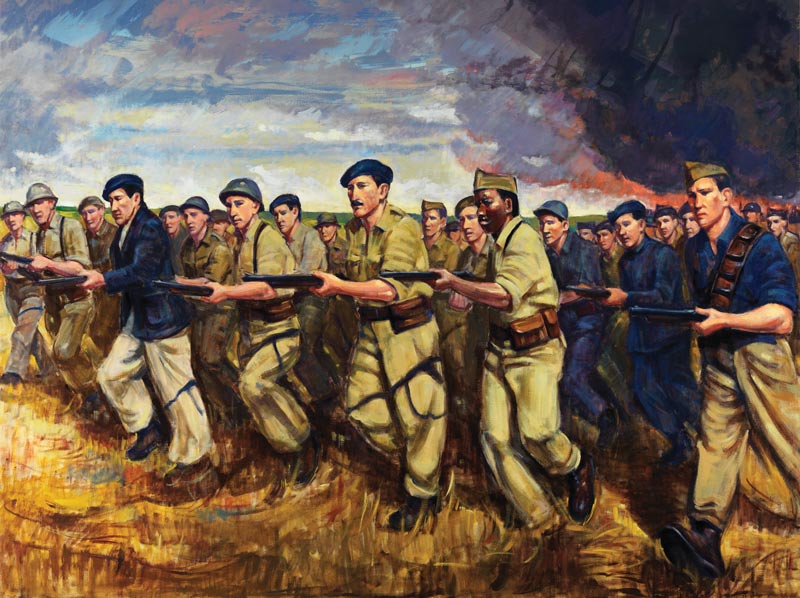
Jim Higgins and almost 1,700 other Canadians were early to the fight against fascism. Their war was in Spain, which had erupted in 1936 after a few generals attempted a coup against the country’s democratically elected Republican government. Most Canadians, along with Higgins, arrived as volunteers in 1937.
General Francisco Franco quickly emerged as the leader of the rebel side, a fascist-supported movement called the Nationalists. In April 1939, after a brutal civil war, Franco’s Nationalists won, five months before the start of the Second World War.
Growing up in Peterborough, Ont., in the 1950s, I knew little about my father’s past, though I was vaguely aware he had fought in a war. He took me to ceremonies on Remembrance Day, but it never occurred to me to question why he wasn’t marching with the other veterans. It was one of many secrets he kept from his five children.
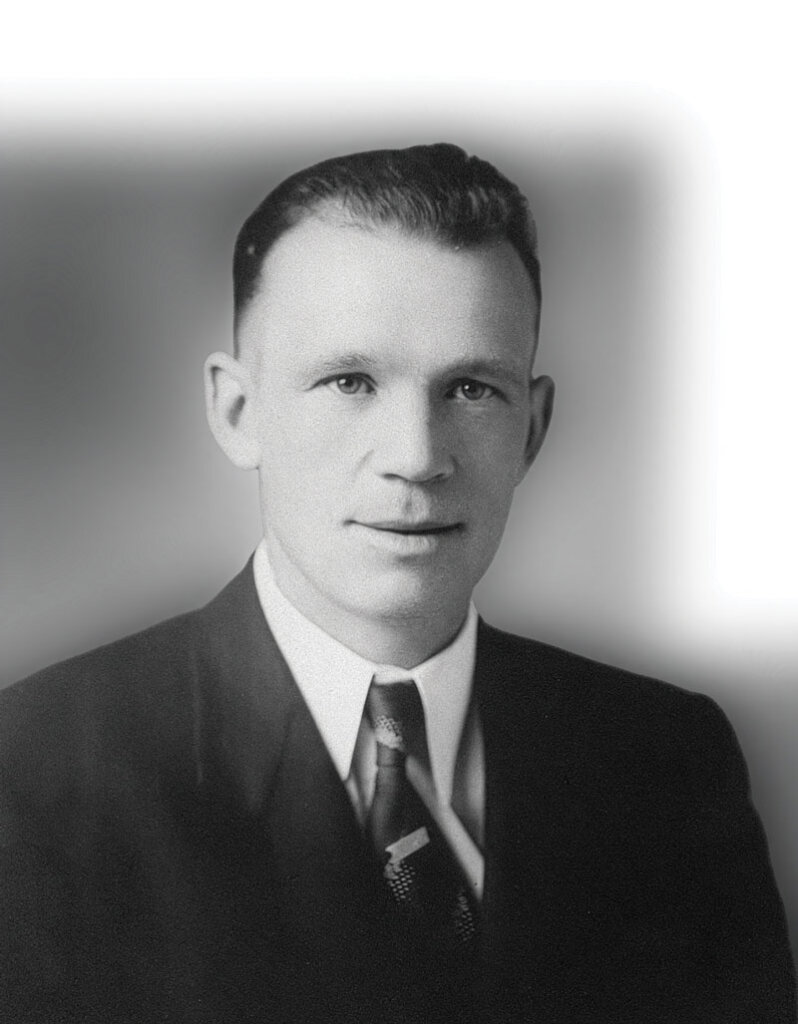
Jim Higgins served in the Mackenzie-Papineau Battalion (above), a Canadian unit that fought as part of the International Brigades during the Spanish Civil War. [courtesy of Janette Higgins]
I had barely glanced at the book manuscript and other material he left behind when he died in 1982. In 2017, when I retired, I finally had the time to do what needed to be done.
His story is now thoroughly documented in Fighting for Democracy: The True Story of Jim Higgins, A Canadian Activist in Spain’s Civil War published in 2020, and many mysteries surrounding my father have been solved, including why he wasn’t marching.
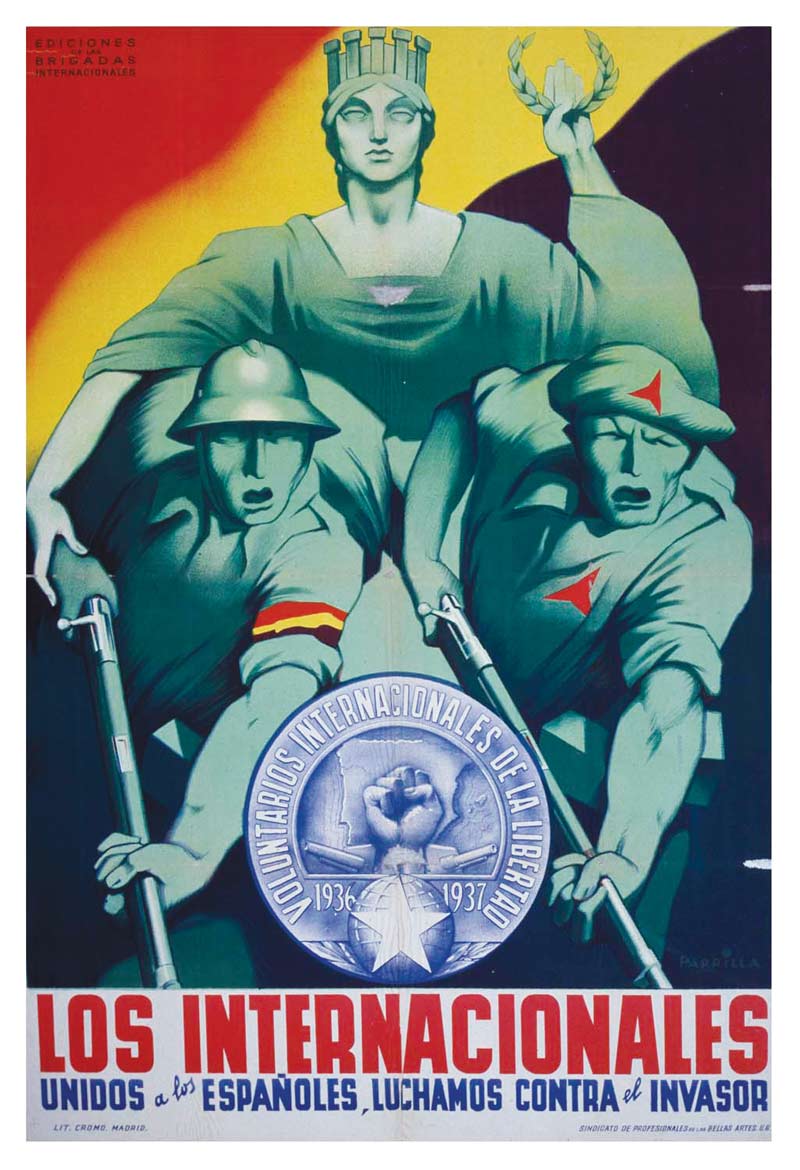
A 1937 propaganda poster for the International Brigades translates to “Internationalists, United with the Spanish People and Struggle Against the Invader.” [Parilla, & Brigadas Internacionales (1937)]
In the late 1930s, it was communism, not fascism, that alarmed and preoccupied the leaders of the western democracies, including Canada’s Prime Minister Mackenzie King. They largely turned a blind eye to the aggressions of Germany’s Adolf Hitler and Italy’s Benito Mussolini, and instead admired their perceived accomplishments: the former had revived his country’s economy and the latter had, according to circulated stories, trains running on schedule.
At the same time, Higgins and others identified the dangerous rise of fascism in Europe. It wasn’t hard to recognize, and Canadians were remarkably well informed. Everyone knew when the Nationalist generals revolted against the Spanish government
in 1936, and within 10 days had received critical support from Hitler and Mussolini. The Spanish Civil War didn’t leave Canada’s front pages until the conflict ended in April 1939.
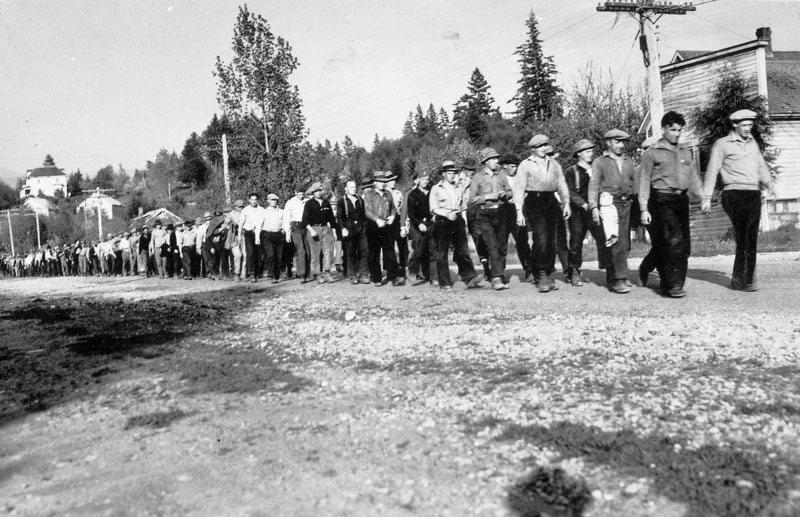
Men leave an unemployment relief camp (top) on Vancouver Island in protest in 1935. [Kaatza Station Museum and Archives/N0064]
Amid a groundswell of international outrage, Higgins and his comrades signed up to fight against fascism in Spain in 1937. Thousands of others from around the world did the same. The Canadians formed the Mackenzie-Papineau Battalion, known as the Mac-Paps, part of the International Brigades that comprised roughly 35,000 volunteers from about 60 countries. The International Brigades were formed in response to German and Italian intervention in July 1936. By October 1936, International Brigade volunteers began arriving in Spain from around the world to fight on the Republican side in the Spanish Civil War.
Their motivation was clear. Though some needed a job and others were looking for adventure, none did it for the money. As Higgins wrote: “We were all anti-fascist, including the Germans and Italians who saw what was happening in their own countries.”
At the war’s outbreak, Spain’s Republican government had been led by a somewhat fractious coalition of socialist and left-wing parties with a wide mix of ideologies. Their reforms—women’s liberation, workers’ rights, establishing secular schools and the end of feudalism—were too much for Spain’s conservatives, the Catholic Church, large landowners and a handful of Spanish generals backed by elites.
Early in the war, western democracies, along with the U.S.S.R., entered into a Non-Intervention Agreement concerning the war in Spain, but three countries openly defied it: Germany and Italy supported the Spanish Nationalists from the start and, in the absence of support from a left-averse West, the Soviet Union supported the Spanish government’s side.
In return for the majority of Spain’s gold reserves, the Soviets provided mostly antiquated materiel and problematic military expertise. It was a devil’s bargain, but the Spanish government had no choice lest it be overthrown. Volunteer soldiers, medical personnel and others from around the world arrived under the auspices of the Comintern, or Communist International, a Soviet-backed organization that aimed to spread communism worldwide. The genesis of Comintern support arose from a 1935 “popular front” strategy that involved global Communist parties, including in Canada and the U.S., working with organizations on the left to counter rising fascism and spread communist ideology. This strategy had helped get Spain’s Republican government elected in May 1936. Comintern’s goal was to seek ascendance through evolution, not revolution.
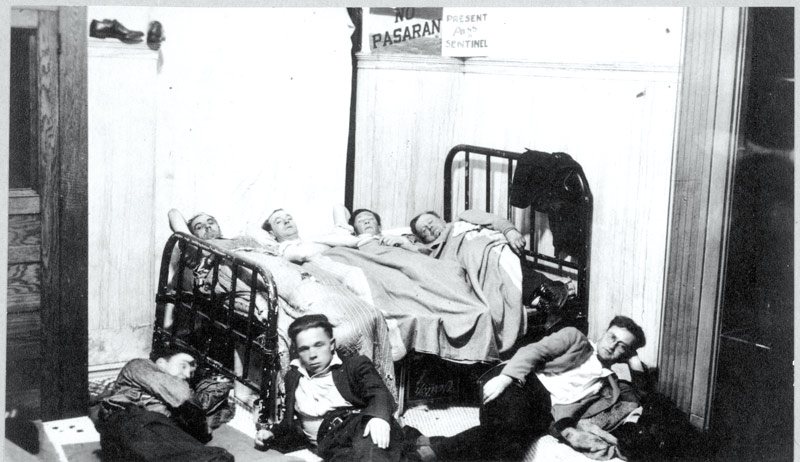
A group of men, possibly members of the Mackenzie-Papineau Battalion, share the same bed during the Depression. [CBC/LAC/C-013236]
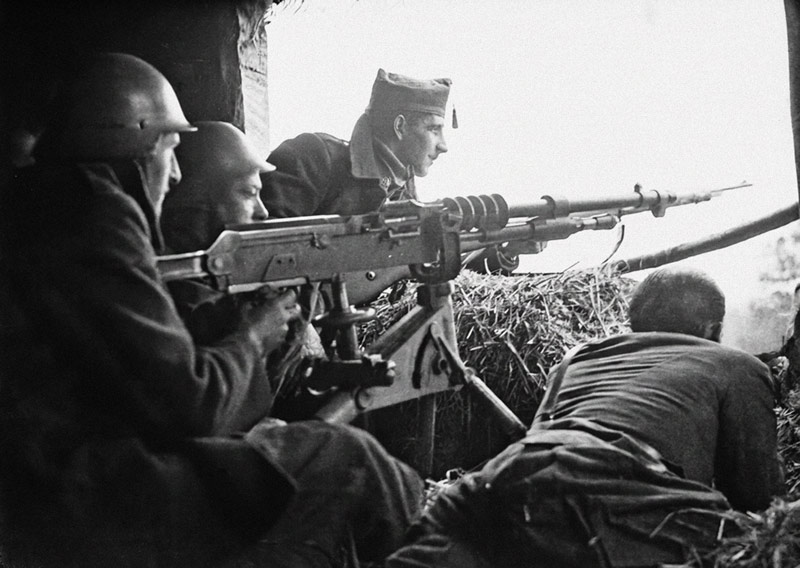
The Canadians formed the Mackenzie-Papineau Battalion, known as the Mac-Paps, part of the International Brigades.
The Great Depression had been devastating to Canadians. It’s hard to comprehend the spirit-crushing despair of those “ten lost years” that started in 1929 with a stock market crash. Farmers lost nearly everything and jobs were scarce—especially for union organizers and single men, such as Higgins.
After being blacklisted in his carpentry trade and effectively prevented from union organizing, Higgins’ talents and resourcefulness led him to work on ranches and in logging camps until he had no choice but to join tens of thousands of other single, unemployed men riding the rails looking for work where none could be found.
[LAC/e007151984]
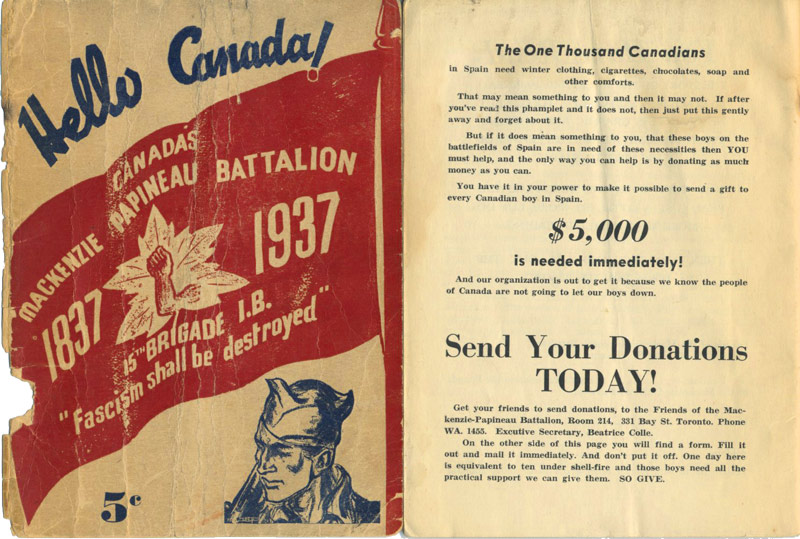
A pamphlet issued in Canada in 1937 told the stories of the Mac-Paps (above) and raised funds for the unit. [cdnhistorybits.wordpress.com]
By 1932, the Defence Department had established relief camps, where unemployed men were meant to do manual labour in exchange for room and board, medical care and daily wages. In his book, Higgins relates how homeless encampment “eyesores” were removed from urban centres and “swept under the rug” by these camps. The work at the facilities was sometimes meaningless, but at least the men were given sustenance and a bed in a bunkhouse crammed with 50 others.
There seemed no end in sight to the Depression. Higgins wrote: “Hundreds of thousands were feeling the effects…but 1935 was the year that brought even the most stubborn to their knees.”
After 1935, left-wing groups backed by the Communist Party of Canada emerged across the country, and they didn’t require members to be card-carrying Communists. That included the Relief Camp Workers’ Union, of which Higgins was a member, though as a social democrat.
The relief camps had become cauldrons of unrest; the government somehow hadn’t foreseen that putting a bunch of disaffected men together would bring ideas around class struggle into sharp focus.
The situation came to a head in the spring of 1935, when men at various B.C. camps went on strike, travelling to Vancouver to protest. Higgins was already there, having been escorted out of a B.C. camp by the RCMP a few days earlier as an agitator. As I found out later, this incident was responsible for the force labelling him “radical.”
Thus began the On to Ottawa Trek. Roughly 1,500 camp “inmates” tried to bring their protest to Parliament, riding atop railcars and gathering citizen support along the way. They were stopped in Regina when a peaceful crowd of citizens and protestors was suddenly charged by RCMP officers on horseback. The melee that followed is now known as the Regina Riot, but Higgins and his fellow trekkers called it “the use of force to stop the trek.” By the time the Communist Party of Canada began recruiting volunteers for the Spanish Civil War, these men were fired up with nothing to lose—except for their lives, of which the conflict claimed some 400. Most volunteers had no savings and needed support to get to Spain.
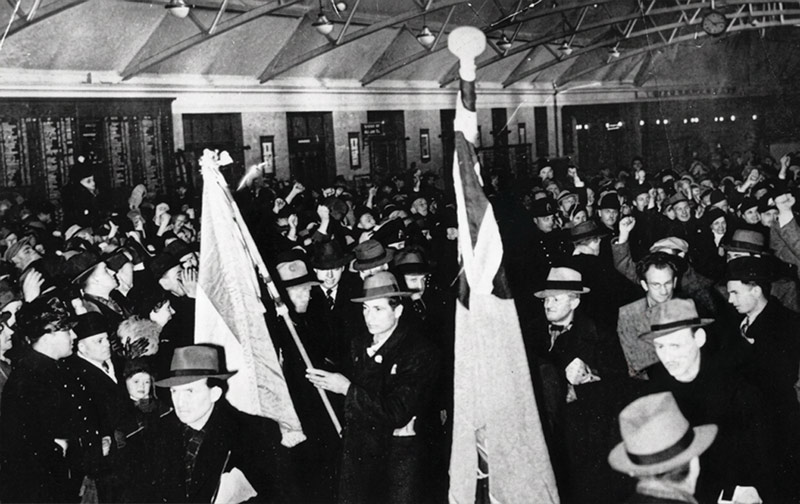
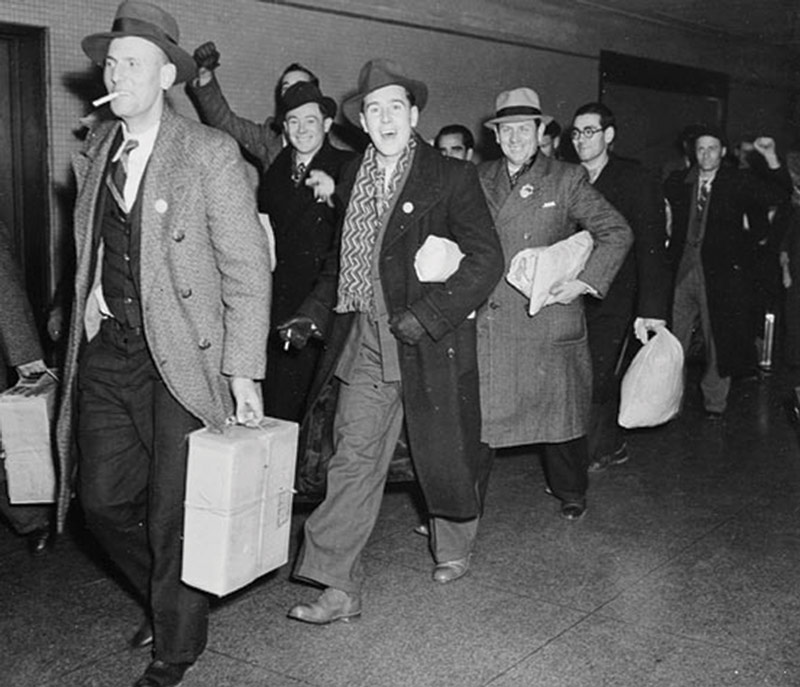
Returning Mac-Pap veterans, including Jim Higgins (circled in below image), arrive at Toronto’s Union Station to a crowd of 10,000. [Toronto Star]
[cpcml.ca]
In his 2008 book Renegades, Michael Petrou reported that 76 per cent of the Canadian volunteers in the Spanish Civil War were members of the Communist Party of Canada. “Given the spike in enlistment [in the Communist Party] in 1936, it is reasonable to assume they signed up because of [the Spanish Civil War],” he wrote.
Higgins was coming out of a Saskatoon Trades and Labour Council meeting in 1937 when he decided to join. “I knew the Communist Party was involved, and had been asked many times to become an official member, but resisted because I did not want to be tied down, to become a robot. I wanted to be independent and decide myself if a cause was worth fighting for,” he wrote. “Defending democracy was a cause worth fighting for—one I could fully commit to.”
In May 1937, Canadian officials were increasingly anxious about communism’s grasp in Canada, and enacted the Foreign Enlistment Act to prevent recruitment by all but acknowledged consular offices. People such as Higgins who were trying to volunteer after that date, had to flout Canadian law and sneak into Spain. The leftist French government, though sympathetic, gave in to pressure from other western democracies and closed its border with Spain the previous year. So, in late October 1937, Higgins and 20 others found themselves making a dangerous climb over the Pyrenees.
Higgins’ army file and writings reveal a courageous soldier. He received a bravery commendation for lugging his machine gun to a strategic spot under a hail of enemy crossfire and singlehandedly halting their advance. Later on, just before the Republicans’ surprise attack in July 1938, known as the Battle of the Ebro, Higgins wrote about exposing enemy spies. He was also entrusted with “special operations,” a few of which he described in his book, and was captured by the enemy, leading to a harrowing escape.
The International Brigades withdrew in September 1938, but Germany and Italy did not; nor did Higgins. He continued fighting with the Spanish Army until late January 1939.
It never occurred to me to question why he wasn’t marching with the other veterans. It was one of many secrets he kept from his five children.
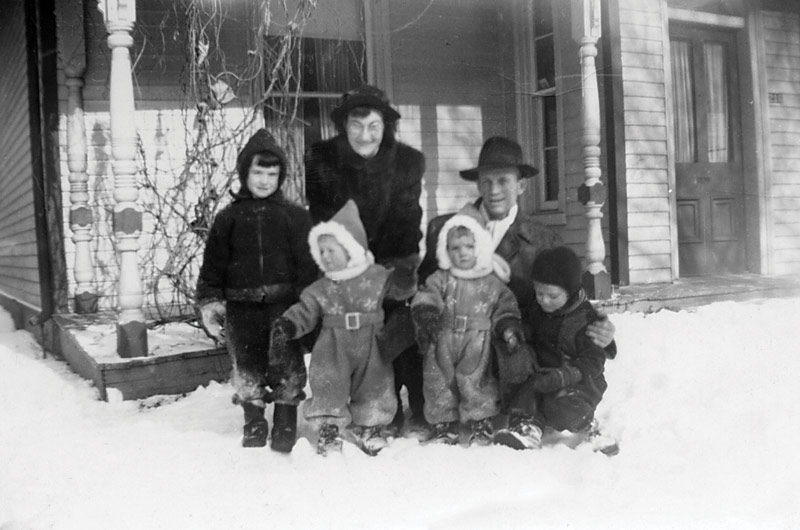
The Higgins family, including the writer (far left), in Peterborough, Ont., in December 1948. [courtesy Janette Higgins]
It was a long few years, but Canadians supported their effort. They sent cigarettes and bars of soap to “our boys in Spain,” and when the Mac-Pap veterans returned to Canada in February 1939, the Toronto Star reported that 10,000 civilians turned up at Toronto’s Union Station to hail them as heroes.
The Canadian government saw it differently. The veterans were watched by the RCMP and some, such as Higgins, who volunteered five months later for WW II, were turned down as security risks. The reason? Canadian authorities, no doubt, perceived them as “premature anti-fascists,” a loaded term used for American volunteers. It wasn’t a compliment—it was code for Reds.
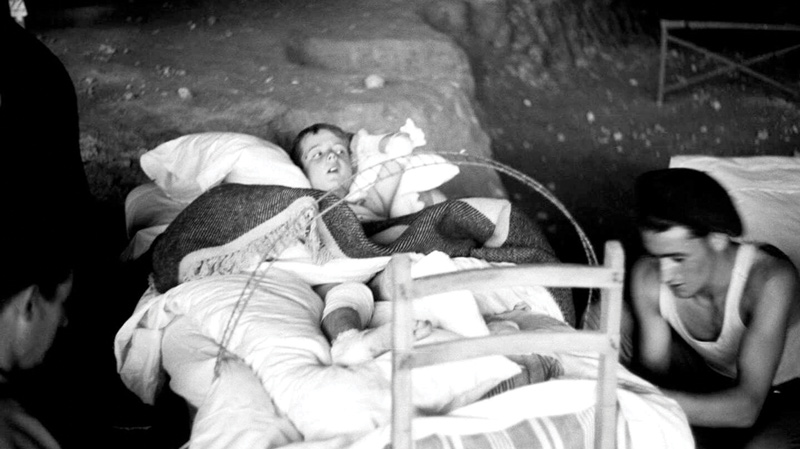
Manuel Álvarez, the boy saved by Higgins during the Battle of the Ebro, recovers at a field hospital. [The Estate of Alexander Wheeler Wainman]
For the most part, Higgins and his “radical” comrades weren’t security risks, but they were a threat to capitalist interests. They fought for the rights of workers to organize and for advancements, such as fair wages, unemployment insurance and universal health care.
No Mac-Pap was ever charged under the Foreign Enlistment Act—it would have been an unpopular move given their widespread citizen support. Neither were they absolved, however. In 1980, Higgins and other surviving veterans made a plea to Ottawa for recognition. They received nothing. Subsequent appeals on their behalf have also been for naught.
In recent decades, a few privately funded memorials have been installed, including one each in B.C. and Ontario under provincial NDP governments, and one in Ottawa, supported by then-governor general Adrienne Clarkson.
In 2018, I received my father’s RCMP file to help document his story. I could find nothing in it that seemed threatening to Canada’s security. I did, however, find out that my father attended parties in Toronto in 1940 organized by known Communists and details of his 1942 marriage to Reta Palliser, my mother, along with the names and birthdates of myself and my four siblings. I also found two letters intercepted in 1940 from his girlfriend, Lillyan, in New York; and was further amused by the description of an intercepted Christmas card sent to a friend in Saskatoon. Inside was a raised fist, a potent symbol, even today.
I also learned that my father was being watched monthly in the 1950s, around the time when we would attend Remembrance Day ceremonies together. The surveillance continued sporadically after that. The last item in his file is a 1980 news clipping about a boy named Manuel Alvarez who had been rescued by an anonymous Canadian soldier in Spain in July 1937, during the Battle of the Ebro, when an enemy bomb hit a water tank, releasing a deluge that swept the child down the mountainside to certain death. Through an incredible fluke and against all odds, Alvarez found his saviour in Peterborough in 1978—Jim Higgins. By 1980, Alvarez had published his acclaimed book, The Tall Soldier: My Forty Year Search For The Man Who Saved My Life. It’s ironic that the last item in my father’s RCMP file tells a hero’s story.
Higgins was called a hero more than once. He was also labelled a radical. As for his stand against fascism, my father never wavered. After Franco died and Spain’s transition to democracy began, he told one reporter: “I’m glad I went over there. I’m proud of it.”
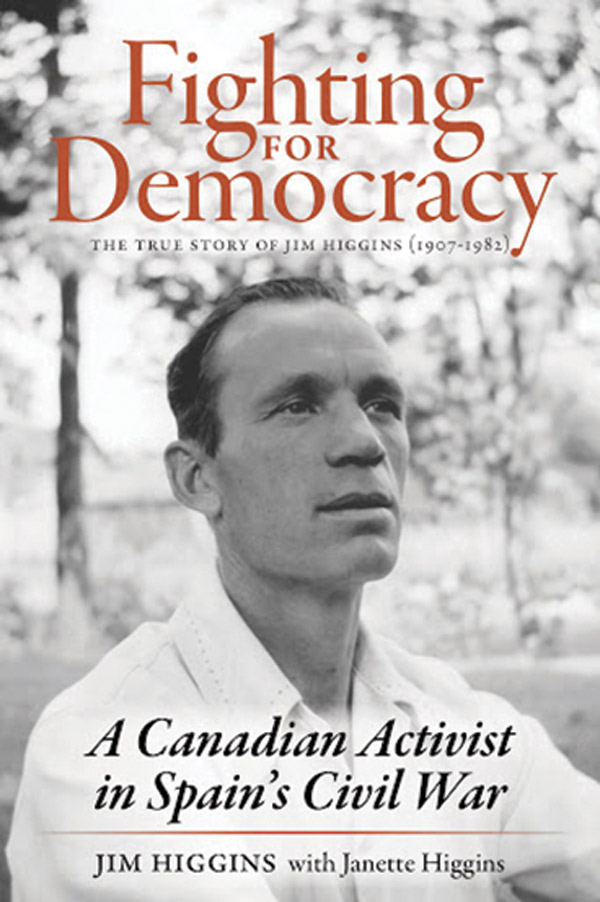
Fighting for Democracy: The True Story of Jim Higgins (1907-1982), A Canadian Activist in Spain’s Civil War by Jim Higgins with Janette Higgins was published in 2020 and is available in eBook formats and print at janettehiggins.com.
Advertisement





Great job, Janette! I hope all Canadian Legion members come to know the Mac-Paps for the anti-fascists they were in fighting the first battles of the Second World War.
And if enough Legion members would agree, Last Post would be able to provide markers for the unmarked graves for these men. Some did fight in WWII and were in the Merchant Marine so they were eligible, but some were not accepted into the Army or Navy and have died unrecognized. Lest We Forget.
We have a project to honour the Mac-Pap vets on Remembrance Day but too many lie in unmarked graves.