




Lionel Edwards
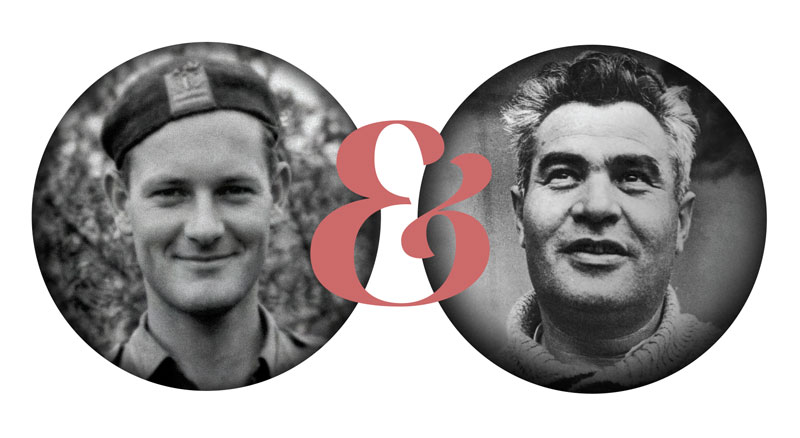
In July 1936, 25-year-old Lionel Edwards first read of the fascist uprising in Spain against the democratically elected Republican government and became obsessed by the war there. The unemployed Calgary accountant was disillusioned with Canada, where roughly 2.2 million of its almost 11 million citizens depended on relief to survive. Seeing no future in Canada, Edwards considered volunteering to serve in the International Brigades fighting as part of the Republican army.
By November, he had been inspired by newspaper accounts of an Austrian named Emil Kléber who claimed to be a naturalized Canadian and was being hailed the “defender of Madrid” for leading the International Brigades in driving off Nationalist attacks on the Spanish capital. Despite devastating casualties, the multinational volunteer force won what Edwards considered a glorious victory. All he wanted was to join the growing number of Canadians going to Spain to fight for its freedom. A few weeks later, when a Spanish government delegation came to Calgary, Edwards approached the organizers and was soon on his way overseas.
Seeing no future in Canada, Edwards considered volunteering to serve in the International Brigades fighting as part of the Republican army.
Edwards arrived in Spain in mid-March 1937, having sailed from New York City a month earlier, debarking in France, then joining a group of volunteers hiking through the Pyrenees. After training at the International Brigades’ headquarters in Albacete, Edwards was briefly assigned to administrative duties before being made commander of No. 3 Company platoon in the recently formed Mackenzie-Papineau Battalion (named in honour of the two 1837 rebellion leaders—William Lyon Mackenzie and Louis-Joseph Papineau).
Sergeant Edwards’ first action came in October 1937 during the disastrous XVth Brigade (of which the Mac-Paps were part) attack on the hilltop citadel town Fuentes de Ebro. In January 1938, Edwards was promoted to lieutenant and No. 3 Company’s command in time for the grim winter fighting at Tereul. Promoted to captain and No. 1 Company command, Edwards led it into the final major International Brigades’ assault across the Ebro River intended to save the republic from defeat. An exploding shell ripped open his right shoulder and almost tore off his left arm. But most of the shrapnel shredded his heavy backpack. Inside the pack was a treasured copy of the Madrid Defence Council’s order giving Emil Kléber command of all International Brigades defending the city. The pack’s contents, he wrote, “saved my life.” Edwards returned to Canada on Feb. 3, 1939.
The pack’s contents, he wrote, “saved my life.”
—Lionel Edwards
Emil Kléber
In early December 1936, Toronto Daily Star correspondent Frederick Griffin interviewed Emil Kléber. All of Griffin’s efforts to confirm Kléber’s background were deftly parried by the “sturdy-set man of 41.” Kléber claimed to be a naturalized Canadian, born in the Austro-Hungarian empire and captured by Russians in 1917 while serving with the Austrian army. After escaping, Kléber told Griffin he had come to Canada and joined the Canadian Expeditionary Force (CEF) in 1919, participating in the intervention in Siberia.
Disillusioned by this expedition in support of the White Russians, Kléber defected to the Soviets. They then sent him to fight alongside Mao Zedong’s Communists against Chiang Kai-shek in China—leading 56,000 men in breaking free of an encirclement by more than 1 million enemy troops.
Griffin accepted this backstory. “Such is the background of the strong man of the defence of Madrid,” he wrote. “He is no brass hat leader…but frequently is in the front line and often, earlier in the defence, he took a rifle, or handled a machine-gun while he was instructing and rallying new troops.”
Kléber compared Madrid’s defence to the French Great War stand known as the “Miracle of Verdun.” In Madrid, he said, “a miracle quietly happened.” The International Brigades showed such bravery they inspired all Madrid to fight and win against overwhelming odds.
Only years after the 1939 Republican defeat was much of the truth about Kléber revealed.
Only years after the 1939 Republican defeat was much of the truth about Kléber revealed. Kléber never concealed that the last name was a nom de guerre borrowed from the famous French Revolution general Jean-Baptiste Kléber. His real name was Manfred Zalmanovich Stern and he was an Austrian captured by the Russians in 1917. His escape to Canada and subsequent CEF service was fanciful, however. Stern was actually an ardent Bolshevik who led Siberian partisans against the White Russians.
In 1922, he entered the Soviet army and, by 1929, was a Main Intelligence Directorate (GRU) agent running a spy cell based in New York City. From there, he did serve in China until 1935, when he returned to Moscow and was sent to Spain the following year.
Stern’s heroic role in Madrid’s defence is beyond question, but it was also exaggerated by Soviet propaganda at the expense of Spanish commanders and the units they led. After Madrid, Stern was recalled to Moscow in December 1937. He disappeared, rumoured to have been shot in Joseph Stalin’s 1938 purge. It was later confirmed that Stern was imprisoned in a Siberian gulag, where he died on Feb. 18, 1954.
“He is no brass hat leader…but frequently is in the front line.”
—Frederick Griffin
on Emil Kléber
Advertisement