

1 December 1959
Twelve countries sign the Antarctic Treaty, declaring the continent a scientific preserve and banning military activity.
2 December 1942
The first controlled self-sustaining nuclear chain reaction is triggered at the University of Chicago, ushering in the atomic age.
3 December 1943
The 1st Special Service Force, the U.S.-Canadian commando unit known as the Devil’s Brigade, work to clear German positions on Monte la Difensa, Italy.
4 December 1950
HMCS Cayuga leads six ships on a dangerous night passage to support the evacuation of the port of Pyongyang in North Korea.
6 December 1912
Prime Minister Robert Borden proposes $35 million to help Britain rearm, but the bill is ultimately defeated in the Senate.
10 December 1943
1st Canadian Infantry Division continues its assault across Italy’s Moro River as the first step in a drive on the town of Ortona.
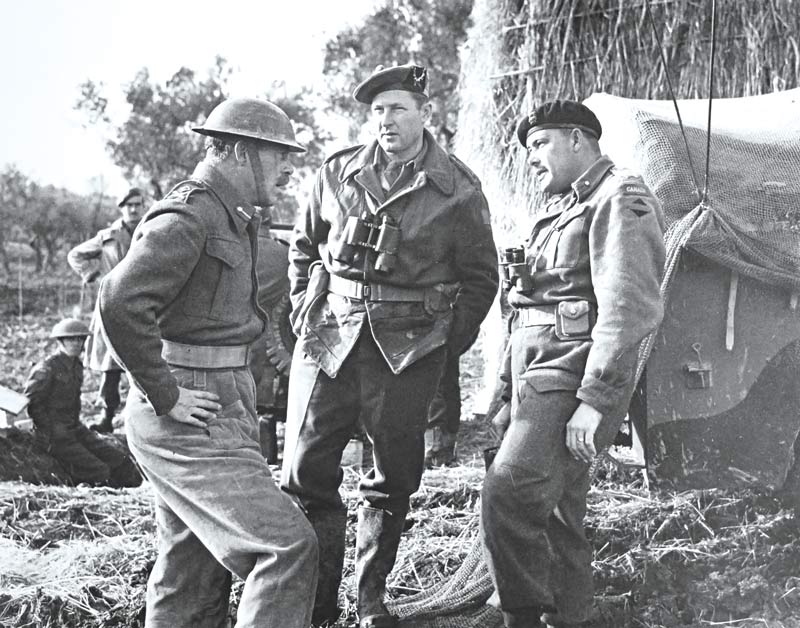
Credit: Lieut. T. Row/DND/LAC/PA131064
11 December 1941
Germany and Italy declare war on the United States.
14 December 1915
Arthur Ince is the first Canadian credited with downing an enemy aircraft, shooting a German seaplane near Ostend, Belgium.
15 December 1916
Canadian Aeroplanes Ltd. is incorporated to provide training aircraft for the Royal Flying Corps.
16 December 1944
Germany launches the Battle of the Bulge, its final major offensive on the Western Front.
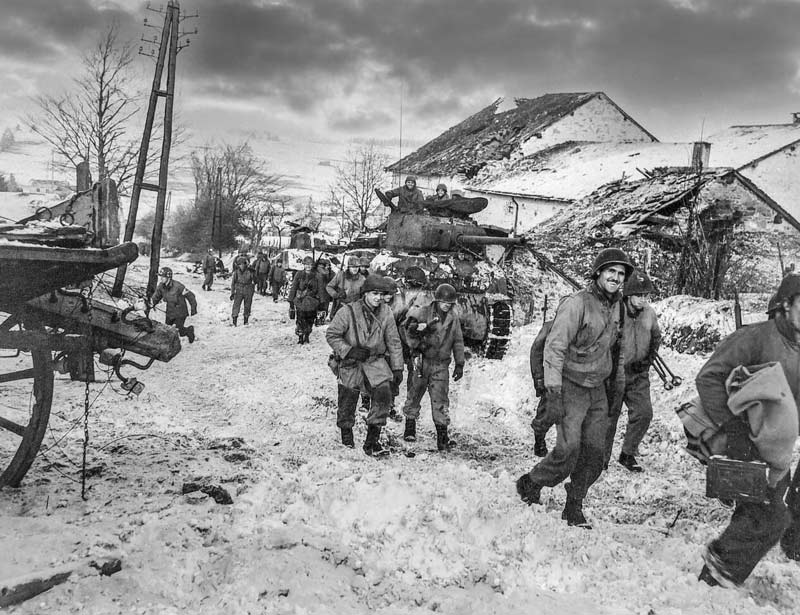
Credit: Shawshots/Alamy/2PYXMJK
17 December 1939
In Ottawa, Canada, the U.K., Australia and New Zealand sign the British Commonwealth Air Training Plan agreement.
18 December 1950
Canada’s first fighting unit—2nd Battalion, Princess Patricia’s Canadian Light Infantry—reaches Korea.
19 December 1813
The British are victorious in a night assault aimed at capturing Fort Niagara in New York.
21 December 1943
2nd Canadian Infantry Brigade, supported by Three Rivers Regiment tanks, enters the town of Ortona, Italy.
23 December 1956
British and French forces leave the Suez Canal after the UN and U.S. force an end to the armed occupation of the region.
24 December 1944
Minesweeper HMCS Clayoquot is torpedoed by U-806 off Halifax. Eight die while 76 survive.
25 December 1941
Hong Kong surrenders.
27 December 1972
Lester B. Pearson, prime minister from 1963 to 1968 and Nobel Peace Prize recipient, dies.
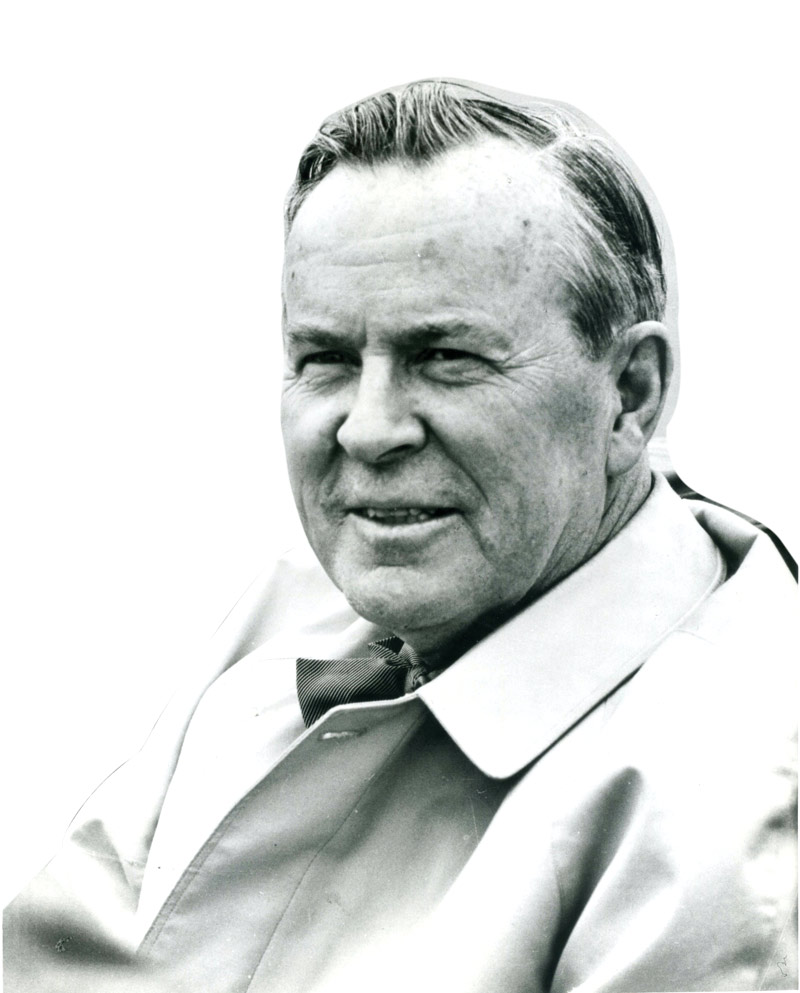
Credit: NFB/LAC/PA-165516
30 December 1941
Churchill delivers his historic “some chicken, some neck” speech in Ottawa, which helped to galvanize wartime resolve.
31 December 1943
The Royal Canadian Air Force is at its peak with 215,000 people, including 15,000 members of the Women’s Division.
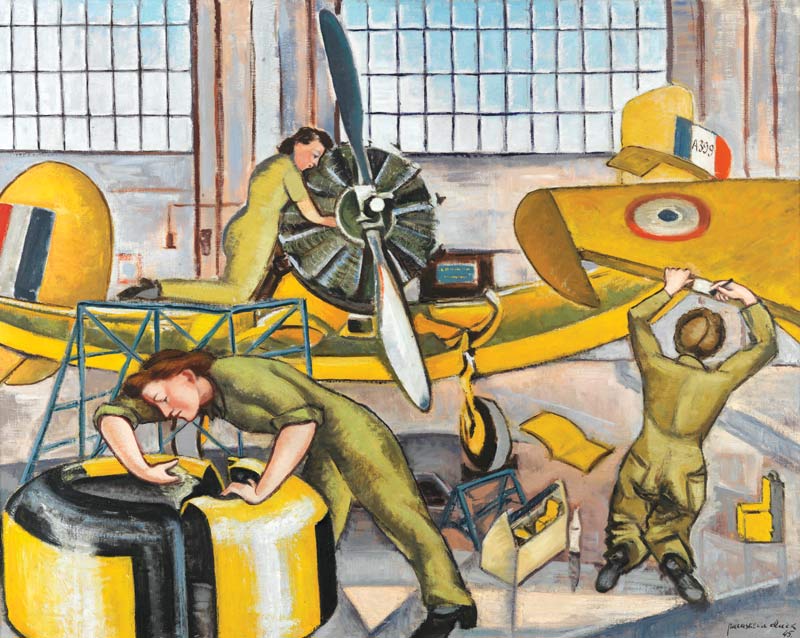
Credit: Paraskeva Plistik Clark/CWM/19710261-5678
Advertisement