


Generic selectors
Exact matches only
Search in title
Search in content
Post Type Selectors
Search

Army

Midnight Charge: The Attack On Kitcheners Wood

As darkness fell on the night of April 22, 1915, three German divisions, advancing behind clouds of poisonous chlorine gas, had torn a five-kilometre gap in the defences of the Ypres Salient. Two French divisions had been forced into a disorderly retreat, exposing the entire left flank of the Canadian Division.
The Royal 22nd Regiment

There is a quiet, dignified chapel in the Citadelle, the great walled fort that dominates the skyline of Quebec City. The chapel is a sacred place for the Royal 22nd Regiment, which makes its headquarters in the fort and marks its 100th anniversary this year.

Ypres 1915: The First Gas Attack

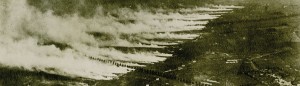
Without warning, a yellowish-green cloud began drifting over the landscape toward the Allied front line. It was April 1915 and the first to fall to the chlorine gas were soldiers from the 45th Algerian Division. Two days later, Canadian soldiers would be clutching their throats, choking on the same asphyxiating gas. We begin a series of articles on Canada’s initial battles on the Western Front.

The Liberation Tour

Next spring, much of the world will commemorate the 70th anniversary of VE-Day, the end of the Second World War in Europe. Given the current tensions between the West and Russia, there may be little incentive to focus on the events of 1945 among the great powers.

Touring Beyond Normandy

As 70th anniversary commemorations get underway for D-Day and the Battle of Normandy, it is important to remember that the majority of combat soldiers who fought in Northwest Europe in 1944 and 1945 only joined their units in the last eight months of the war.

What Soldiers Carried Into Battle On D-Day PLUS 360˚ Views

While the weight of a soldier’s kit could vary—depending on the task—it was anything but light on D-Day.

These two figures illustrate, in general terms, the varied and specialized uniform and equipment worn by the 1st Canadian Parachute Battalion airborne (left) and North Shore (N.B.) Regiment (right) amphibious assault troops. The weight of an average soldier’s kit could easily exceed 36 kilograms or 80 pounds.

Most Popular
In the news
Sign up to our newsletter

Stay up to date with the latest from Legion magazine

By signing up for the e-newsletter you accept our terms and conditions and privacy policy.

Advertisement
Listen to the Podcast

Sign up today for a FREE download of Canada’s War Stories

Free e-book

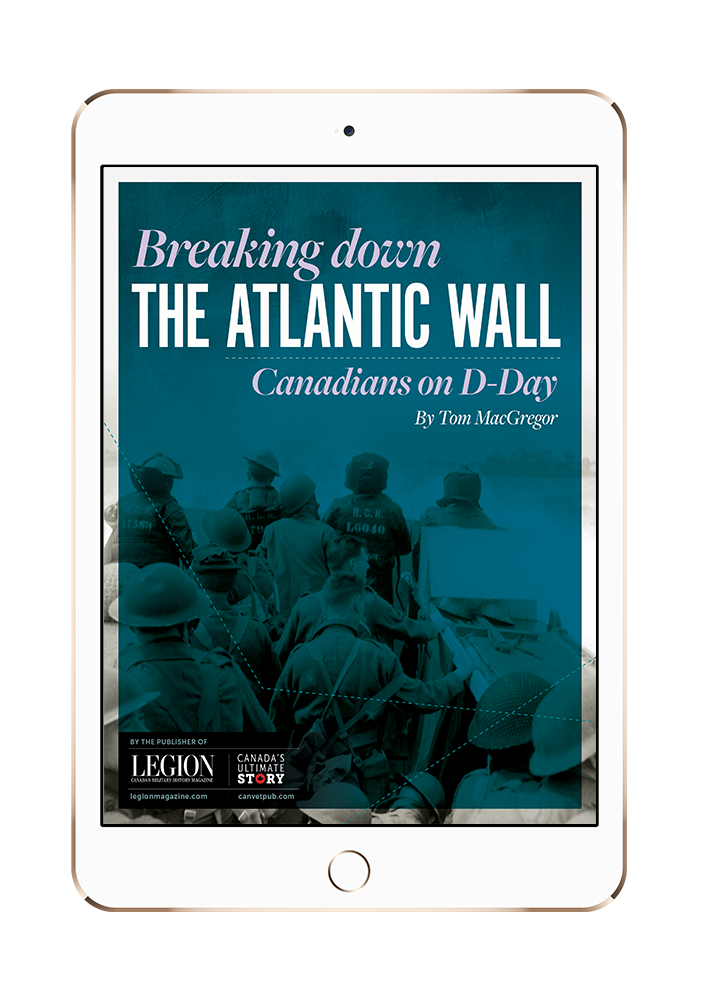
An informative primer on Canada’s crucial role in the Normandy landing, June 6, 1944.