


Generic selectors
Exact matches only
Search in title
Search in content
Post Type Selectors
Search

Army

Taking Caen: Army, Part 95

Operation Charnwood, the July 8-9, 1944, attack on Caen, Normandy, by I British Corps, was a multi-phase advance. The first part, intended to collapse the city’s outer defensive perimeter, required Canada’s 9th (Highland) Infantry Brigade to capture Buron, Gruchy, and Authie, three villages that the 12th SS had fortified during the month-long pause in the Caen sector.


Clearing Buron: Army, Part 94

On July 5, 1944, the millionth Allied soldier landed in France. The lodgement phase of Operation Overlord—codenamed Neptune—was over. The port of Cherbourg was secure and to everyone’s surprise the supply system, using the remaining Mulberry (artificial) Harbour and the open beaches, was working smoothly. No operation can succeed without solid logistical support and the Allies were bringing manpower and materiel to Normandy more quickly than the enemy.

Lessons Of Carpiquet: Army, Part 93

The battle for Le Mesnil-Patry, which proved so costly for the Queen’s Own Rifles of Canada and First Hussars, was part of a larger attempt to expand the Normandy beachhead. The Canadians, with 114 fatal casualties in what the Hussars call their “Charge of the Light Brigade,” were no harder hit than British divisions on either flank. The 51st Highland Division suffered heavy losses in the Orne River bridgehead, including an entire company of the 5th Black Watch. Both 50th Infantry and the 7th Armoured were roughly handled in the attempt to reach Villers-Bocage.

A Well-Entrenched Enemy: Army, Part 92

On June 7, 1944, D+1, the 12th SS Hitler Youth Division blocked the Canadian and British advance to Carpiquet and Caen by committing the tanks and infantry of Kurt Meyer’s 25th Panzer Grenadier Regiment to battle. It was a tactical victory with enormous operational consequences. Sepp Dietrich, the commander of 1st SS Panzer Corps, who was supposed to launch a powerful counterattack against the Allied bridgehead in Normandy with three armoured divisions, found that both 21st Panzer and 12th SS were heavily engaged and could not be withdrawn. Panzer Lehr, the third armoured division, was also being drawn into combat with British 30 Corps.

Murder In Normandy: Army, Part 91

All those involved in the planning for D-Day knew there were two quite separate problems in securing a beachhead. The first task, breaking through the crust of defences known as the Atlantic Wall was rightly seen as the major challenge, but preparation and rigorous training was also required to carry out the advance inland to widen and deepen the bridgehead. The 9th Canadian Infantry Brigade, known as the Highland Brigade, had been selected to lead the Canadian advance, so Brigadier D.G. “Ben” Cunningham and his battalion commanders prepared detailed plans.

Fighting Normandy’s Terrain: Army, Part 90

This story marks the start of a new series on the Canadian Army’s experience during the campaign in Normandy and Northwest Europe, 1944-45. Having just returned from another battlefield study tour with eight students from my university, Wilfrid Laurier, and an equal number from the Université de Montréal, I have been reflecting on the enormous changes that have occurred since my first visit to these battlefields in the early 1980s.

Most Popular
In the news
Sign up to our newsletter

Stay up to date with the latest from Legion magazine

By signing up for the e-newsletter you accept our terms and conditions and privacy policy.

Advertisement
Listen to the Podcast

Sign up today for a FREE download of Canada’s War Stories

Free e-book

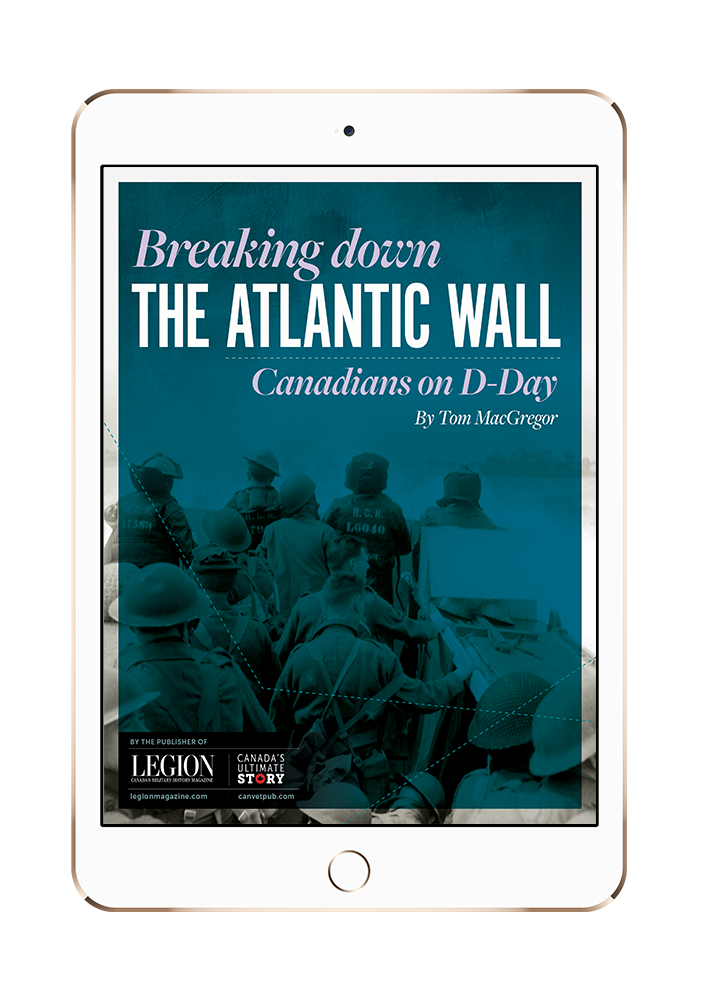
An informative primer on Canada’s crucial role in the Normandy landing, June 6, 1944.