
Generic selectors
Exact matches only
Search in title
Search in content
Post Type Selectors
Search

Terry Copp

Short, Bloody Steps: Army, Part 98

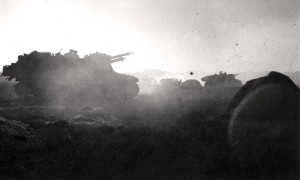
Operation Atlantic was called off on the evening of July 20, 1944, but no one told the enemy, who continued to press counterattacks designed to regain St. André-sur-Orne, Point 67 and Bourguebus in Normandy. Since the Canadians and British were dug in with good artillery observation positions and well-camouflaged anti-tank guns, the German battle groups began to take heavy losses, including precious Panther tanks.Operation Atlantic was called off on the evening of July 20, 1944, but no one told the enemy, who continued to press counterattacks designed to regain St. André-sur-Orne, Point 67 and Bourguebus in Normandy. Since the Canadians and British were dug in with good artillery observation positions and well-camouflaged anti-tank guns, the German battle groups began to take heavy losses, including precious Panther tanks.Operation Atlantic was called off on the evening of July 20, 1944, but no one told the enemy, who continued to press counterattacks designed to regain St. André-sur-Orne, Point 67 and Bourguebus in Normandy. Since the Canadians and British were dug in with good artillery observation positions and well-camouflaged anti-tank guns, the German battle groups began to take heavy losses, including precious Panther tanks.
Flawed From The Start: Army, Part 97

The Canadian part of Operation Goodwood/Atlantic began well. The veteran 3rd Canadian Division fought into Caen’s industrial zone south of the River Orne while 4th Brigade from 2nd Cdn. Div. won a difficult battle for the village of Louvigny. The 3rd British Div. on the left flank of the bridgehead also gained its initial objectives, but the two leading British armoured divisions lost close to 200 tanks without reaching the vital high ground south of the city.The Canadian part of Operation Goodwood/Atlantic began well. The veteran 3rd Canadian Division fought into Caen’s industrial zone south of the River Orne while 4th Brigade from 2nd Cdn. Div. won a difficult battle for the village of Louvigny. The 3rd British Div. on the left flank of the bridgehead also gained its initial objectives, but the two leading British armoured divisions lost close to 200 tanks without reaching the vital high ground south of the city.The Canadian part of Operation Goodwood/Atlantic began well. The veteran 3rd Canadian Division fought into Caen’s industrial zone south of the River Orne while 4th Brigade from 2nd Cdn. Div. won a difficult battle for the village of Louvigny. The 3rd British Div. on the left flank of the bridgehead also gained its initial objectives, but the two leading British armoured divisions lost close to 200 tanks without reaching the vital high ground south of the city.

The Bloody Battles Around Caen: Army, Part 96

On the afternoon of July 11, 1944, Canadian Corps Headquarters once again became operational on the soil of France. Lieutenant-General Guy Granville Simonds assumed responsibility for 7,280 metres of front in the Caen sector of Normandy. There was little time or inclination to mark this event or link it with the memory of the vaunted Canadian Corps of First World War fame because there was too much to be done.

Taking Caen: Army, Part 95

Operation Charnwood, the July 8-9, 1944, attack on Caen, Normandy, by I British Corps, was a multi-phase advance. The first part, intended to collapse the city’s outer defensive perimeter, required Canada’s 9th (Highland) Infantry Brigade to capture Buron, Gruchy, and Authie, three villages that the 12th SS had fortified during the month-long pause in the Caen sector.

Clearing Buron: Army, Part 94

On July 5, 1944, the millionth Allied soldier landed in France. The lodgement phase of Operation Overlord—codenamed Neptune—was over. The port of Cherbourg was secure and to everyone’s surprise the supply system, using the remaining Mulberry (artificial) Harbour and the open beaches, was working smoothly. No operation can succeed without solid logistical support and the Allies were bringing manpower and materiel to Normandy more quickly than the enemy.

Lessons Of Carpiquet: Army, Part 93

The battle for Le Mesnil-Patry, which proved so costly for the Queen’s Own Rifles of Canada and First Hussars, was part of a larger attempt to expand the Normandy beachhead. The Canadians, with 114 fatal casualties in what the Hussars call their “Charge of the Light Brigade,” were no harder hit than British divisions on either flank. The 51st Highland Division suffered heavy losses in the Orne River bridgehead, including an entire company of the 5th Black Watch. Both 50th Infantry and the 7th Armoured were roughly handled in the attempt to reach Villers-Bocage.

Most Popular
In the news
Sign up to our newsletter

Stay up to date with the latest from Legion magazine

By signing up for the e-newsletter you accept our terms and conditions and privacy policy.

Advertisement
Listen to the Podcast

Sign up today for a FREE download of Canada’s War Stories

Free e-book

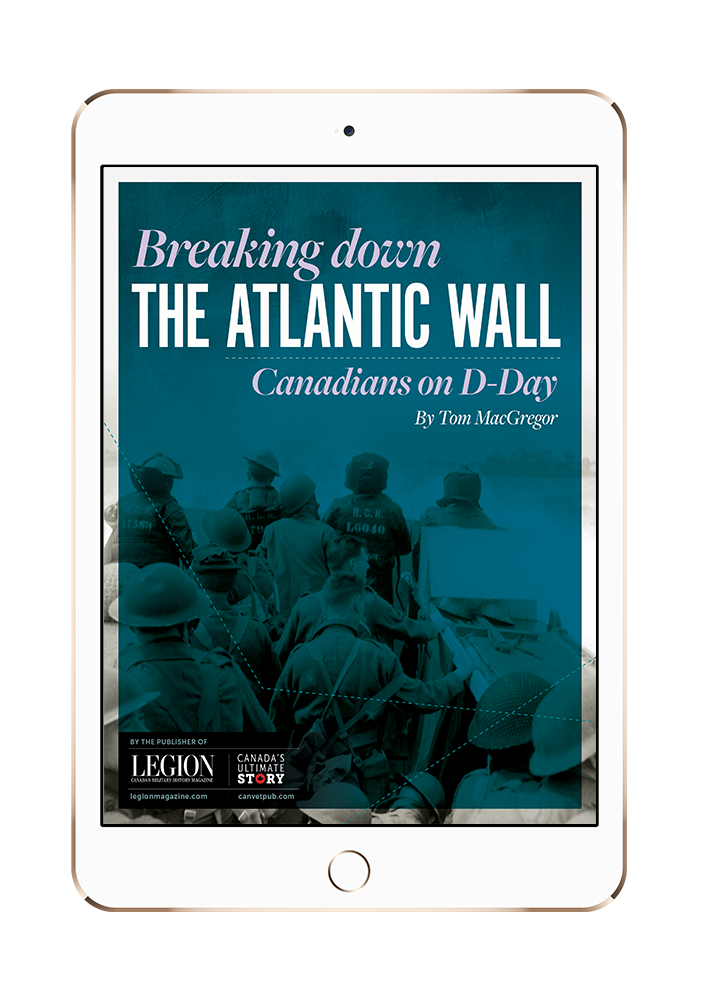
An informative primer on Canada’s crucial role in the Normandy landing, June 6, 1944.