



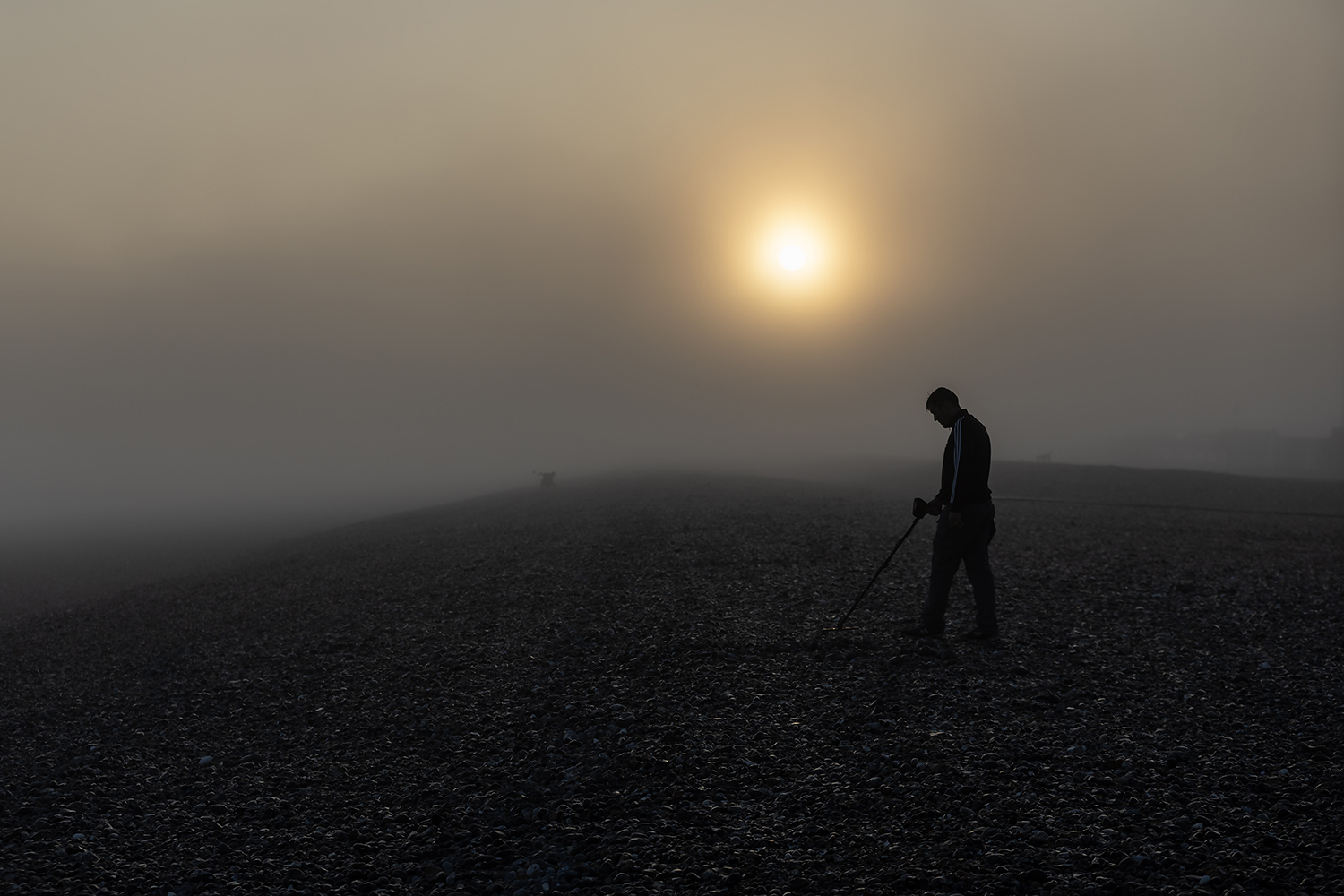
Detectorists scavenge the main beach at Dieppe, France. The pickings were slim. [Stephen J. Thorne/LM]
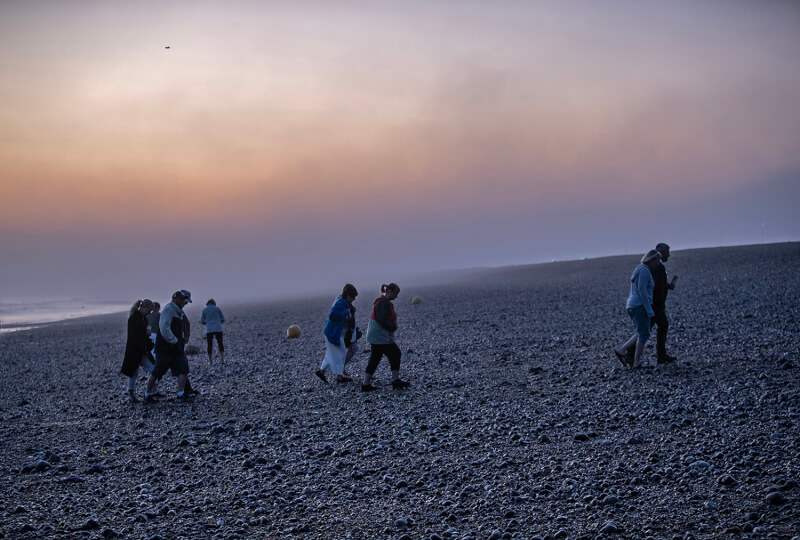
For the purposes of an invasion—or, in this case, a raid—nautical twilight is an opportune time of day just before dawn when the sun is between six and 12 degrees below the horizon. It’s called nautical twilight because the brightest stars can still provide peacetime—and wartime—mariners with points of navigation.
On a typical pre-dawn morning along France’s Alabaster Coast, at Dieppe in particular, it’s often foggy. The twilight is just enough to give inbound vessels a shadowy land reference but, looking out from shore, there’s not much visibility.
That didn’t help a predominantly Canadian force dispatched in August 1942 to raid the German-occupied town of Dieppe, famous for its scallops, ancient landmarks and, tellingly, pebbled beaches.
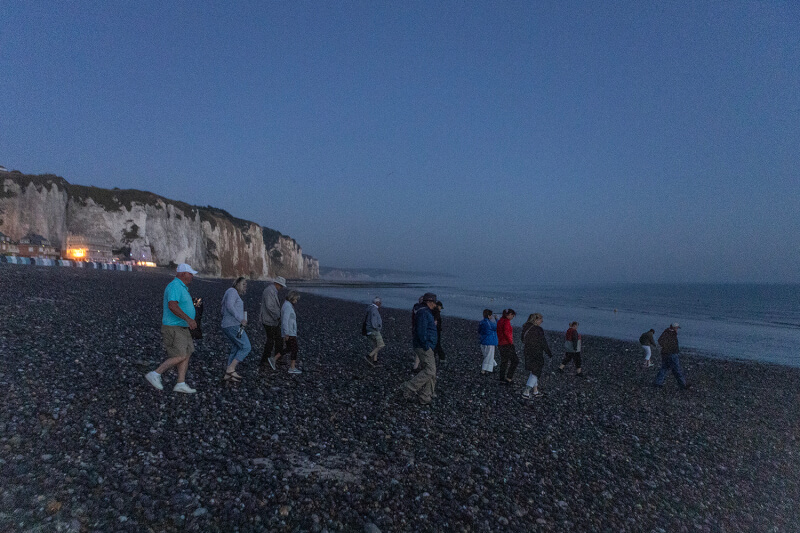
Legion pilgrims descend the slope on Dieppe’s White Beach at 5:15 a.m., nautical twilight, for a toast to the fallen. [Stephen J. Thorne/LM]
The Germans knew they were coming. If not this day, then soon. It was Aug. 19, 1942, and the radar stations, gun positions and coastal batteries on the cliffs and ramparts overlooking the beaches extending from Vasterival in the west to Puys in the east with Dieppe in the middle, were on high alert.
What followed was nothing short of a disaster for the 6,100 Allied troops who landed at six points along a 16-kilometre front, including four central Canadian beaches code-named Green (at Pourville), White and Red (Dieppe), and Blue (Puys).
Nearly 5,000 of the raiders were Canadian; there were 1,000 British commandos and 50 American Rangers.

A woman carts her young charge off White Beach at Dieppe. [Stephen J. Thorne/LM]
After earlier flanking attacks, the first wave was scheduled to land in Dieppe at 5:20 a.m.—peak nautical twilight in mid-August in northern France. The landing came in behind schedule under heavy fire at 5:35. Other elements also came in late.
They faced a withering defence and heavily wired seawalls enhanced by geography: cliffs above and smoothly rounded billiard- to baseball-sized stones below. The former gave the Germans sweeping enfilade along the beaches; the latter slowed the soldiers and stopped many of the tanks and armoured vehicles altogether.
Just 2,210 of the Canadians who launched the operation returned to England, many of them wounded. Canadian casualties numbered 3,367, including 1,946 prisoners of war and 916 killed in action. Total Allied deaths exceeded 1,400.
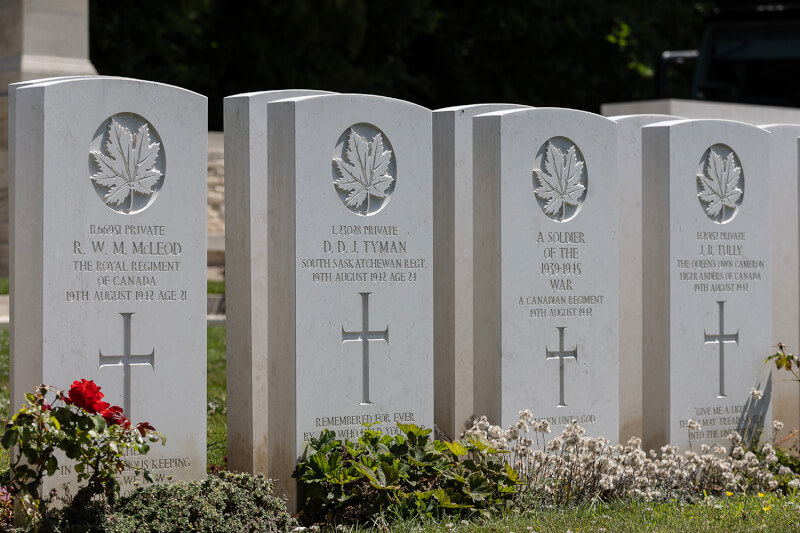
Row upon row of Canadians killed on Aug. 19, 1944, fill the cemetery in Dieppe. [Stephen J. Thorne/LM]
Allied air forces paid a high cost at Dieppe, but protected the ships from Luftwaffe attacks. The Royal Air Force lost 106 aircraft, its highest single-day total of the war. The Royal Canadian Air Force lost 13. Luftwaffe losses amounted to 48 aircraft.
German forces remained in Dieppe until the Battle of Normandy was over. When the First Canadian Army approached at the end of August 1944, the garrison withdrew without a fight.
The 2nd Canadian Infantry Division liberated Dieppe on Sept. 1, 1944. Two days later, the entire division paused for reorganization and a victory parade, complete with bagpipes. A memorial service for the raid’s dead was held in the Canadian military cemetery.
Today, Dieppe is a vibrant seaside city of nearly 30,000. Sunbathers and swimmers lounge and frolic along its beaches, while dolphins play offshore. Memorials mark the sacrifices. And vestiges of the occupation and the raid bring the history to life.
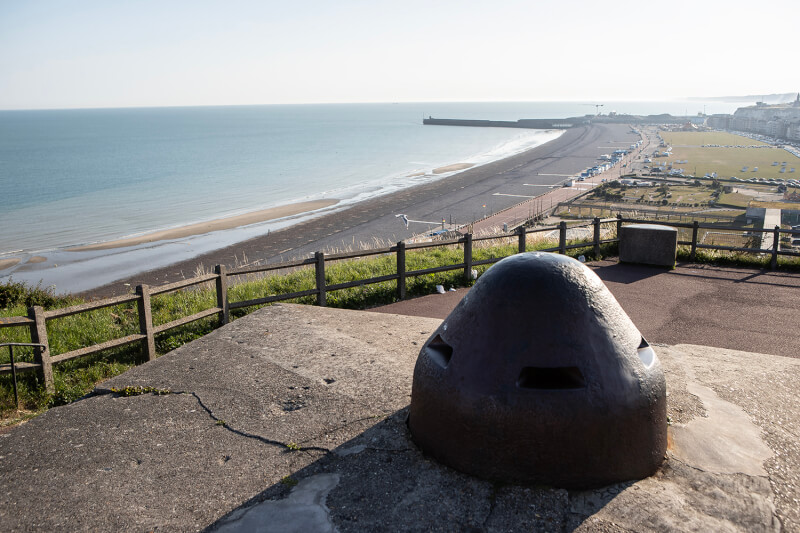
A German bunker offers a commanding view of the town and the beach of Dieppe. [Stephen J. Thorne/LM]
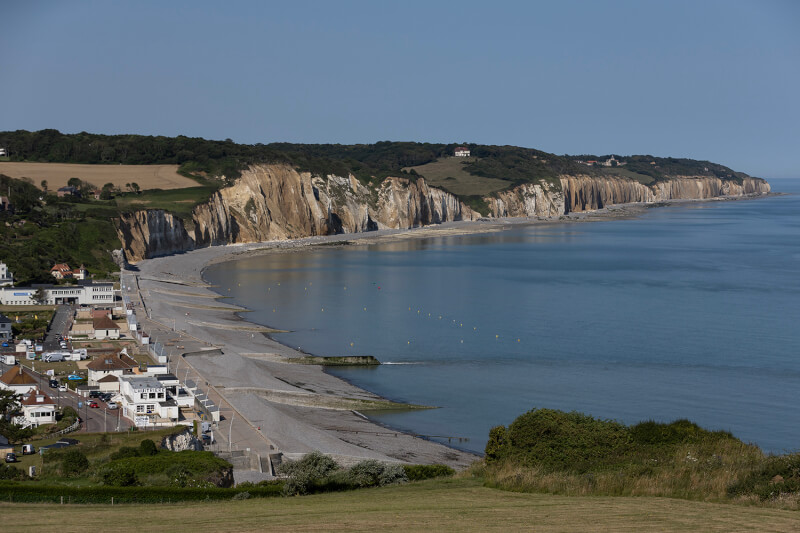
At Green Beach in Pourville, The South Saskatchewan Regiment and The Queen’s Own Cameron Highlanders of Canada met light opposition, initially. Resistance intensified as the South Saskatchewans, supported by the Camerons, crossed the River Scie. After heavy fighting, they were stopped well short of Dieppe. The main force of the Camerons, meanwhile, pushed on toward their objective, an inland airfield, advancing three kilometres before they were forced to halt. Both regiments then attempted to withdraw and suffered heavy losses in the process. [Stephen J. Thorne/LM]
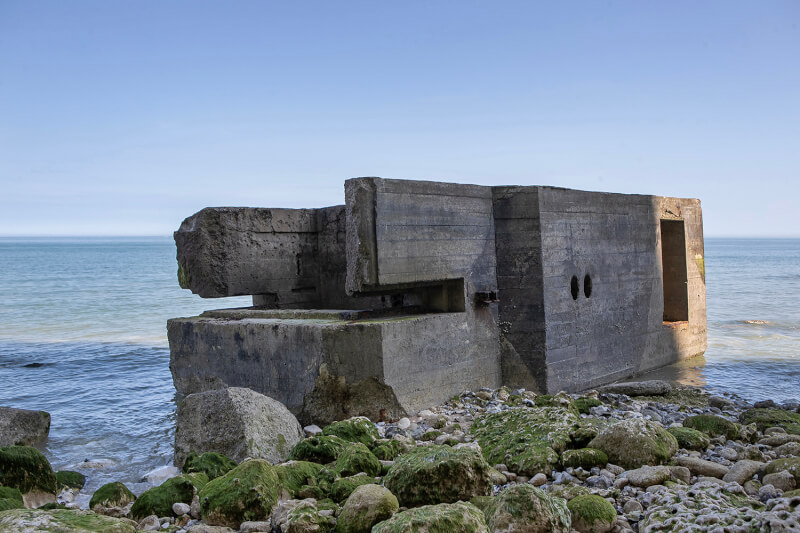
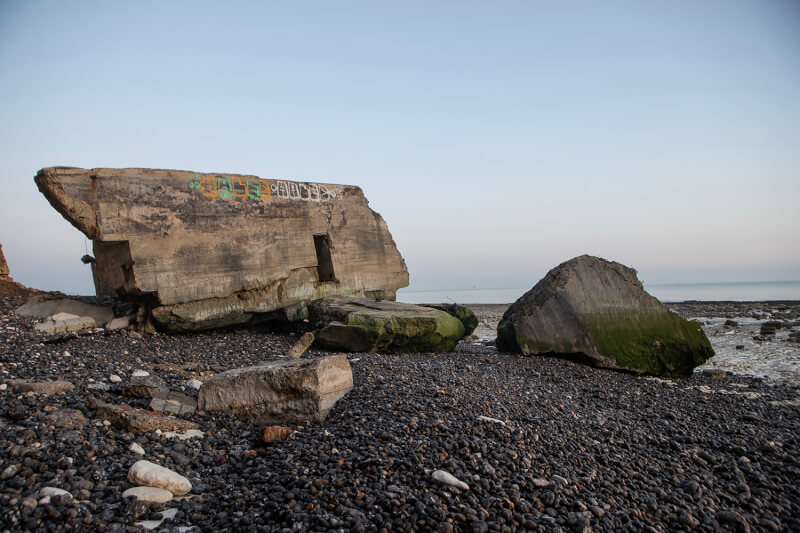
This German bunker tumbled from the cliffs above the beach at Pourville sometime after the war. [Stephen J. Thorne/LM]
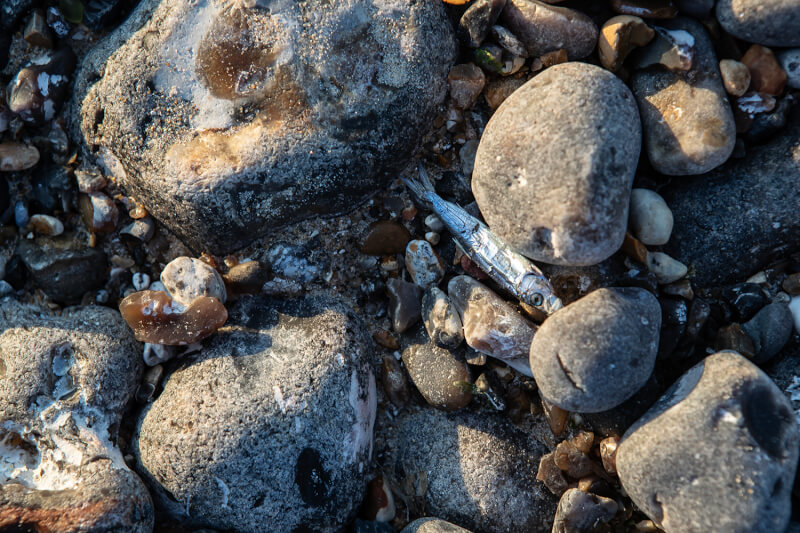
[Stephen J. Thorne/LM]
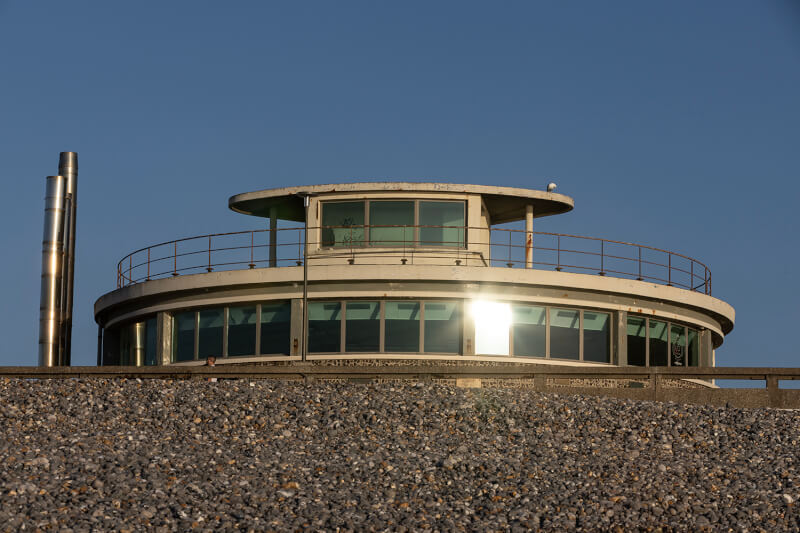
A bathing facility looms over the main beaches at Dieppe. [Stephen J. Thorne/LM]
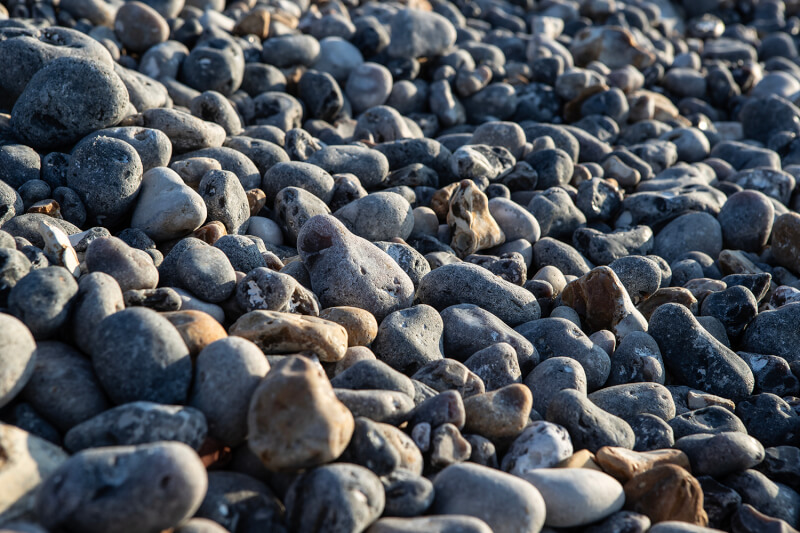
The stony beach at Dieppe proved daunting for both man and machine on Aug. 19, 1942. [Stephen J. Thorne/LM]
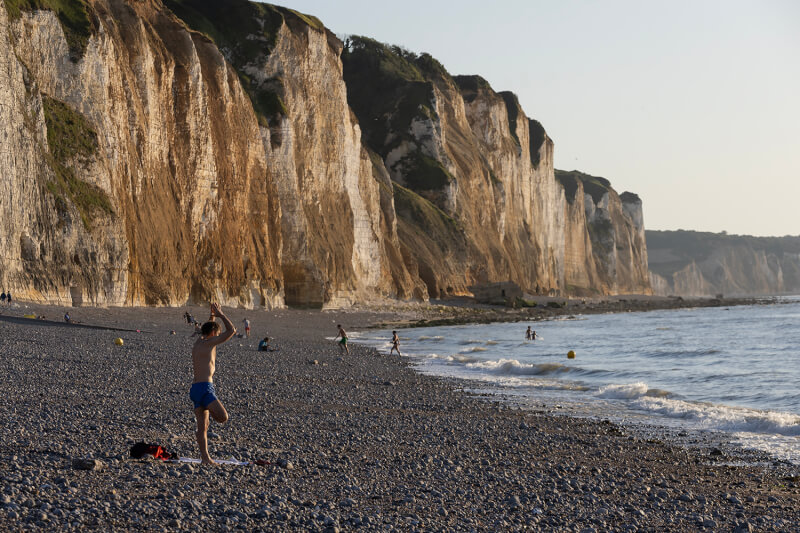
A man practises yoga in the evening sun on the beach at Dieppe. [Stephen J. Thorne/LM]
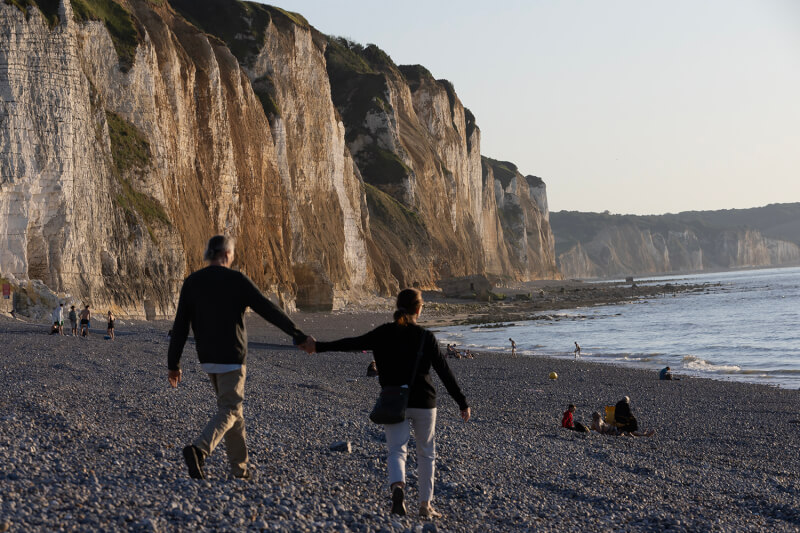
A couple trots along the stony beach at Dieppe, a fallen German bunker lying among the rocks in the distance. [Stephen J. Thorne/LM]
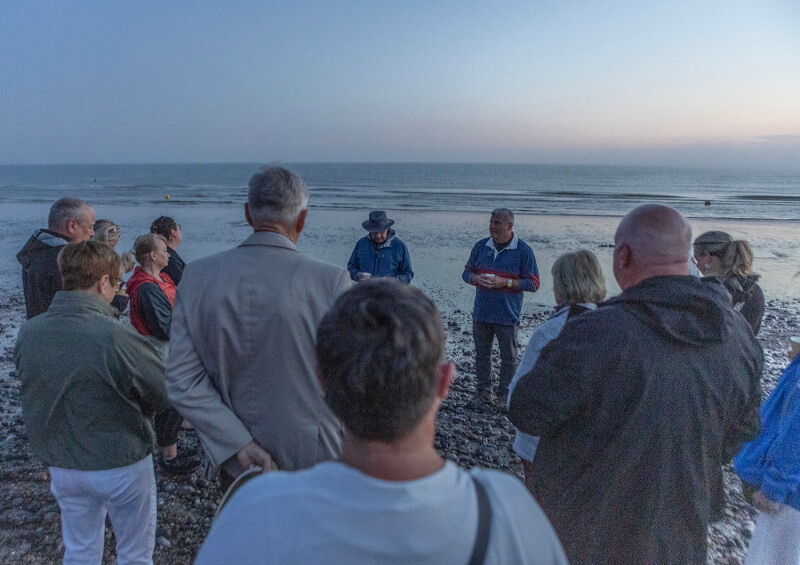
A toast to the fallen. [Stephen J. Thorne/LM]
[Stephen J. Thorne/LM]
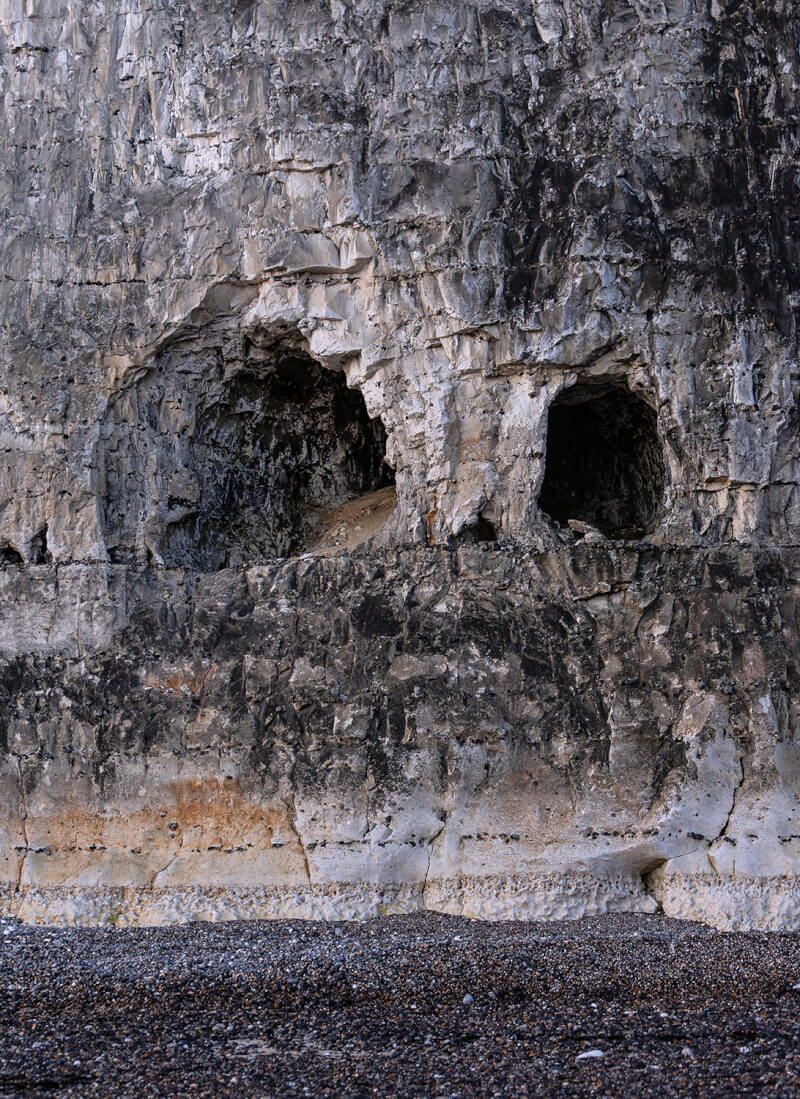
German machine-gun posts were ensconced in caves at the cliffs’ base along the beach. [Stephen J. Thorne/LM]
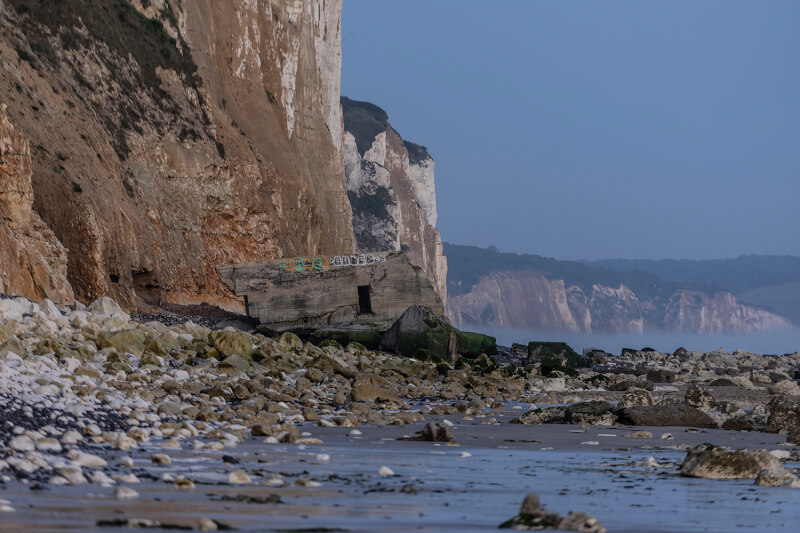
Another German bunker lies at the base of the cliff at Dieppe’s White Beach. Mother Nature did what naval guns and air force bombs couldn’t do. [Stephen J. Thorne/LM]
[Stephen J. Thorne/LM]
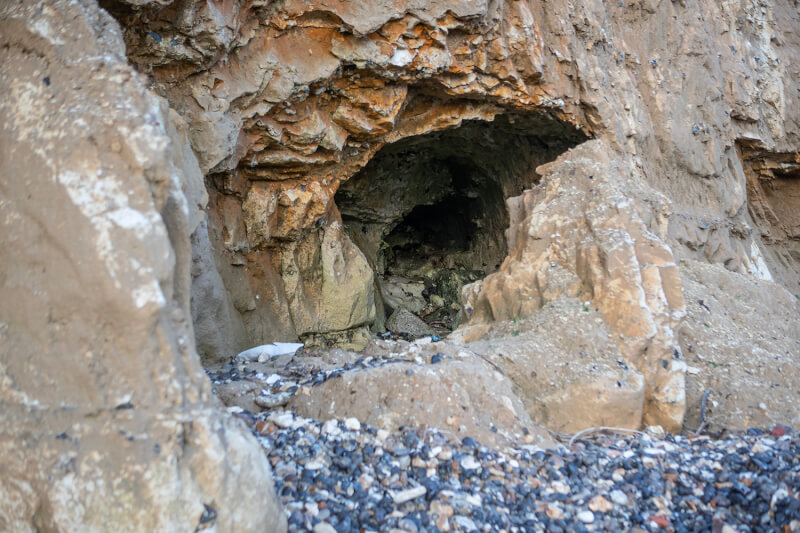
The caves were bunker-like, affording German gunners some protection and an element of surprise. [Stephen J. Thorne/LM]
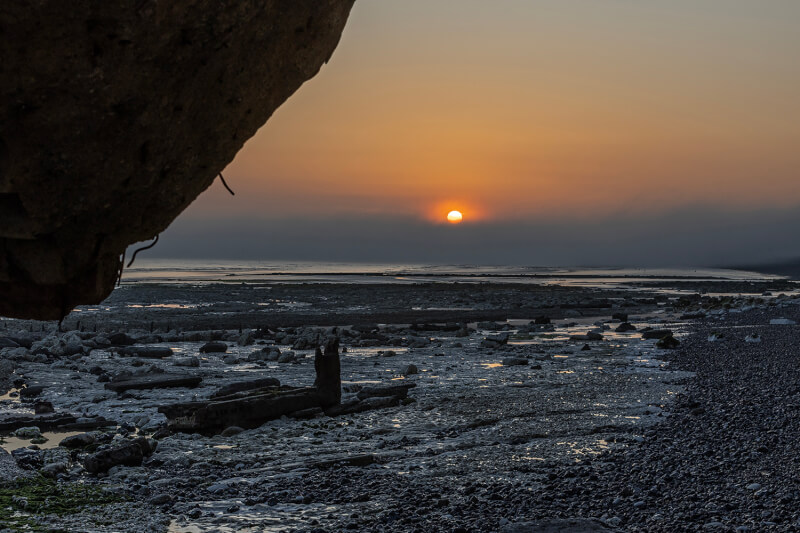
The sun rises over Dieppe’s main beach, where The Essex Scottish Regiment assaulted the eastern section, supported by the reserve battalion of Les Fusiliers Mont-Royal. The Royal Hamilton Light Infantry landed near here, the western end of the beach. Tanks of The Calgary Regiment encountered unforeseen obstacles and arrived 15 minutes late, leaving the infantry unsupported. They were stopped in their tracks as they came ashore—by gunfire, stones and a seawall. [Stephen J. Thorne/LM]
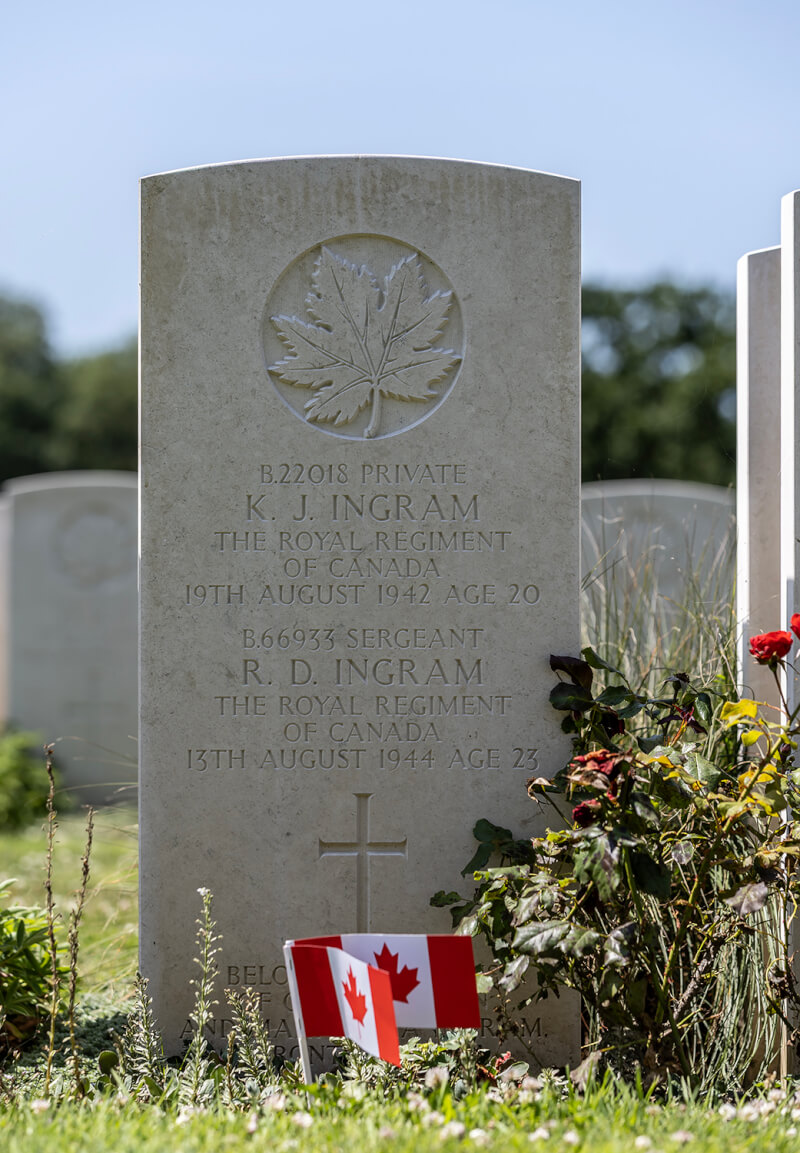
Two brothers killed two years apart, the first at Dieppe on Aug 19, 1942, buried together. [Stephen J. Thorne/LM]
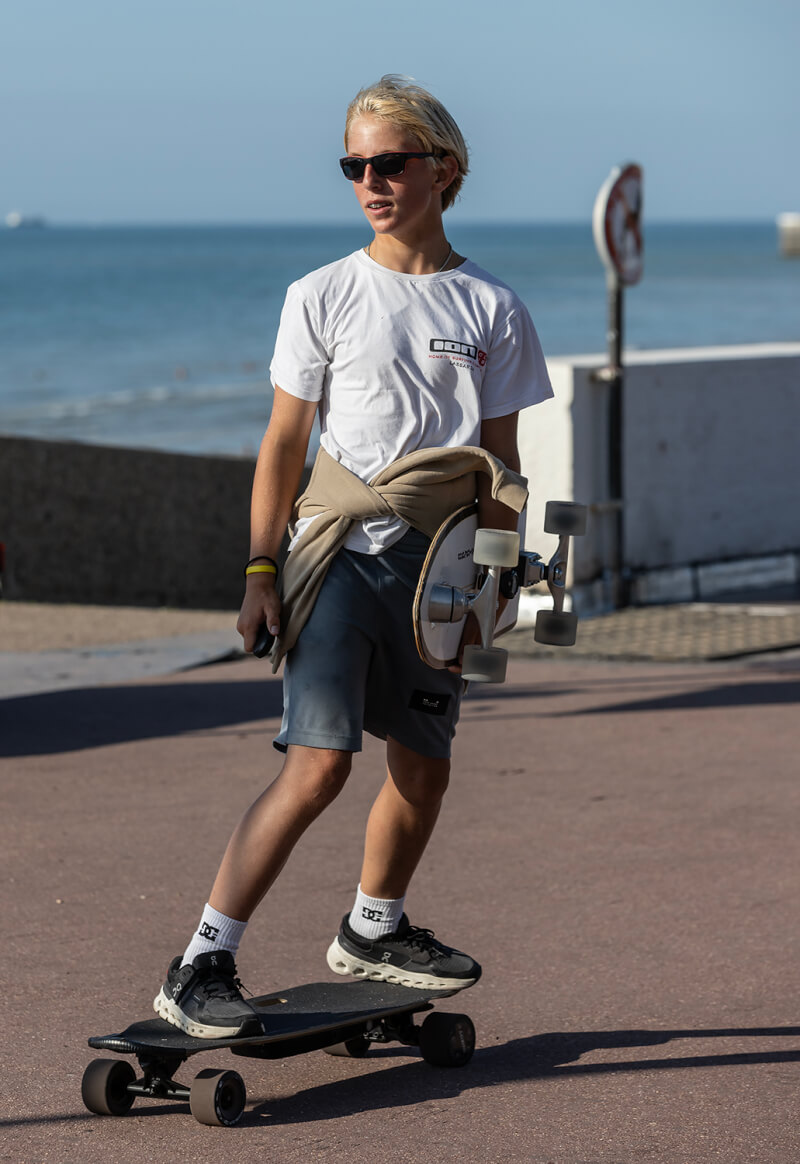
Dieppe has long since reclaimed its role as a seaside resort town and fishing hub. [Stephen J. Thorne/LM]
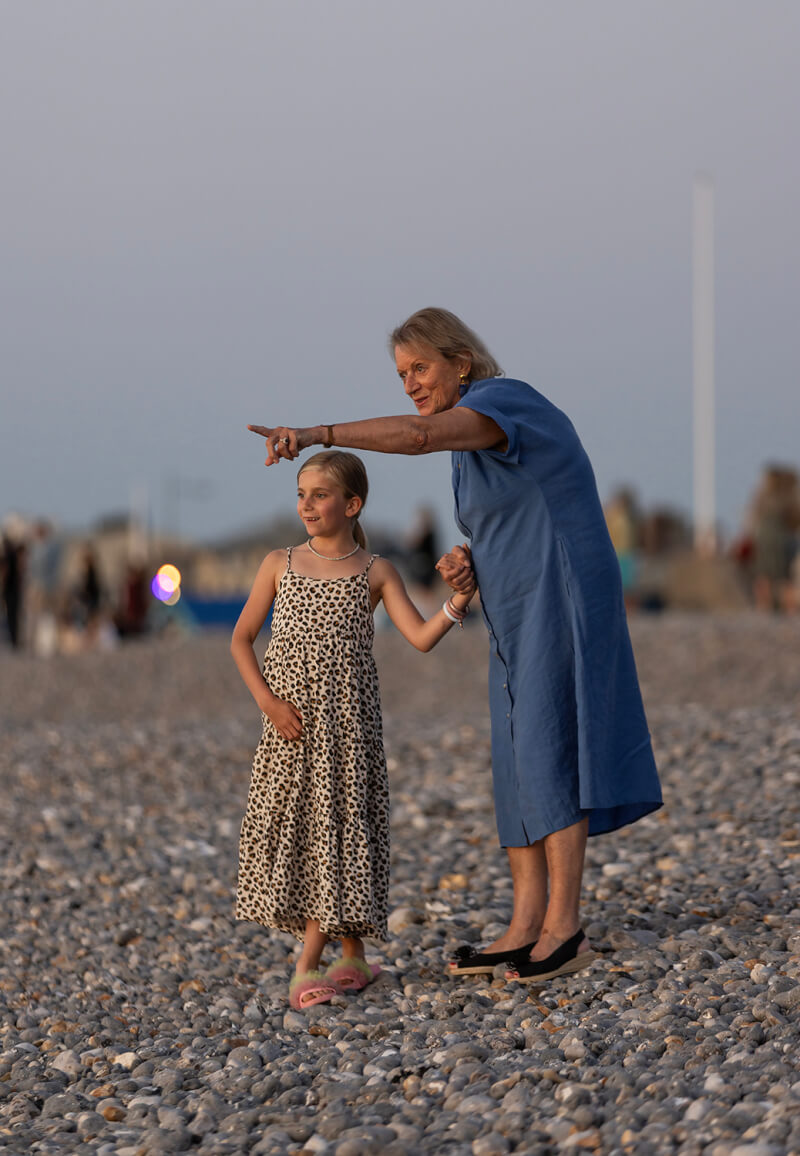
A grandmother and granddaughter watch a pod of dolphins pass the Dieppe beach at sunset. [Stephen J. Thorne/LM]
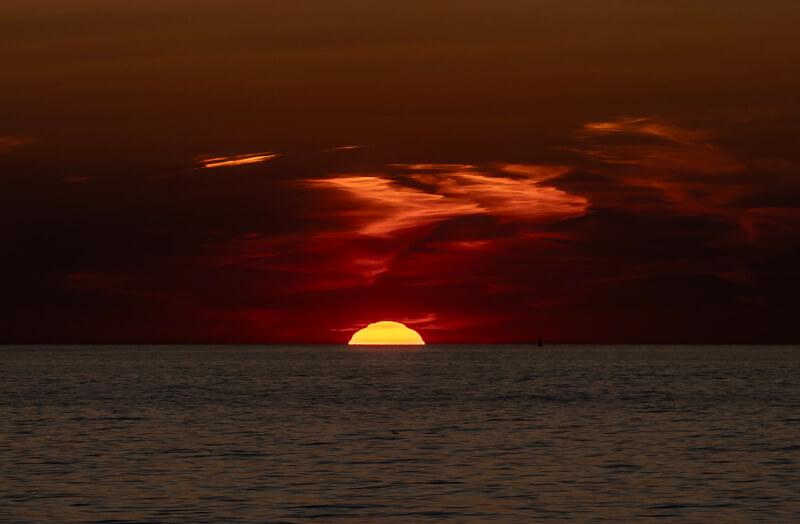
At the going down of the sun and in the morning. We will remember them. [Stephen J. Thorne/LM]
Advertisement






Rest in peace brave soldiers.