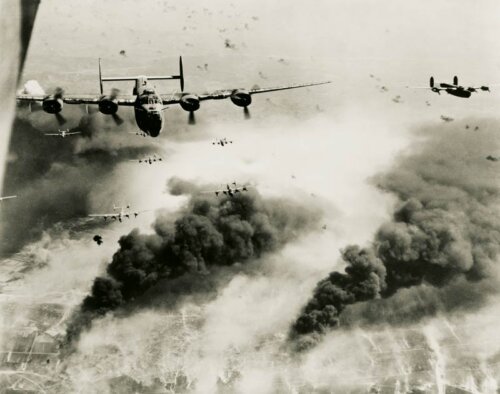




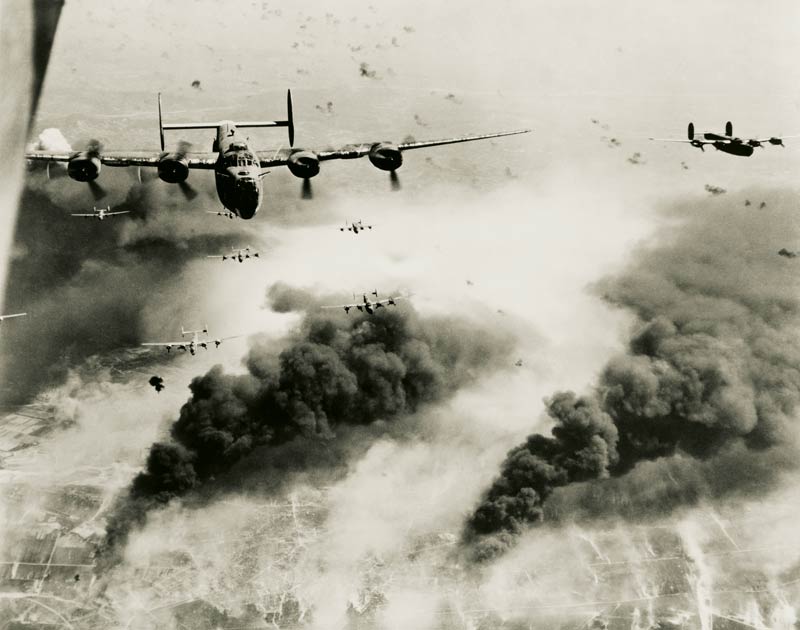
Some of the sorties to Poland were flown using Consolidated B-24 Liberators, such as these pictured over Romania. [The Canadian Virtual War Memorial (10)/ Richard R. Ganczak/U.S. Air Force photo/Wikimedia]
Most are probably familiar with Canada’s roles in liberating France, Italy, Belgium and the Netherlands during the Second World War. But what about the liberation of Poland? Wartime geographic and strategic positions prevented western Allied forces from reaching the country on the ground. This left the air route as the only practical way to help drive the Germans from Poland.
It had been attacked by Germany on Sept. 1, 1939, and the Soviet Union joined the invasion on Sept. 17. Poland’s first underground resistance forces emerged by the end of the month as the country was succumbing to the joint onslaught. It was initially composed of many separate organizations but by 1942, the resistance (except for a small communist faction) was unified under the Home Army (HA), the military arm of the Polish Underground State. Both were loyal to the Polish government-in-exile in London. The HA would eventually reach a strength of 380,000-400,000 soldiers, making it one of the largest resistance forces in Europe.
Meanwhile, the Special Operations Executive (SOE) had been created by British Prime Minister Winston Churchill in 1940 to disrupt the German war effort (and later Japan’s) by supporting national resistance movements in enemy-occupied territory. To transport supplies and SOE operatives to resistance forces, the Royal Air Force eventually created four “Special Duties” squadrons (three in Europe and one in Asia). These units were composed of Commonwealth aircrews, principally including Brits, Canadians, Australians, New Zealanders and South Africans.
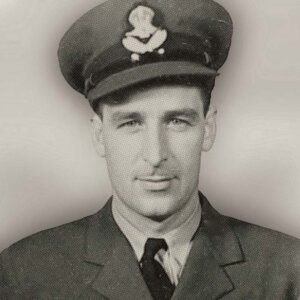
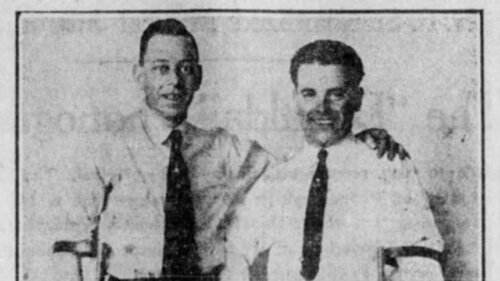
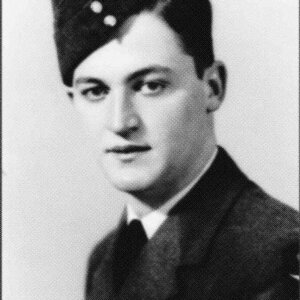
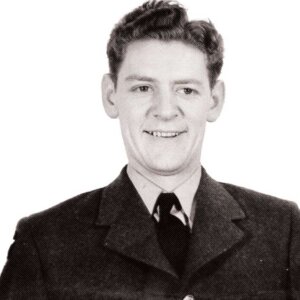
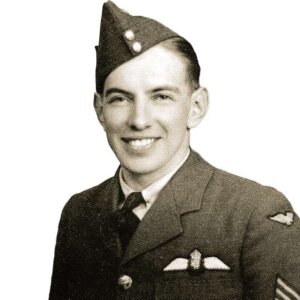
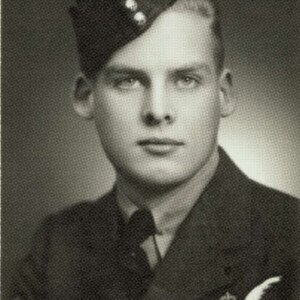
Flying Officer George Dougald MacRae (left) was one of 15 Canadian airmen killed while supporting Allied efforts to liberate Poland during WW II. [airmen.dk]
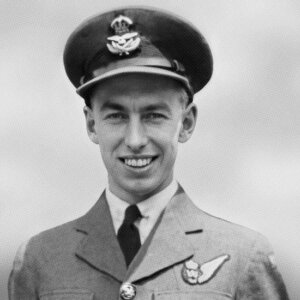
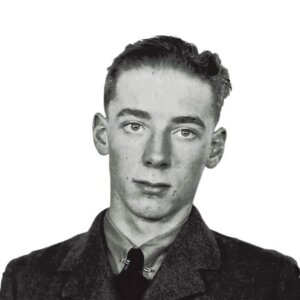
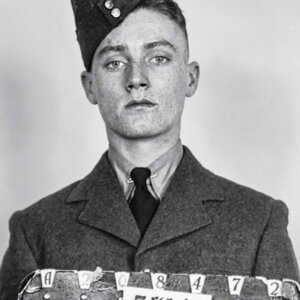
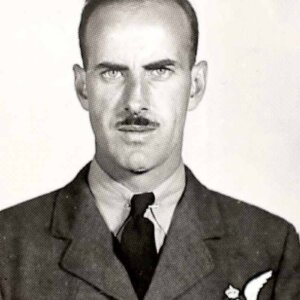
Given its size, the HA desperately needed a wide range of supplies—including small arms, explosives, radios, medical supplies, forging materials, clothing, money, chocolate and cigarettes—to effectively conduct sabotage and other clandestine activities. Agents of an SOE Polish section created in 1942 likewise needed transportation to Poland.
The ability of the SOE and its western allies to support the HA from the air was challenged by both distance and the evolving geopolitical situation. For starters, Poland was some 1,500 kilometres from the U.K. And, following the summer 1941 German invasion of the Soviet Union, all prewar Polish territory—as well as the rest of northwestern Europe—was under control of the Third Reich.
After some trial trips to Poland in 1941, RAF 138 Squadron (which included an all-Polish flight) started flying regularly to the country from Tempsford, England, in 1942. These missions followed a perilous northern route over the North Sea, occupied Denmark and the Baltic Sea before turning south to Poland. The aircraft, Handley Page Halifaxes, each with a crew of seven or eight, then turned around and took the same path back. They travelled to Poland at night and a sortie usually included several aircraft, each assigned a specific rural drop zone.
After some trial trips to Poland in 1941, RAF 138 Squadron started flying regularly to the country in 1942. These missions followed a perilous route.
The first Royal Canadian Air Force men in 138 Squadron to die on a mission in support of the HA were Flight Sergeant Eugene Shadrack Masson and Sergeant Donald Robin Ross on the night of March 14-15, 1943. (That sortie was particularly deadly with 25 per cent of its aircraft lost). Air gunner Masson, 25, was from Timmins, Ont., while wireless operator/air gunner Ross, 22, was from Sherbrooke, Que. Their Halifax was shot down by a German night fighter en route to Poland and crashed into the Baltic near Store Heddinge, Denmark. The rest of the Allied crew died, too. The Canadians were buried in Bispebjerg Cemetery in Copenhagen.
On the night of Sept. 15, 1943, two more Canadians were killed: Flying Officer Joseph Darie Louis Cloutier, the navigator, and Sergeant Kenneth Charles Windsor, flight engineer. Cloutier, 24, was from Trois-Rivières, Que.; Windsor, 23, was from Montreal. Their Halifax was shot down by German anti-aircraft fire while returning to England. It crashed into the Baltic Sea, near Rügenwalde, Germany (now part of Poland). The pilot survived, while the other seven crewmen died. Their bodies were never recovered, but their names were inscribed on the Runnymede Air Forces Memorial in England.
Canadian Flying Officer James Reid Bradley was killed the next night when his Halifax was shot down by a German night fighter while en route to Poland. The navigator’s plane crashed into the Kattegat Sea, near Aarhus, Denmark. Two other crew members died and four others were taken prisoner. Bradley, 21, hailed from Toronto. He is buried in the Randers North Cemetery in Denmark.
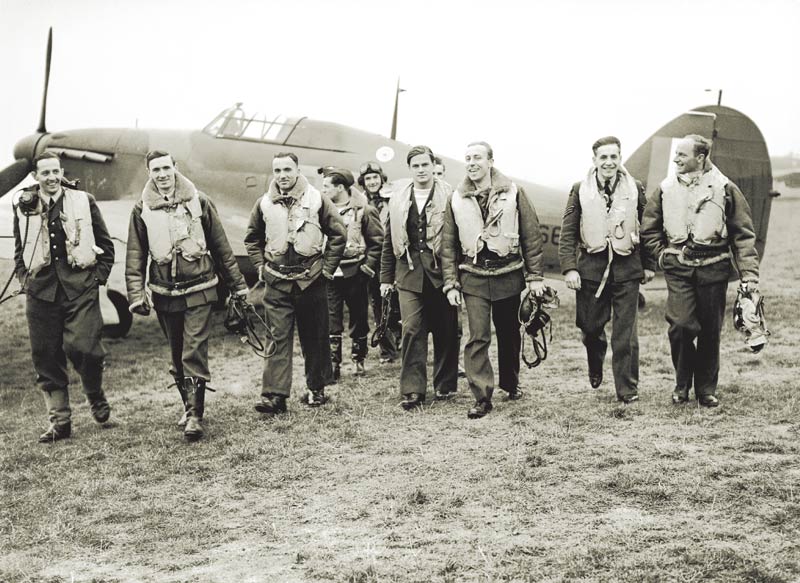
Polish pilots return from a sortie in October 1940. [Stanley Devan/Imperial War Museums/Wikimedia]
With southern Italy in Allied hands by early October, RAF support flights to the HA were taken over by 148 Squadron, together with No. 1586 (Polish Special Duties) Flight. The group operated from Brindisi, Italy, starting in early 1944. The flight path to and from Poland, while slightly shorter, was no less dangerous, now crossing occupied Yugoslavia and Axis-aligned Hungary.
The first Canadians of 148 Squadron killed on an HA mission were Warrant Officer 2nd Class Thomas Johnson Makepeace, the pilot, and Warrant Officer 2nd Class John Stewart McWilliams, navigator, on the night of May 30, 1944. Makepeace, 21, was from Basswood, Man., while McWilliams, 31, was from Peterborough, Ont. Their Halifax was likely shot down by a German night fighter in the vicinity of Secanj, Yugoslavia, while returning to Italy after making a drop in southern Poland. They are buried in a communal grave with the rest of their crew in the Belgrade War Cemetery.
On the night of July 4, 1944, Flying Officer John Stanley Brown was killed when his Halifax was taken out by a German night fighter while outbound to Poland. The 24-year-old bomb aimer was from Wetaskiwin, Alta. His plane crashed in the vicinity of Sombor, Yugoslavia (now Serbia). Brown is also buried along with the rest of his crew in the Belgrade War Cemetery.
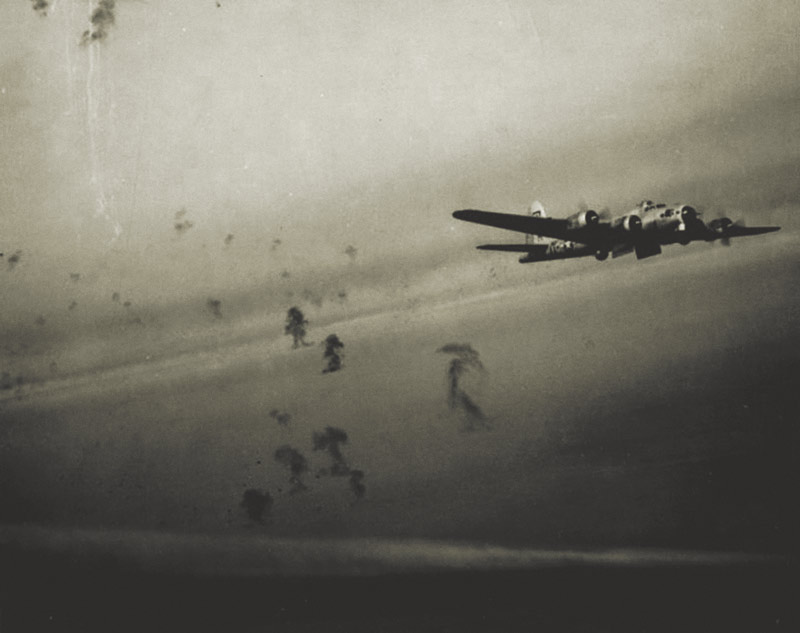
An American B-17 Flying Fortress flies over the Polish capital during the 1944 Warsaw Uprising. [U.S. Air Force Historical Research Agency]
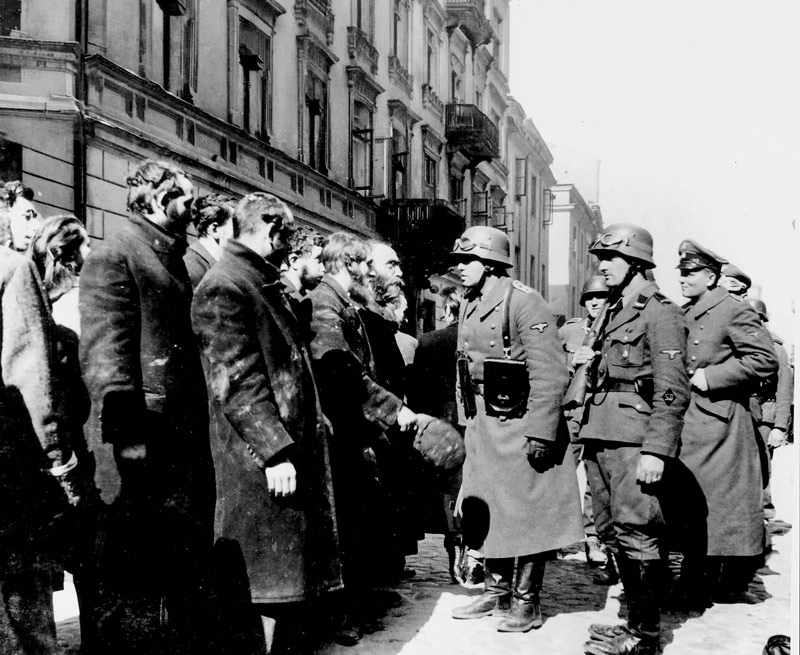
Germans interrogate Jews in the city in spring 1943. [Wikimedia]
The nature of the RAF’s special duties HA missions changed dramatically after the start of the Warsaw Uprising on Aug. 1, 1944. The Soviet Red Army had reached the eastern outskirts of the Polish capital days earlier. As Warsaw’s German occupiers were preparing to evacuate, the moment seemed opportune for the HA to begin a major push to liberate the city.
The threat of a Soviet-imposed Communist government in Poland added to the resistance’s urgency as the Soviets had already sponsored a rival Polish Communist government-in-waiting. The HA, expecting a short, easy fight with the retreating Germans, only had enough arms and ammunition for a few days. Its hopes, however, were dashed when the Germans reinforced their Warsaw garrison and fought back furiously. The Red Army, meanwhile, decided not to assist the HA.
In desperation, the Polish government-in-exile lobbied the U.K. and the U.S. to immediately drop supplies to the HA in Warsaw. On Aug. 4, 148 Squadron made its first of several flights to the beleaguered city. These missions proved far more dangerous than those to the southern Polish countryside. Aircraft had to fly farther over enemy territory, straining fuel supplies and increasing the chances of being shot down—the Germans had ringed Warsaw with anti-aircraft guns, the planes had to approach at low altitudes over the drop zones, and the Soviets wouldn’t allow crippled or low-on-fuel RAF planes to land in areas they controlled.
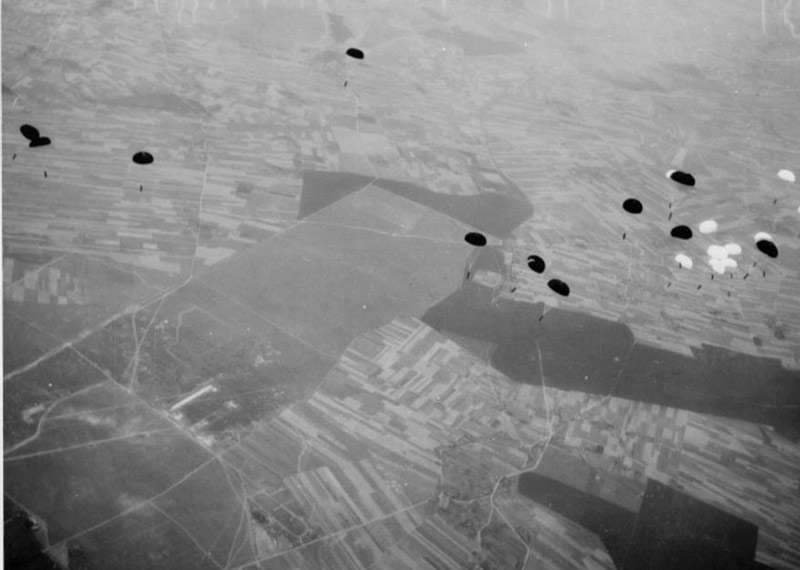
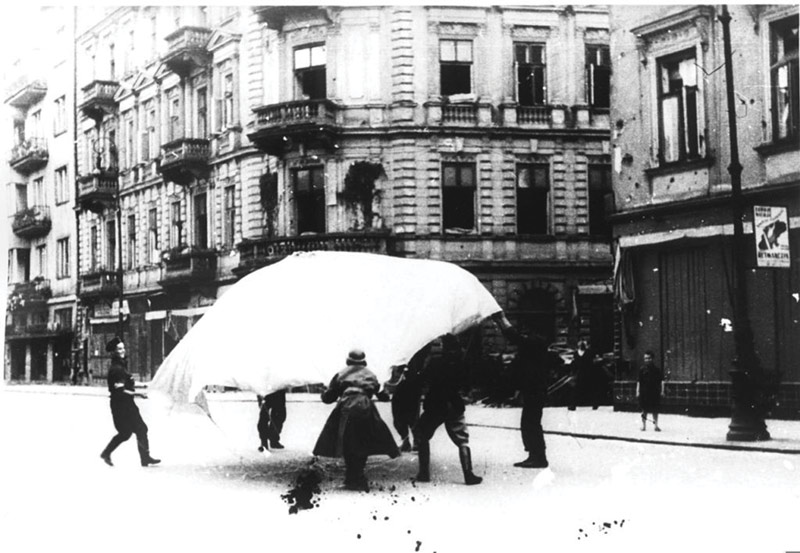
Allied supplies drop over Warsaw in autumn 1944 (top), while locals rush to receive them (above).[U.S. Air Force Historical Research Agency; Archiwum Główne Akt Dawnych]
On Aug. 5, 1944, the first Canadians were killed on an HA mission during the Warsaw Uprising. Two aircraft with Canadians on board were shot down while returning to Italy after their drops on alternate locations in southern Poland. One Halifax crashed near the village of Dabrowa Tarnowska, Poland. Two British crewmen died alongside five Canadians: Flight Lieutenant Arnold Raymond Blynn, 26, its pilot from Middleton, N.S.; Flying Officer Harold Leonard Brown, 20, its wireless operator of Toronto; Pilot Officer George Alfred
Chapman, 24, its navigator from Toronto; Flight Sergeant Arthur George William Liddell, 31, the air gunner of Montreal; and Flight Sergeant Charles Burton Wylie, 20, the bomb aimer from Instow, Sask. The other Halifax came down near the village of Debina Zakrzowska, Poland, killing Flight Sergeant Charles Alec Beanland, 20, its air gunner of Hamilton, and the rest of its crew. All the Canadians killed that night were buried in the Krakow Rakowicki Cemetery Poland in 1948.
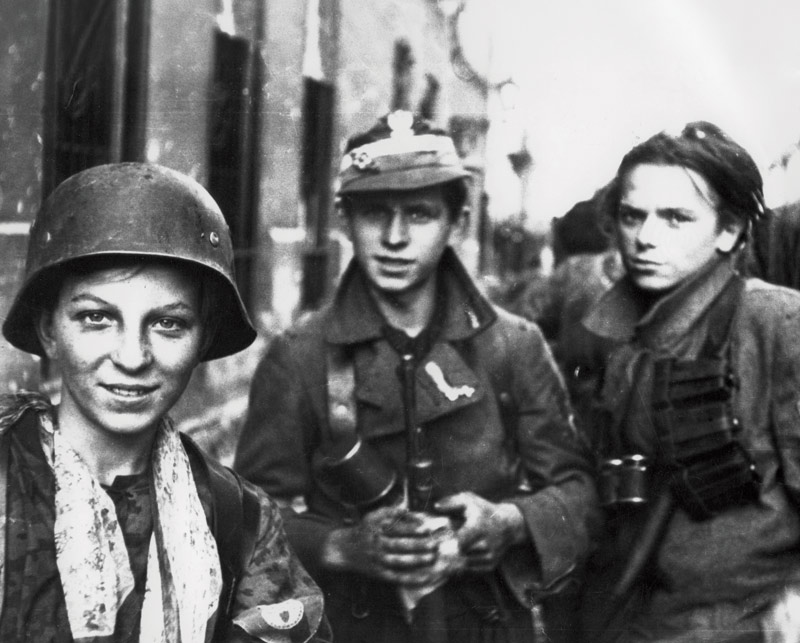
Polish Home Army soldiers pose for a photo during the 1944 Warsaw Uprising (above).[Wikimedia/Jerzy Tomaszewski/Wikimedia]
During the first week of the Warsaw Uprising, 148 Squadron and 1586 Polish Flight sustained particularly significant losses, which caused the RAF to rethink its strategy of dropping supplies in a heavily defended urban area. When missions to Warsaw resumed in mid-August, they were reinforced by three bomber squadrons, all equipped with Consolidated B-24 Liberator aircraft.
On the night of Aug. 13-14, 1944, Flying Officer George Dougald MacRae was killed when his Liberator was shot down over Warsaw. The 30-year-old pilot from Ardbeg, Ont., was also buried in Krakow Rakowicki Cemetery. Coincidentally, his brother, Lance Corporal Jamie Duncan MacRae, 32, was killed the next day in France, while serving with The Argyll and Sutherland Highlanders of Canada (Princess Louise’s).
In the end, the Germans crushed the Warsaw Uprising and the HA surrendered on Oct. 2, 1944. After two months of one of the bloodiest urban battles on the Eastern Front, roughly 18,000 Polish insurgents were killed alongside 150,000-200,000 civilians. Further, some 500,000-700,000 Warsaw residents were deported to various concentration, labour and prisoner-of-war camps and the Germans undertook a systematic demolition of the city. By January 1945, about 85 per cent of its buildings had been destroyed.
The RAF units supplying the HA during the uprising suffered appalling losses, too. Of 196 aircraft, only 42 made it to Warsaw—and 39 of those were lost. In the whole western Allied operation, more than 250 airmen were killed. “No other major air operation during World War II, and certainly none in which no bombs were dropped, could compare with this incredible effort,” said South African historian Neil D. Orpen.
Between 1943 and 1944, 15 Canadians were killed supplying the HA; another 11 were taken prisoners; and two others survived crashes and evaded capture.
The RAF units supplying the HA during the uprising suffered appalling losses. Of 196 aircraft, only 42 made it to Warsaw—and 39 of those were lost.
On Dec. 12, 1964, on the 25th anniversary of the creation of the Polish resistance movement and the 20th anniversary of the Warsaw Uprising, the Polish Home Army Ex-Servicemen’s Association in Canada unveiled a monument in Ottawa commemorating the Canadian airmen who died supporting the HA. Canadian parliamentary, government and military officials and representatives of various Polish-Canadian veteran and community organizations attended the ceremony. And Prime Minister Lester B. Pearson paid homage to the bravery of both the RCAF airmen and the HA soldiers. Representatives of the Polish People’s Republic, in the Communist Soviet sphere since 1945, didn’t attend (nor were they invited).
In the 1980s, the political situation in Poland began to change and by 1990, Poland had a freely elected president and parliament. Starting in 1993, officials from the free Republic of Poland attended ceremonies at the monument. In 1995, Polish President Lech Wałesa approved the posthumous awarding of the Cross of the Home Army to all the Canadian airmen named on the memorial.
On Sept. 26, 1995, a rededication ceremony was held for the monument—which had been moved from its original location across from the National War Memorial to Confederation Park in 1967. A sculpted Cross of the Home Army was added to the monument and, like the unveiling in 1964, many dignitaries representing the Canadian government, Canadian and Polish veterans’ organizations, and Polish and Allied embassies attended. Some family members of fallen RCAF aircrew named on the memorial were present, too.
For more than 60 years, the Polish Home Army – Canadian Airmen Memorial has stood in commemoration of the little-known sacrifices made by Canadians to help liberate Poland.
Advertisement