





Manitoba became a province of Canada in 1870, though at the time it didn’t extend much past the Red River Valley (it wasn’t until 1912 that it expanded to its current boundaries). In 1871, B.C. became a province. Between them, was a vast area then known as the North-West Territories.
The West was rapidly changing; buffalo were disappearing, and settlers were slowly populating the region. Too slowly, though, from the federal government’s perspective.
Interior minister Clifford Sifton first looked to Britain and the U.S. to find immigrants to move to the area. When he couldn’t find enough people there, he broadened his search to include Doukhobors, Poles, Finns, Icelanders and Ukrainians. For the first time, Canada was attracting large numbers of people who weren’t French or English, the inadvertent beginnings of multiculturalism.
“Those who come at the eleventh hour will receive the same treatment as those who have been in the field for a long time.”
Sifton hired agents who went abroad and gave lectures about Western Canada’s bounty, and he sent out more than a million pamphlets, extolling the virtues of the soil and pure air. Some were a bit misleading—“The frontier of Manitoba is about the same latitude as Paris”—but they worked. During his tenure, the population of the West grew from 300,000 to 1.5 million.
Sifton was also the superintendent general of Indian affairs, a post he was less adept at. He cut funding to Indigenous schools and negotiated Treaty 8, which gave 850,000 square kilometres of the West to the Crown. His goal was to populate the region with white farmers.
On that front, Sifton largely succeeded. By 1885, roughly half the population of the North-West Territories was Indigenous. Twenty years later, less than three per cent were Status Indians.
The North-West Territories were large and diverse and essentially run by the federal government, some 2,500 kilometres away in Ottawa. Its residents argued that they needed local representation. In 1897, an executive council was formed, giving the area responsible government. But local political leaders lobbied for provincial status.
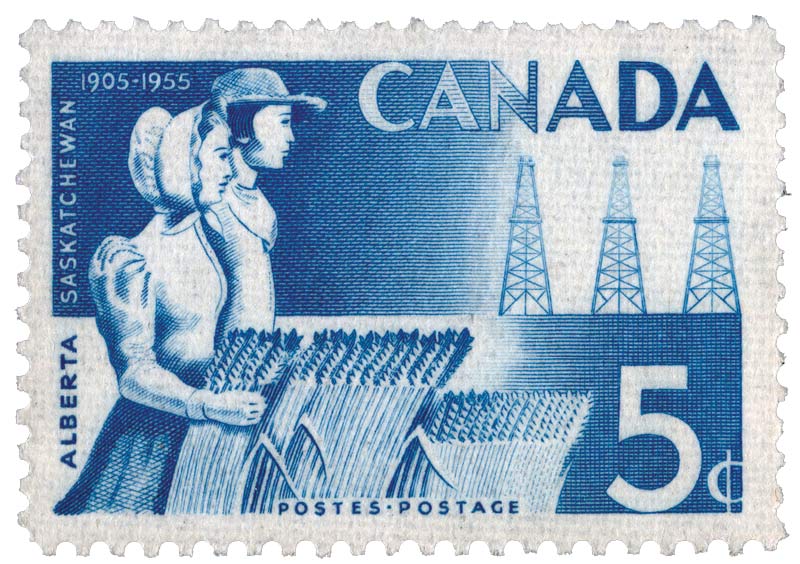
Their original vision was of one large province that would include the districts of Alberta, Saskatchewan, Assiniboia (present-day southern Saskatchewan) and Athabasca (present-day northern Saskatchewan and northern Alberta). But Prime Minister Wilfrid Laurier and others felt that was too big to administer. So, on Sept. 1, 1905, the federal government adopted The Alberta Act and The Saskatchewan Act, creating Canada’s eighth and ninth provinces as we know them today.
That day, Laurier spoke to an audience of 10,000 in Edmonton, the capital of Alberta. He praised the burgeoning agricultural sector, the city’s “young and vigorous people” and said it was an occasion of national rejoicing.
“Let me say to one and all, above all those newly our fellow countrymen, that the Dominion of Canada is in one respect like the Kingdom of Heaven: those who come at the eleventh hour will receive the same treatment as those who have been in the field for a long time.”
Amen.
Advertisement