

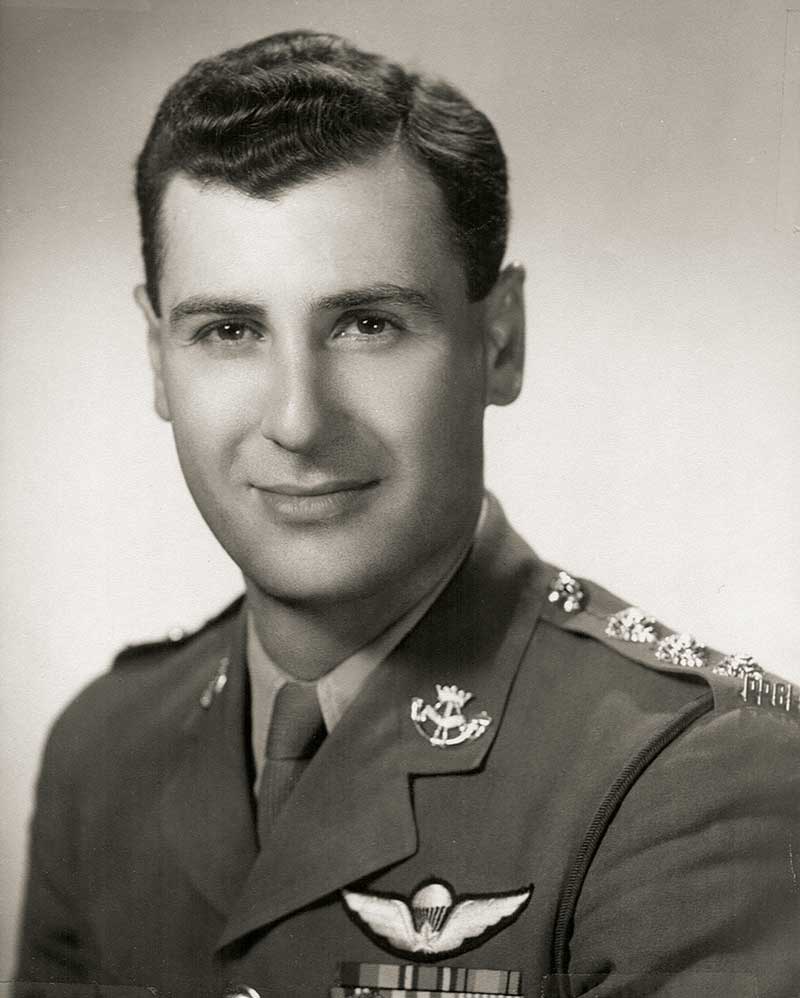
Lieutenant Mike Levy. [The Military Museums/Mike Levy family]
The enemy tide was relentless. Wave after wave of Chinese troops, hastened by the shrill call of a bugle, streamed across a ridgeline toward Korean Hill 677, the moonlight silhouetting their figures until flares, then muzzle flashes and explosions, illuminated the advance. Yet still the torrent came, a seemingly unstoppable force that the entrenched defenders of ‘D’ Company, Princess Patricia’s Canadian Light Infantry (PPCLI), tried to plug.
Just three days earlier, the Communists’ Fifth Phase Offensive had routed the Republic of Korea 6th Division to the north of the Kapyong valley, giving rise to a flood of humanity that threatened to dismantle the United Nations’ front lines and open the way to Seoul in the south. Mere hours earlier, the tenacious guarding action on Hill 504, adjacent to PPCLI on the valley’s opposite side, had been ceded—with great reluctance—when 3rd Battalion, The Royal Australian Regiment (3 RAR) couldn’t hold on any longer. From around 9:30 p.m. the previous eve, the Canadians of their own 2nd Battalion unit had come close, indeed closer than many realized in their isolated positions, to sharing a similar fate, first in clashes against ‘B’ Company, and battalion headquarters thereafter.
Now, at 1:30 a.m. on April 25, 1951, it was ‘D’ Company’s turn.
“Kill the imperialist pigs,” yelled a Chinese officer as he ushered his men through Vickers machine-gun fire, believing their assailants to be American. Spoken in an unfamiliar language, the war cry meant little to those atop Hill 677—save for one.
“We are Canadian soldiers,” bellowed No. 10 Platoon commander, Lieutenant Mike George Levy, in the appropriate dialect. “We have lots of Canadian soldiers here.”
Subsequent demands for a Chinese surrender echoed down the ridge line, only to be met with enemy fury and the accusation of one bewilderingly fluent defender being a “son of a turtle,” a culturally vulgar slight. Through the darkness and over the din of battle, Levy and the attacker exchanged further insults until a subordinate of the former, tiring of it all, interjected: “Tell the bloody platoon commander to shut up.”
It was no use, anyway, for the enemy waves continued.
By 3 a.m., a Canadian machine gun had been silenced and its operators, privates Maurice Carr and Bruce MacDonald, killed. Without the weapon’s enfilade decimating their ranks, the Chinese, far from dropping their arms, barrelled ahead with increasing aggressiveness, threatening to overrun multiple positions.
Levy’s platoon was all but surrounded on what seemed like a godforsaken Korean peninsula so far from home. The desperate moment called for desperate measures, of that the British-Canadian lieutenant was sure.
It wasn’t the first time he had made a bold gamble.
When Levy last encountered Chinese forces, they were not foe, but friend.
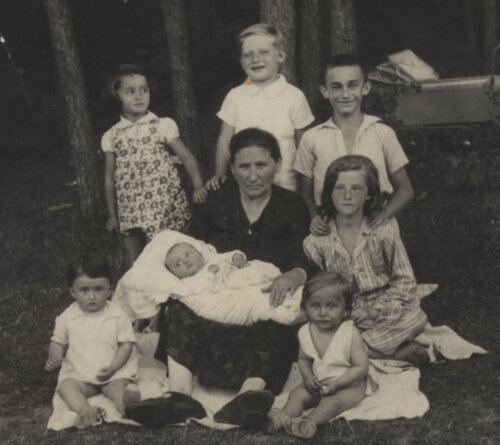
Born in Bombay (now Mumbai) in British-occupied India on Nov. 7, 1925, and raised in Shanghai over the Sino-Indian border, Levy spent his formative years active in sports and Boy Scouts. Following the Dec. 7-8, 1941, outbreak of war between Japan and the British Empire, however, he found himself in enemy-controlled territory, leading to his incarcaration.
At 16, Levy was delivered to Pootung Internment Camp in Shanghai before being transferred to the nearby Longhua Civil Assembly Center in 1943, sharing its rudimentary facilities with approximately 2,000 Ally-aligned foreign nationals. The teen had no intention of staying, and so, during the night of May 22, 1944, with conditions “deteriorating rapidly,” he and four other captives escaped.
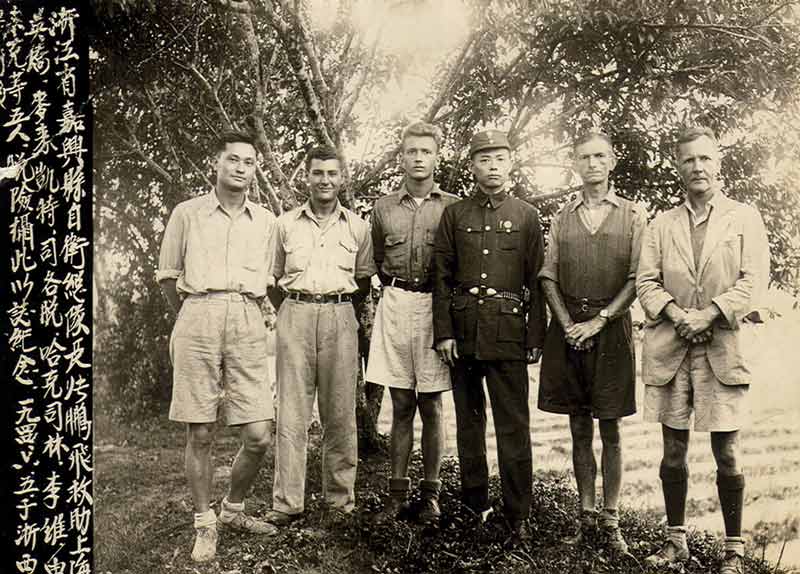
Raised in Shanghai, Mike Levy escaped a Japanese prisoner of war camp in 1944. The escapees pose with a Chinese guerrilla commander.
Evading the guards and navigating past the double-thickness barbed wire was just the beginning of their ordeal, however. Ahead of them lay a formidable 3,200-kilometre journey through vast swaths of Japanese-conquered China.
Within the first 24 hours, the group was confronted by a Japanese sentry post. An attempt to walk in the opposite direction while ignoring pleas to halt proved fruitless after a young guard caught up with them. Questioned on their identities, one of Levy’s companions said they were German and Russian hikers (that both of those countries were belligerents apparently didn’t arouse suspicion). The soldier permitted them to proceed.
Travelling on foot and by junk for much of the trip, Levy and his comrades trekked through jungles and across paddy fields, over lakes and between countless villages, usually escorted by Chinese guerrilla bands and aided by rural locals despite the immense risks in providing hospitality and money to the fugitives.
Levy was transferred to Longhua Civil Assembly Center in 1943. The teen had no intention of staying. During the night of May 22, 1944, he escaped.
Meanwhile, the Japanese search for Levy’s group continued. The men also had to contend with the likes of disease, challenging—if stunning—terrain and the fast-changing nature of the front lines en route, occasionally justifying detours and the redrawing of plans.
On or about June 21, 1944, the British consulate in Chongqing (the Nationalist Chinese provisional capital) sent a telegram to the men congratulating them for their “courage and resourcefulness” in escaping. Eventually, after two months of eluding Japanese military authorities, guided by their Chinese allies, they arrived at friendly enough territory to fly over the Himalayas to India.
But Levy’s adventures were far from over.
In Calcutta (now Kolkata), the barely adult lad found a new purpose after joining the British Special Operations Executive (SOE), where his knowledge of Chinese culture and language, not to mention his recently evinced evasive skills, were deemed assets. Levy attained the rank of captain as part of the SOE’s Force 136, training and then working alongside some 150 Chinese-Canadians who had signed up, largely with aspirations of receiving equal rights back home.
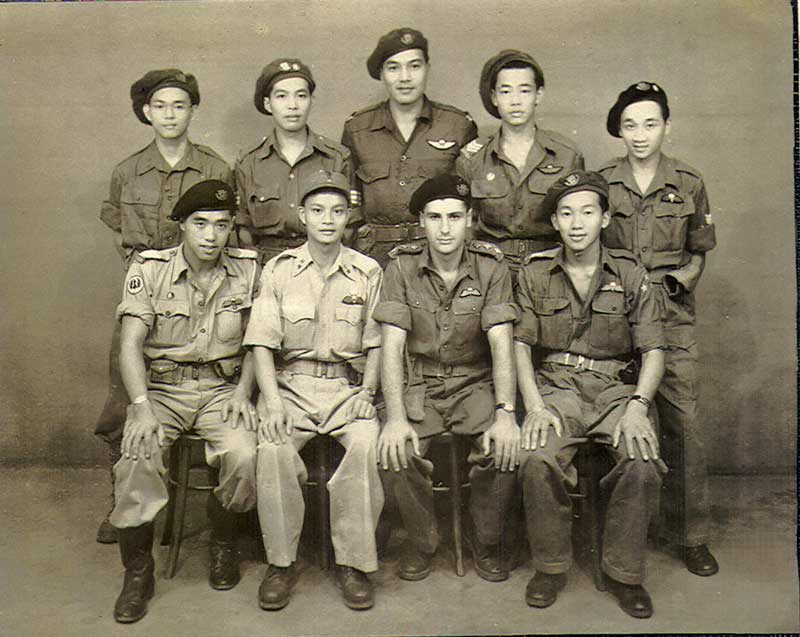
He first connected with Canadians while serving with Force 136. Levy returned to Asia to fight for Canada in Korea (below).[The Military Museums/Mike Levy family]
“The mission of Force 136 members was simple,” reads an article on the Chinese Canadian Military Museum website. “Get dropped behind Japanese lines; survive in the jungle in small teams with no outside support; seek out and train local resistance fighters; and work with those guerrilla groups to sabotage Japanese equipment and supply lines and conduct espionage.”
Levy was, unsurprisingly, the perfect candidate for such dauntingly ambitious objectives.
In July 1945, the captain—then acting as second-in-command of the code-named Galvanic Brown Patrol Liaison Team—dropped into the Malayan jungle north of Kuala Lumpur, tasked with sowing discord among the Japanese occupiers. Operating in relative seclusion alongside local guerrilla bands through to VJ-Day and beyond, Levy excelled in his numerous duties, earning a Mention in Dispatches for being “full of guts” during a clash outside the town of Salak South.
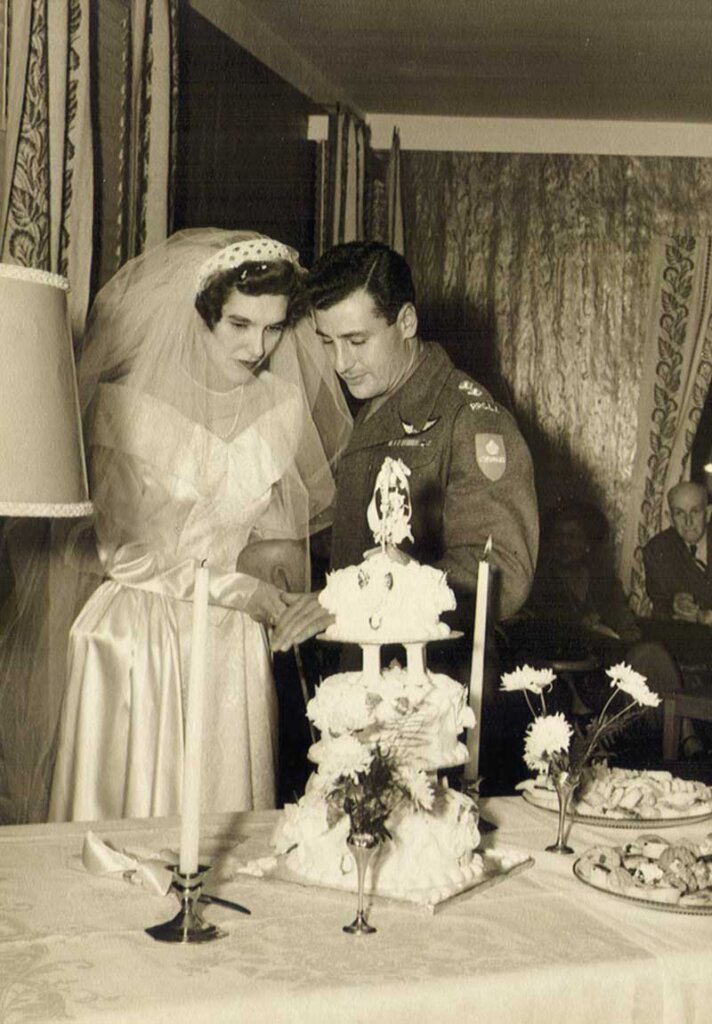
Post-WW II, Levy moved to Canada where he met his wife Marjorie.[The Military Museums/Mike Levy family]
During his time with British intelligence, the now-combat-hardened officer learned much about Canada through SOE colleague and Vancouverite, Lieutenant-Colonel Arthur Stewart. Inspired by him and his Chinese-Canadian comrades, Levy opted to resettle in Canada after the war, first living with Stewart himself—who would introduce the newcomer to his future wife, Marjorie Edith Arthur—before trying his entrepreneurial hand at running a Vancouver fish-and-chip restaurant.
While his business wasn’t as successful as he hoped, Levy remained resolute in his efforts to start fresh in his adopted country by building on his military ties and enlisting in the Irish Fusiliers of Canada militia regiment. The veteran was thus well-suited to volunteer for the UN mission to Korea in response to the Soviet-backed North’s invasion of the South on June 25, 1950.
Levy, now a PPCLI lieutenant of the Canadian Army Special Force, arrived on the Korean peninsula at a time when the conflict was, in historian William Johnston’s words, a “wildly shifting battlefield.” The original North Korean assault drove the South’s army and its U.S. allies out of Seoul and into a defensive perimeter around the southern city of Pusan (present-day Busan), a situation only alleviated following a UN amphibious landing near the port city of Inchon in September. This, as well as the concurrent breakout from the Pusan perimeter, quickly routed the Communist forces, who yielded the South Korean capital and retreated across the 38th parallel that divided the two countries. UN troops maintained the pressure, advancing farther north until the Chinese, who joined the war in October, launched a 300,000-man-strong offensive to drive them back.
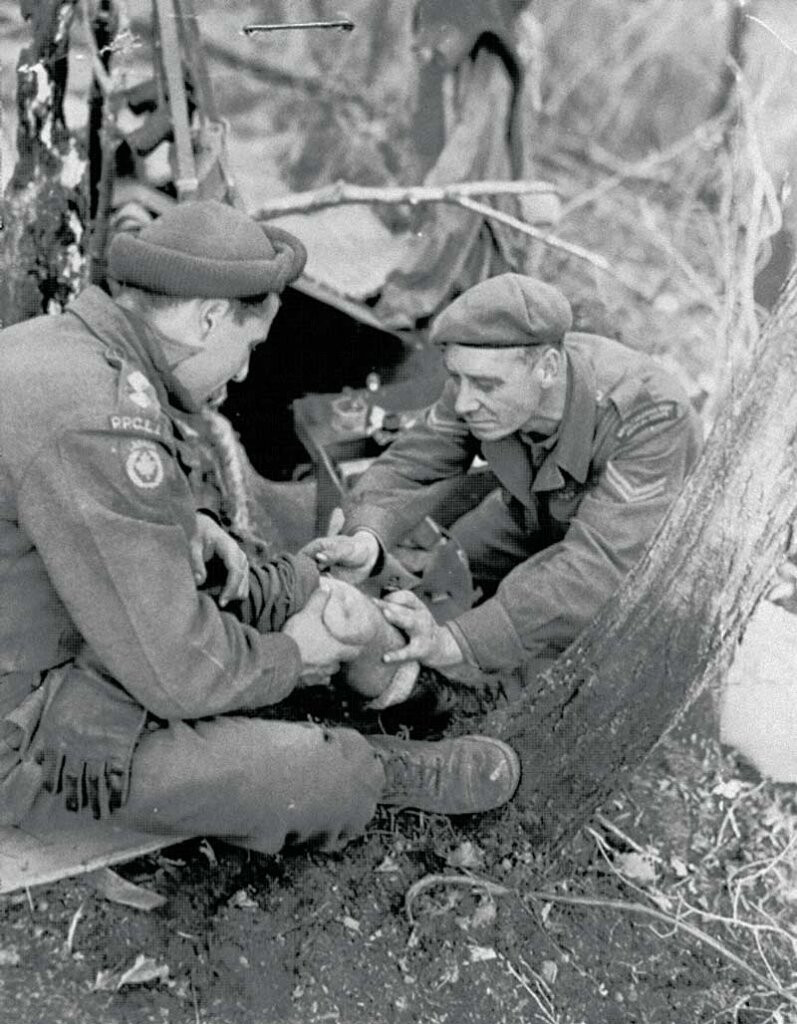
Levy is treated for a shrapnel wound in Korea in 1951. [The Military Museums/Mike Levy family]
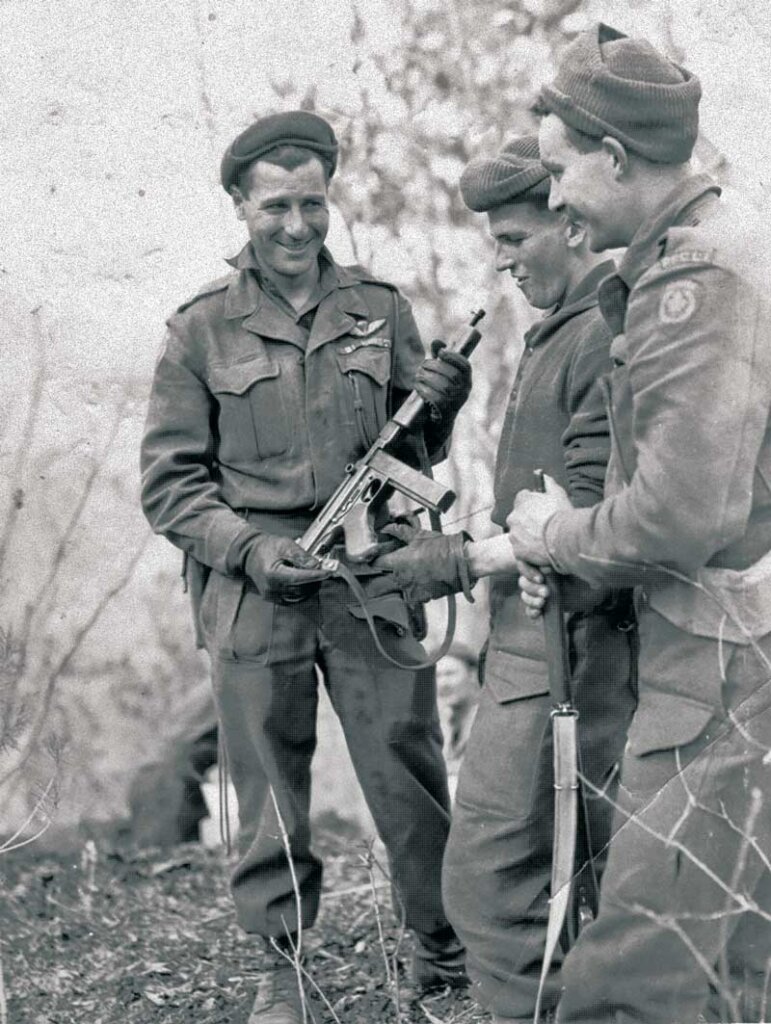
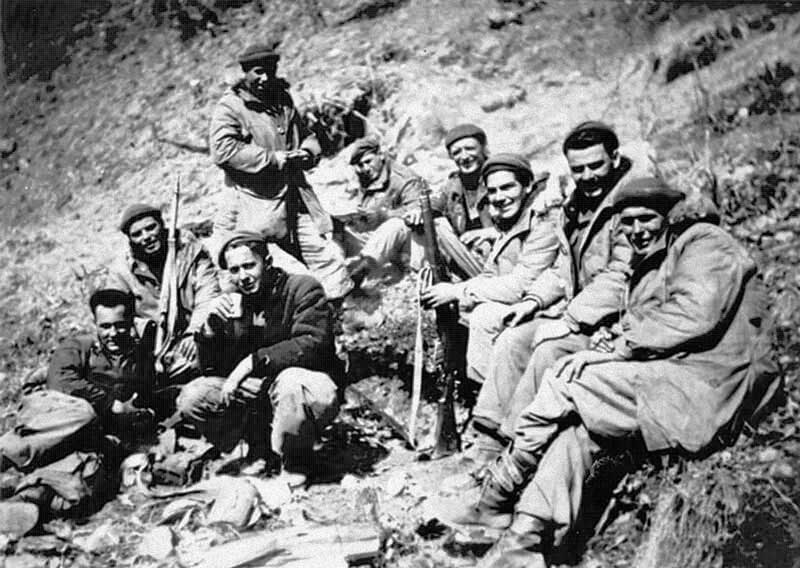
Levy with comrades in Korea. [The Military Museums/Mike Levy family]
When Levy’s 2nd Battalion, PPCLI, landed in Pusan that December, the multinational coalition to which they were attached had been pushed out of North Korea to a front some 80 kilometres south of Seoul. Sent ahead of 25th Canadian Infantry Brigade’s other fighting elements, the formation was temporarily absorbed into 27th Commonwealth Brigade, which comprised 3 RAR and two British battalions, as well as a New Zealand artillery regiment and an Indian ambulance unit. These combined forces, under the command of Brigadier Brian Burke, participated in the broader counteroffensive to push the Communist Chinese and North Korean invaders back—once again—across the 38th parallel.
For the next few weeks, 2 PPCLI endured a series of bitter battles for nondescript Korean hilltops, facing a stubborn enemy capable of hampering UN inroads long enough to construct the next defensive position farther north. In the March 7, 1951, struggle for Hill 532 alone, the Canadians incurred seven killed and 37 wounded.
Yet slowly, surely, the Chinese and North Koreans withdrew, and finally, on April 8, 27th Commonwealth Brigade crossed the 38th parallel as it marched through a rugged and steep-sided valley, surrounded by hills that rose as high as 1,000 metres above a river and nearby village.
Its name was Kapyong.
Further, if smaller, fights awaited the Canadians in the prelude to their greatest test. Starting April 14, in a battle to wrest control of Hill 795 from the enemy, PPCLI’s ‘D’ Company confronted some of its toughest opposition to date.
“At 1655 hours,” the battalion war diarist wrote, “the company attack went in [and]…was successful in reaching [the primary objective] but the position was untenable…Lieutenant M.G. Levy led the attack with great spirit and succeeded in reaching the well-held Chinese bunker…with his platoon.”
Despite their gallant efforts, however, Hill 795 didn’t fall for another two days, costing five wounded. Much of the brigade, less the Kiwi gunners, fell back and into reserve.
The break would be temporary—a fact Levy would come to realize all too well.
Friends-turned-foes swept in like a tide on April 25, 1951.
Levy, contacting Captain Wally Mills, ‘D’ Company’s acting commander who had
established his tactical headquarters on Hill 677’s reverse slope, intended to change that.
The British-Canadian lieutenant requested that friendly artillery fire be directed “to impact within 10-15 metres of our position.” It was clearly a last-ditch ploy, one with immeasurable risks, but his superior officer endorsed it before relaying it on to Lieutenant-Colonel Jim Stone, PPCLI commander, who obliged.
Twenty-four 25-pounder guns of the New Zealand 16th Field Regiment—bolstered by three U.S. artillery units—launched shell after shell into a concentrated mass of Chinese attackers as Levy, exposing himself to their ire, directed the bombardment.
Even so, recalled a PPCLI sergeant of the broader battle, the enemy “just keep coming.”
The situation desperate, Levy shifted the fire onto his own position.
“Our slit trenches were within hollering distance,” said one 10 Platoon soldier, “when we got the word, we all crouched down….” As he, Levy, and other survivors hugged the soil for dear life, the initial 10-minute barrage had the desired effect of scattering the enemy forces, if only for the briefest of moments. “They were about to over run us,” the soldier added, “when another ten-minute barrage came in. Later, we were hard pressed and called in a third ten-minute barrage. We were convinced the artillery would kill us all….” Levy’s two beleaguered sections were fortunate on that count as, from the skies above, around 4,000 rounds rained hell dangerously close to their positions, skirting them by less than five to six metres.
Elsewhere, agonized screams cut through the darkness as shrapnel bursts scattered just beneath tree-top height to shred the Chinese ranks, which were stopped cold. Levy, jumping between slit trenches as he honed Kiwi fire, had saved his platoon.
One Toronto Sun newspaper columnist would even claim he “may have saved Seoul.”
What remained indisputable was that Levy’s gamble had paid off.
The Battle of Kapyong officially ended for the Canadians on April 26, when the 27th Commonwealth Brigade was finally, and most deservedly, relieved. By then, enemy forces, suffering a reputed 300 fatalities against PPCLI and potentially some 2,000 casualties against all UN troops, had conceded the fight.
The struggle had ceased far less with a bang and more with a fizzle at dawn on the 25th. Regardless, the defenders, too, had been bloodied and bruised over three days of ferocious, largely hand-to-hand combat. The stalwart defence of Hill 504 cost 3 RAR 32 killed and 59 wounded while even the New Zealand gunners lost two dead. That such a sacrifice took place in the lead-up to Anzac Day, marking exactly 36 years since the disastrous 1915 Gallipoli landings in Turkey, perhaps added to the sense of service. There was no question that the Aussies and Kiwis, the latter having fired approximately 14,500 shells during the battle, had played a monumental role in averting a very different catastrophe in Korea.
“In their isolated defence areas,” remarked Lieutenant-Colonel Stone, “they kept their heads down, the morale of their troops up, and their weapons firing.”
The Canadians themselves, having performed their own stalwart defence atop Hill 677 against a numerically superior force, sustained 10 killed and 23 wounded. “In their isolated defence areas,” remarked Lieutenant-Colonel Stone, “they kept their heads down, the morale of their troops up, and their weapons firing.” Of course, many men had earned that characterization—yet arguably, one had epitomized it.
PPCLI, alongside other formations, received the U.S. Presidential Unit Citation—the first of only two occasions that a Canadian battalion has been awarded such a rare decoration. Five of the unit’s soldiers were also issued accolades, including Military Cross holder Wally Mills, who had relayed co-ordinates for the artillery strike provided by his 10 Platoon commander.
Levy wasn’t among the recipients.
True, modern history is replete with instances where infantry, recognizing that their position might fall to the enemy, have radioed in “danger close,” a tried-and-tested part of military doctrine in which an artillery barrage lands within range of its own troops, thereby risking friendly fire for a perceived—and hoped for—greater good. Nevertheless, its existence in the manuals made such a gambit no less courageous.
Regardless, Levy was said not to bear a grudge for having received no medal. His efforts were eventually acknowledged just prior to his death on June 4, 2007, at age 81. In April 2004, Gov. Gen. Adrienne Clarkson bestowed upon him a personal coat of arms, honouring not only his heroics at Kapyong but also his dedicated 25-year career in Canada’s military that followed.
The blazon features the red, blue and gold regimental colours of PPCLI, a lightning flash representing the wireless radio unit that Levy used to call in the artillery strike, and four Korean pine cones, symbolizing the county tree of Kapyong and the hopes of a fresh beginning.
The motto, meanwhile, says it all:
“I have prevailed.”
Advertisement