

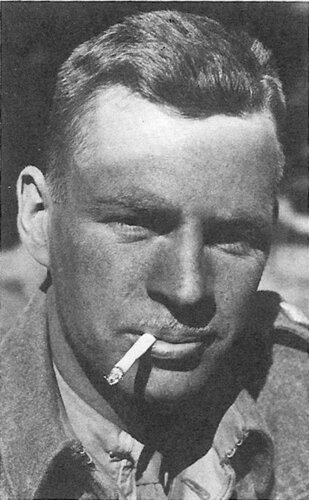
On June 6, 1944, Ken Bell landed at Juno Beach with colleagues from the Canadian Army Film and Photo Unit (CFPU). This was Bell’s first exposure to the Second World War battle sites of northwestern Europe—sites he would return to and re-photograph for the next four decades.
Bell was drawn, repeatedly, back to the battlefields in the postwar period to show the contrast of wartime and peaceful landscapes. Interestingly, his books are of photographs, but they are not about photographs. Instead, his work indicates a belief in images both as historical documents and as a method to visually represent a healing process.

Personnel of 3rd Canadian Infantry Division land at Bernières-sur-Mer, France, on D-Day.[Gilbert A. Milne/DND/LAC/PA-131506]
In 1943, Bell was hired by Canada’s Directorate of Public Relations. He travelled throughout the country shooting scenes of military training and special events. In May 1944, Bell was transferred to the CFPU and was made a liaison officer of The Highland Light Infantry of Canada. After D-Day, Bell followed Canadian troops inland from Juno Beach toward Germany.
Five years later, Maclean’s magazine commissioned Bell to return to peacetime Europe to re-photograph the landscapes of the Second World War. Bell retraced the route of the Canadian Army on a motorcycle, shooting subjects with the same composition as the wartime images. He even met some of the same people he had photographed during the war.
Bell planned to spend two weeks in Europe, but eventually stayed for two months. The work remained with him even longer. In 1953, he used the images for his photographic book Curtain Call.

Years later, families frolic at the same spot.[Ken Bell/The Way We Were]
“The war photographs depict the miseries and ravages of war and show countries destroyed and in despair,” Bell wrote in the book’s preface. “But everywhere an effort was being made to do everything possible to wipe out the scars of war.”
He used his camera as a tool to investigate what that process looked like.
The battlefields kept calling Bell back. He returned to Europe in 1969 to take photographs for his second book, Not in Vain (1973). Bell later admitted that he wasn’t satisfied with it and began working on another book in 1983. The result was The Way We Were (1988). It was Bell’s final re-photography publication, and shares many characteristics with his previous works—including images from more than 20 of the same sites he had been to during the war and each time afterward.
All of Bell’s books include images by other photographers, though they aren’t always credited. The Way We Were was the first of Bell’s books to include images taken in places he had never served during the war, as well as Canadian Army film stills, and photographs from other combatant nations.
By re-photographing events at which he hadn’t been present, Bell positions the images made by his colleagues as straightforward windows to the past. But it’s important to remember the layers of choices that formed Bell’s books. From the events he shot, to the locations he revisited, to his selection of photographs, to the final printed page, all are less a window to the past and more a window to Bell and how he viewed the war and the act of representing war through photography.
Spanning nearly four decades, Bell’s body of work allows viewers to critically examine a photographer’s role in the telling of history—an approach that’s essential in a world that remains saturated with photographs of war.
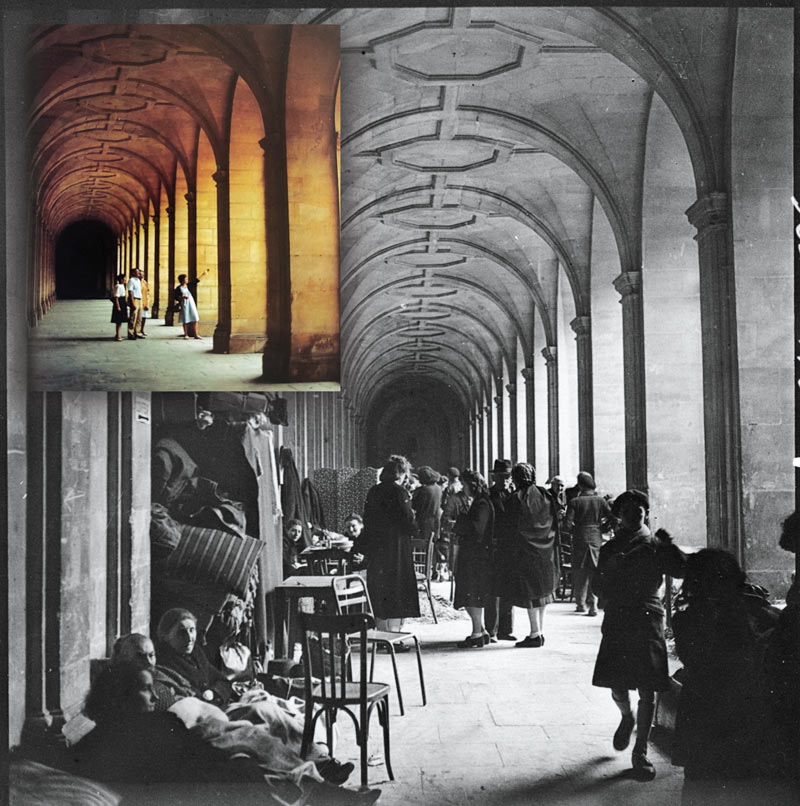
Civilians settle in a church in Caen, France, on July 10, 1944. Postwar [inset], tourists explore the site.[Ken Bell/DND/LAC/PA-135905; Ken Bell/The Way We Were]

Men wounded by snipers are brought back to cover in Falaise, France, on Aug. 17, 1944. [Ken Bell/The Way We Were]

The scene would be contrasted by a neighbourly meeting and a cyclist.[Donald I. Grant/DND/LAC/PA-135908]
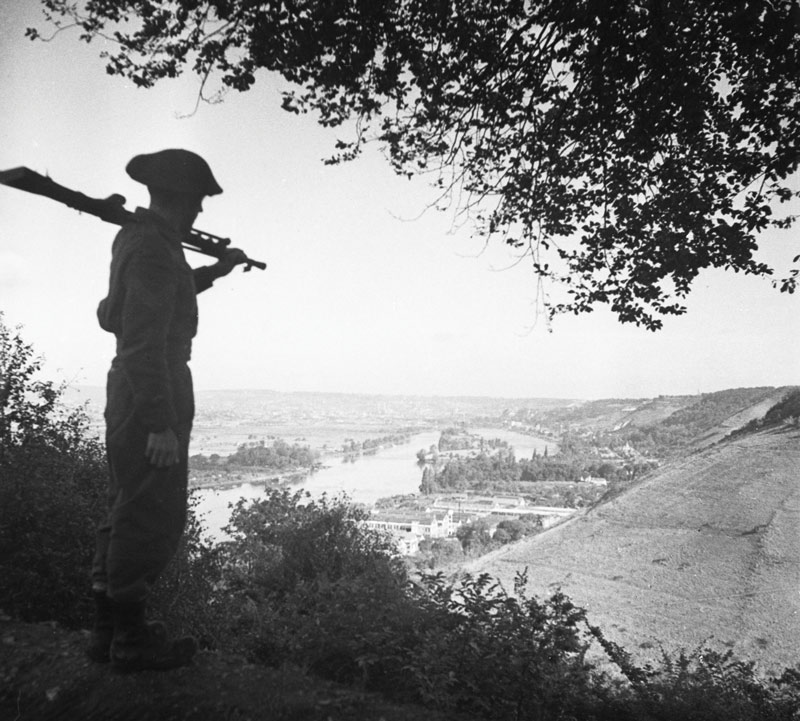
Sergeant B. Shaw looks out over Rouen, France, on Aug. 31, 1944.[Ken Bell/DND/LAC/PA-131223]
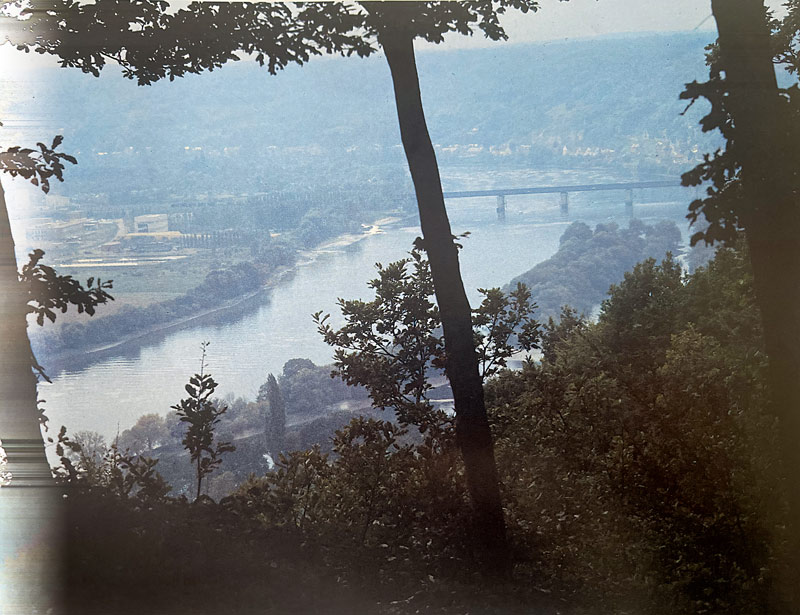
Decades later, a similar vantage appears serene without the soldier. [Ken Bell/The Way We Were]

Canadian and American soldiers meet in Elbeuf, France, on Aug. 27, 1944. [Ken Bell/DND/LAC/PA-131223]
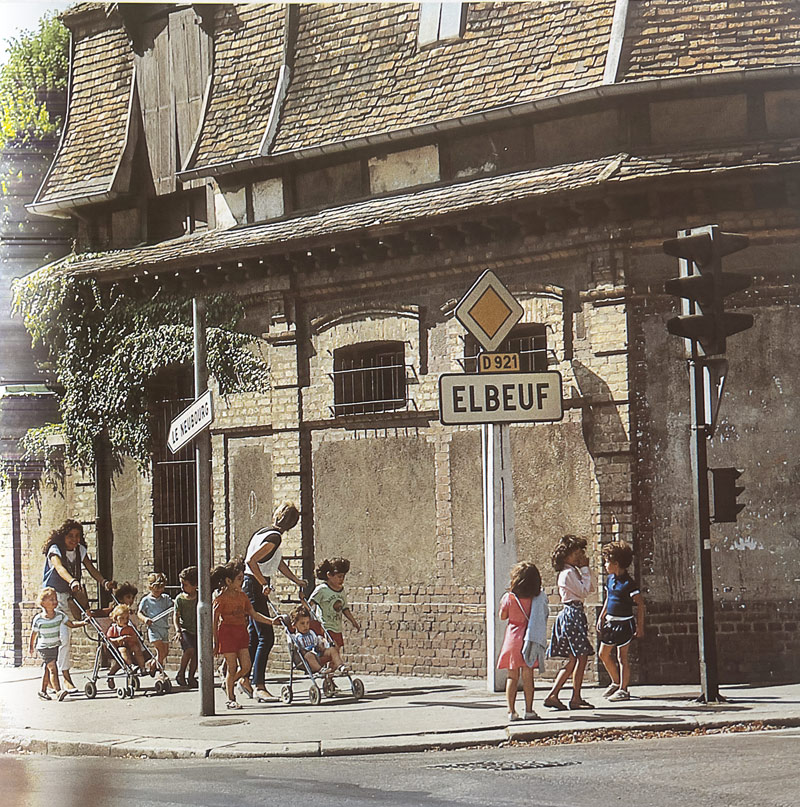
Youngsters and their guardians walk the same stretch of the village years later.[Ken Bell/The Way We Were]
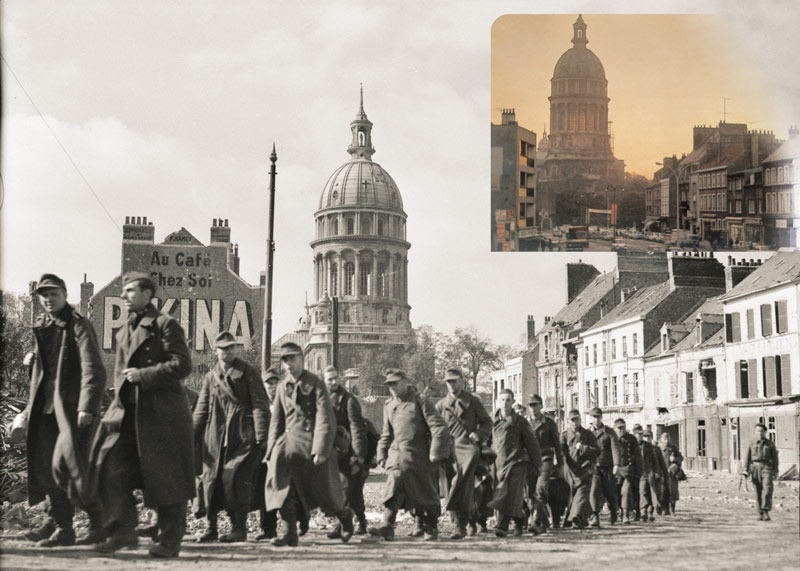
Boulogne-sur-Mer, France, at peace [top], while on Sept. 19, 1944, German prisoners are marched away.[Donald I. Grant/DND/LAC/PA-136333]
Advertisement