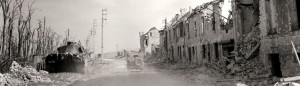
Pounding Towards Falaise: Army, Part 104
Operation Totalize was the first major action carried out by First Canadian Army in the Second World War and a great deal of attention was paid to documenting every aspect of the Aug. 8-10, 1944, battle.



Operation Totalize was the first major action carried out by First Canadian Army in the Second World War and a great deal of attention was paid to documenting every aspect of the Aug. 8-10, 1944, battle.
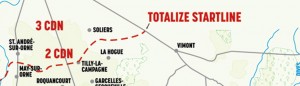
In July 1944, the German Army concentrated more panzer divisions in the open fields south of Caen than in any other sector on the eastern or western front. Relying on infantry and artillery to meet the Soviet Union’s summer offensive and to check the Americans in the dense Bocage country in Normandy was a gamble, but Hitler and his senior officers knew a breakout in the Anglo-Canadian sector would open routes to Falaise and the River Seine while cutting off most of the German forces in Normandy. The Caen-Falaise plain was such good tank country that it could only be defended by the best panzer divisions.

By the third week of July 1944 the senior German officers in the west feared their armies were on the verge of collapse. Battle casualties totalled more than 116,000 men and just 10,000 replacements had arrived to sustain combat strength. The loss of 2,722 officers was particularly worrying. Ten generals, eight officers of the General Staff and 158 regimental and battalion commanders had been killed or seriously wounded between June 6 and July 24. On July 15, two days before he was wounded by a strafing aircraft, Field Marshal Erwin Rommel prepared a new Analysis of the Situation which began with the statement: “The position on the Normandy Front…is rapidly approaching its crisis.” Noting the heavy losses in men and equipment, “17 tanks to replace about 225,” and the weakness and inexperience of the newly arrived infantry divisions, he concluded “the enemy will shortly be able to break through our thinly held front, especially in the 7th Army sector…the end of the unequal battle is in sight.”
By the third week of July 1944 the senior German officers in the west feared their armies were on the verge of collapse. Battle casualties totalled more than 116,000 men and just 10,000 replacements had arrived to sustain combat strength. The loss of 2,722 officers was particularly worrying. Ten generals, eight officers of the General Staff and 158 regimental and battalion commanders had been killed or seriously wounded between June 6 and July 24. On July 15, two days before he was wounded by a strafing aircraft, Field Marshal Erwin Rommel prepared a new Analysis of the Situation which began with the statement: “The position on the Normandy Front…is rapidly approaching its crisis.” Noting the heavy losses in men and equipment, “17 tanks to replace about 225,” and the weakness and inexperience of the newly arrived infantry divisions, he concluded “the enemy will shortly be able to break through our thinly held front, especially in the 7th Army sector…the end of the unequal battle is in sight.”
By the third week of July 1944 the senior German officers in the west feared their armies were on the verge of collapse. Battle casualties totalled more than 116,000 men and just 10,000 replacements had arrived to sustain combat strength. The loss of 2,722 officers was particularly worrying. Ten generals, eight officers of the General Staff and 158 regimental and battalion commanders had been killed or seriously wounded between June 6 and July 24. On July 15, two days before he was wounded by a strafing aircraft, Field Marshal Erwin Rommel prepared a new Analysis of the Situation which began with the statement: “The position on the Normandy Front…is rapidly approaching its crisis.” Noting the heavy losses in men and equipment, “17 tanks to replace about 225,” and the weakness and inexperience of the newly arrived infantry divisions, he concluded “the enemy will shortly be able to break through our thinly held front, especially in the 7th Army sector…the end of the unequal battle is in sight.”
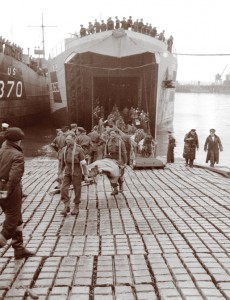
Every soldier is affected by the strain and violence of combat. Most learn to cope or even adapt, some become stronger and tougher, but others develop immediate or delayed reactions that can be psychologically disabling. Historically these have been labelled shell shock, combat fatigue, battle exhaustion, combat stress reaction, post-traumatic stress disorder and most recently operational stress injury. Psychological problems related to experiences in war and other stressful situations are universal, but doctors, patients, governments and the military are constantly changing their ideas about causation, prevention and treatment.Every soldier is affected by the strain and violence of combat. Most learn to cope or even adapt, some become stronger and tougher, but others develop immediate or delayed reactions that can be psychologically disabling. Historically these have been labelled shell shock, combat fatigue, battle exhaustion, combat stress reaction, post-traumatic stress disorder and most recently operational stress injury. Psychological problems related to experiences in war and other stressful situations are universal, but doctors, patients, governments and the military are constantly changing their ideas about causation, prevention and treatment.Every soldier is affected by the strain and violence of combat. Most learn to cope or even adapt, some become stronger and tougher, but others develop immediate or delayed reactions that can be psychologically disabling. Historically these have been labelled shell shock, combat fatigue, battle exhaustion, combat stress reaction, post-traumatic stress disorder and most recently operational stress injury. Psychological problems related to experiences in war and other stressful situations are universal, but doctors, patients, governments and the military are constantly changing their ideas about causation, prevention and treatment.
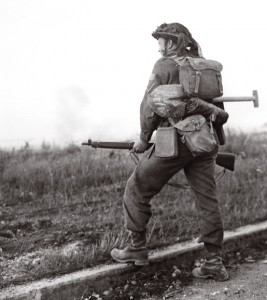
Operation Spring, 2nd Canadian Corps’ second attempt to secure Verrières Ridge, began in the dark during the early hours of July 25, 1944.Operation Spring, 2nd Canadian Corps’ second attempt to secure Verrières Ridge, began in the dark during the early hours of July 25, 1944.Operation Spring, 2nd Canadian Corps’ second attempt to secure Verrières Ridge, began in the dark during the early hours of July 25, 1944.

General Bernard Montgomery’s “armoured blitzkrieg,” Operation Goodwood, and its Canadian component, Operation Atlantic, ended in rain and confusion on July 20, 1944. The next day, Montgomery and his army commander, Lieutenant-General Sir Miles Dempsey, met to consider their options. News of the failed assassination attempt against Hitler was discussed as was the postponement of Operation Cobra, the major American offensive originally scheduled for July 20. The two British generals agreed they could not wait for the Americans; they would launch their attack south of Caen as soon as possible.