Operation Drumbeat

U-boats targeted East Coast shipping in the first half of 1942 aboard U-123, was a showman who attacked ships in full view of American[ Interfoto/Alamy/BX5HOB]

U-boats targeted East Coast shipping in the first half of 1942

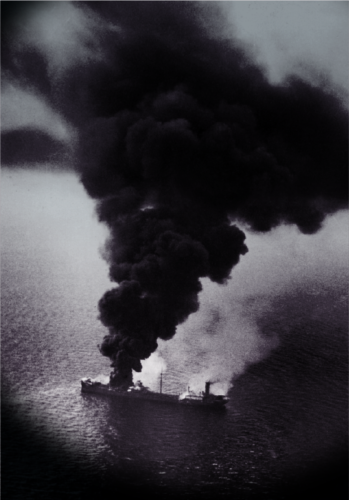
In the early hours of Jan. 12, 1942, wireless stations around the North Atlantic picked up a distress call from the British passenger freighter, SS Cyclops. The 9,076-ton vessel with 181 people aboard was 230 kilometres southeast of Cape Sable, N.S., and had just been struck by two torpedoes from U-123.
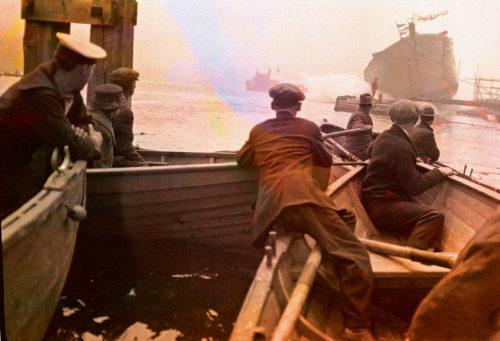
It was torpedoed by U-67 on June 29, 1942, during Operation Drumbeat. U-boats are displayed at Kiel, Germany.[Everett Collection/Alamy/BTJEBE]

The Royal Canadian Navy dispatched the minesweepers Red Deer and Burlington to the scene, while the Royal Canadian Air Force sent off a Catalina. Red Deer eventually rescued 93 survivors. No trace of U-123 was found.

The sinking of Cyclops marked the start of U-boat attacks on Allied shipping in the Western Hemisphere. Attacks in Canadian and Newfoundland waters were deflected by rapid expansion of the system of escorted convoys. Farther south, however, the U-boats operated with impunity in the face of grossly inadequate American defences.

The U-boats sank more Allied ships in this period than they did in any previous year of the war. By the time it was finished, Operation Paukenschlag (drumbeat) constituted America’s greatest naval defeat. It should never have happened.

The primary task of the escort was destruction of the enemy.

Within days of Germany’s declaration of war on the United States on Dec. 11, 1941, Admiral Karl Dönitz, commander of the U-boat fleet, dispatched the first wave of attackers.  Five large Type IX U-boats of Group Paukenschlag were ordered westward: two to operate off Nova Scotia and three between Cape Cod, Mass., and Cape Hatteras, N.C. A dozen smaller Type VIIs of Group Zieten (named for a German cavalry officer of the 1700s) left a few weeks later to attack shipping along the great circle route south of Cape Race, Nfld. While Group Zieten fed on shipping dispersed on the Grand Banks from westbound transatlantic convoys, great drama unfolded farther south.

On Jan. 14-15, U-123 sank two ships off Rhode Island, then moved to Cape Hatteras where it sank three more and damaged one on Jan. 19. “It is a pity there were not 10 or 20 submarines [here] instead of just one,” wrote Reinhard Hardegen, U-123’s captain. “I am sure they would have found targets in plenty.” Hardegen also found the American coast utterly unprepared for war: navigation lights operated normally and there was no blackout—Atlantic City and Miami feared that blackouts would hurt tourism. To the Germans the American shoreline looked like a carnival: “It is unbelieveable,” Hardegen commented to one of his lookouts as they gazed in amazement.


Gunners aboard U-123 prepare to fire a deck gun at an Allied transport in the mid-Atlantic in early 1942. U-boat captain Reinhard Hardegen  [Alamy/2D5JN8W]

For U-66, it was the lights of the New Jersey shore that silhouetted the Canadian passenger steamer Lady Hawkins on the evening of Jan. 19. Despite steaming in blackout condition and zigzagging, the ship was easy to track and hit. Only 71 of Lady Hawkins’ 320 passenger and crew were rescued five days later. It would not be the last ship sunk against the glow of America’s cities before the coast finally went dark in April.

The arrival of the U-boats should have been no surprise. An assault on the American coast was expected and Allied intelligence tracked the westward movement of the U-boats. The British and Canadians had also shared their hard-won experience and their sophisticated organization for the defence of shipping with the U.S. Canada controlled the routing of all Allied merchant ships and convoys in the Western Hemisphere north of the equator. This included an organization for naval control of shipping throughout the United States using “consular shipping agents”—naval officers in civilian clothes—to provide routing information to Allied ships.

In 1941, this system was unmasked to the Americans. They were provided with all the relevant confidential books and special publications on control of shipping, and their local port directors were tasked with working alongside the British shipping agents.

There was every expectation that the Americans would adopt a system of escorted convoys in early 1942. In fact, the infrastructure was in place—put there by the British and Canadians. In the fall of 1941, the U.S. navy had started escorting Allied convoys between Newfoundland and Iceland alongside the RCN. So, they knew how things worked.

But the simple British/Canadian solution of putting everything into escorted convoys and pushing them through ran counter to the U.S. navy’s earnest desire to fight.

Crowd aboard HMCS Arvida, a Flower-class corvette, as it enters St. John’s Harbour in Newfoundland on Sept. 15, 1942.[LAC/3204126]

Their convoy escort doctrine in late 1941 specified that the primary task of a U.S. escort was destruction of the enemy. If the escort could not do that, it was better to have no convoy at all.

Only destroyers met the U.S. navy’s standard for effective convoy escorts in 1942, and most of those were soon on their way to the Pacific. In March 1942, the navy’s Board on the Organization of East Coast Convoys concluded that poorly escorted convoys were too dangerous: they simply assembled targets for the enemy. It was better to keep those targets dispersed. So they did, but with catastrophic results. In February 1942, U-boats sank 71 ships in the North Atlantic, most of them independently routed vessels in the western Atlantic. Group Zieten, operating south of the Grand Banks, took a fair share of these from dispersed westbound transatlantic convoys.

That problem was fixed by bringing westbound convoys right into Halifax in March: this became a Canadian task. That same month the RCN established the first escorted convoy route between Halifax and Boston. By then convoys between Saint John, N.B., and Halifax were running routinely. But nothing the British and Canadians did in the spring of 1942 convinced the Americans of the merits of convoys. Most of the 92 ships sunk by U-boats in March were independently routed south of New York. April was no better.

American defences con-sisted largely of designated shipping corridors which the merchant ships travelled at widely spaced intervals. These lanes were patrolled—with rigorous routine—by the few available U.S. navy destroyers and patrol ships and covered by military and civilian air patrols. The result, paradoxically, was a safe operating zone for U-boats, free of interference by other ships and—between the regu-lar patrols—free of enemy warships, too. To conserve torpedoes, the U-boats could often resort to sinking ships rather leisurely with gunfire.

As bad as the first four months of 1942 were along the U.S. coast, nothing compared to May and June. By May, the U-boat strength in American waters peaked at 19. They were kept on station longer by U-459, a U-tanker stationed northwest of Bermuda by late April. In two weeks, it transferred 600 tonnes of fuel (and a few tor-pedoes) to 14 subs, allowing the smaller Type VII U-boats to penetrate deeper into the Caribbean.


An anti-submarine net stretches between York Redoubt and McNabs Island in Halifax Harbour in May 1942 [DND/LAC/PA-105924]

In May, U-boats finally arrived in the Gulf of Mexico in strength, where little had been done to protect shipping. In that month alone, U-boats sank 115 ships in the Atlantic—nearly half of these in the Gulf of Mexico.

The British sent help in May. Two mid-ocean escort groups redeployed to the Caribbean to defend British convoys and sev-eral trawlers went to the American east coast. This modest increment in escort strength may have been all the U.S. navy needed. In mid-May the first American convoys in the Eastern Sea Frontier began operating between Key West, Fla., and Hampton Roads, Va. It was a start, and it encouraged the Germans to move south in search of easier targets.Meanwhile, the RCN responded to the spread-ing attacks by developing its own convoy routes.

When U-553 penetrated the St. Lawrence River and torpedoed the steamers Leto and Nicoya off Cap-Chat, Que., on May 12, convoys between Sydney, N.S., and Quebec City started. And in late May the RCN began Canadian oil tanker convoys between Halifax and Aruba in the Caribbean. These convoys operated through the U.S. navy’s Eastern Sea Frontier without loss until the end of the summer, in stark contrast to the calamity unfolding nearby.

Navy brass and merchant marine officials gather (above) for a British convoy conference at the height of the U-boat threat in August 1942. [Pictorial Pres/Alamy/M60CCX]

Monthly sinkings by U-boats peaked—for the war—at 128 in June. Only 14 of these ships had been sailing in a convoy, most of the rest were sunk in the Gulf of Mexico.

It encouraged the Germans to move south in search of easier targets.

Patrols and the dim-out along the U.S. coast did little to deter the Germans from operating close inshore, even in daylight. On June 15, two U.S. freighters were sunk off Virginia Beach, Va., while holidaymakers watched. Expansion of the interlocking coastal convoy system stopped the carnage, but not until July.

The British and Canadians had always understood that escorted convoys were not perfect but were essential to sharply reducing the rate of losses. U-boats operating inshore were invariably individual submarines operating in free-fire zones. The system of ‘safe lanes’ had presented these submariners with a steady stream of unprotected targets.

Convoys swamped the individual submariner with targets and did so in the presence of escort vessels and aircraft. Lone hunters usually had one chance at a coastal convoy and seldom hit more than one ship. The British and Canadians had long known and accepted that metric. 

So did Dönitz. He tracked his success using a formula of “tonnage sunk per U-boat day at sea.” As targets were harder to find or attack, Dönitz pushed his U-boats farther afield, down along the U.S. coast, into the Gulf of Mexico and finally south across the Caribbean.

Survivors of the torpedoed steamer Nicoya exit a boat in May 1942. [Getty Images: C. I an tate]

The expansion of convoys along the U.S. coast soon pushed the most profitable operational zones beyond the range of Dönitz’s most numerous U-boats, the small Type VII. As attacks concentrated off the South American coast in the late summer, only Type XI U-boats were effective. By August, Dönitz was withdrawing the Type VIIs for a renewed pack campaign in mid-ocean. The carnage off America was largely over.

For a time one of the war’s most effective weapons, the U-boat provided a cloak of invisibility that offered its crew large measures of both risk and reward. [Universal Images/Pen and sword Books]

The Americans handled this defeat by simply deeming it irrelevant. The U.S. Office of War Information told the media in the spring of 1942 to concentrate on America’s shipbuilding program: they would produce more new ships than the Germans could sink. And they did: new production outstripped losses in October 1942 and never fell behind again. But the assault on shipping off the U.S. coast was never just about America. Nearly 60 per cent of the ships lost in the American zone in early 1942 were British Commonwealth and Empire ships, or European vessels operating under British charter.

Lone hunters usually had one chance at a coastal convoy.

In theory, this too ought not to have mattered. A British-American allocation board was supposed to equitably assign new American-built merchant ships—many of them originally ordered to British account under the Lend-Lease policy. But the U.S. Joint Chiefs of Staff controlled merchant ship allocation and simply refused to give any to the British: they wanted the ships for military purposes.

British merchant ship losses spiked again in the fall, when they abandoned convoys in the South Atlantic to find escorts for Operation Torch, the North African landings. The looming import crisis in 1943 prompted the British to appeal directly to U.S. President Franklin D. Roosevelt to release new construction to Britain. Roosevelt fought his military staff over the allocation of ships to Britain during the winter of 1942-43 without success.

Finally, in the spring of 1943, FDR bought 80 Liberty ships from Canada and transferred them to Britain under Lend-Lease, but they took time to arrive. Meanwhile, British imports reached their lowest point of the war that year.Between January and June 1942, some 360 ships were lost in American waters. It was a stunning defeat for the Americans—and for the Allies. It was also a disaster that was totally avoidable, as the Canadian example amply demonstrates. The American failure to adopt a system of coastal convoys from the outset remains one of the great errors of judgment in modern naval history. Perhaps, in the end, that defeat really did not matter to Americans because the real victim was Great Britain.

A convoy sets sail in 1942. Washington severely underestimated the threat U-boats posed to coastal shipping after the United States joined the war. Largely as a result, some 360 vessels were lost in American waters in the first six months of 1942. [Office of War Information/U.S. Library of Congress/2017877198]

Sub vs Schooner

In a U-boat rampage off the East Coast in 1918, the schooner Dornfontein was captured and burned

Dornfontein is launched in Saint John, N.B., in July 1918. [Heritage Saint John]

On Aug. 3, 1918, a small boat carrying nine sailors arrived at Gannet Rock in the Bay of Fundy. They had a tale to tell. 
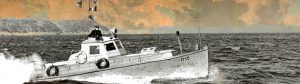
The previous day, a submarine had stopped their schooner—looted it, and took the crew as prisoners. Then the raiders set the schooner on fire and turned its crew loose in their small boat. It had taken more than 12 hours to row to shore. It was not supposed to happen. 

When the First World War started in 1914, submarines were a novelty weapon. Their range was short and everyone expected them to operate inshore, fully submerged and, in accordance with international law, to sink only warships. After all, submarines did not have enough crew to take ships as prizes, or space for prisoners, or—in the German case—the ability to bring captured ships home as prizes of war.

Certainly they presented no threat to Canada, if only because they could not cross the Atlantic. So Canada sent troops to the Western Front and the British promised to protect Canada from whatever naval threat developed. No one expected much. 

On its maiden voyage, the four-masted schooner was carrying a heavy load of wood to Natal, South Africa. [Marc Milner]

However, the establishment of a “distant blockade” of Germany by the Allies in 1914, by closing off the Strait of Dover and the passage between Scotland and Norway, gave the Germans an opening. To be lawful, a blockade had to be right along the enemy coast. The Germans responded in early 1915 with a “blockade” of Great Britain by submarines, threatening to sink warships and merchant ships on sight. With that, the U-boat war on Allied merchant shipping began in earnest. 

The sinking of RMS Lusitania by a U-boat in May 1915, with a heavy loss of life (many American), brought enough international pressure to end the first unrestricted campaign. The pattern repeated itself in 1916, when neutral pressure stopped another unrestricted U-boat campaign. 

In the meantime, Germany’s U-boat fleet grew in size, power and range, including a program of “U-freighters” to evade the Allied blockade. In July 1916, the 1,600-tonne U-Deutschland arrived at Baltimore, Maryland, to load cargo. (The second U-freighter, U-Bremen, was lost at sea on its maiden voyage). 

Clearly, U-boats could cross the Atlantic. More alarming was the arrival in October of U-53—a 740-tonne combat submarine—at Newport, Rhode Island, which promptly sank four British vessels just outside American waters. By the end of 1916, the shooting war had come to the western Atlantic.

As 1918 dawned, the Canadian coast was largely undefended.

Germany declared another unrestricted submarine campaign against the Allies in February 1917. They expected the Americas to declare war, but believed they could not intervene decisively in Europe for years. And if Germany could sink more than 800,000 tonnes of British shipping a month over the next six months, Britain would capitulate. The 1917 U-boat campaign was a gamble, but one worth the risk.

The British beat the U-boats by introducing convoys in the summer of 1917, but the subs kept the Royal Navy fully engaged in European waters for the rest of the war. 

Canada was left to fend for itself—with some important help from the Americans. By 1917, the Royal Canadian Navy had 20 small ships and 12 Battle-class trawlers armed with puny 12-pounder guns at best. As 1918 dawned, the Canadian coast was largely undefended. 

RMS Lusitania, bound for Liverpool from New York, was sunk by a torpedo from U-20 on May 7, 1915. [Wikimedia]

The U-boats arrived in the summer of 1918. U-151 was already in U.S. waters when U-156 reached Cape Race, Nfld., in early July. It sank a couple of Norwegian schooners and then headed for New York. 

After dropping mines, which sank the cruiser USS San Diego on July 19, U-156 turned back north. In broad daylight—and just five kilometres away from vacationers on the beach at Cape Cod—the U-boat leisurely sank four barges and damaged their tug with gunfire. News of the attack off Cape Cod reached Canada just as the fishermen came ashore in Canso to tell their story. 

The nine crew members were taken aboard the sub while the schooner was looted.

The next day, July 26, U-156 attempted to sink two British freighters south of Cape Sable, N.S. News of these attacks reached Ottawa on July 27. 

The presence of U-156 in the Bay of Fundy makes it difficult to explain what happened next. 

On July 31, the 695-tonne four-masted cargo schooner Dornfontein cleared Saint John, N.B., on its maiden voyage with a load of lumber for Natal, South Africa. Highly classified routing instructions issued before departure were supposed to keep it safe. These were usually kept in a weighted bag, ready to throw overboard should the enemy appear. Other than that, Dornfontein was on its own.

By the afternoon of Aug. 2, Dornfontein was about 60 kilometres south of Grand Manan Island when U-156 rose from the depths and fired two shots across the bow. Dornfontein hove to. The nine crew members were taken aboard the sub while the schooner was looted for food (it carried six months of supplies), the seamen’s clothing, other valuables—including Dornfontein’s secret instructions—and gasoline. 

Within a month of launch, Dornfontein was seized, looted and burned by a U-boat crew 10 kilometres south of Grand Manan Island in the Bay of Fundy. [Heritage Saint John]

The Canadians were held on the U-boat for five hours, interrogated and fed a meal of bully beef and rice. Nearly all the German crew spoke English and one lieutenant claimed to have vacationed annually on the Maine coast for decades.

Dornfontein’s captain described the Germans as “a beastly looking set of fellows….” The presence of blueberry pie on the mess table seemed suspicious, and seaman James Oliver of New River, N.B., protested that the food was probably poisoned. What happened next is unclear, except that Oliver was shot in the leg.

The cheery calls of “Goodbye!” and “Good luck!” from the Germans were bitterly ironic for Dornfontein’s crew as they set off for Grand Manan that afternoon. As they rowed away, their ship was ablaze from stem to stern.


At 6 a.m. the next day, Dornfontein’s crew scrambled ashore on Gannet Rock and, later that day, rowed the short distance to Grand Manan, where they were met by the RCN and taken to Saint John. The men provided details of U-156’s size, armament and crew. 

The signal to Ottawa read in part, “Submarine two hundred and seventy feet long, able to submerge in twenty seconds. Engine room plates marked U fifty-six. Vessel painted black on top, grey underneath, old paint….” 

More alarmingly, the report noted that “All papers taken.” A board of inquiry found the schooner’s captain “gravely negligent” and suspended his master’s licence for the rest of the war.

Meanwhile, U-156 headed for the Grand Banks of Newfoundland, sinking more fishing schooners and then the 4,900-tonne British tanker Luz Blanco in a running gun battle off Halifax. 

On Aug. 20, the Germans captured the Canadian steam trawler Triumph, which they armed with one or two 3-pounder guns. Triumph was a familiar sight, and it had no problem getting close. After sinking four schooners off Canso, U-156 and the hijacked Triumph headed for the fishing grounds south of Newfoundland.

The Canadian navy could do little. Its ships were too small, too slow, too poorly armed and too few to either trap the big subs or fight them. Evidence of that was soon clear. On Aug. 25, one section of an RCN patrol, HMCS Hochelaga and Trawler 22, caught sight of a schooner’s masts falling and went to investigate: they found U-156 lying on the surface. Instead of attacking immediately, the Canadians ran away. By the time the whole patrol—Cartier, Hochelaga and two trawlers—returned to the scene, U-156 was long gone and soon on its way home. The captain of Hochelaga was dismissed from the service for failing to use “his utmost exertion to bring his ship into action.” 

To provide the RCN with a safe refuge, the Halifax fortress was fully manned until the end of the war. 

Dornfontein burned to the waterline but was salvaged. It sailed again under the American flag as Netherton until it was abandoned at sea—on fire—in August 1920. James Oliver limped for the rest of his life. And U-156 never made it home. 

The life of U-156

The Imperial German Navy sub U-156 sank 44 ships before it was lost in the Northern Barrage minefield between the Orkney Islands and Norway. [SDMODELMAKERS]

During the Great War, the Germans built 373 U-boats, most of them small and intended for European waters. But a portion were large, displaced up to 1,000 tonnes, and were capable of long-range patrols.

The biggest, however, were the five remaining U-freighters which the Germans converted into warships in 1917. These submerged cruisers were the largest submarines in the world, over 60 metres long with a cruising radius of 49,000 kilometres and full displacement weight of over 2,200 tonnes. Just one of these monsters, like U-156, carried more firepower than the entire RCN: two 15-centimetre deck guns, two 88-millimetre guns and 18 torpedoes. 

The U-cruisers were a law of the sea unto themselves. 

U-156 was commissioned at Bremen, on the Weser River about 60 kilometres from the North Sea, on Aug. 28, 1917. 

Its first voyage was to the Canary Islands to load contraband. The British learned of this effort to breach the blockade and sent a sub to ambush U-156. A torpedo from a British sub hit U-156, but failed to explode. The U-boat escaped. 

The sub’s only cruise operation began on June 15, 1918, when Captain Richard Feldt and his crew of 76 set off for Long Island, N.Y. Over the next nine weeks, U-156 accounted for approximately four small steamers, three trawlers, 19 fishing schooners, two very large sailing ships, one tanker, four barges and a U.S. Navy cruiser.

U-156 did not escape retribution. The Allies laid deep minefields at the entrances to the North Sea to sink U-boats slipping through. Signals sent by Feldt in the final approaches gave precise timing and routing for his passage through the Northern Barrage. When U-156 failed to report in on Sept. 25, it was assumed that it had struck a mine and sunk with all hands. It carried to the grave the other side of one of the most fascinating stories of Canada’s Great War.

The overzealous skipper

Skipper Harding Wambach stands outside the wheelhouse on Harbour Defence Craft 15, which conducted examination duties in Saint John, N.B., in 1943. [DND]

When Nicholas Monserrat titled his classic account of the Battle of the Atlantic The Cruel Sea, it was no accident. Nearly half of the Royal Canadian Navy vessels lost in the Second World War succumbed to marine accidents.
Patrol boat HMCS Adversus ran aground; destroyer HMCS Skeena dragged its anchor and stranded on the island of Viðey in Iceland; five boats of the 29th Motor Torpedo Boat Flotilla burned in a fire in the harbour at Ostend, Belgium; minesweeper HMCS Bras D’Or simply disappeared; armed yacht HMCS Otter caught fire and exploded.

Collision was a constant danger. C-class destroyer HMCS Fraser was sliced in half by anti-aircraft cruiser HMS Calcutta off Bordeaux, France, in June 1940. Its replacement, D-class destroyer HMCS Margaree, was lost three months later in a collision with a ship in the same convoy. Flower-class corvette HMCS Windflower and Bangor-class minesweeper HMCS Chedabucto were also sunk by the vessels they escorted. And lowly Gate Vessel 1, former Battle-class naval trawler HMCS Ypres, was run down by the battleship HMS Revenge at the entrance to Halifax Harbour.

Now the Canadian navy has added a new name to the list of vessels lost at sea during the Second World War: Harbour Defence Craft 15.

Five soldiers stationed on Partridge Island in 1943 witnessed the HDC 15 incident. Offshore, ships in the examination anchorage wait to be inspected. [DND]

To be sure, HDC 15 was a modest vessel: built of wood in Shelburne, N.S., in 1940 and barely 48.5 feet long and 13 feet wide. Its two 225-horsepower gas engines produced a maximum speed of 15 knots and it could cruise for 15 hours. A slightly raised cabin provided standing room for the crew below decks, space for a small galley, and an enclosed wheelhouse. HDC 15 carried a 14-foot dory as a tender, a searchlight and one depth charge chute (without the charge).

In December 1942, after service in Halifax, HDC 15 made the passage to Saint John, N.B., to help the local naval establishment, HMCS Captor II, handle the winter surge in traffic. Between November and May, Saint John was Canada’s busiest commercial port, handling 40 to 60 ocean-going vessels a month. These included Canada’s traffic to neutral countries, notably the Republic of Ireland and, in 1943, Swedish relief ships carrying Canadian grain to Nazi-occupied Greece.

By early 1943, Captor II’s fleet consisted of about a dozen vessels. Isles-class trawlers HMCS Anticosti and HMCS Magdalen provided anti-submarine patrols for the outer harbour. The former tugboat HMCS Murray Stewart and the sleek schooner-like HMCS Zoarces conducted examination services, while a clutch of eight much smaller vessels supported the examination services and provided inner-harbour patrols.

Captor II’s fleet was extremely busy through the winter of 1943. In March, 47 ships arrived, and 39 ships left in eight convoys for Halifax. By the end of the month, 23 ocean-going steamers lay alongside, with more waiting in the examination anchorage south of Partridge Island. April was even busier; 70 ships cleared the port that month, including seven Swedish and four Irish vessels. “A berth is seldom vacant for more than a few hours,” Captor II reported in May. Shuffling shipping to and from the exposed examination anchorage kept it all ticking along.

HDC 37 was typical of the small vessels that formed the inner-harbour defences of several Canadian wartime ports. [DND]

On April 14, 1943, a strong southwest wind blew up the Bay of Fundy, pushing 12- to 14-foot waves across the entrance to the harbour. By noon, the wind had pushed the Swedish relief ship SS Monga Barra across the inner harbour and stranded it alongside the Atlantic Sugar Refineries wharf. Zoarces, coming in from a stint of examination duty, arranged for harbour tugs to pull Monga Barra off, and then went alongside and dismissed its crew for the day.

By 1:50 p.m., it was clear that the local tugs needed help, so Murray Stewart was ordered in from the examination anchorage to assist. Zoarces was ordered to resume examination duties, but its crew was already scattering to homes and bars around the city. Getting them back would take time.

HDC 15, standing by at Pier 5 in Saint John West, was ordered to meet Murray Stewart, take off the examination officer, and stand by as the examination vessel until Zoarces could pick him up.

The transfer never happened.

At roughly 2 p.m., HDC 15 cast off and headed down the harbour with six of the usual crew of seven aboard. (Able Seaman F. McKenna had stood duty watch the night before and was excused for the day.) In addition to Skipper Harding Robertson Wambach, HDC 15 carried a motor mechanic, an able seaman, a signaller and two ordinary seamen.

Motor Mechanic Thomas James Rourke, born in Dublin, Ireland, in 1916 and raised in Saskatoon, joined the RCN in March 1940 and served in small vessels on the East Coast. When he joined Captor II in September 1942, his wife Wilma moved to Saint John to be with him.

Able Seamen Odin Arthur Elliott, 22, was an experienced seafarer who knew the Bay of Fundy well. Before he joined the navy in April 1941, his ship was the schooner Rayo from his hometown of Apple River, N.S., near the head of the bay. His forearms were suitably tattooed, including an anchor. Elliott had arrived in Saint John aboard HDC 15 in December, leaving his wife Beulah behind.

Wambach’s signalman was Lawrence Cyril Jasper, 21, an electrician’s apprentice from Toronto. After joining the navy in 1940, Jasper had struggled to pass the signalman’s test, but finally qualified with a rank of ordinary signalman. Like the others, he had served in several small boats in Halifax before his posting to Captor II. His young wife Mary had also moved to Saint John.

Ordinary Seaman Joseph W. Nodwell, 20, was a Saint John lad from the local reserve division HMCS Brunswicker. He went on active duty in March 1942. He also returned to Saint John in December aboard HDC 15.

Ordinary Seaman John Patrick Daly, another Toronto native and just a few months shy of his 20th birthday, rounded out the crew.

HMCS Murray Stewart conducted much of the examination duties in Saint John. [DND]

As HDC 15 motored down the harbour, past the stranded Monga Barra, Wambach met HDC 37 and discussed the weather with Skipper Frederick Durant. Durant warned Wambach that conditions were not “fit for harbour craft,” advice confirmed by the harbour pilot aboard HDC 37. Both advised Wambach to turn back. When Wambach resumed his course seaward, Durant turned HDC 37 to watch him go and to stand by if HDC 15 got into trouble.

HDC 15 met Murray Stewart at the bell buoy northeast of Partridge Island at 2:47 p.m. That point was fully exposed to the long southwesterly fetch, and seas were running high. When Wambach turned his small craft around to follow Murray Stewart into the lee of the island, HDC 15 could not hold the course. Waves pushed its stern around repeatedly until HDC 15 finally wallowed in a trough. The next large sea rolled it over.

HDC 15 disappeared “in a flurry of foam,” according to Chaplain A.R. Perkins of the 3rd (New Brunswick) Coast Regiment, who watched it all from the veranda of the sergeant’s mess on the island.

Skipper Eric Caines of Murray Stewart immediately ordered his crew on deck with lifebelts and the ship’s boat cleared to launch. He turned his ship to help.

Three men were soon seen in the water: one clinging to the dory and two to what looked like a deck hatch. Murray Stewart got to within 15 feet of the pair on the hatch, and threw lifelines and kisby rings, but to no avail. The seas carried the men away, and their heavy foul-weather gear pulled them down.

The rescue operation quickly drifted into shoal water north of the channel, where the sea rose steeply and became very confused.

Murray Stewart, 119 feet long with powerful tugboat engines, was soon in danger. When waves swamped the stern and swept away the boat, Caines ordered his men inside and tried to go astern, back into the channel. When that failed, Caines ordered full power and a turn to starboard. As Murray Stewart came around, it met the full force of the sea. Within seconds a wave crashed against the wheelhouse, taking out three windows and the ship’s communications.

Mate Jonathan W.H. Tremaine, a veteran of 16 years at sea in the Saint John area, told the subsequent board of inquiry that those seas were 20 feet high. He may have been right: Murray Stewart’s wheelhouse was 16 feet off the water.

Meanwhile, Skipper Durant brought HDC 37 within 100 yards of the overturned vessel before backing out because his ship “was becoming unmanageable.”

In the circumstances, nothing could be done for HDC 15 and its crew.

While examination vessel HMCS Zoarces dealt with a ship stranded in the harbour, HDC 15 stepped in. [DND]

That night, a badly battered HDC 15 was found upright on the east side of the Courtney Bay breakwater. Wambach’s body was in the forward cabin. Rourke’s body was found a few minutes later among the rocks. Daly, Jasper, Elliott and Nodwell were missing. By noon on April 15, heavy seas had destroyed what remained of HDC 15.

A board of inquiry convened in Saint John on April 17, heard testimony from 18 witnesses, including five soldiers from Partridge Island and six from vessels nearby at the time. The burden of the testimony focused on weather and sea state.

The inquiry concluded that “conditions prevailing at the time were too bad for the HDC 15 to weather.” The blame for the loss of HDC 15 was laid squarely on Wambach: “Overzealousness on the part of Skipper Harding Wambach, R.C.N.R. in endeavouring to carry out the order received by him, was a primary cause.”

By then Wambach’s body was already on its way to East LaHave, N.S., for burial. Rourke was buried near his wife Wilma’s home in Sillery, Que. The sea eventually gave up other remains. At the end of October, a badly decomposed body identified from clothing as Elliott came ashore near Red Head. His remains were buried at Fairview Cemetery in Halifax. Over the next two weeks, a torso and a skull were also found at Red Head. These were buried in Fern Hill Cemetary in Saint John in separate graves as unidentified RCN sailors. No other remains were found.

Like the men in those other RCN vessels lost to the cruel sea, the crew of HDC 15 died in the cold waters of the Atlantic Ocean while on active service, their passing marked only by scattered graves and inscriptions on the Halifax Memorial. But no longer: in 2019, HDC 15—the only Canadian harbour defence craft sunk in wartime operations—was added to the navy’s official list of wartime losses.


A good seaman

[DND]

Skipper Harding Robertson Wambach was born in East LaHave in Lunenburg County, N.S., on Nov. 20, 1912. By the time he joined the navy in April 1940, Wambach had spent years in the “coasting trade.” After training on HMCS Cartier, he joined his father and brother operating small boats in Halifax Harbour.

Wambach was posted to Saint John in July 1942, where he

quickly  earned a reputation for his knowledge and skill as a seaman and officer. He often served as an examination officer (known as XO), checking shipsʼ credentials, verifying cargo manifests, fuel requirements and mechanical defects. As an XO, Wambach had been transferred at sea on “numerous occasions.”

The consensus of his peers was that Wambach was a good skipper. Testimony at the board of inquiry described him as “a conscientious, able seaman and pilot” and “a capable and efficient officer” who was “particularly conscientious about the way he kept his boat.”

Chopper Mission

Story by Marc Milner
Photography by Stephen J. Thorne

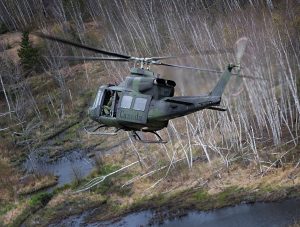
With its flight engineer seated in the portside doorway, a CH-146 Griffon helicopter from 403 Squadron flies over rugged terrain near its base in Gagetown, N.B. [Stephen J. Thorne]

The word comes in late in the evening: the president and the provisional government of “West Isles” are surrounded by a rebel force in the capital city of “Blue Mountain.” They need to be saved from the rebels if the peace-support mission in the region is to succeed. Canadian Special Operations Forces have them protected in a secure compound—and it’s time to send in the Griffons.

“The Griffons are enablers,” said Captain Nate Fenn, an instructor with 403 Squadron in New Brunswick, where aircrew train to fly the Royal Canadian Air Force’s fleet of Bell CH-146 Griffon helicopters. “Success is measured by how things go for the guy on the ground. If a corporal fails in his task because we did not do our job, that’s mission failure.”

The Griffons make up the largest fleet operated by the RCAF, with some 85 in service. They provide a fast, versatile response during military operations and civil emergencies, including terrorist incidents, humanitarian crises, UN missions, floods and fires, search and rescue, and a myriad of other tasks. In short, the Griffon is Canada’s utility helicopter.

The bulk of Canada’s Griffons belong to the RCAF’s 1 Wing, whose job is to support the army. Based in Borden, Ont., 400 Squadron handles maintenance; 430 flies out of CFB Valcartier in Quebec.; 408 is based in Edmonton; 438 calls Montreal home; 403, the Helicopter Operational Training Squadron, is in Gagetown, N.B. Griffons are also flown by 427 Special Operations Aviation Squadron in Petawawa, Ont., along with Chinooks from 450 Tactical Helicopter Squadron, also based at CFB Petawawa.

A helicopter crewman crosses the tarmac prior to a training mission with 403 Squadron. The squadron teaches newly minted pilots tactical flying techniques—low and fast, day and night, using terrain as cover. [Stephen J. Thorne]


Helicopters from 1 Wing provided essential cover and support for Canada’s mission in Kandahar, Afghanistan, in 2009-11. The RCAF deployed six CH-147D Chinooks—acquired from the United States in 2008—and eight Griffons to escort them, mainly on resupply and route surveillance missions. One of those Griffons crashed during takeoff in dusty conditions on July 6, 2009, and two Canadian and one British servicemen lost their lives. Some of Canada’s seven newer CH-147Fs—again escorted by Griffons—flew casualty-evacuation missions in Mali in 2018-19.

By tactical helicopter standards, the Griffon is pretty plain. It is, in fact, a Bell 412, which is commonly used in the oil industry, by police forces and by militaries. No big weapon pods dangle from stubby wings, and no bulky sensors mar the sleek outside of the airframe.

Some have criticized the aircraft for being underpowered, particularly when armour plating is installed, but the Griffon does have a bite. Machine guns can be mounted in the doors. In a hot operational environment, it is not unusual for a Griffon to have a C6 machine gun on one side and a .50-calibre machine gun on the other. The .50 calibre has a long reach and is very accurate. “Like a laser,” said Flight Sergeant Adam Vandenberg.

In addition, the very effective M134 Minigun—a Gatling gun capable of up to 6,000 rounds a minute—can be door-mounted or slung from beneath. As many hostile forces have discovered, messing with an operational CH-146 can produce a very nasty surprise.

Like most weapons in the Canadian Armed Forces, the secret of the Griffons’ success is the people who operate them. That starts at the basic helicopter course in Portage, Man., where new rotary-wing pilots learn to fly the Bell Jet Ranger. But that does not teach them how to fly a tactical helicopter in support of the army. That job belongs to 403 Squadron at CFB Gagetown and its Tactical First Officer training course.

Griffon pilots have to develop “good hands and feet” for tactical flying, said Capt. Jason McLinton of 403’s safety and standards flight. And they have to be able to fly fast and low, day or night. Becoming one with the machine is essential when you’re brushing treetops at 170 kilometres per hour. Other skills include flying in dispersed formation (not following directly behind another helicopter), using valleys, hills, streams and ridgelines as cover, and arriving prepared to battle an alert enemy with weapons pointing skyward.

A flight engineer in training monitors a landing from his position in a Griffon doorway. His job is to know the aircraft inside out, manage its loads, fire its weapons and, at times, guide the pilot. [Stephen J. Thorne]

Another challenge is flying in arid, almost-treeless conditions such as in Afghanistan and Mali. Landing in a dust ball cannot be learned in Canada, although landing in snow is a good simulation. Afghanistan pilots trained in Arizona; pilots in Mali learned on the job. Any way you slice it, tactical helicopter flying is not for the faint of heart.

Behind the pilot and co-pilot is the third member of a Griffon’s crew. The flight engineer runs the show in the back of the helicopter, managing loads, manning weapons, and scanning the ground and surrounding areas. When things get hot, the flight engineer fires the door gun to deal with the threat. A flight engineer’s training is actually harder than a pilot’s. Candidates must already have four to six years of experience as maintainers. They know the Griffon inside out before they become aircrew.

Landing a Griffon in a clearing not much bigger than its rotor size and airframe length requires close attention to height, drift and distance between rotor tips and trees. Flight engineers track all that, feeding the pilots a steady stream of information: “Move right ten.” “Stop.” “Back up five, four, three, two, one. Stop.” “Ten feet off the ground; five, three, one, skids on the ground.” And on it goes.

Unlike the free-for-all flying depicted in Hollywood movies, hitting time targets is an essential component of effective tactical flying. Crew members must have “a critical appreciation of timings,” as squadron commander Lieutenant-Colonel Jim Knutsson put it, to manage fuel and load against time and distance.

Helicopters landing too slowly may delay those coming in next. Arriving too early at a landing zone may alert the enemy; too late and those on the ground waiting for extraction may be at greater risk.

Anything that makes an aircraft vulnerable—such as trailing in the wash behind another helicopter—must be avoided. Pilots need to fly their own aircraft, keep a safe formation distance from others (measured in rotor length), and meet critical timings.

Equipment emergencies and dangerous tactical scenarios are integrated into the training. “Everything is a bombardment of emergencies!” said Vandenberg. More extreme situations—engine or rotor failures, for example—are practised in 403’s simulator. But every student’s training includes potentially disastrous scenarios in the air that they must master smoothly. Their instructors must have nerves of steel. Few pilots or flight engineers fail the course, but they don’t get an easy pass.

Three crews, totalling 44 people, maintain 403 Squadron’s aircraft. [Stephen J. Thorne]

The mission to extract the president of West Isles will be conducted in three distinct phases:

Phase one is a high transit to “Milsom Hill” for the aircraft rendezvous, followed by a low approach (using the topography to mask movement) to holding area “Quebec,” just short of the extraction point.

Phase two is the extraction itself—the most dangerous part. Two helicopters will land while the mission commander flies cover. If the Griffons take fire on the final approach to the landing zone, the mission commander must decide whether to carry on or abort.

Phase three is the exfiltration to forward operating base “Petersville.” That should take about 12 minutes.

All three choppers on the mission are carrying door guns. The mission commander has studied meteorology forecasts, route maps, communications plans, tactical scenarios, aircraft status and enemy threat assessments. The main threat is improvised explosive devices.

IEDs are a threat not normally associated with helicopters, but they affect the choice of emergency landing spots. Sometimes an aircrew will keep flying rather than land on what appears to the untrained eye as a nice clear stretch of road. And pilots crossing power lines will fly between the poles, not over them—Claymore mines on top of power poles can be remotely detonated or triggered by low-flying helicopters. Small arms fire is also a constant danger.

The Griffons assigned to rescue the president of West Isles will each carry 820 kilograms of fuel. (The choppers consume anywhere from 90 to 330 kilograms of fuel an hour, depending on the mission and the load.) This mission requires about 400.

The weather is good, with a high ceiling, a light northwest wind and excellent visibility. After the briefing, crews have about an hour to complete a final check of the flight plan, communications and equipment.

As the aircrew go through their final checks in the hanger, the Griffons sit, ready to go, on the tarmac.

A 403 Squadron trainee leads a briefing before a low-level training mission in southern New Brunswick. [Stephen J. Thorne]

Like all helicopters, the 5.4-tonne Griffon is a complex machine. Its twin Pratt & Whitney PT6T-3D gas turbine engines generate 1,800 horsepower on liftoff. The bulk of that power moves from the engines through a complex gearbox to the mast, into a complex rotor head and out to four 6.7-metre blades. The rest goes aft, through the boom, to the small tail rotor. Unlike conventional aircraft, the strain on helicopter powertrains and airframes is enormous. It all has to purr smoothly or the Griffon can’t fly.

Many of a Griffon squadron’s personnel, not surprisingly, are maintainers who handle almost everything themselves, short of the mandatory 600-hour check. On overseas tours, a majority of the maintenance personnel deploy as well, and they don’t travel light.

Forty-four people, organized into three crews, work on 403’s helicopters, most in two shifts between 7:30 a.m. and 11 p.m. A small cadre works into the wee hours, tackling snags arising from the day’s flying. Forty maintainers, working day and night, seven days a week, kept eight Griffons flying in Afghanistan. “It’s work, sleep and repeat, until the tour is over,” said Chief Warrant Officer Jacques Friolet.

Griffon squadrons have everything they need to keep the aircraft flying. They can cut, bend, shape and rivet any part of the airframe, using plasma cutters, lathes, casting machines and bending presses on material from aluminum to titanium. Thousands of tools of every shape and size, many highly specialized for specific jobs on the Griffon, are on hand.

Seventy tool boards and four large tool boxes line 403’s hangers. Every tool is accounted for; no one wants a wrench or a screwdriver rattling around inside the engine compartment. The squadron keeps tool kits for specialized tasks and kits ready for off-site use. For a major deployment like Afghanistan, Griffon maintainers bring everything they need. There is little—except a full engine strip-down and replacement—that a Griffon squadron can’t do for itself.

A crew of maintainers conduct diagnostics aboard a CH-146 in a hangar at CFB Gagetown. [Stephen J. Thorne]

Crew members drift onto the tarmac at around 9:50 a.m., knowing their helicopters are ready for the task ahead. Flight engineers do an external inspection while flight crews go through the communications and startup procedures. Engine start is precisely at 10. It’s a cold start, so warm-up and pre-flight checks take about 20 minutes. The takeoff and first two phases are done in radio silence: takeoff is controlled by lights from the tower: green means go.

The three Griffons lift off at precisely 10:30 and fly toward the Milsom Hill rendezvous, slated for 10:39. Measuring air speed and timing is vital from the outset. At the rendezvous, the Griffons slip into formation, with the mission commander’s chopper in the lead and the others on either side according to where their door gun is mounted. On this mission, fire is reserved for self-defence. The C6 alone will do, because space is needed for passengers.

The Griffons arrive at holding area Quebec precisely on time. The lead chopper—code-named Wolf-11—rises up to get clear communications with the special operations force at the landing zone. Wolf-12 and Wolf-13 circle low, behind the shelter of a large hill.

The order to go is received at 10:56 and the Griffons sweep over the hill and into the extraction site. Wolf-11 flies cover while Wolf-12 leads Wolf-13 to the landing zone. Skids hit the ground at precisely 11:00 and, within a minute, both lift off with the rescuees and fly directly to Petersville, the recovery site. Because they are carrying such a critical package—the president and his entourage—the mantra for this phase is “suppress, bypass and avoid” enemy fire.

Wolf-11, however, has to land last to extract five special ops personnel. It takes fire on the way out, but all three Griffons make it safely to Petersville about 12 minutes later. Mission accomplished.

The president of West Isles was rescued in a carefully planned operation carried out by well-trained personnel operating capable aircraft. For the pilot trainees, the mission is a success. For 403 Squadron, it’s just another day keeping Canada’s workhorse Griffons ready for action.

Historian Marc Milner is honorary colonel of 403 Squadron.


Griffon Upgrades

The Griffon fleet is now more than 20 years old, and it needs to keep flying. Having tactical helicopter capability is “absolutely critical to the success of the full range of military operations,” said Harjit Sajjan, Canada’s Minister of National Defence, in January.

To ensure that, the government announced it will upgrade the helicopter’s avionics, communications and navigation systems. This will extend the life of the Griffon fleet to the early 2030s, and buy time for the RCAF to plan and order its next generation of tactical helicopters.

The original supplier of the CH-146 Griffon, Bell Helicopter Textron Canada, will oversee design and development of the upgrades. Pratt and Whitney will supply new PT6T-9 TwinPac engines, which will deliver a little extra power. Work on the project—valued at some $800 million—is to start around 2022.


Stopping the panzers

A German tank commander stares down a photographer in Normandy in June 1944. His Panzer IV-G tank has 80mm frontal armour; some 8,500 Panzer IVs were built during the war. [LAPI/Roger Viollet/Getty Images/14089-9]

Canada’s role following D-Day was vital to the success of Operation Overlord

The problem with the well-known story of Canada’s role in Operation Overlord, the D-Day landings in France in June 1944, is not what it says, but what it leaves out—just about everything that matters.

In the long-familiar tale, the 3rd Canadian Infantry Division, supported by amphibious tanks of the 2nd Canadian Armoured Brigade, landed on Juno Beach. It was a tough beach assault, but the landing went well. By the end of the day, Canadians made the deepest penetration of any Allied division. The next day, Canadians cut the critical Caen-to-Bayeux road and rail link—our signal accomplishment. Further advances were thwarted by fierce German counterattacks, and the Canadians stalled for a month while the British and Americans on either flank got on with winning the Normandy campaign.

Allied commanders of Operation Overload meet on Feb. 1, 1944: (front, from left) Royal Air Force Air Chief Marshal Arthur Tedder, U.S. Army General Dwight D. Eisenhower, British Army Gen. Bernard Montgomery; (rear, from left) U.S. First Army Gen. Omar Bradley, Royal Navy Admiral Bertram Ramsay, RAF Air Chief Marshal Trafford Leigh-Mallory and U.S. Army Lieutenant-General Walter Bedell Smith. [Frank L. Dubervill/DND/LAC/PA-129050]

In fact, the Canadian Army played a central and decisive role in the planning and success of Overlord, and it did so in three ways that should forever change how we think about Canada on D-Day.

The first critical impact of the Canadian Army on Operation Overlord was its key role in the initial planning. In 1943, when British Lieutenant-General Frederick Morgan was appointed Chief of Staff to the Supreme Allied Commander and tasked with planning the invasion, First Canadian Army was central to his whole scheme. The plan called for a three-division landing north of Caen—one American, one British and one Canadian—under command of the British Second Army. First Canadian Army—supported by the fighters of No. 84 Group, RAF—was to arrive soon after the initial landing as the break-out force. Morgan’s plan was accepted by the Allied Combined Chiefs of Staff in July 1943.

Decisions made at the Quebec Conference of August 1943 changed Morgan’s plan. Under the new scheme, First United States Army would command the initial landings. First Canadian Army’s exploitation task remained, and the British Second Army was relegated to a follow-on role. So, in the fall of 1943, Overlord was planned to be a North American-led operation.

Politics then conspired to unseat First Canadian Army from its central role in Overlord. By 1943, Prime Minister William Lyon Mackenzie King’s Liberal government was under mounting pressure from the electorate to get the Canadians fighting, like everyone else. Instead, Canadian soldiers languished in garrisons in England, waiting for their big day. The government blamed the commanding officer of First Canadian Army, General Andrew G.L. McNaughton, for resisting offers to send Canadians troops to combat theatres. It did not help that the Minister of National Defence, Colonel J.L. Ralston, hated McNaughton, while many senior Canadian officers also wanted him gone.

In fact, King and Ralston had to press hard to insert 1st Canadian Division and 1st Canadian Armoured Brigade into the landings in Sicily in July 1943, but that brief campaign brought little respite from public unrest. When Ralston approached the Chief of the Imperial General Staff, General Alan Brooke, in July about getting rid of McNaughton, Brooke warned that the only way to do so was to break up his army.

Sitting on an M10 tank destroyer aboard a Rhino ferry, members of the Royal Canadian Artillery approach Bernières-sur-Mer, France, on June 6, 1944: (from left) Gunner B. Long, Bombardier M.B. Farrell, Gunner C. Henderson, Sergeant G.A. Chappel, Lieutenant W.E. Lee and Gunner M. Dowhaniuk. [Ken Bell/DND/LAC/PA-137523]

Four federal byelections and a general election in Ontario went against the Liberals in early August. At the Quebec Conference that month, Ralston pressed for the dispatch of another division and a Canadian Corps headquarters to Italy. Brooke cautioned that none of these could be returned from Italy in time for the attack on France in the spring of 1944. The Canadian government accepted that, and the 5th Canadian (Armoured) Division and I Canadian Corps headquarters were ordered to Italy.

In the fall of 1943, McNaughton remained content to command a joint Anglo-Canadian army in the breakout role. For Brooke—indeed for the British government—this was intolerable, and so Brooke continued to work with Ralston through the fall to remove McNaughton. When this was finally accomplished in early December (on medical grounds), First Canadian Army was not only broken, it was now rudderless. Britain’s I Corps absorbed 3rd Canadian Division for the invasion and any chance of a high-profile Canadian role in Overlord was gone.

In any event, it is doubtful that a lead role for Canada in Operation Overlord would have survived. When General Bernard Montgomery and General Dwight D. Eisenhower assumed command of Overlord, they dismissed Morgan’s plans and adopted a five-division assault with First United States Army and British Second Army landing side by side. First Canadian Army now became the follow-on force. Given the pressure of inter-Allied politics and the ultimate importance of the landings to the prestige of Great Britain, Operation Overlord could never have been an American-Canadian operation.

The second critical Canadian impact was that First Canadian Army did not fade from the Overlord picture. It appears that the Germans were watching them as an indicator of Allied intent—as they had in the Great War. So, the Canadians played a key role in Operation Fortitude, the D-Day deception that took place in early 1944. In fact, contrary to popular wisdom, American General George S. Patton was not visible in the initial phase of Operation Fortitude; First Canadian Army was the beating heart of that initial deception.

Part of the D-Day deception plan, Operation Fortitude included a fictitious army stationed in southern England and mimicking a large-scale invasion force aimed away from Normandy. This included inflatable tanks (below) and dummy landing craft. [Imperial War Museums/H 42531]

Fortitude South, a hypothetical landing slated for the Pas-de-Calais region, had First Canadian Army headquarters and II Canadian Corps as the key formations in a notional First U.S. Army Group (FUSAG). Canadians organized and ran the radio deception operations, which began in late April 1944, and First Canadian Army constituted the initial assault force in the FUSAG attack plan. The group dragged its feet (very publicly) in the sea along the coast of Kent—opposite the French port of Calais where the Germans expected the main assault—while II Canadian Corps harboured the turned agents who provided faulty information to German intelligence.

When the Normandy landings began on the morning of June 6, Germany’s immediate fear was that it was a feint and a prelude to main landings in the Pas-de-Calais and the Netherlands’ Scheldt River estuary.

First Canadian Army had been doing a staff work-up for a Scheldt landing—something the British had done in September 1914—since the summer of 1943. These efforts were supported by II Canadian Corps with amphibious training exercises in England’s muddy and tide-swept Medway River (conditions similar to the Scheldt) in the days immediately following D-Day.

On June 8, two days after D-Day, 2nd Canadian Division prepared all its vehicles for a landing. The next day, newspapers in Hamburg reported that a Canadian-British landing in northern France or the Scheldt was imminent. On June 10, in response to these reports, 1st SS Panzer Division and the Panzer regiment of 116th Panzer Division, already moving to the Canadian front in Normandy, were diverted to the Pas-de-Calais.

Patton was announced as the commanding officer of FUSAG on June 12. Until then, First Canadian Army had been the purveyor of the deception that fixed 15th German Army and much of the available armour in the Pas-de-Calais, more than 300 kilometres northeast of the Normandy beaches.

Members of the Sherbrooke Fusiliers work at waterproofing their Sherman tanks in England in April 1944. [Donald I. Grant/DND/LAC/PA-188676]

The third impact was 3rd Canadian Division’s extraordinary role in Overlord—its task was vital to the success of the whole operation. The Canadians went to Normandy to stop the only thing that could defeat the landings: a Panzer counterattack.

The origins of this lay in Morgan’s plans of 1943. Morgan and his staff identified two areas over which Germany might launch its Panzer divisions to destroy a landing between Caen and Bayeux. The first was northeastward from Bayeux along the flat, open crest of the Sommervieu-Bazenville ridge toward Courseulles-sur-Mer. The second was over the open countryside astride the Mue River northwest of Caen, which also culminated at Courseulles-sur-Mer.

In the three-division assault of the Morgan plan, 3rd Canadian Division was to hold the western end of the Sommervieu-Bazenville ridge. When Montgomery expanded the landings to five divisions, and included Sword Beach to the east, the Canadian assault was shifted to Juno Beach and the vulnerable Mue River area. This was where the major Panzer counterattack was now anticipated.

Only Germany’s Panzer divisions could repel the Allied landings. Lessons had been learned at Gela, Sicily, in July 1943, when the Americans were nearly driven into the sea by Axis armour, and later at Salerno, Italy, when Panzer Grenadier forces nearly achieved success. Two scenarios seemed likely for Normandy: a quick attack within days of the landings (like Gela and Salerno) to throw them back before they could get established, or a deliberate—and longer delayed—attack with more powerful forces. The commander of German coastal defences, Field Marshal Erwin Rommel, favoured the quick attack, others preferred to let the Allies get ashore and then destroy them in a mobile battle. Either way, stopping the Panzers counter-attack was the key to securing Overlord.

As planning coalesced in early 1944, the critical nature of the Canadian role became clearer. The 3rd British Division and 6th British Airborne Division on Canada’s left were to secure Caen and the crossings over the Orne River and canal to prevent German armour using the great open plain north of Caen to roll up against the landings from the east. To Canada’s right, 50th British Division was to secure Bayeux and prevent its road hub being used to support armour on the Sommervieu-Bazenville ridge. If all this went according to plan, that left only the plains on either side of the Mue River open for a powerful German Panzer thrust to the sea.

If there was any doubt about German intent and the importance of the Mue River, Rommel’s intentions clear that up: he wanted four Panzer divisions ready to strike down the Mue River in May 1944. He very nearly got his wish: three were there on June 8.

The order given to 3rd Canadian Division for the opening phase of Operation Overlord confirms their role: stop the counterattack. The simplicity of the instructions issued to the Canadians in early March 1944 masked their significance. Instructions to defeat counterattacks were pretty generic by this stage of the war, but the context of this one is clear. While formations on either side of the Canadians were to secure their sectors against local counterattacks, including attempts by the Germans to recapture Caen or Bayeux, 3rd Canadian Division was to establish itself in fortress positions astride the Mue River around Carpiquet, Putot-en-Bessin and Bretteville-l’Orgueilleuse, and defeat the “probable” enemy counterattack.

As a result, 3rd Canadian Division landed as the single most powerful Allied formation in Operation Overlord: it came loaded up to defeat the Panzers. The Royal Canadian Artillery’s 12th, 13th and 14th field regiments and its 3rd Anti-Tank Regiment, along with the 2nd Canadian Armoured Brigade, brought to bear an enormous accretion of firepower.

The three field regiments, as well as the 19th Field Regiment attached for the assault, were all re-equipped with American M7 Priest 105mm self-propelled guns. This added enormous mobility, while the attendant command and observation-post Sherman tanks added the equivalent of an entire armoured regiment to the Canadian order of battle. In addition, three British artillery regiments were assigned to the 3rd Canadian Division, giving the division twice its normal allocation of field guns (144 instead of 72) plus 16 4.5-inch guns.

When all was said and done, 3rd Canadian Division wielded more firepower than any other Allied division in Operation Overlord—and they needed it. The final intelligence estimate on German tank strength, issued in late May, revealed that 550 German tanks were deployed between the Seine and the Loire rivers, and half of them were believed to be Panthers or Tigers. Worse still, 500 of these tanks were estimated to be in the sector of 1st British Corps around Caen. With the British—in theory—secure in Caen and along the Orne, the Canadians’ job was to stop these tanks from reaching the beach across the open ground west of Caen.

The assault and the days following it did not, of course, go precisely as scripted. The first major Panzer counterattack on 3rd British Division was launched by 21st Panzer Division late on the first day. It was seen off smartly, but the threat remained.

Thanks to Operation Fortitude, indecision about the meaning of the Normandy landings caused a delay in the deployment of 12th SS Panzer Division Hitlerjugend (Hitler Youth). When it arrived on June 7, its preparation for an attack to the sea west of Caen was pre-empted by the advance of 9th Canadian Infantry Brigade down the east side of the Mue River. A bloody and ultimately stalemated battle developed around Buron and Authie, which resulted in the Canadians abandoning the attempt to get to Carpiquet and settling for a fortress position at Villons-les-Buissons, north of Buron.

To the west of the Mue River, 7th Canadian Infantry Brigade had time to assume its fortress position around Putot-en-Bessin and Bretteville-l’Orgueilleuse on June 7. As 12th SS probed and prodded the Canadian line along the Caen-Bayeux highway on June 8, the elite Panzer Lehr Division—the second most powerful German Panzer division—deployed in front of 7th Brigade. The moment was ripe for a massive Panzer thrust to the sea, but the German high command fumbled it. By the time Rommel arrived on his first visit to Normandy—to the Canadian front on the Mue River—12th SS had not yet cleared the start line for the attack. It was decided to wait for 1st SS Panzer Division and the Panzer Regiment of 116th Panzer Division to arrive before launching the assault to the sea.

In the meantime, Panzer Lehr was shifted west to stop the British drive south from Bayeux, and 12th SS was ordered again to clear the Canadians out of their fortresses.

As 12th SS launched more futile attempts to dislodge the Canadians, word was received of an imminent (but false) Anglo-Canadian landing in the Pas-de-Calais or the Scheldt. 1st SS Panzer and the tanks of 116th Panzer Division were diverted to the northeast to meet the new threat, and the Panzer counterattack was postponed indefinitely.
The Canadian Army could never have won the Normandy campaign by itself, but it was certainly critical to Operation Overlord’s success.

Infantrymen from the Canadian Infantry Brigade examine a disabled Panzer V tank near Authie on July 9, 1944. [Harold G. Aikman/DND/LAC/PA-114367]