

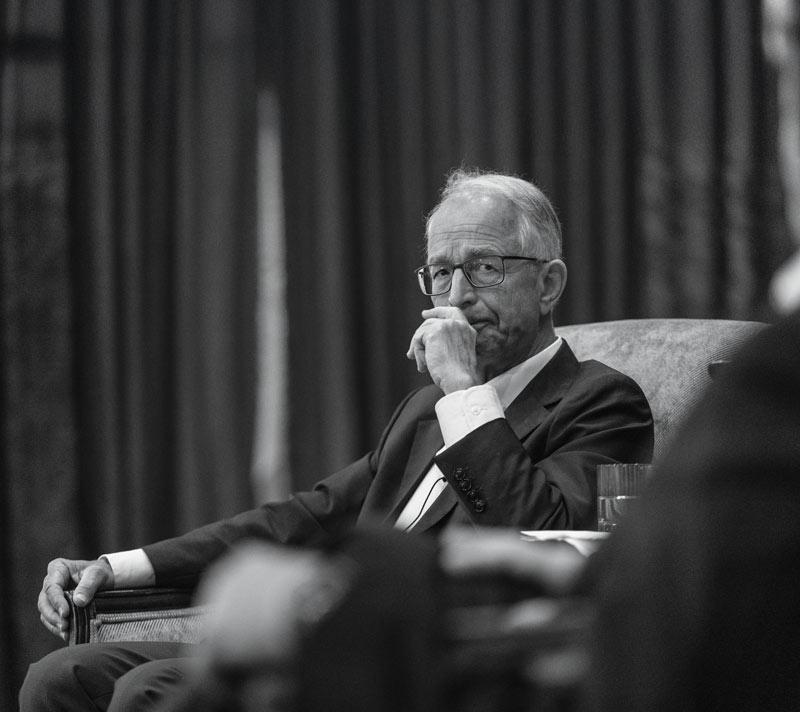
First appointed in 2019, Field Marshal The Lord Richards of Herstmonceux will continue as the organization’s grand president [Stephen J. Thorne ]
The Royal Commonwealth Ex-Services League (RCEL) has been helping veterans in the Caribbean, Africa, Australasia and the Indian subcontinent since 1921.
Wars, and a commitment to underserved veterans throughout the Empire and Commonwealth, kept it going. The RCEL has provided support to hundreds of thousands of ex-service personnel and their spouses in the form of welfare grants for the equivalent of two meals a day. It has also provided pension advice, assisted with moves to other countries, traced lost relatives, and helped with money transfers and disability claims.
More than three million citizens of the Empire fought for king and country between 1914 and 1918; 440,000 became casualties. Another 4.5 million from the Indian subcontinent, Africa and the Caribbean joined the fight between 1939 and 1945; 360,000 were killed, wounded or captured.
Their governments didn’t always acknowledge their sacrifices and hardships. There was no shortage of need for such an organization in the farthest reaches of the Empire and, so, the RCEL stepped in.
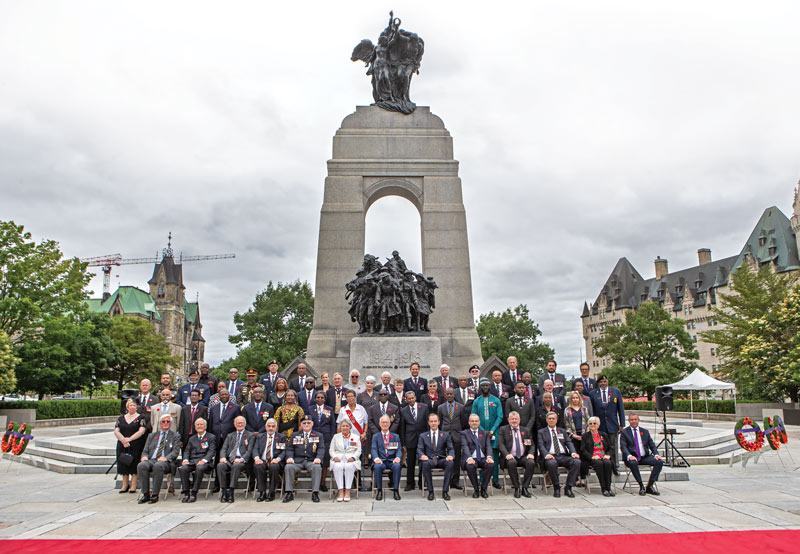
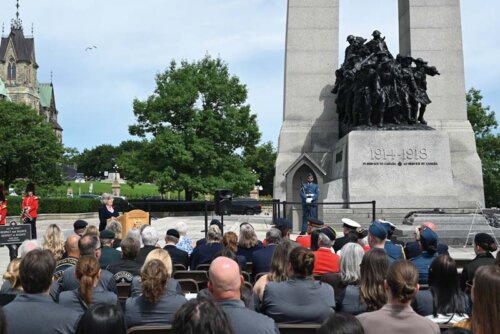
The Royal Commonwealth Ex-Services League (below) met in Ottawa for its 35th conference. Delegates from many of its member countries attended two memorial services at the National War Memorial. [Stephen J. Thorne/LM]
But the wars have mercifully become fewer and farther between, and evolving ties to Britain, its empire relegated to history have, with the passage of time, eroded the League’s client base. Indeed, its days appeared numbered the last time the RCEL’s 52 member organizations from 48 countries met in London, England, in 2022.
At that time, it was responsible for some 4,580 pre-independence veterans and widows, the bulk of them in Pakistan, Uganda and Zimbabwe. It was estimated that some 3,600 beneficiaries would need support for up to five years, after which it was anticipated the RCEL would hold its last conference and wrap things up.
It secured a three-year funding extension—six million British pounds (about C$11 million)—for its veterans’ program from Britain’s Foreign, Commonwealth & Development Office, enabling the RCEL to aid veterans and their widows. The money is set to run out in March 2027.
A June-July 2025 conference, its 35th and possibly last, was held in Ottawa. But sources at the event told Legion Magazine that unanticipated developments inspired RCEL leadership to reconsider its expected demise.
After 104 years, word had apparently gotten out and new clients were emerging. Existing clients were living longer than expected. More than half its client base are widows. The demand suddenly wasn’t shrinking anymore; it was expanding.
So much so, that a pared-down RCEL now plans to ask the development office for 10 years’ worth of funding to take its programs through 2037. It will likely hold at least one more conference, probably in London, officials said.
A pared-down RCEL now plans to ask the development office for 10 years’ worth of funding to take its programs through 2037.
The Ottawa conference host, Royal Canadian Legion President Berkley Lawrence, a 33-year veteran of the Royal Canadian Corps of Signals, told the group assembled at the city’s stately Château Laurier hotel that the new course of action was making it difficult to plan with financing unconfirmed and the future uncertain.
Lawrence called it “a moral obligation to continue the funding.”
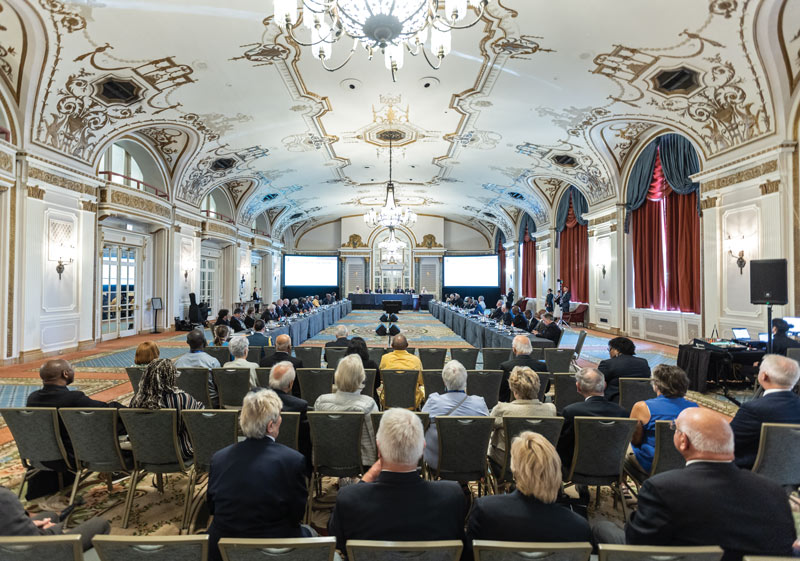
Delegates attending the sessions at Ottawa’s Château Laurier decided to continue the RCEL’s work for up to a decade beyond its current mandate. [Stephen J. Thorne/LM]
“What would happen to our reputation as the RCEL and the British government if we stopped supporting our veterans?” he asked.
RCEL grand president, Field Marshal The Lord Richards of Herstmonceux, assured delegates that leadership was confident Britain’s Labour government wouldn’t go against its core principles and decline the organization’s funding request.
“Just to reassure you,” said Richards, “we are ready to preserve this voice,” adding he is “reasonably confident” all will go as planned. He urged Lawrence to “exert similar influence” where he could.
The Royal Family have been strong supporters of the league. King Charles III succeeded his mother, the late Queen Elizabeth II, as its patron. Charles’ father, Prince Philip, was grand president for more than 40 years—and not just in name; he was a regular at working meetings. In 1982, the organization launched the Prince Philip Appeal for Commonwealth Veterans.
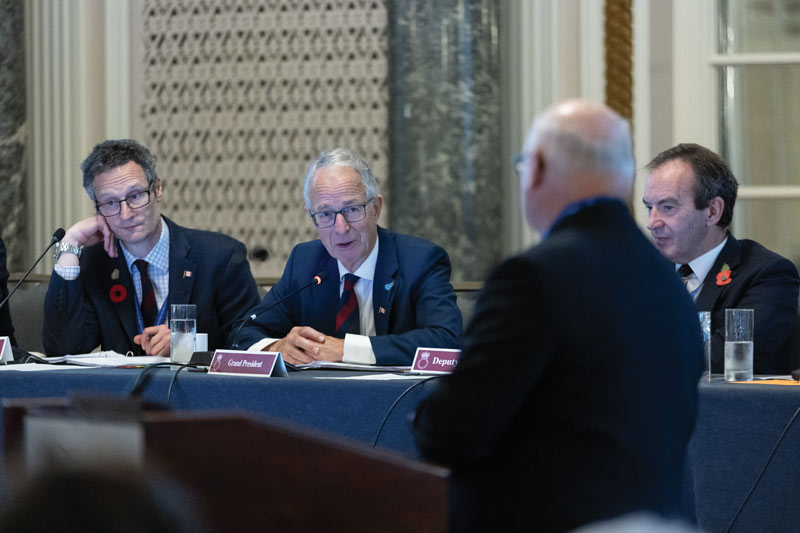
The conference host, Royal Canadian Legion President Berkley Lawrence, delivers a report on its work in the Caribbean. [Stephen J. Thorne/LM]
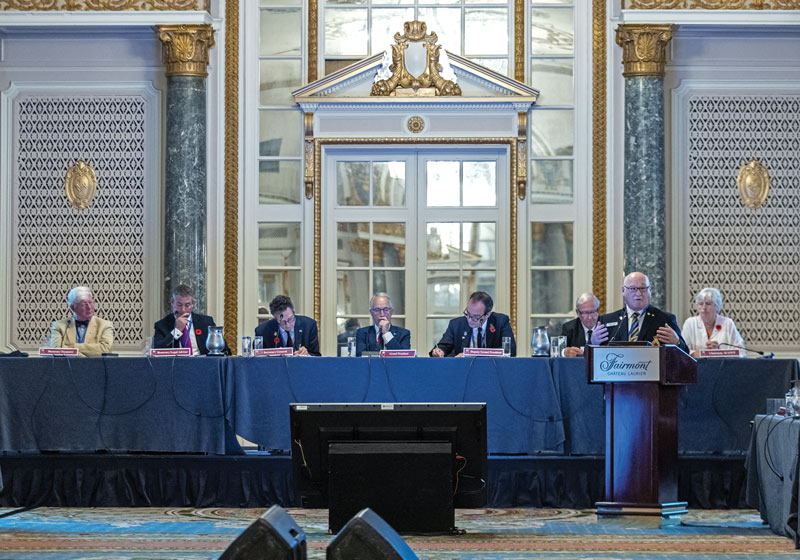
The Royal Canadian Legion has co-ordinated and assisted member organizations in the Caribbean through its RCEL Welfare Fund since 1966. It also provides an annual grant to the Curphey Home, a Jamaican veterans’ facility, and supplies nine Caribbean countries with remembrance materials, such as lapel poppies, each year.
Legionnaires across Canada likely know the RCEL best for the collections taken on its behalf at the provincial commands’ biennial conventions. The Legion president and executive director conduct welfare monitoring of RCEL activities in the Caribbean and make evaluation visits every two years.
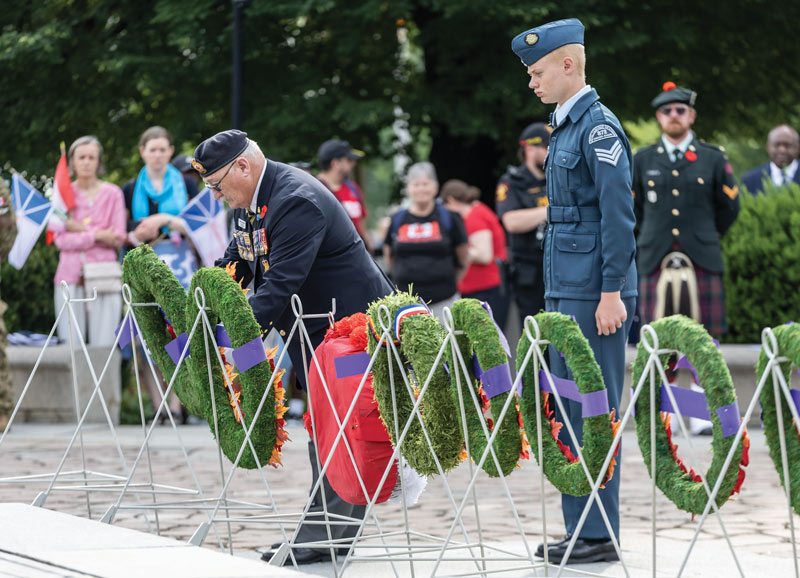
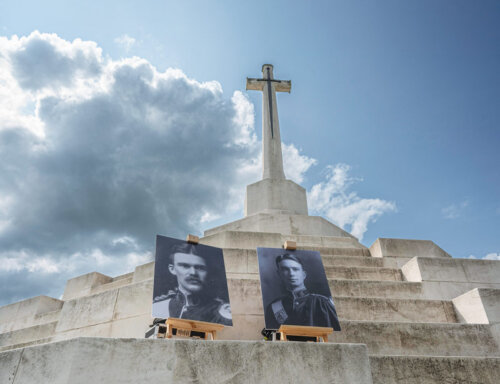
Accompanied by Air Cadet Sergeant Simon Wright, RCL president and military veteran Berkley Lawrence, a Newfoundlander whose grandfather was wounded at Beaumont-Hamel in 1916, places a wreath on Newfoundland’s Memorial Day, July 1, 2025. [Stephen J. Thorne/LM]
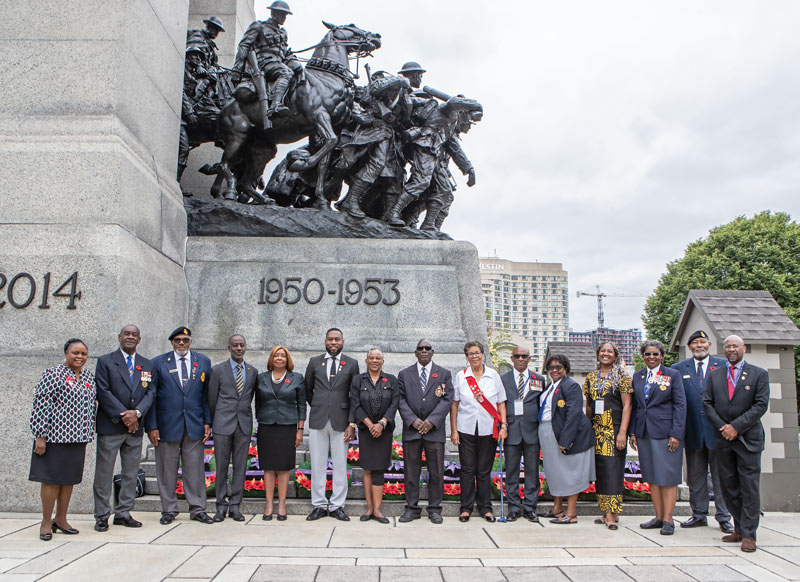
The Legion’s partners in caring for Caribbean veterans and their spouses gather at the cenotaph.[Stephen J. Thorne/LM]
“Just to reassure you, we are ready to preserve this voice.”
Advertisement