






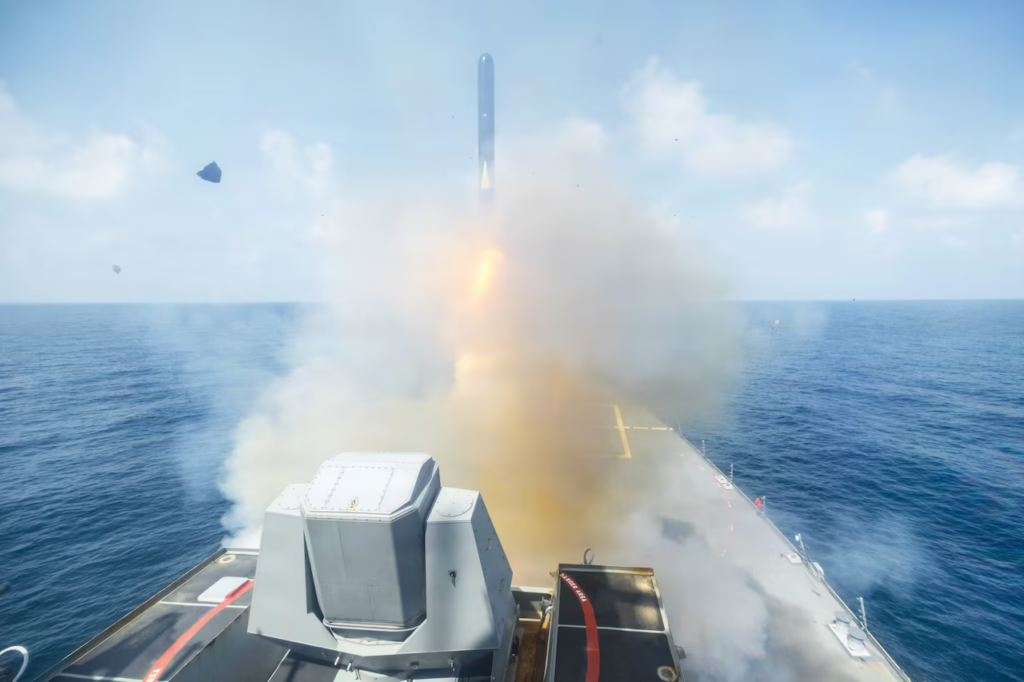
The destroyer USS Spruance fires a Tomahawk missile in support of Operation Epic Fury against the Iranian regime in the U.S. Central Command area of responsibility on Feb. 28, 2026. [U.S. Navy]
“War? Whoever called this a war?” said cast member Colin Jost in a parody of U.S. Defense Secretary Pete Hegseth. “This isn’t a war,” said Jost as Hegseth. “It’s a situationship. We’re just going to hook up and see where it goes.”
As Gal Beckerman observed in The Atlantic, President Donald Trump and his supporters “have been twisting themselves into semantic pretzels” to describe what’s happening in Iran.
In Trump’s eight-minute video address posted to Truth Social on Feb. 28 announcing U.S.-Israeli air strikes, he said he was launching “major combat operations in Iran.”
Days later, House Speaker Mike Johnson insisted “we’re not at war right now,” but instead, his country was on a “very specific, clear mission—an operation. Operation Epic Fury.”
Trump and others have since let their guard down, using “war” from time to time when speaking about Iran. But their overall reluctance to label this a war is hardly surprising—it fits a long pattern of political leaders showing a profound aversion to the use of the dreaded three-letter word.
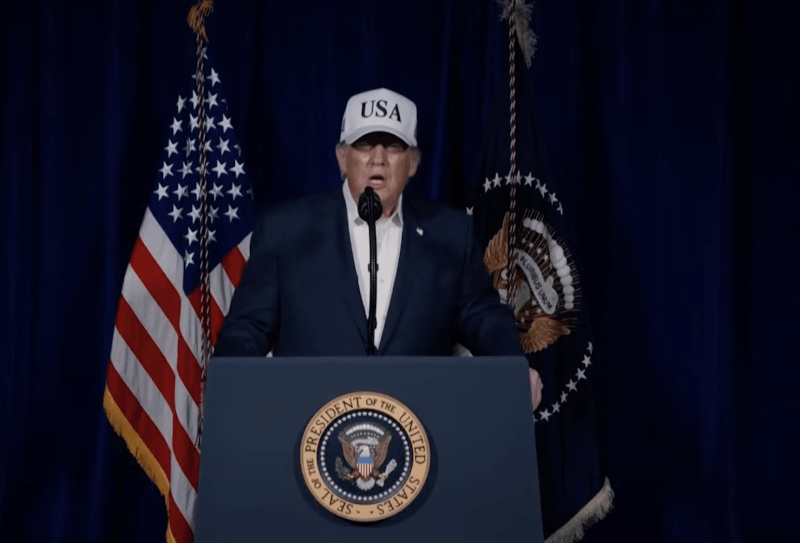
A still from Trump’s Feb. 28 video posted to Truth Social announcing U.S. military operations in Iran. [PBS/Youtube]
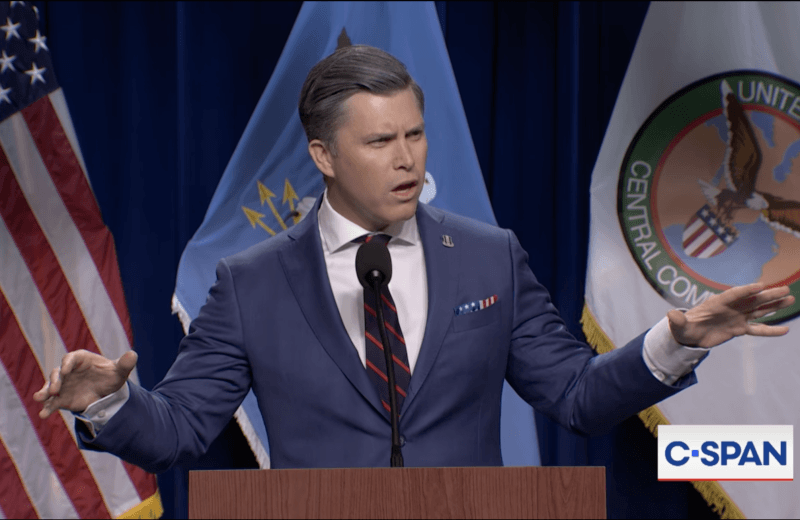
A still from the March 8 episode of Saturday Night Live featuring Colin Jost as Pete Hegseth on the “situationship” in Iran. [Saturday Night Live/C-SPAN]
This kind of devious wartime wording might trace its origins back to 1950 and the Korean War, officially labelled a “police action” by U.S. President Harry S. Truman’s administration as a way of circumventing a formal declaration of war by Congress. Instead, Truman opted for a UN Security Council resolution to endorse a U.S.-led coalition aimed at repelling North Korea’s invasion of South Korea.
The so-called “police action” turned into three years of bloody combat and the death of roughly three million people. Tens of thousands of Canadians served in Korea and more than 500 died. Those that came home struggled for years against the public perception that they hadn’t fought in a real war.
A decade later in Vietnam, it was clear to everyone that a war was underway—the nightly TV footage and the body counts made that obvious. Yet despite the loss of 58,000 American casualties, “the Vietnam War is, technically speaking, not considered a war in the United States,” according to Encyclopaedia Britannica, because Congress never formally declared war on either North Vietnam or the Viet Cong.
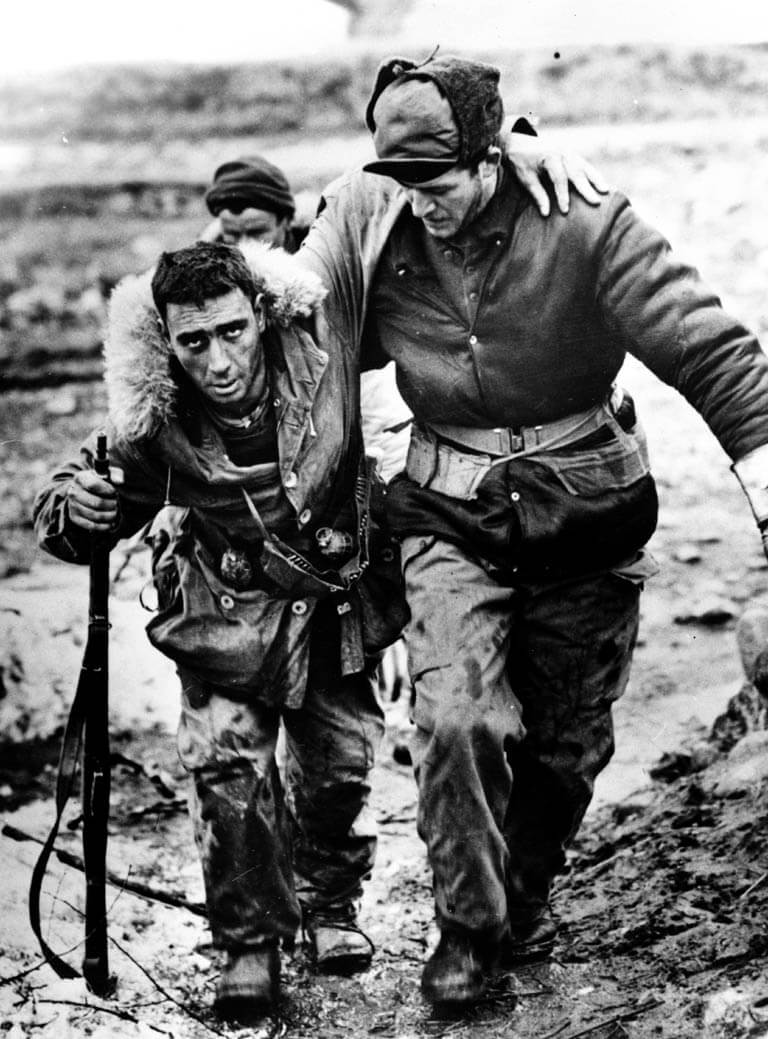
Canadian rifleman Private Morris J. Piche of the 2nd Battalion, Princess Patricia’s Canadian Light Infantry, is helped to an aid station behind the Korean front lines by Lance Corporal W. J. Chrysler during the Battle of Kapyong in April 1951. [Imperial War Museum/KOR 652]
In both the “war on drugs” and the “war on terror,” political leaders also sought to communicate the intent for an unequivocal outcome: “There was a message being delivered—we are going to expunge this particular problem,” said Jon Greenberg, a faculty member at the U.S.-based Poynter Institute for Media Studies. “That was part of the rhetoric, part of the promise.”
Likewise, said Greenberg, when leaders deliberately avoid the W-word to describe an armed conflict, they do so to sidestep expectations for a specific outcome, including victory.
“If you believe we’re at war, then you are more likely to say, ‘We’re going to win.’ The word ‘war’ carries a defined, desired end point,” said Greenberg. In using the phrase major combat operations, “you give yourself more flexibility on what the end point looks like. That’s part of the way language works.”
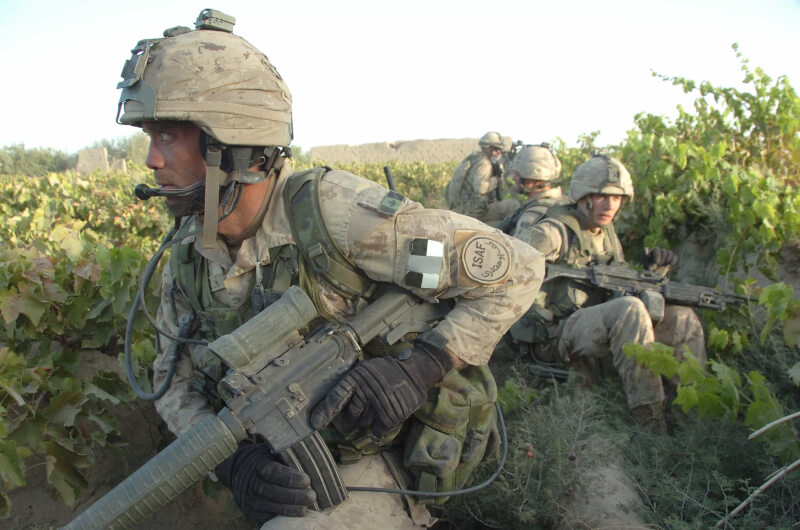
Canadian soldiers pause in a grape vineyard during Operation Medusa, part of the September 2006 Battle of Panjwaii in Kandahar, Afghanistan.
[Department of National Defence, AR2006-P005-0031]
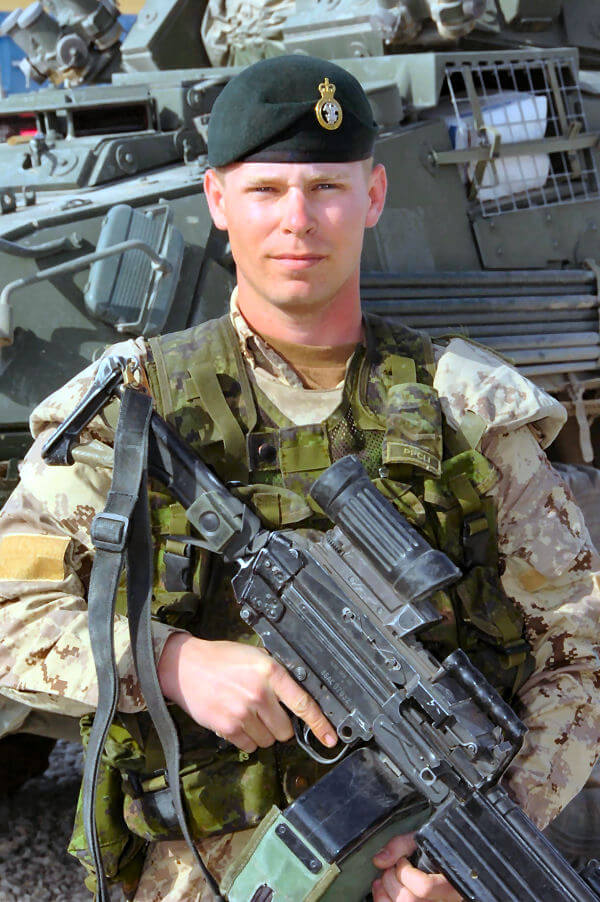
Private Robert Costall of the 1st Battalion, PPCLI, was killed in a firefight with insurgents in northern Helmand province, about 110 kilometres northwest of Kandahar, on March 28, 2006. [Veterans Affairs Canada]
It wasn’t until Canadian troops began dying at a steady rate in Kandahar in the spring of 2006—arguably starting with the death of Private Robert Costall in a firefight with the Taliban—that Canadians accepted the hard truth that their country was involved not in a “conflict,” a “reconstruction mission” or an “operation,” but a straight-up war.
It wasn’t always like this. Countries and city states once simply called wars what they are, with an unspoken agreement that a formal declaration of war would proceed the start of any hostilities.
“This tradition goes back to antiquity, and also has roots in medieval chivalry,” wrote Katja Ziegler, a professor of international law, in the online journal The Conversation.
The practice of declaring war fell out of favour after the Second World War, said Ziegler, when newly codified international law—specifically the UN Charter—prohibited all use of armed force between states except in the narrow cases of self-defence or others authorized by the UN Security Council.
“War has essentially become entirely unlawful and formal declarations of it are therefore highly unlikely, since they would only risk legal sanction,” said Ziegler. Today, “calling war by its common name has volatile political and emotive consequences.”
War and truth have always been like oil and water. But when countries go to war today and fail to meet even the basic requirement of saying so, Jon Greenberg urges citizens to arm themselves with a healthy supply of skepticism.
“Facts,” he said, “are slippery when bombs, drones and missiles are flying.”
Advertisement