


In the aftermath of the First World War and its horrific trench warfare, the German military developed a new doctrine of smashing enemy defensive lines with columns of armour and then racing into their rear areas to create chaos.
In the beginning at least, this strategy worked pretty well. It was called blitzkrieg and, during the early days of the Second World War, it helped the Germans take huge amounts of territory faster than anyone imagined possible. (As it turned out, taking territory with fast-moving armour was one thing, but holding onto it was a much more difficult tactical problem).

A blitzkrieg is a highly mobile form of infantry and armour, working in combined arms. (German armed forces, June 1942)
Now in Iraq and Syria, ISIS has revived the spirit of blitzkrieg to create a new kind of jihadi fighter for this new war.
It makes sense given that much of the battleground in Iraq and Syria has devolved into something that often looks like the First World War, complete with trenches and barbed wire and anti-tank obstacles.
Reports indicate that this new kind of Jihadi is called an inghamasi, from the Arabic word ghamas, meaning “to plunge.” In an information-rich essay by the U.S. Small Wars Journal, John Rowley reports that ISIS recruits are now given three options when asked what role they want to play.
“’Do you want to be a muqatil (fighter), istishhadi (martyr i.e. suicide bomber) or an inghamasi (plunging fighter)?’” reports Rowley.
The inghamasi are tasked with driving armoured vehicles directly through enemy lines in order to create breakthroughs and cause chaos. One difference from Wehrmacht doctrine, however, is that the inghamasi are not expected to survive.
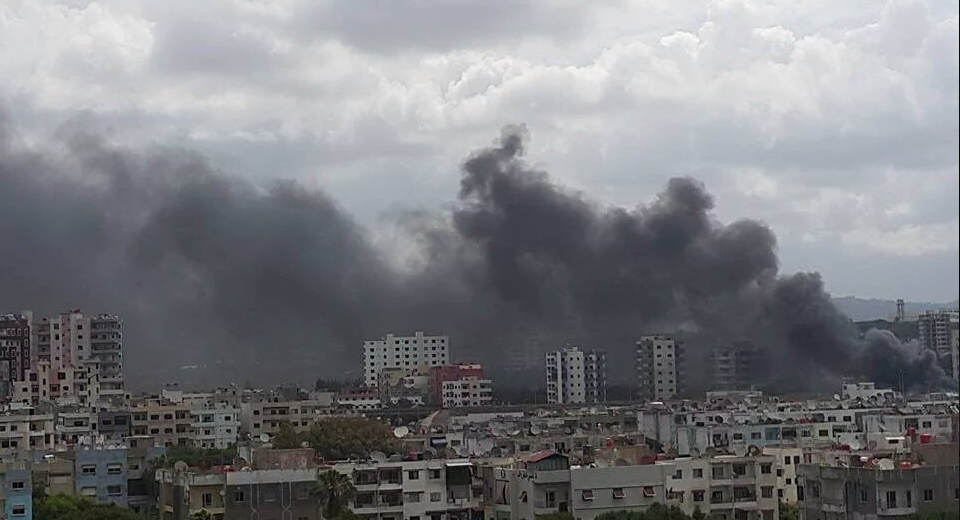
Syria city of Jableh in Latakia targeted by militant rockets on May 23,2016. [Twitter Aldin Abazovic @Ald_Aba]
Receive Front lines directly to your inbox. CLICK HERE to sign up for FREE!
Advertisement








An interesting idea, but somewhat muddled writing: While both parties seem to share some battle-field tactics there’s not much else they have in common. And to say the territory looks like WW1 puts the NAZIs in the wrong war. Also I’d disagree that any kind of fanaticism is a sign of fascism—all kinds of political and religious beliefs have fanatical followers. I know a fanatical stamp collector.