A Cornish toast to historian Tim Cook

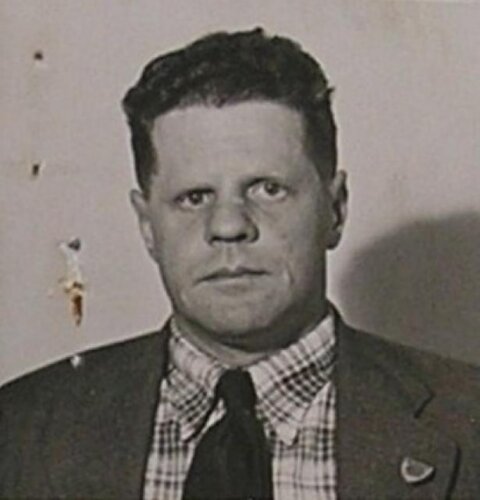
A portrait of historian and author Tim Cook

Historian Tim Cook was a frequent contributor to Legion Magazine. He died on Oct. 25, 2025. 
[Marie Louise Deruaz]

The traditional Cornish fishing village of Mevagissey, situated on the west coast of England, seemed like as good a place as any to discover the works of Canada’s “preeminent military historian” Tim Cook. It was a pleasant enough day, just after Christmas, while outside, parting clouds and a tame ocean breeze presented prime conditions for exploration—to amble along cobbled streets, to frequent ye olde pubs, perhaps even to trek through the hills bound for oh-so-near Pentewan.

The urge, however, was absent. Quayside saunters and savoured pints could wait. Far more tantalizing was Cook’s newly unwrapped tome, The Necessary War, Volume 1: Canadians Fighting The Second World War: 1939-1943, a gift from a bemused father-in-law wondering why a Brit would desire such a seemingly obscure read.

That a two-birds-one-stone approach might have been taken by dropping into The Fountain Inn for both brew and book did not register. The curious excitement for immersing myself in a relatively unknown tale, of indulging my Canadaphilic tendencies with an overarching love for military history, had become irresistible.

The Necessary War proved to be a necessary venture. I devoured it.

It would be the first of many such titles within Cook’s illustrious oeuvre, the awakening of a passion that had evidently lay dormant for too long. With each new book added to my already groaning shelves—At the Sharp End, Shock Troops, Vimy, Fight to the Finish— I soon realized that I wanted to follow his example.

I soon realized, too, that he was far more than a name on a dust jacket.

It was borderline beggar belief—at least in my mind—when the chief historian and director of research for the esteemed Canadian War Museum agreed to speak with a small-time, small-town British freelance writer about the Dieppe Raid for a U.K. history magazine.

It was part of his job, of course, to be interviewed by journalists and other authors, to highlight Canada’s wartime story as he did so eloquently in every single book. Simply, however, I never dreamt that I might be one of them.

Cook spoke as he wrote. These were not blocks to be plotted and prodded on a map in Churchill’s war rooms; these were men. Quebecers and Saskatchewanians cut down on bloodied Dieppe shingles, 916 of whom were destined never to come home. The blow-by-blow battle was there, as was unmistakably imperative, but in Cook’s retelling of the human cost of Operation Jubilee, the story came to life.

As The Necessary War was the first of many titles I read of his, so my Dieppe Raid feature was the first of many such interactions I had with the renowned researcher, who held a doctorate in history. Whether requesting 50-word quotes for freelance articles or full-blown interviews for Legion Magazine, Cook donated his time, blending professionalism with compassion and genuine interest in one’s career trajectory and broader well-being. In doing so, he made me feel like Walter Cronkite.

If only I had told him as much.

The blow-by-blow battle was there, as was unmistakably imperative, but in Cook’s retelling of the human cost of Operation Jubilee, the story came to life.

Perhaps Cook knew, or one can only hope he knew, the enormous impact he had on the Canadian military history world—and, by extension, those who shared his boundless passion—prior to his passing on Oct. 25, 2025, at age 54.

“He was instrumental in shaping the Canadian War Museum we know today,” said its President and CEO Caroline Dromaguet in a statement announcing his loss, remarking that he was a “passionate ambassador” for the institute—and for most ardent admirers.

Of the latter, he unquestionably had masses.

“I first met Tim Cook in 2006,” wrote Alex Souchen, an associate professor for the University of Guelph’s department of history and a former Canadian War Museum volunteer. “I was a wide-eyed undergrad who wanted to be a military historian ‘just like him.’”

“I remember him smiling at the compliment,” Souchen added of his earliest chat with the researcher, “but still taking the time to talk to me about career prospects.”

Equally, it seems, Cook’s personability extended to fellow scholars. “He was one of the country’s very best historians,” observed colleague and aviation specialist Mike Bechthold, “and an even better person.”

Alex Fitzgerald-Black, Juno Beach Centre’s executive director, echoed the sentiment by asserting that “he leaves behind a legacy of work that has done veterans proud.

“His passing is a huge loss for Canada.”

“He was one of the country’s very best historians, and an even better person.”

The now, sadly, former chief historian of the Canadian War Museum maintained a distinguished career within the institution for some 23 years; contributed hundreds of articles to myriad publications, including Legion Magazine; delivered an untold number of presentations, public addresses and, of course, interviews; won numerous accolades, not least the Ottawa Book Award for literary non-fiction and the J.W. Dafoe Book Prize; was recognized with the Queen Elizabeth II Diamond Jubilee Medal; and was named to the Order of Canada for his services to Canadian military historiography, both as a scholar and the bestselling author of 19 books.

Nevertheless, it was beyond his objective achievements that I found my greatest admiration for Cook. He was ever-kind and always patient—even with a starstruck and tongue-tied British writer. He provided insights that inspired in unexpected ways, often by seamlessly weaving big picture with small. And he earned the respect of his peers in everything he did.

The reality, however, is that I can’t pretend to have truly known Cook. Such a right is reserved for others, from his loving family, including a wife and three daughters, to a multitude of friends and colleagues. But nor was he merely another famous writer on my groaning shelves.

Cook’s influence on my own life was, is, and will continue to be significant. And I’m confident that his same influence extends to numerous admirers, both those who came before and, mark these words, those who will come long after.

The next time I’m in Mevagissey, a Cornish pint will be raised for Tim Cook.


Fine dining

Cumulogranitus: Air force slang for one of those pesky clouds with a mountain inside.

Stan Heather of Toronto sends this story. In June 2012, 34 WW II veterans flew to Britain for the dedication and unveiling of the Bomber Command Memorial in London.

On their first evening, four of them decided to go to a fine dining establishment. They found a beautiful restaurant and listened as the waiter outlined the specials. One of the patrons mentioned, “I’d love fish and chips.” Everyone, including the waiter, laughed.

When the food arrived, under silver domes, the first dish unveiled was an order of fish and chips, complete with mushy peas. The restaurant had dispatched someone to a chip shop down the street to bring back a special dinner. It was much enjoyed.

The perils of recruit school. The sergeant looks over a gaggle of new soldiers.

“Anybody here interested in music?”

After a pause, two hands rise tentatively.

“I play guitar, sergeant,” says one rookie.

“Me, too, sergeant,” says the other.

The sergeant’s eyes light up. “Great. Get down to the mess on the double. They’re waiting for you to move the piano.”

Aircraft manufacturers have tended to christen their products with catchy names like Spitfire, Thunderbolt and Hellcat. The people who fly them, on the other hand, have tended to apply their own labels. Often, their nicknames are less than complimentary. Here are a few labels given to planes flown by the Royal Canadian Air Force at one time or another.

Dollar 19, the C-119 Flying Boxcar, 1950s.

Flying Banana, the Vertol-Piasecki H-21 helicopter, 1950s. Named for the distinctive bend in its fuselage.

Flying Porcupine, the Short Sunderland flying boat, WW II. It was so named by the Germans because it was studded with machine-guns.

Hallybag, the Handley Page Halifax bomber, WW II.

Lizzy, the Westland Lysander, WW II.

Mossie, the De Haviland Mosquito, WW II.

Pregnant Duck, the Lockheed Hudson patrol bomber, WW II. It had a plump outline.

Pregnant Frog, the Grumman Goblin, a biplane fighter, WW II. It was not a sleek aircraft by any stretch of the imagination.

Steam Otter, the De Havilland Canada Otter. It got this nickname, suggesting old technology, after the appearance of its successor, the turbo-prop Twin Otter, known as the Twotter.

Stoof, the Grumman Tracker; from the official U.S. Navy designation S2F, 1960s-70s.

Strainer, the Vickers Stranraer flying boat, WW II.

Stringbag, the Fairey Swordfish biplane torpedo bomber, WW II;  named because of the variety of equipment it could carry, reminding pilots of the multi-purpose string shopping bags used at the time.

Sword, the North American F-86 Sabre, 1950s.

What-a-Pity, the Westland Wapiti light biplane bomber, 1920s-1930s.

Wimpey, the Vickers Wellington bomber, WW II. Named after J. Wellington Wimpey, a character in the Popeye cartoons of the day.

The U.S. Navy is a dry service, with no alcohol on its vessels. That has often led American officers to wangle invitations to British or Canadian ships to get a drink in the mess.

In 1942, a Canadian corvette was escorting a convoy to Boston from Halifax when it was joined by a U.S. Navy blimp as an air escort. The blimp, an ancestor of those that drift over today’s sporting events, flashed a signal: Hello, always glad to see you, even though we are a dry Navy and you are a wet one.

The corvette replied: “If you’re thirsty, come alongside.”

The balloon changed course and, in a moment, was floating directly overhead. A bucket came down on a long rope and the captain sent someone to fetch a half dozen bottles of beer, which were quickly hoisted aloft.

The blimp returned to its station, signalling: Here’s to you, Canadian Navy. We’ll make sure you are very well protected.

The convoy reached Boston without incident.

A Canadian who was seconded to the British army with NATO in Germany in the 1950s recalls an evening in the mess with a very senior officer who had come to inspect the local units.

He was being briefed by his aide about a big parade to be held the next day. The aide said he would write the various necessary commands on a small card that the general could consult.

The general was having none of that. “Oh, no. I’ll just mumble some mumbo-jumbo. The soldiers know what to do. They won’t let me down.”

And they didn’t.

The first dish unveiled was, an order of fish and chips, complete with mushy peas.

We have all heard of gremlins. But few know that there are several different kinds of gremlins:

The Ampless drains batteries. The Creeper tampers with instrument needles, making them creep about. The Petrol Boozer causes fuel problems. Zero puts ice on the wings. Shorty creates problems in electrical circuits. A Widget is a baby gremlin.

Everyone knows Murphy’s Law: If anything can go wrong, it will go wrong.

But there is also a Second Law: If everything is proceeding on time, within budget and without any failures, you have overlooked something.

And a Third Law, too: If there is a possibility of two or more things going wrong, the first to go wrong will be that which has the worst consequences.

Moving toward 100

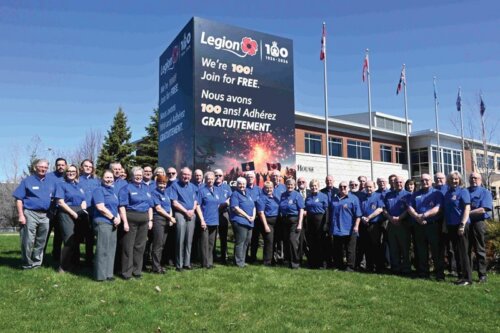
From technological innovation to membership growth and beyond, The Royal Canadian Legion shows no sign of slowing down as it approaches its centennial

Winged commander

[Illustration by Malcolm Jones]

Amazingly, during the early years of the Second World War, Royal Air Force bombers were equipped with carrier pigeons. They were supposed to be the last resort if radio communications were lost.

In 1942, one of these birds actually helped rescue a downed crew member.

The pigeon, named Winkie, was aboard a badly damaged bomber returning from a mission to Norway. The plane went down in the North Sea. The crew sent a message that they were ditching, but didn’t send a position. As they bobbed in the frigid water they released Winkie.

Winkie made it home to her Dundee, Scotland, coop, oil-stained and exhausted after a 200-kilometre flight and her owner notified the local air base. Navigators plotted the time of the ditching and calculated the distance the bird could have flown. The lost aviators were retrieved.

The pigeon was awarded the Dickin Medal, which is given to animals for bravery or devotion to duty in combat.

Last fall, a bronze statue of Winkie was unveiled in Dundee.

In 1944, a young Canadian officer had just taken command of a motor torpedo boat and was heading for Greenock, Scotland, on the River Clyde to pick up supplies. All the while, he was looking for a potential target to practise on. What did he see coming down the river but the liner Queen Mary, all 80,000 tons of it. He couldn’t resist and rang up for full speed. But as he closed in on the troopship, he noticed men on its bridge aiming rifles at him. He decided in favour of discretion and sheered away.

An investigation was launched and in due course he was marched before a senior admiral. “I described what had happened, explaining that it had all been quite harmless,” he recalled years later.

When the questioning was done, the admiral dismissed his staff and the Queen Mary officers. He gestured to the Canadian to take a seat and offered him a cigarette.

“Really,” he said. “That was a bit naughty, wasn’t it?

“But in a way I really can’t blame you. She must have been an irresistible target. You’ll hear no more about it.”

And that was it. The two men chatted for a while and the admiral wished the young man good luck before parting.

The skipper survived the war and went on to greater fame back home in Canada. His name was Jack McClelland, and he eventually ran McClelland & Stewart, the publishing house that helped promote Canadian literature and the careers of authors such as Margaret Atwood, Pierre Berton and Farley Mowat.

“We’ve run aground,” the astonished navigator shouted from the bridge, as thoughts of court martial popped into his head.

In the spring of 1945, when the Second World War had only weeks to run, HMCS New Glasgow left Londonderry to join a convoy off the coast of Scotland. It was to be its final escort assignment before returning to Canada for a refit and a long-awaited home leave. The frigate was steaming in bright moonlight and calm seas in company with three other ships.

Without warning, the ship lurched upward and to starboard, accompanied by a grating, grinding noise. “We’ve run aground,” the astonished navigator shouted from the bridge, as thoughts of court martial popped into his head.

The captain suggested they had hit an uncharted rock.

What they had struck was a German submarine, U-1003, which had been submerged and running on its snorkel. The impact damaged the sub badly and it lay on the bottom in 80 metres of water for two days, while the crew struggled to make repairs. In the end, the captain ordered the vessel to surface and the crew abandoned ship.

New Glasgow had some nasty hull gashes and a mangled propeller. After first aid at Londonderry, she was ordered to Rosyth, on the other side of Scotland, for a refit and was still in drydock when the war ended.

As far as we can tell, this was the only case during the war of two belligerent warships colliding accidentally.

Canadian-born actress Mary Pickford decided to help Canada’s war effort in the early 1940s by offering to raffle off one of her handbags to raise money to buy sports gear for the troops. Her gesture sadly ran afoul of a Toronto city bylaw, which capped the value of raffle items at $50. Pickford’s bejeweled purse was worth $1,500. An exception was sought.

Blaze of glory?

The 1976 Montreal Olympics was a major assignment for the Canadian Armed Forces, with about 9,000 service members involved. Security was a preoccupation for the hosts, with memories of the terrorism attack at the 1972 Munich Games still fresh. While the army had the biggest load, the navy contributed about 1,000 sailors as it handled security for the sailing events of the Games, which were staged on Lake Ontario off Kingston, Ont. The navy contingent included three destroyers, HMC ships Nipigon, Annapolis and Saguenay, along with 70 tow and rescue vessels. In contrast, Canada never had more than three destroyers at a time assigned during the Korean War.

The Games went off without major hitches, although the final day of the sailing regatta offered a few scary moments. As the final races wrapped up, a pillar of black smoke suddenly climbed into the sky out on the lake. Security vessels, ready for anything, dashed for the site where they found one of the competing yachts burning, while several official vessels bobbed nearby. The response was quickly stood down as the story came out.

One of the Olympic competitors was very unhappy with his performance over the week-long regatta, and he blamed his boat. In fact, he developed a hatred for his boat. And wanted no part of it.

But under the rules which allowed him to bring the vessel into Canada free of duty, he couldn’t sell it. He couldn’t give it away. He couldn’t even donate it. He would have to pay to have it freighted back home.

But he found a loophole. After the last race, he waved over a support boat and, as confused officials looked on, he and his crewman stripped his vessel of sails, winches and anything else that could be quickly detached. When that was done, he opened a gas can and slopped fuel all over his racer. He stepped aboard the support vessel, lit a gas-soaked rag and tossed it in. His boat went up with a whoosh of flames and burned merrily.

While the yachtsman had to explain himself to both race officials and security people, as well as the sailors who had sped to the scene, he was said to be grinning the whole time.

During the last few months of the Second World War, the brass in a Canadian division decided that each artillery troop should include an expert on mines and booby traps. In response, a young artilleryman was tabbed for a course on clearing mines. He and his colleagues were taught the tricks of lifting and defusing the sneaky explosive devices. For their final test, they were driven to an open field, where a large sign in German warned of “Minen.” They were told to clear the field.

As they gingerly surveyed the scene, the sergeant-major climbed back in the truck. As he drove off, he leaned out the window: “Go to it boys, but be careful. I’ll wait down the road. I hate messy scenes.”

Eventually, they lifted all the mines they could find. The sergeant-major returned, counted the mines, then casually tossed them into the truck. The onlookers winced at his cavalier treatment of ordnance. He grinned and explained that he and a helper had planted the mines a couple of weeks ago. “They’re duds.”

Air support during the Normandy Campaign apparently could be iffy. According to the Canadians: “When the Luftwaffe came over, we dove for cover. When the RAF came over, the Germans dove for cover. When the Americans came over, everyone dove for cover.

A Second World War unit was pulled out of line for a brief rest, but was simultaneously chided for the state of its vehicles. They were told their paint was chipped and faded and needed to be retouched. So, someone found drums of grey paint, and everyone set about slapping it on. One bright fellow suggested adding gasoline to the drums. It would dry a lot faster, he said. The gas was duly added and, sure enough, the paint dried in record time, letting everyone get back to the actual important tasks, like scrounging booze. The new paint job passed muster, and all was well. Until the first big rainfall, when all the gasoline-diluted paint washed off.

He lit a gas-soaked rag and tossed it in. His boat went up with a whoosh of flames.

A Canadian Spitfire squadron operating out of an airfield in Normandy in the summer of 1944 decided it was time to party when it was given a few days off. Teams were dispatched to local towns and farms to rustle food and drink. One group found a nearby farm with a tempting crop of ripe corn and decided a corn roast would be a nice change from rations.

When the party started, locals were invited to drop by for a drink and a chat through the language barrier. One of the visitors was the corn farmer. He was all smiles until he came to the food table and found the air force members enjoying fresh corn slathered in Normandy butter. He stared horrified. “Mais non, non, messieurs,” he gasped. “C’est pour les animaux!”