



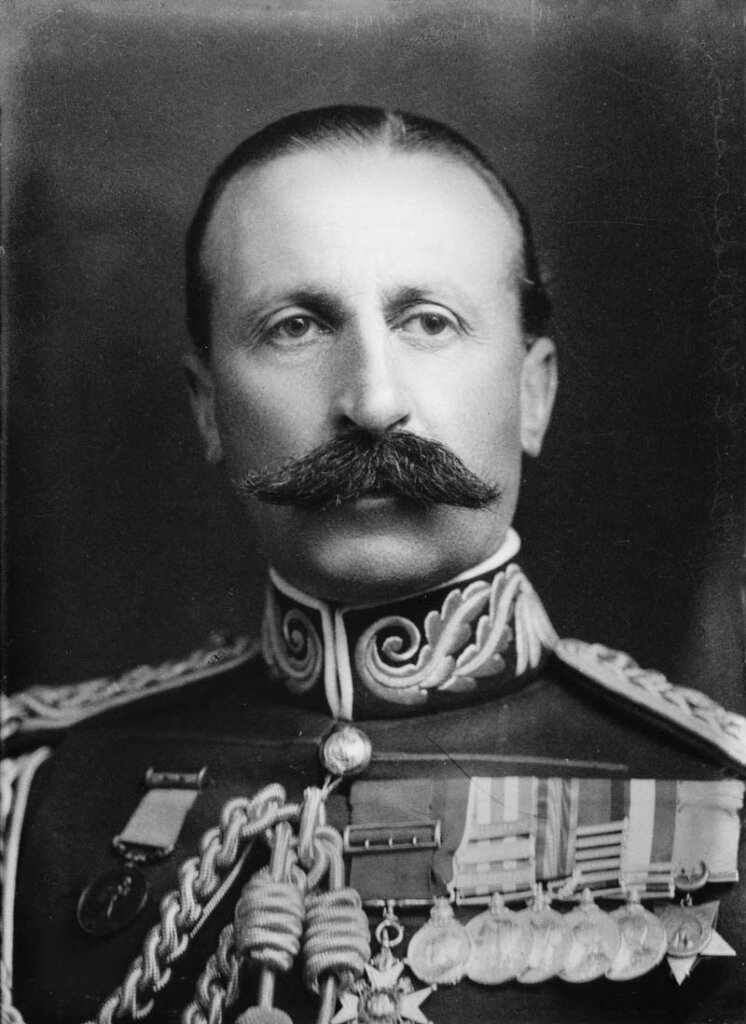
E.A.H. ALDERSON
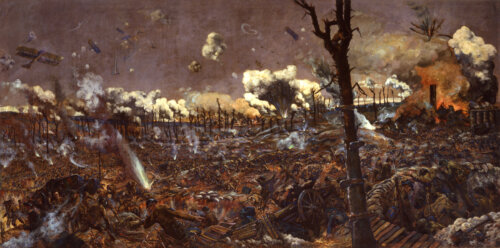
In the aftermath of the Canadian failure during the Battle of St. Eloi Craters, a scapegoat was sought. Although 2nd Canadian Division had fought tenaciously to hold the ground the British 3rd Division had won in the last week of March 1916, the battle mostly ended on April 16 with the Allies roughly aligned with where they had started. In its first major engagement, 2nd Division lost 1,373 casualties for no gain.
British Expeditionary Force commander-in-chief Field Marshal Douglas Haig initially reprimanded Second Army commander Lieutenant-General Herbert Plumer. Piqued, Plumer demanded that British Lieutenant-General Edwin Alderson, who commanded the Canadian Corps, take “severe disciplinary measures” by sacking 2nd Division’s Major-General Richard Turner and his 6th Canadian Brigade commander Brigadier-General Huntley Ketchen for incompetence. Alderson, however, understood that the Canadians had been placed in an unwinnable situation. Hoping to save Turner, Alderson asked him to condemn Ketchen. Turner refused and accused Alderson of failing to support the division by not authorizing a requested limited withdrawal out of the cauldron of fire to safer ground. Alderson lashed back, claiming Turner was unqualified for divisional command. Plumer, wanting the matter resolved, agreed that Turner should go.
The Canadians had been placed in an unwinnable situation.
That might have been the end of matters had Canada’s military representative at the front, Max Aitken (later Lord Beaverbrook)—who had been appointed by Minister of Militia and Defence Sam Hughes—not waded into the matter. The 36-year-old entrepreneur warned Haig on April 23 that his government wouldn’t stand to see a Canadian general, already considered a war hero for past actions, scapegoated. Haig, fully aware of how defensive Canada’s politicians and soldiers were about their corps being commanded by a Brit, strove to avert a “serious feud between the Canadians and the British.” Avoiding that feud, he said, was more important than permitting “the retention of a couple of incompetent commanders.” So, Turner and Ketchen kept their postings and Alderson was sacrificed.
On April 26, the Canadian cabinet
agreed to Alderson’s replacement by British Lieutenant-General Julian Hedworth George Byng. Haig assured Alderson that he would receive a significant appointment in exchange for going quietly. However, he was appointed inspector-general of Canadian forces in England and France, which proved a purely nominal assignment. “Canadian politics,” Alderson told a friend, “have been too strong for all of us.” In 1920, he retired from the military.
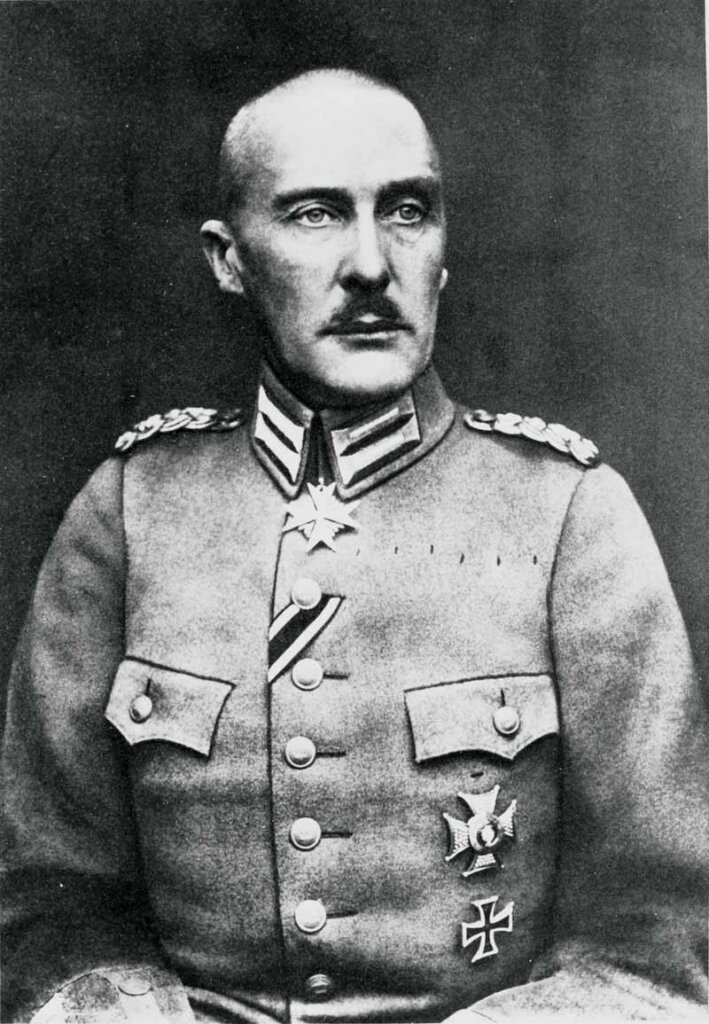
ALBRECHT, DUKE OF WÜRTTEMBERG
When the British Expeditionary Force detonated massive explosive charges on March 27 at St. Eloi, creating huge craters and reducing the battlefield to a nightmarish morass, two German companies were largely destroyed. These units were part of the German 4th Army commanded by Generaloberst Albrecht, Duke of Württemberg. Born in 1865, the long-time military careerist quickly rose to 4th Army command, and led it to victory in the August 1914 Battle of the Ardennes. Since then, Albrecht’s troops had competently fought the French, Belgians and British on the Western Front. During the Second Battle of Ypres, Albrecht had overseen the first large-scale poison gas attack in which Canadian troops were among the exposed. His reputation as a reliable and solid battlefield commander was recognized with a Pour le Mérite—Germany’s highest order for bravery.
No sooner had the massive British mines detonated than Albrecht rushed troops into the devastated landscape. After a savage week of fighting, British 3rd Division was exhausted. On April 4, they were relieved by 2nd Canadian Division, who soon found themselves trapped in a meat grinder as the Germans launched repeated counterattacks and blasted their exposed positions with heavy artillery bombardments.
Albrecht knew the Canadians were inexperienced and likely not well trained.
Albrecht knew the Canadians facing his troops were inexperienced and likely not well trained. Having developed their infiltration tactics earlier in fighting the French at Verdun, four specialized German attack companies penetrated Canadian lines early on April 6 on the heels of a massive artillery bombardment. Slashing through the devastated defensive positions and catching the Canadians in the middle of a relief of one battalion by another, the Germans captured all key craters—except for Crater 6. They then called in a surrounding curtain of artillery fire that prevented any effective counterattacks.
Although the battle had obviously tipped decisively in the Germans’ favour, the Canadians were ordered to not only hold their ground but regain what had been lost. The battle’s outcome, however, was inevitable. On April 16, aerial photographs showed the Germans heavily entrenched within the deepest craters of St. Eloi. A Canadian withdrawal was finally ordered.
The 4th Army’s win was decisive. Soon after, Albrecht was promoted to generalfeldmarschall and in 1917, his new army group assumed responsibility for the Western Front’s southern flank. Presumptive heir to the Kingdom of Württemberg, the 1918-19 German revolution prevented his ascension to the throne.
Advertisement